Master Baseball Fielding Drills for Sharper Defense
Yes, baseball fielding drills are essential for improving your game. Consistent practice helps you develop quicker reactions and a stronger arm. Mastering these drills can lead to fewer errors and more outs. It’s all about building muscle memory and confidence on the field.
Good fielding means more than just catching the ball. It involves smooth transitions and smart decision-making. We found that players who focus on proper footwork and glove control see the biggest improvements. These drills help turn good players into great ones by refining their fundamentals.
- Learn essential drills for infielders and outfielders.
- Improve your reaction time and accuracy.
- Develop better glove work and throwing power.
- Build confidence for game-day performance.
Ready to take your fielding to the next level? Let’s walk through some effective drills that can make a real difference in your play.
Mastering Baseball Fielding with Essential Drills
Ready to transform your defense? Practicing the right baseball fielding drills is your direct path to becoming a reliable player. We found that consistent repetition builds the muscle memory needed for smooth plays. This isn’t just about making catches; it’s about making outs consistently.
Improving Infield Fundamentals
Infielders face a unique set of challenges. They need quick hands, sharp footwork, and a strong, accurate arm. Let’s look at drills that hone these specific skills. Infielders need a strong, accurate arm, and this guide helps develop that skill.
The “All-Around” Ground Ball Drill
This is a staple for a reason. It simulates game-like ground balls from various angles. You’ll practice fielding forehands, backhands, and straight-on shots.
Execution
Have a partner or coach roll or hit ground balls to you. Focus on getting your body in front of the ball. Practice a clean transfer from your glove to your throwing hand. Make sure your feet are in a good fielding position before the ball arrives.
Key Focus Points
- Keep your glove low and on the ground.
- Use your non-gloved hand to trap the ball.
- Take a direct line to your target with your throw.
- Stay balanced through the play.
The “Quick Hands” Drill
This drill is perfect for developing fast reflexes. It targets your hand-eye coordination and the speed of your glove work. Many players find this helps immensely with balls hit sharply.
How to Do It
Stand about 10-15 feet from a partner. Have them toss or lightly hit balls directly at you. You can use a tennis ball or a golf ball for a faster challenge. Catch the ball with just your glove hand, focusing on soft hands. The goal is to catch as many as possible without fumbling.
Progression
Once you’re comfortable, try catching with only your bare hand. This forces you to be even more precise. You can also add a slight shuffle or movement to simulate reacting to a hit.
The “Flip” Drill for Second Basemen and Shortstops
This drill is critical for turning double plays. It hones the ability to field a ground ball and quickly flip it to a middle infielder. This drill is critical for turning double plays, which requires quick transfers and accuracy.
Performing the Drill
Position yourself where you’d field a ground ball. Have a partner roll the ball to your right (for a shortstop) or left (for a second baseman). Field the ball cleanly. Instead of a full throw, practice a quick, short flip to your imaginary second baseman. Focus on a smooth transfer and accuracy.
What to Watch For
Ensure your feet are in position to make the flip easily. Don’t over-throw the ball; a controlled flick is key. This builds the confidence to execute under pressure.
Developing Outfield Skills
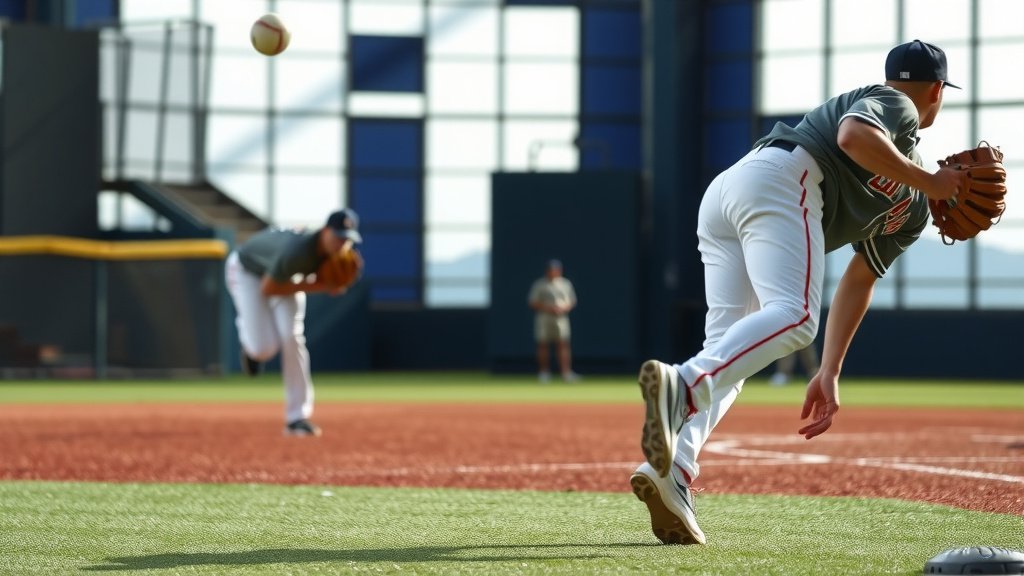
Outfielders need to track fly balls, cut off ground balls, and make strong throws. These drills help you cover more ground and make better decisions.
“Crow Hop” Throwing Drill
A strong, accurate throw is a hallmark of a great outfielder. The crow hop is the foundation for generating power and distance.
The Technique
Start with the ball in your glove. As you approach the ball, take a few steps. Before throwing, plant your back foot and then step with your front foot (this is the crow hop). Follow through with your arm. Practice this motion repeatedly, focusing on making it feel natural and explosive.
Why it Matters
Research and found that proper crow hopping can add significant velocity and accuracy to your throws (National Baseball Institute). It allows you to get the ball to your target faster, cutting down runners. Practice throwing to different bases to work on your accuracy.
“Pop-Up Tracking” Drill
Catching fly balls can be tricky. This drill helps you judge the flight of the ball and get to the right spot quickly.
Running the Drill
Have a partner hit or toss fly balls to you. As the ball is hit, watch it all the way into your glove. Work on your approach angle. Do you need to go forward, backward, or sideways? Focus on making the catch with two hands whenever possible.
Improving Decision-Making
Pay attention to the wind and the sun. These factors can affect the ball’s flight. We found that outfielders who consistently watch the ball into their glove make fewer errors on fly balls. Your goal is to be in the “neighborhood” of the ball as it comes down.
“Cut-off and Relay” Drill
This drill is about teamwork and communication. It’s essential for preventing extra bases on hits to the outfield.
How to Practice
One player hits the ball to the outfield. Another player (the cut-off man) positions themselves between the outfielder and the base they are throwing to. The outfielder throws the ball to the cut-off man, who then relays it to the target. This requires clear communication and accurate throws from both players.
The Importance of Communication
Outfielders need to yell “I got it!” or “Cut!” to their cut-off man. The cut-off man needs to be in a good position. Many coaches say that strong communication on relays is as important as arm strength (Youth Baseball Digest).
General Fielding Improvement Tips
Beyond specific drills, some general principles can boost your fielding game.
Glove Maintenance
Your glove is your best friend on the field. Keeping it in good condition makes a difference. We found that a well-oiled, broken-in glove feels more natural and helps you secure catches. Make sure it’s not too stiff or too loose.
Footwork is Key
Good footwork makes everything else easier. Being in the right position allows for a clean transfer and an accurate throw. Many baseball academies stress that players should practice their footwork even without a ball.
Visualize Success
Mental preparation is just as important as physical practice. Imagine yourself making plays cleanly. Positive visualization can build confidence and reduce anxiety on the field.
Your Fielding Improvement Checklist
Ready to put it into action? Here’s a quick checklist to help you focus your practice:
- Practice fielding ground balls from all angles daily.
- Work on your crow hop for stronger outfield throws.
- Drill quick transfers for infield ground balls.
- Track fly balls with your eyes until they are in the glove.
- Communicate clearly on cut-off and relay plays.
- Maintain your glove for optimal performance.
Conclusion
You’ve now seen how dedicated practice with baseball fielding drills can truly transform your game. By focusing on drills for both infield and outfield, you’re building essential skills like quicker reactions, better glove work, and stronger arms. Remember, consistency is your best friend here. Keep working on your footwork, your transfers, and your communication.
Your next step? Pick one drill that targets an area you want to improve and commit to practicing it at least three times this week. You’ve got this!
Frequently Asked Questions
How often should I practice fielding drills?
Aim to practice fielding drills at least three to four times a week. Even 15-20 minutes of focused work can make a big difference over time. Consistency is more important than long, infrequent sessions.
What’s the best way to break in a new baseball glove?
You can glove oil and work it by hand to make it more pliable. Playing catch with it regularly helps too. Many players also use a glove mallet or wrap it with a ball inside overnight.
Can I improve my fielding without a coach?
Absolutely! You can practice many drills with a friend or even by yourself, using a wall or a pitching machine. Focusing on the correct technique and repeating movements is key, even without direct supervision.
How do I stop my throws from wobbling?
Wobbly throws often come from a lack of arm extension and an improper grip. Ensure you’re gripping the ball firmly with your fingertips and following through completely with your arm. Practicing your crow hop will also help with a more stable release.
What if I’m afraid of the ball hitting me?
This is common, especially for younger players. Start with softer balls, like tennis balls, and gradually work up to baseballs. Focus on the drills that teach you to get your body behind the ball. Visualization can also help build your confidence over time.