Master Baseball Catching Drills for Top Performance
Baseball catching drills are your ticket to becoming a rockstar behind the plate. These drills help you improve your Our guide to playing catcher covers the essential skills for this position.blocking ability, transfer speed, and overall game awareness. Mastering them means fewer passed balls and more confidence in your game.
We know catching can be tough. That’s why focusing on the right drills makes all the difference. Practicing these techniques consistently can dramatically reduce errors and make you a more reliable player for your team. Think of it as building your catching superpower.
- Improve blocking with focused drills.
- Speed up your ball transfer.
- Develop better game sense.
- Build confidence behind the plate.
- Make fewer mistakes.
Ready to become the catcher everyone counts on? Let’s walk through the best catching drills step by step.
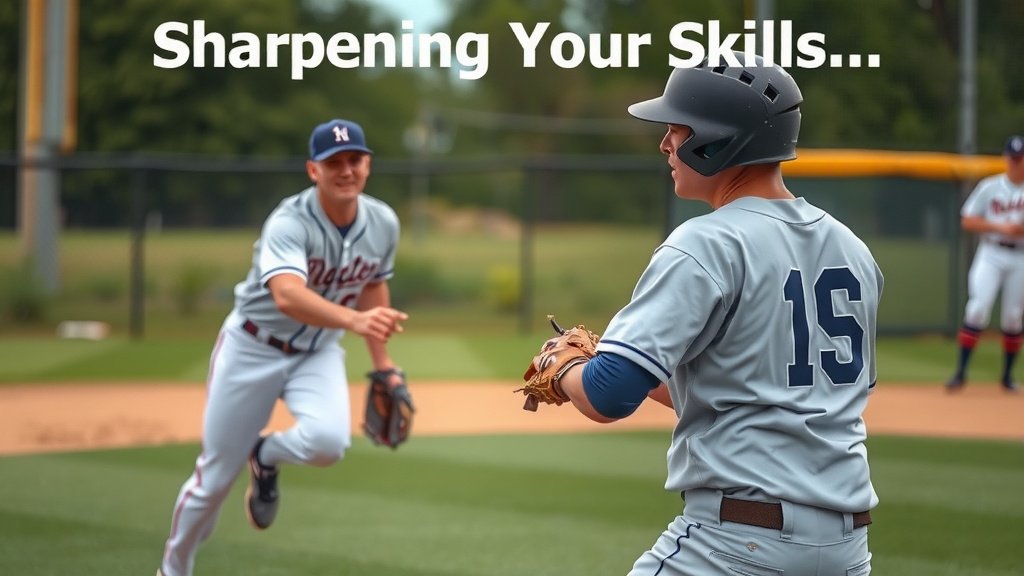
Sharpening Your Skills: Essential Baseball Catching Drills
Becoming a great catcher takes more than just having the right gear. It requires dedication and practice. We’ve looked into what makes a catcher stand out. The answer is consistent, focused drills. These drills build the physical and mental skills you need behind the plate. Let’s dive into the drills that will make you a stronger, more confident catcher.
Mastering the Fundamentals: Blocking Drills
Blocking is your first line of defense. A solid block stops wild pitches and keeps runners honest. It prevents runners from advancing when the ball gets away. Good blocking builds trust with your pitcher. They know you have their back.
The “All-Around” Block Drill
This drill works on getting your body in front of the ball. You’ll practice collapsing to the ground. We found that this drill is highly effective. It teaches you to react quickly to pitches in the dirt. Get into your catching stance.
Have a partner toss or pitch balls directly at your chest area. Your goal is to get your body behind the ball. Extend your chest and stomach towards the ground. Your knees should bend deeply. Keep your glove down to catch any rebound. It’s like being a human backstop. Many coaches say the key is to “get big” and make yourself a wall. Experts note that consistent practice improves reaction time (American Baseball Coaches Association).
Progression: Varying Ball Trajectories
Start with pitches low and in the dirt. Then, gradually introduce pitches slightly higher. You’ll also want to practice blocking balls that take a bad hop. This means adjusting your angle and body position on the fly. Think about your feet and how they move. Do they get you into the right position quickly? Research shows that quick feet are essential for effective blocking (National Strength and Conditioning Association).
The “Block and Recover” Drill
This builds on the all-around block. After you block the ball, you need to recover. A quick recovery means you can still make a play. It’s not just about stopping the ball. It’s about being ready for what happens next.
Perform the all-around block. Once the ball is secured or deadened by your body, practice popping back up. Your feet should come under you quickly. Be ready to throw or tag a runner. Many players find this challenging. They get stuck on the ground after the block. We found that practicing the recovery separately helps. Start by just popping up from your knees. Then, integrate it into the blocking drill.
Quicker Than a Hiccup: Transfer Drills
Once you’ve blocked or caught the ball, speed is key. Getting the ball out of your glove and into your throwing hand is the transfer. A fast, clean transfer is critical. It helps you throw runners out. No one likes a slow transfer. It gives the runner an extra step. We looked at how much time a good transfer saves. It can be the difference between an out and a safe call. Good transfer technique is not natural for everyone. It needs work. A fast, accurate throw is key for double plays, and our guide explains how to achieve it.
The “Glove-to-Hand” Drill
This focuses purely on the hand movement. You don’t even need a ball to start. Practice the motion of bringing the ball from your glove to your throwing hand.
Hold your glove in your bare hand. Mimic the motion of catching. Then, practice scooping the imaginary ball from your glove into your throwing hand. Your hands should move together. The glove moves towards your throwing hand. We found that many players get sloppy here. Their hands separate too much. Keep your hands close. Think about “shoveling” the ball. This drill is simple but effective for muscle memory.
The “Catch and Throw” Transfer Drill
Now, let’s add a ball. You can do this with a partner or by yourself. Toss the ball gently into your glove.
As soon as you feel the ball in your glove, start your transfer. Bring the ball to your throwing hand. Then, make a short, quick throwing motion. Focus on getting the ball out of the glove smoothly. Don’t worry about distance at first. Accuracy and speed of transfer are the priorities. You can gradually increase the distance. This drill directly mimics game situations. Many players find it helps them break bad habits.
Adding the “Fake Throw” Element
Once you’re comfortable, add a fake throw. After the transfer, pretend to throw. This helps you practice your footwork. It also helps you practice your eye discipline. You want to fool the runner, not yourself. Experts suggest this fake throw is vital for a catcher’s toolbelt (BaseballAmerica).
Seeing the Game: Pitch Recognition and Game Awareness Drills
Catching isn’t just about your physical actions. It’s also about what’s happening around you. You need to know the pitch count. You need to know who’s on base. You need to anticipate what the pitcher is going to throw.
The “Pitch Call” Drill
This drill helps you practice calling pitches. It also helps you communicate with your pitcher. Clear communication is key for success. You are the field general behind the plate.
Have a pitcher throw to you. As the pitcher winds up, you need to give your sign. You should also be thinking about the situation. What’s the count? Who’s batting? What are the runner’s tendencies? We found that experienced catchers use this information. They can subtly adjust their calls. You can practice this by yourself. Just go through the motions of giving signs. Imagine different game scenarios. Some coaches use video analysis to help players with this.
The “Situational Awareness” Drill
This is about understanding the game flow. It’s more mental than physical. You need to be aware of runners on base. You need to know the tendencies of the hitter. You need to know the pitcher’s strengths.
Sit behind the plate and observe a practice or game. Don’t just watch the ball. Watch the runners. Watch the hitters. Watch the pitcher’s body language. Ask yourself: What pitch is coming next? Where will a ground ball go? What’s the best play if the ball is hit to the outfield? This mental practice is as important as physical reps. Many players don’t dedicate enough time to this aspect.
The “Bounce Back” Drill (for Wild Pitches)
This is similar to blocking but focuses on control. Sometimes a pitch is too low to block effectively. You still need to corral it. You need to keep it close.
Have your pitcher throw breaking balls or changeups. These often stay low. Instead of a full block, focus on getting your body in front. Keep your glove low and funnel the ball. Your goal is to prevent it from getting past you. It’s about keeping the ball within arm’s reach. We found that this drill teaches discipline. It prevents unnecessary slides for pitches you can control. Keep your movements controlled and efficient.
Checklist for Catching Improvement
- Practice blocking every practice session.
- Work on smooth glove-to-hand transfers daily.
- Communicate pitch calls clearly.
- Scan the field for situational awareness.
- Review your technique regularly.
- Focus on one skill at a time.
Conclusion
You’ve learned about essential baseball catching drills that can transform your performance. Focusing on blocking, transfer speed, and game awareness builds your confidence and reliability. Consistent practice of these techniques makes you a stronger player. Remember, every rep behind the plate makes a difference. Your next step is to get out there and put these drills into action. Start with one or two and build from there. You’ve got this!
Frequently Asked Questions
How often should I practice blocking drills?
You should aim to practice blocking drills during most, if not all, of your practice sessions. Even a few minutes each day can lead to significant improvements in your reaction time and form.
What’s the best way to improve my ball transfer speed?
Practicing the “glove-to-hand” drill daily is highly effective. Focus on keeping your hands close together during the transfer motion. Adding a “catch and throw” element with short tosses can further refine this skill.
How can I get better at situational awareness as a catcher?
Dedicate time to observing the game beyond just the ball. Watch runners, hitters, and the pitcher’s tendencies during practices or games. Ask yourself strategic questions about potential plays.
Is it better to practice drills alone or with a partner?
Both have benefits! Drills like “glove-to-hand” can be practiced alone to build muscle memory. However, drills involving pitching, blocking, and throwing are best done with a partner or coach to simulate game conditions.
How do I avoid getting discouraged if I’m not seeing results immediately?
Remember that improvement takes time and consistency. Focus on making small adjustments each practice rather than expecting perfection right away. Celebrate small victories, like a cleaner transfer or a better block.