What is a Ground Ball in Baseball: A Simple Explanation
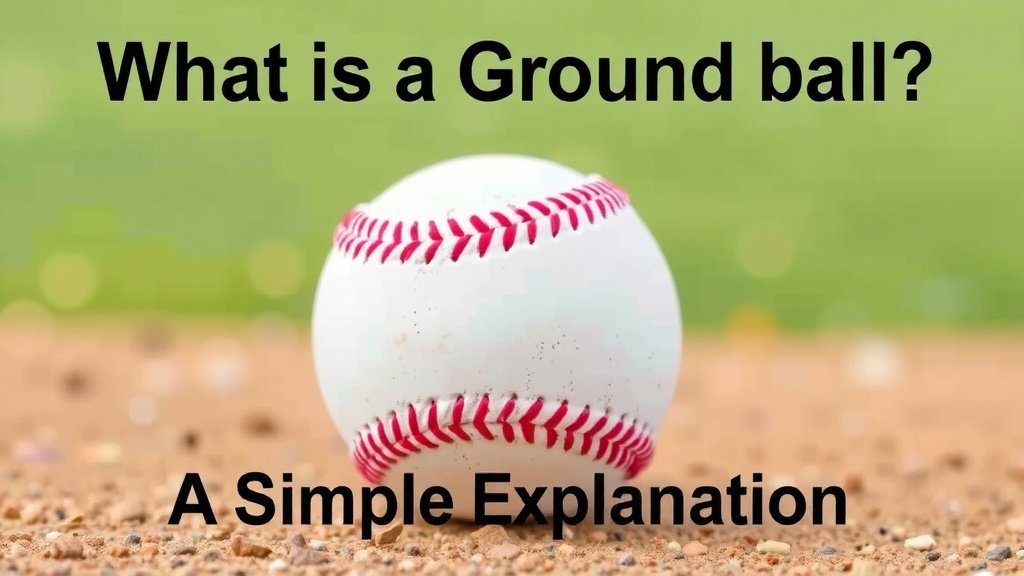
A ground ball in baseball is a batted ball that bounces or rolls along the ground. It’s a very common type of hit that requires quick fielding. You’ll often see infielders scrambling to get these balls.
Understanding ground balls is key to appreciating baseball strategy. It affects how players position themselves and how teams plan their defense. Knowing what happens after a ground ball is hit can make watching the game more exciting for you.
- A ground ball is a batted ball hit along the dirt.
- Infielders try to field these quickly.
- It can lead to outs or runners advancing.
- Proper fielding is essential for a strong defense.
Let’s break down what makes a ground ball and how players handle them. We’ll look at everything from the hit itself to the plays that follow.
Understanding the Ground Ball in Baseball
A ground ball is one of the most fundamental plays in baseball. It’s a batted ball that stays low and rolls or bounces on the infield dirt. You’ll see infielders like shortstops and second basemen reacting to these hits constantly. They are a key part of the game’s action.
What Exactly Defines a Ground Ball?
Simply put, a ground ball is a hit that travels along the ground. It hasn’t gone over the fence for a home run or high enough in the air for a fly ball. The ball’s path is low to the surface. This low trajectory makes it a **challenge for fielders** to track and catch cleanly.
The Trajectory Matters
Think of it like this: a line drive is a fast, straight hit. A fly ball goes up in the air. A ground ball stays down. The angle off the bat is what determines this. A hit with a low launch angle will likely become a ground ball. The speed of the ball and the angle at which it hits the ground also play a role. A ball that takes a big hop can be harder to handle than one that stays low and slow.
Common Types of Ground Balls
There are a few ways ground balls are often described, depending on how they travel. A “fairly ground ball” is hit with a lot of force and stays on a straight line. A “slow roller” is just what it sounds like – a softly hit ball that barely moves. Sometimes, you’ll hear about a “chopper.” This is a ground ball that bounces unusually high and erratically, making it tough to field. These different types all require slightly different approaches from the fielder.
How Infielders Handle Ground Balls
Fielding ground balls is a skill that takes a lot of practice. Infielders have to be ready for anything. Their job is to stop the ball and get the batter out, or at least prevent runners from advancing.
The Initial Reaction and Approach
When a ball is hit on the ground, the infielder’s first step is **immediate and explosive**. They need to move towards the ball quickly. Their glove is positioned low, ready to scoop up the ball. It’s a dance of anticipation and reaction. They have to judge the speed and direction of the ball instantly.
Glove Work: The Scoop and Transfer
The actual fielding of the ball is often called the “scoop.” A good infielder uses their glove to scoop the ball up smoothly. The goal is to avoid a big bobble. Once the ball is in the glove, the next crucial step is the “transfer.” This is when the infielder moves the ball from their glove to their throwing hand. A quick and clean transfer is essential for making an out. Sometimes, this happens in one fluid motion. Other times, they might need to catch the ball, bring it into their body, and then throw. Experts often stress that a **smooth transfer** is the mark of a great fielder (Baseball America).
Dealing with Different Bounces
Ground balls don’t always bounce predictably. A ball can hit a small lump in the dirt and take a funny hop. Or it might be hit with backspin, causing it to stop or even roll backward. Good fielders are trained to adapt to these unpredictable bounces. They often get into a “ready position” with bent knees and a low center of gravity. This allows them to adjust quickly to **any kind of bounce**. It’s like being a cat, always landing on your feet!
The Throw to First Base
After successfully fielding the ground ball, the next task is to throw the ball to first base. This throw needs to be accurate and strong. The first baseman needs to catch the ball before the runner reaches the base. The infielder will often try to get their feet in a good throwing position. This usually means getting their body in line with first base. A good throw makes the first baseman’s job much easier. A wild throw can lead to the runner advancing or even scoring.
Strategic Importance of Ground Balls
Ground balls aren’t just random events; they are a result of pitching and hitting strategies. How teams approach them also dictates game flow.
Pitching and Hitting Strategy
Pitchers might try to induce ground balls by throwing certain types of pitches. Pitches thrown low in the strike zone are more likely to be hit on the ground. Batters, on the other hand, might try to hit ground balls to specific parts of the field. This is often done to avoid strong infielders or to try and hit through a gap. A “bunt” is a type of softly hit ground ball that batters use to advance runners. It’s a quick play that requires **fast reflexes** from the pitcher or third baseman.
Defensive Alignment and Shifts
Teams position their infielders based on the batter and the game situation. Sometimes, you’ll see defensive “shifts.” This is when fielders move to one side of the infield to take away certain types of hits. If a hitter tends to pull the ball on the ground to the left side, the defense might move an infielder over there. This can prevent hits. The goal is to **optimize the defense** against a specific hitter’s tendencies. It’s a chess match happening on the field.
When a Ground Ball is Not an Out
Not every ground ball results in an out. If the ball is hit too softly, or if the infielder bobbles it, the batter might reach first base safely. This is called a “hit.” If there are runners on base when a ground ball is hit, they might try to advance to the next base while the defense is busy fielding the ball. A well-placed ground ball through a gap in the infield can allow runners to score. This is why **quick fielding and accurate throws** are so critical.

A Checklist for Fielding Ground Balls
Here are a few things to remember when you see a ground ball in action:
- Watch the ball off the bat.
- Get your body in front of the ball.
- Keep your glove low.
- Have a quick glove-to-hand transfer.
- Make an accurate throw.
- Be ready for unexpected bounces.
Conclusion
You now understand that a ground ball is more than just a ball rolling on the dirt. It’s a dynamic play that tests an infielder’s skills. From the pitcher’s strategy to the fielder’s quick reflexes and accurate throw, each step is vital. A well-fielded ground ball can end an inning, while a bobble can keep it alive. Pay attention to these plays next time you watch a game. You’ll see the strategy and athleticism involved. To further appreciate the game, try practicing fielding some ground balls yourself!
Frequently Asked Questions
What’s the difference between a ground ball and a line drive?
A ground ball travels along the ground, often bouncing or rolling. A line drive is hit hard and fast, staying low but typically not touching the ground until it’s far into the field or past an infielder. The trajectory is the main difference.
Why are some ground balls harder to field than others?
Ground balls can be tricky due to their speed, angle, and the surface they bounce on. A “chopper” that bounces high and erratically is tougher than a slow roller. Small bumps or imperfections in the infield dirt can also cause unpredictable hops that challenge fielders.
Can a ground ball result in an out for the runner other than the batter?
Yes, absolutely. If there are runners on base, they might try to advance while the defense fields a ground ball. A fielder might throw to a different base than first to get an out on a runner trying to advance, especially if the batter reaches first base safely.
What is a “shift” in baseball regarding ground balls?
A shift is a defensive strategy where infielders position themselves differently than their usual spots. They might move towards one side of the infield to anticipate a batter hitting ground balls to a specific area, like the left side.
How does a pitcher try to make a batter hit a ground ball?
Pitchers often aim to throw pitches that are low in the strike zone. These types of pitches, often curveballs or sinkers, have a better chance of being hit downward by the batter, increasing the likelihood of a ground ball.