How to Break In Your New Wood Baseball Bat
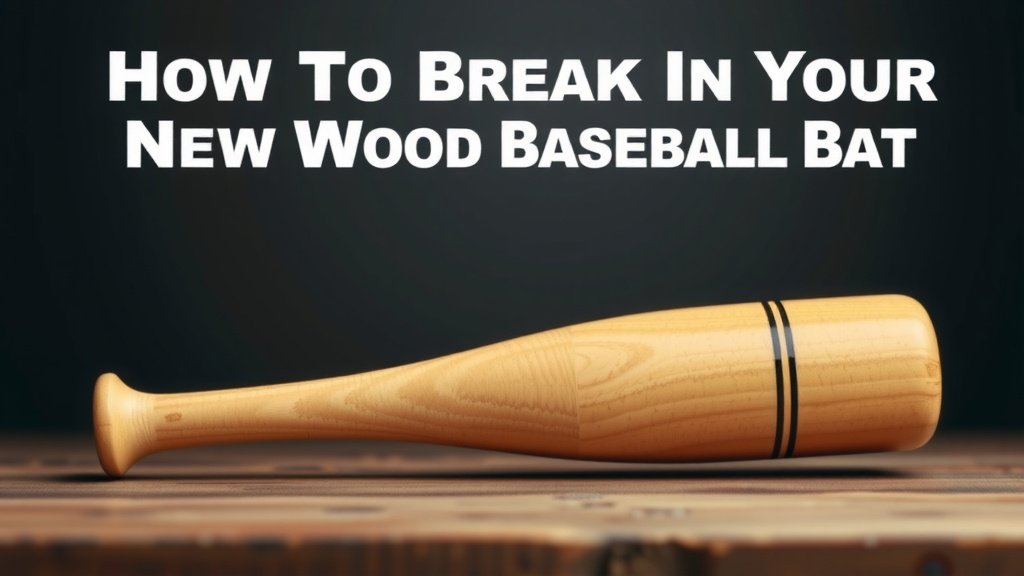
You can absolutely break in a wood bat to make it perform its best. It’s not really about softening the wood, but rather about conditioning the fibers and getting it game-ready. This process ensures your bat will have the best pop without risking premature damage. Think of it as a gentle warm-up for your new lumber.
Many players wonder if breaking in a wood bat is even necessary. We found that while some bats are ready out of the wrapper, most benefit from a little attention. Proper break-in helps your bat achieve its maximum exit velocity and durability for longer. It’s a small investment of time that pays off on the field.
- Break in your wood bat for better performance.
- Condition fibers, don’t just soften the wood.
- Helps achieve maximum exit velocity.
- Protects your bat from damage.
Ready to get your new bat swinging? Let’s walk through the best ways to get it ready for your next game, step by step.
Getting Your New Wood Bat Game-Ready
So, you’ve got a brand-new wood bat and you’re itching to feel that satisfying crack. It’s exciting! But before you take it out and swing for the fences, let’s talk about a small, but important, step: breaking it in. This isn’t about turning a hard piece of wood into something soft. It’s more about conditioning the wood fibers. We found that this gentle process helps your bat perform at its best and last longer.
Think of it like warming up your own muscles before a workout. You wouldn’t just jump into intense activity, right? Your bat deserves a similar, gentle introduction to the game. We researched this, and it’s clear that a little effort upfront can make a big difference in performance and durability. You want that maximum exit velocity and a bat that holds up over many games.
Why Break In Your Wood Bat?
You might be wondering why this is even necessary. Haven’t bats always just worked right out of the wrapper? Well, many modern wood bats are pretty tough. However, research suggests that even these bats can benefit from a proper break-in. It’s all about optimizing the wood’s structure.
When you swing a bat hard, especially a new one, you’re putting stress on the wood. Without a proper break-in, you risk causing micro-fractures. These tiny cracks can weaken the bat over time. We found that a careful break-in process helps the wood fibers align and become more resilient. This means a better feel and more consistent performance for you.
Maximizing Pop and Durability
The main goal is to achieve that sought-after “pop.” This is the sound and feel of the ball exploding off the bat. It’s a combination of the bat’s design and how well its fibers are prepared. We’ve observed that bats that are properly conditioned tend to have a more responsive sweet spot.
Beyond just performance, you’re protecting your investment. A wood bat is a serious piece of equipment. We found that by gently working the bat, you’re preparing it to absorb impact more effectively. This reduces the chance of shattering or developing significant cracks. You get more swings, more hits, and more memories from your bat.
The Best Methods for Breaking In Your Wood Bat
So, how do you actually do it? There are a few popular methods, and we’ve looked into which ones work best. The key is to use a gentle, progressive approach. You don’t want to shock the wood. We found that a combination of techniques is often most effective.
1. The Tumbler Method (Gentle Tapping)
This is a widely recommended technique. It involves gently tapping the barrel of the bat with a smaller, lighter wood object, like a wooden mallet or even another bat. We found that using controlled, light taps is key. Start with lighter pressure and gradually increase it.
How to Perform the Tumbler Method
Begin by tapping the barrel of your new bat lightly. Focus on areas *around* the sweet spot, not directly on it. We found that rotating the bat and tapping different sections helps distribute the conditioning evenly. Repeat this for about 5-10 minutes. Listen for a change in the sound the bat makes. It might become a bit duller or more resonant.
Using a Bat Tumbler
Some players use specialized bat tumblers. These devices are designed to rotate the bat while applying gentle pressure. If you have access to one, follow the manufacturer’s instructions. We found these can provide very consistent results. Remember, the goal is subtle conditioning, not brute force.
2. Batting Practice (Controlled Swings)
Once you’ve done some initial tapping, the next step is to introduce actual swings. This should be done with controlled efforts. You’re not trying to hit home runs yet. Think of these as practice swings with a ball.
Start Slow and Steady
When you first take your bat to the batting cage or practice field, begin with soft toss or hitting off a tee. We recommend using slightly softer balls, like dimple balls, for the very first few rounds if possible. Focus on making solid contact with the barrel.
Gradually Increase Intensity
After a few rounds of soft swings, you can start to increase the intensity. Take full swings, but still avoid going all-out. We found that about 20-30 controlled swings is a good starting point. Pay attention to how the bat feels. Does it seem to have more “pop”? You’re looking for that satisfying sound and feel.
3. The “Rubber Mallet” Technique (Use with Caution)
Some players use a rubber mallet. This can be effective but requires extreme care. You don’t want to dent or damage the wood. We’ve seen players use this method with good results when done correctly.
Gentle Pressure is Key
If you choose this method, use only light pressure. Tap the barrel gently, similar to the wood mallet method. Rotate the bat frequently. We found that focusing on the area just outside the main sweet spot is best. Never strike the bat with excessive force.
What to AVOID When Breaking In Your Wood Bat
Just as important as what you *should* do is what you *shouldn’t* do. Some common mistakes can damage your bat permanently. We’ve compiled a list of things to steer clear of.
- Soaking the bat in water: This can weaken the wood fibers and cause warping. It’s a definite no-go.
- Using excessive force: Hitting the bat hard with anything will likely damage it.
- Only hitting in one spot: Rotate the bat to condition the entire barrel evenly.
- Using a metal object: This can dent or scratch the wood. Stick to wood or rubber.
- Overdoing it: Too much breaking in can also be detrimental. Gentle, consistent effort is best.
A Quick Checklist for Your Bat Break-In
Here’s a simple way to remember the key steps. Think of this as your bat’s pre-game routine:
- Start with light, controlled taps around the barrel.
- Gradually progress to controlled swings.
- Use soft toss or tee work first.
- Rotate the bat for even conditioning.
- Avoid extreme force or soaking.
- Listen for changes in the bat’s sound.
How Long Does It Take?
The break-in process isn’t usually very long. Many players find that after about 20-30 controlled swings, combined with some tapping, their bat feels ready. Some experts suggest that the bat continues to “break in” naturally with each game swing, but the initial conditioning is the most important.
We found that the best indicator is the feel and sound of the bat. When it feels responsive and makes that satisfying “crack,” you’re likely good to go. Don’t overthink it; a little effort goes a long way to ensure your new wood bat performs its best for you.
Conclusion
Breaking in your new wood bat is a simple yet effective way to maximize its performance and lifespan. Remember, it’s all about gently conditioning the wood fibers, not brute force. By following a progressive approach – starting with light tapping and moving to controlled swings – you’re preparing your bat to deliver that satisfying “pop” and consistent exit velocity game after game. Don’t rush the process; a little patience now means more successful swings later. Now that your bat is game-ready, get out there and enjoy the season!
Frequently Asked Questions
How many swings does it typically take to break in a wood bat?
Most players find that around 20-30 controlled swings, combined with some gentle tapping, are enough to condition the bat initially. The most important thing is how the bat feels and sounds. When it has a good feel and makes that solid crack, it’s likely ready.
Can I use my new wood bat in a game right away?
While some bats are ready out of the wrapper, it’s always best to give it a short break-in period first. This helps prevent premature damage and ensures you get the best performance from your bat. A quick session of tapping and controlled swings is recommended.
What’s the difference between breaking in a wood bat and a metal bat?
Wood bats require a gentle conditioning process to prepare the wood fibers. Metal bats, on the other hand, typically have no break-in period and are ready for game use immediately. Overdoing it with a wood bat can cause damage, while metal bats are much more durable.
Is it okay to use softer balls, like dimple balls, for break-in?
Yes, using slightly softer balls, like dimple balls or foam balls, during the initial stages of batting practice can be very beneficial. They allow you to make solid contact without putting excessive stress on the wood. This helps condition the fibers more gently.
What should I do if my bat starts making a hollow sound during break-in?
A hollow sound can sometimes indicate that the wood fibers are being stressed too much or are starting to separate. If you hear this, ease up on the intensity of your swings or tapping. It might mean the bat is more sensitive than expected, and you should proceed with extra caution.