
Master the Baseball Pitch: A Step-by-Step Guide
Throwing a baseball correctly starts with your grip, followed by a smooth arm motion and a powerful body rotation. You want to transfer energy from your legs all the way to your fingertips. Getting these steps right will help you throw with more accuracy and speed.
Learning to throw a baseball can seem daunting, but it’s a skill anyone can improve with practice. We’ll cover the fundamentals to get you started, from holding the ball properly to completing your follow-through. Mastering these basic techniques will make a big difference.
- Grip the ball correctly.
- Use a proper wind-up and stride.
- Rotate your body effectively.
- Follow through with your arm.
- Practice consistently for improvement.
Let’s walk through the exact steps to get you throwing like a pro, or at least much better than you are now!
Mastering the Art of Throwing a Baseball
Learning how to throw a baseball is more than just flicking your wrist. It’s about harnessing your body’s power to send the ball sailing with speed and accuracy. We’ve broken down the mechanics so you can start improving your throw right away.
The Foundation: Your Grip on the Ball
The way you hold the baseball is the very first step to a successful throw. Getting this right sets the stage for everything else. A good grip allows for better control and spin.
The Four-Seam Grip for Power and Accuracy
For most throws, especially for beginners, the four-seam grip is your best friend. It’s simple and effective. This grip helps the ball travel straighter.
Here’s how to do it: Find the area on the ball where the seams look like a capital ‘I’. This is where the stitches are farthest apart. Place your index and middle fingers across these seams. Your fingers should be about an inch apart. Keep a little space between your fingers and the ball. Your thumb should rest underneath the ball, on the smooth leather between the seams. Your ring finger and pinky finger should be together, close to the thumb.
The key is to hold the ball firmly but not too tightly. Imagine you’re holding a bird; you don’t want to crush it, but you don’t want it to fly away either. A relaxed grip allows for a quicker arm motion.
Other Grips to Know (But Start Here!)
While the four-seam grip is great for starting, pitchers often use other grips. The two-seam grip places your fingers along the seams that are closer together. This can make the ball move more. For now, focus on mastering the four-seam. You can explore other grips once you’re comfortable with the basics.
The Kinetic Chain: Power From the Ground Up
A powerful throw isn’t just about your arm. It’s a coordinated effort from your entire body. Think of it like a whip or a chain reaction. Energy starts in your legs and travels up through your torso to your arm. This is called the kinetic chain.
Your Stance and Wind-Up
Before you even think about throwing, your stance matters. Stand with your feet shoulder-width apart. If you’re right-handed, your left foot should be slightly in front of your right foot. If you’re left-handed, it’s the opposite.
Now, for the wind-up. Many experts suggest starting with your glove side pointing towards your target. This helps you stay balanced and focused. As you prepare to throw, bring your throwing hand back and up. Your glove should also come up, usually towards your chest. This entire motion helps build momentum. Keep your eyes on your target throughout this phase.
The Step and Hip Rotation
As your arm comes forward, you’ll step towards your target with your front foot. This step is crucial for generating power. For right-handed throwers, you’ll step with your left foot. For left-handed throwers, you’ll step with your right foot.
As you step, your hips should start to rotate. This is a key part of the kinetic chain. Imagine your hips are a powerful engine. They lead the rotation, followed by your torso and then your arm. Many coaches find that teaching players to lead with their hips can dramatically increase velocity. Don’t rush this. Let the hips initiate the forward motion.
Brining Your Arm Through
Once your hips start to rotate, your arm naturally follows. Bring your throwing elbow up and slightly bent, leading the way. Think of it like you’re pulling a rope. Your shoulder acts as the pivot point. Keep your arm relaxed, not stiff. A stiff arm is a slow arm.
As your arm comes forward, your torso will rotate. Your throwing shoulder should be coming forward, but keep your head up and eyes on the target. Many find it helpful to keep their glove hand pointed towards the target for as long as possible. This helps maintain good alignment.
The Release Point and Follow-Through
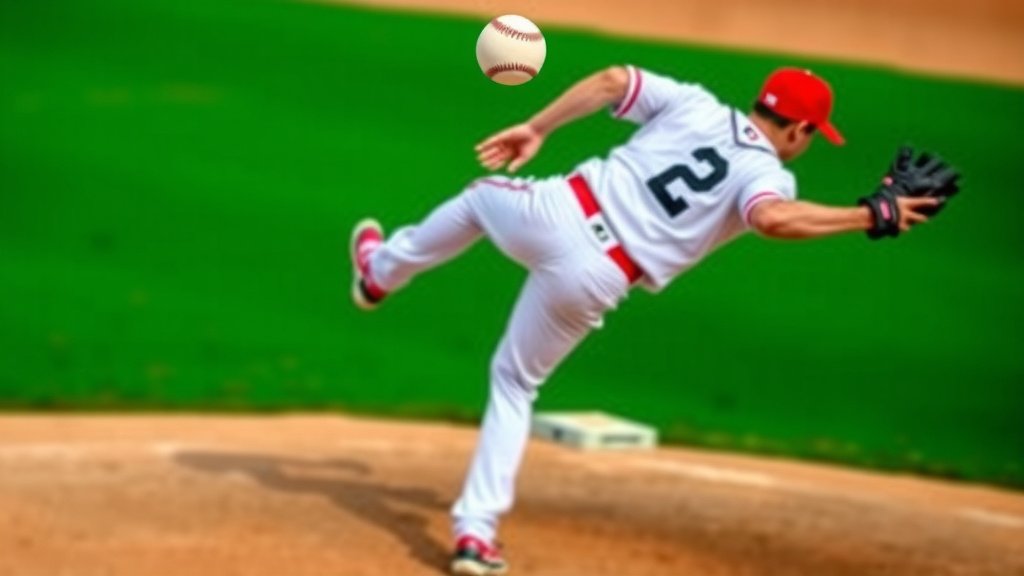
This is where all your hard work pays off. The release point and follow-through are critical for accuracy and preventing injury.
Releasing the Ball
The release point should happen naturally as your arm comes forward. You want to release the ball out in front of your body, not directly beside your head. Aim to release the ball when your arm is extended, but not locked out. This allows for maximum velocity and a clean release.
Many younger players tend to throw the ball too late, almost behind them. This can lead to the ball sailing high or wide. Focus on extending towards your target. Your fingers will naturally come over the top of the ball, imparting spin and direction.
The Importance of the Follow-Through
Don’t stop moving after you release the ball! The follow-through is just as important as the wind-up. After releasing the ball, let your arm continue its natural motion across your body. Your throwing hand should end up somewhere near your opposite hip or thigh.
This full follow-through helps slow your arm down gradually. It’s like applying the brakes. It prevents sudden stops that can strain your shoulder and elbow. Many sports medicine professionals highlight the follow-through as a key injury prevention technique (American Journal of Sports Medicine). A good follow-through also indicates that you’ve transferred your energy efficiently through the throw.
Practice Makes Perfect: Your Improvement Checklist
No one becomes a great thrower overnight. Consistent practice is the secret ingredient. Here’s a simple checklist to guide your practice sessions:
- Grip Check: Are you holding the ball correctly with your four-seam grip?
- Balance and Stance: Is your base solid and balanced before you start your motion?
- Hip and Torso Rotation: Are your hips leading the rotation, transferring energy upwards?
- Arm Path: Is your arm coming through smoothly, not stiff or jerky?
- Follow-Through: Are you completing your motion across your body?
- Target Focus: Are your eyes locked on the target throughout the throw?
From Backyard Fun to the Big Leagues
Whether you’re playing catch in the backyard or aiming for the diamond, these fundamentals apply. Start slow, focus on technique, and gradually increase your effort. You’ll be surprised at how quickly you can improve your throwing skills with dedicated practice.
Conclusion
You’ve learned the essential steps to throwing a baseball with more control and power. Remember, a good grip sets the stage for everything. Then, focus on using your whole body through a smooth kinetic chain, from your legs to your hips and finally your arm. Don’t forget the release and a full follow-through; these protect your arm and ensure accuracy. The key to improvement is consistent practice. Grab a ball and a friend, and start applying these techniques today. You’ll feel the difference with every throw!
Frequently Asked Questions
How can I improve my throwing accuracy?
Accuracy comes from a consistent release point and keeping your eyes on the target throughout the entire motion. Practice throwing to a specific spot, like a target on a wall or a catcher’s glove, and focus on repeating your mechanics with each throw. Small adjustments to your arm angle and follow-through can make a big difference.
What’s the biggest mistake beginners make when throwing?
A common mistake is relying too much on just the arm and not engaging the rest of the body. Many beginners also rush the throwing motion or stop their arm abruptly after release. Focusing on the kinetic chain, from your legs to hips to torso, and completing a full follow-through will help you generate more power and reduce strain.
How do I know if I’m gripping the ball correctly?
For a four-seam grip, you should feel the seams with your index and middle fingers, about an inch apart, and your thumb underneath the ball. The ball shouldn’t feel too tight or too loose in your hand. You should have a little space between your fingertips and the ball, allowing for a relaxed but firm hold.
Why is the follow-through so important?
The follow-through is vital for both injury prevention and maximizing your throwing efficiency. It allows your arm to slow down gradually after releasing the ball, reducing stress on your elbow and shoulder. A proper follow-through also ensures you’ve transferred your energy effectively toward your target.
How often should I practice throwing?
Consistency is key. Aim for short, focused practice sessions several times a week rather than one long session. Even 15-20 minutes of dedicated practice, focusing on your grip, mechanics, and target, will lead to noticeable improvement over time. Listen to your body and don’t overexert yourself.