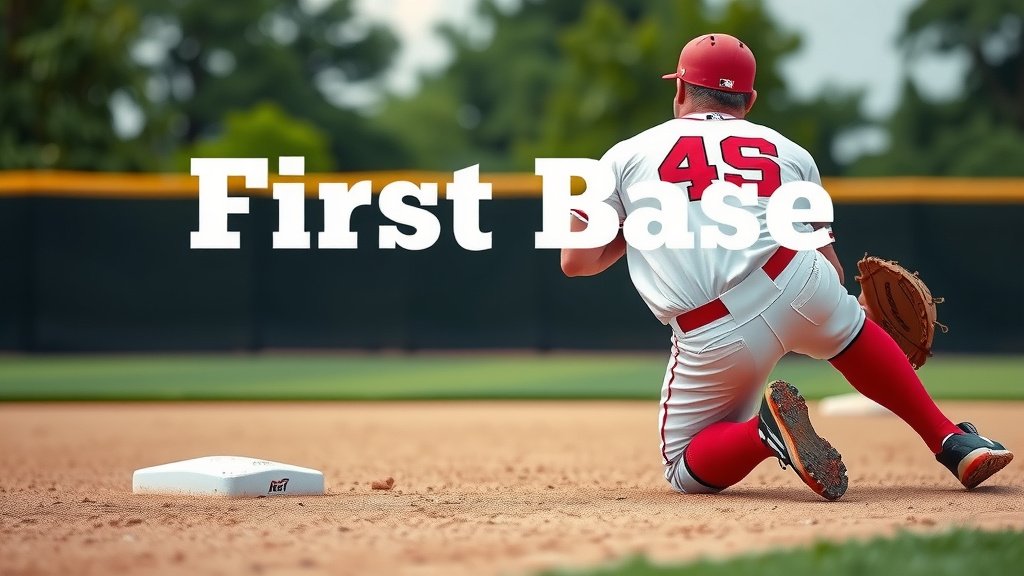
Mastering First Base: A Beginner’s Guide
Playing first base in baseball involves more than just catching the ball. You’ll need to develop good footwork, a strong throwing arm, and the ability to catch errant throws. Mastering these skills will make you a reliable presence on the diamond.
As the “first defender,” you’re the last line of defense for many plays. Your role is crucial for successful outs and preventing runners from advancing. Good first basemen are often described as having “soft hands” and excellent situational awareness.
- Catching throws from infielders.
- Stepping on the base for outs.
- Fielding ground balls near the bag.
- Communicating with your pitcher.
- Knowing when to cover home plate (rarely).
Let’s break down the key skills and strategies to help you become a solid first baseman.
Mastering First Base: Your Guide to a Solid Defense
Playing first base is a vital role on any baseball team. You’re not just standing near a bag; you’re a key player in getting outs. This position requires a unique blend of skills. You’ll need quick reflexes and good communication. Learning to play this position well can really boost your team’s success. Let’s get you ready for the diamond.
The Fundamentals of Fielding at First
Your primary job is to catch throws and record outs. This means staying focused on every play. Even when the ball isn’t hit directly to you, you need to be ready. Good first basemen make the game look easy. They make difficult catches look routine. It all comes down to practice and understanding the basics.
Getting in Position: The Ready Stance
Before any pitch, you need to be in the right spot. This is your ready stance. Your feet should be about shoulder-width apart. Keep your knees slightly bent. This allows you to move quickly in any direction. Your weight should be balanced. This helps you react to ground balls or thrown balls. You want to be athletic and agile.
Catching Throws: The Art of Receiving
Catching balls from your infielders is your main task. You’ll often be reaching for throws that aren’t perfect. The key is to present a good target. Keep your glove open and out in front of you. If the throw is low, get down into a good fielding position. If it’s high, reach up. Some experts say to extend your arms for high throws (MLB.com).
There are a few techniques for catching. For throws at chest height or lower, you want to cradle the ball. This means using your throwing hand to cover the ball as it enters your glove. This prevents the ball from popping out. For high throws, reach with your glove and try to secure it with your throwing hand.
The “Soft Hands” Technique
Having “soft hands” means you can absorb the impact of the ball. Think of it like a shock absorber. When the ball hits your glove, let your arm and hand give a little. Don’t be stiff. This technique helps keep the ball in your glove, especially on hard throws. Research has shown that athletes with better proprioception, or body awareness, often have softer hands (University of Michigan, Kinesiology Department).
Stepping on the Base: The Out-Making Move
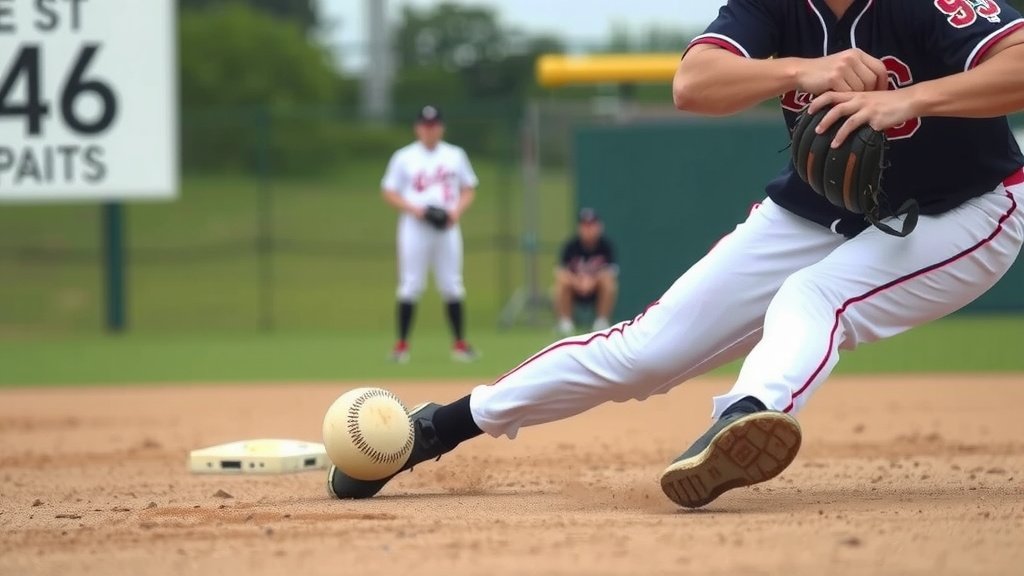
Once you catch the ball, you need to make the out. Most of the time, this means stepping on first base. You need to step on the base with your glove foot (the foot that is on the same side as your glove). This is the easiest way to secure the out, especially if the runner is fast.
You’ll often need to reach for the base with your foot while keeping the ball in your glove. This is called a “stretch.” The further you can reach while still maintaining balance and control, the better. Practice this stretch regularly. Your infielders will appreciate your reach!
Fielding Ground Balls Near the Bag
Sometimes, a ground ball will be hit to you. You are the first line of defense for balls hit in your general area. You need to be able to field these cleanly. Your ready stance is important here. You should be able to quickly move to your left or right.
Charging the Ball: When to Be Aggressive
If a ground ball is hit slowly towards you, you might need to charge the ball. This means moving forward to field it. Don’t let it get too close to the base. Being aggressive can turn a base hit into an out. You’ll need to bend your knees and get down low to the ground.
After fielding the ball, you’ll need to transfer it to your throwing hand. Then, make the throw to the pitcher covering the base or to another infielder if it’s a force out situation. Practice this quick transfer. It’s a skill that improves with repetition.
The Pick-Up: Scooping and Throwing
For ground balls hit slightly away from you, you’ll need to scoop them up. This is often called a “pick-up.” Get your glove down and slide it under the ball. Then, smoothly bring your throwing hand over the top to secure it. Aim for a clean transfer.
Communication and Game Awareness
First base isn’t just about fielding. It’s also about being a smart player. You are in a great position to see the whole field. This makes you a valuable communicator.
Talking to Your Pitcher
You should communicate with your pitcher before and during pitches. Let them know where runners are. Tell them if you’re ready for a pick-off attempt. A simple nod or a quick word can make a big difference. Many coaches stress that good communication prevents errors (National Baseball Institute).
Situational Awareness: Knowing What to Do
You need to know what’s happening on the field at all times. This includes knowing how many outs there are. Are there runners on base? Is it a force out or a tag out situation? For example, if there are two outs and a runner on first, you’ll want to step on the base yourself for the out. If there’s a runner on third, you might need to be ready to tag them out.
A common situation is a dropped third strike. If the catcher drops the ball and first base is unoccupied, or if there are two outs, you might need to cover first base yourself. Be aware of where the catcher is and where the ball is. This kind of situational awareness is learned over time.
Covering Bases and Pick-Offs
Your role expands beyond just your base. You are often involved in plays at other bases.
The Pick-Off Play
As a first baseman, you can be involved in pick-off plays. When the pitcher throws over to first, you need to be ready to receive the throw. You also need to know where the runner is. If the pitcher throws you the ball, be prepared to tag the runner out if they are off the base.
Covering Home Plate (Rarely!)
In very specific situations, like a wild pitch or passed ball with a runner on third and two outs, you might be called on to cover home plate. This is uncommon. Your primary focus is almost always on first base. Your coach will usually signal if you need to break for home.
Checklist for a Great First Baseman
- Practice your ready stance daily.
- Work on catching throws with your glove foot.
- Develop your “soft hands” for better control.
- Master the quick transfer from glove to hand.
- Always know the number of outs.
- Communicate clearly with your pitcher and infielders.
Conclusion
You’ve learned the fundamentals of playing first base, from your ready stance to fielding ground balls and catching throws. Remember, mastering this position is about consistent practice and sharp game awareness. Focus on your footwork, developing soft hands, and clear communication with your teammates. The more you practice these skills, the more confidence you’ll build. Now, get out there and apply what you’ve learned on the diamond!
Frequently Asked Questions
What’s the most important skill for a first baseman?
While many skills are important, catching throws is arguably the most frequent and critical task for a first baseman. You’ll be receiving many throws from your infielders to record outs. Practicing your ability to snag errant throws and keep your foot on the bag is key.
How do I improve my “soft hands”?
Developing “soft hands” is about learning to absorb the impact of the ball. When a ball comes into your glove, practice letting your arm and hand move slightly backward with the ball. Think of it like a cushion. This technique, often improved through repetition, helps prevent the ball from bouncing out.
When should I charge a ground ball at first base?
You should charge a ground ball if it’s hit slowly towards you and you have enough time to field it cleanly before it reaches the base. Being aggressive can turn potential base hits into outs. Just make sure you’re still balanced and ready to make a throw if needed.
How do I practice stepping on the base correctly?
When catching a throw, practice reaching the base with your glove foot (the foot on the same side as your glove). Aim to extend your stretch as far as you comfortably can while maintaining balance. Try this with different throwing angles to get a feel for it.
What does situational awareness mean for a first baseman?
Situational awareness means understanding the game context: how many outs there are, where runners are, and whether it’s a force out or tag out situation. For example, knowing when to step on the bag versus when to tag a runner. This awareness helps you make the right play.