How to Take a Proper Batting Stance: Step-by-Step Guide
Taking a proper batting stance starts with your feet shoulder-width apart, knees slightly bent, and weight balanced evenly on the balls of your feet. From there, angle your front shoulder toward the pitcher and hold the bat loose and ready behind your head. Get these basics right, and everything else in your swing gets easier.
Why does this matter so much? Because your stance is the foundation of your entire swing. We researched what hitting coaches teach at every level, and we found that most hitting problems trace back to a shaky setup. A good stance also helps you see the ball better, react faster, and stay balanced through contact.
- Start with your feet shoulder-width apart for a stable base.
- Bend your knees and keep your weight on the balls of your feet.
- Hold the bat comfortably, not choked tight, at shoulder height.
- Keep your eyes level and your head still.
- Stay relaxed — tension kills bat speed. Choosing the right bat weight for your swing also matters, and our bat weight guide walks you through it.
Sounds simple enough, right? It is, but the small details make a big difference. Below, we walk through each step of building a solid batting stance, so you can step into the box with confidence.
Setting Up Your Batting Stance Step by Step
Your stance comes together in four simple steps: feet, knees, shoulders, and hands. We found that most hitters who struggle at the plate are rushing this part. Slow down and build your base first.
Step 1: Find Your Feet
Start by stepping into the batter’s box with your feet about shoulder-width apart. Too wide, and you can’t rotate your hips. Too narrow, and you’ll wobble like a giraffe on roller skates.
Your front foot should line up roughly with the front of the plate. Squaring up too far ahead or behind changes where the ball crosses your eyes. Many coaches teach hitters to line their toes up with the plate’s mid-point as a starting spot.
Open, Square, or Closed?
You have three basic foot alignments to choose from:
- Square stance: Both toes point at the plate. The most common starting point for beginners.
- Open stance: Front foot pulled back toward the catcher. Helps hitters who have trouble seeing the ball.
- Closed stance: Front foot steps slightly toward the pitcher. Can help you pull the ball, but may block your view.
We found that a square stance is the easiest to learn from. You can always adjust later once you know your own swing.
Step 2: Bend Your Knees and Load Your Legs
Now soften your knees. You want a slight bend, not a deep squat. Think of a basketball player on defense — ready to move in any direction.
Keep your weight on the balls of your feet, not your heels. This keeps you athletic and quick. Balance is the name of the game here, and research on athletic performance shows that stable bases improve reaction time (NIH).
Step 3: Angle Your Shoulders and Head
Turn your front shoulder slightly toward the pitcher. This gives you two-eyed vision of the ball, which is huge. Hitting with one eye is like driving with a hand over half your windshield.
Keep your head still and your eyes level. Tilted or bobbing heads make judging pitches much harder. Many hitting instructors say a quiet head is the single biggest improvement young hitters can make.
Step 4: Position Your Hands and Bat
Bring the bat back behind your head, at about shoulder height. Your hands should rest a few inches from your body — close enough to stay quick, far enough to keep the barrel free.
Grip the bat with your fingers, not your palms. And relax that grip! Squeezing the bat like a juice box only tenses your forearms and slows your swing.
Common Stance Mistakes to Avoid
Even good hitters pick up bad habits. Here are the problems we found most often — and how to fix each one.
Standing Too Tall or Too Rigid
Straight legs and stiff shoulders kill your ability to react. Loosen up and get athletic. If your coach can push you over with one finger, you’re too stiff.
Shifting Weight to Your Heels
When your weight rocks back on your heels, you lose balance and power. Keep that weight forward and centered. Try wiggling your toes in the box — if you can’t, you’re leaning back.
Gripping the Bat Too Tight
Tension travels up your arms and into your shoulders. A loose grip lets your wrists work freely. Many pros describe the ideal grip as firm but relaxed, like holding a small bird.
Choosing the Right Stance Width for Your Body
There’s no single perfect stance for everyone. Your height, strength, and swing style all matter. The table below gives you a simple starting guide.
| Body Type | Recommended Stance Width | Why It Works |
|---|---|---|
| Younger or smaller hitters | Slightly narrower than shoulders | Easier to stride and rotate |
| Average adult hitters | About shoulder-width | Balance and quickness combined |
| Bigger, stronger hitters | Slightly wider than shoulders | More stability for power swings |
Whatever width you pick, your weight should stay centered. Many hitting coaches suggest starting shoulder-width and adjusting from there after a few rounds of batting practice.
Staying Relaxed and Confident in the Box
Your stance isn’t just physical — it’s mental too. Nervous hitters tense up, and tense muscles are slow muscles. Cleveland Clinic materials on sports stress note that controlled breathing helps athletes stay calm under pressure.
Try this: take a slow breath as you step in, then exhale as you settle into your stance. Shake out your hands once. Wiggle your fingers on the bat. These tiny rituals keep your body loose and ready.
Building a Pre-Pitch Routine
The best hitters do the same things every pitch. A routine keeps your mind busy and your body consistent. Yours might look like this:
- Step into the box with your back foot first.
- Tap the plate once to set your feet.
- Take one deep breath and exhale slowly.
- Waggle the bat once or twice to stay loose.
- Fix your eyes on the pitcher’s release point.
Repeat it every time. Muscle memory loves routine, and so does confidence.
Drills to Lock In Your Stance
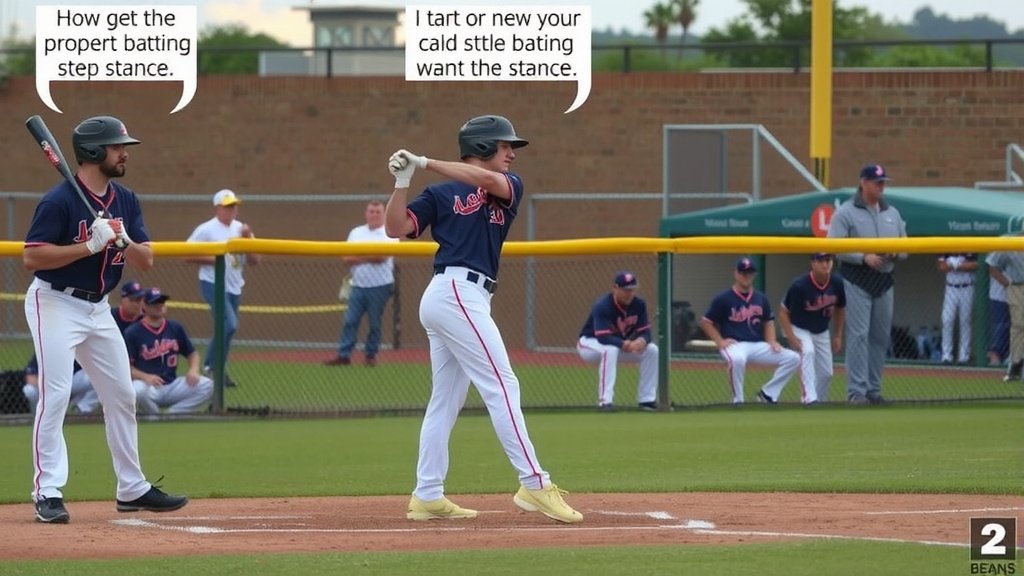
Practice makes permanent, so practice the right things. These simple drills need little more than a mirror and a bat.
The Mirror Check
Stand in front of a mirror and get into your stance. Check your feet, knees, shoulders, and hands against the steps above. We found that hitters who film or mirror their stance fix problems in days instead of months.
The Balance Test
Get into your stance and have someone gently push your shoulders. You shouldn’t tip over. If you do, widen your feet or bend your knees more. Balance under pressure is what holds up in a real at-bat.
The Soft Toss Rhythm Drill
Have a partner toss balls softly while you hold your stance and take easy swings. Focus on staying loose and balanced, not hitting bombs. Speed comes later. Rhythm comes first.
Your Quick Stance Checklist
Before every at-bat, run through this short list. It takes five seconds and saves you a lot of frustration.
- Feet shoulder-width apart, toes lined up with the plate.
- Knees bent, weight on the balls of your feet.
- Front shoulder angled toward the pitcher.
- Hands at shoulder height, grip relaxed.
- Head still, eyes level on the pitcher.
- One deep breath before the pitch.
Nail these six points every time you step in, and your stance becomes automatic. That’s when the fun stuff — line drives, hard contact, confident swings — starts to happen.
Conclusion
A great swing starts long before the pitch arrives. It starts with a wide-enough base, soft knees, a quiet head, and a relaxed grip. We found that hitters who master these small details fix their biggest swing problems without changing anything else. Your stance doesn’t need to look like a pro’s — it needs to be balanced, comfortable, and repeatable. That’s it.
So here’s your next step: grab a bat tonight and do the mirror check. Run through your checklist a few times until your setup feels automatic. Then take it to batting practice and let your stance do the heavy lifting. From there, our guide to turning that contact into hits covers what a single is and how to get one.
Frequently Asked Questions
Should I stand closer or farther from the plate?
Your bat should just reach the outer corner of the plate when you extend your arms. If you’re standing too far away, outside pitches become nearly impossible to hit. Stand too close, and inside pitches jam you. Have a coach or teammate check your distance during practice.
How do I know if my batting stance is too wide?
If you can’t take an easy stride toward the pitcher, or you feel stuck when you start your swing, your feet are likely too far apart. Try this test: take a practice swing in your stance. If your hips can’t rotate freely, narrow your feet an inch or two and try again.
Can I copy the stance of a professional player I like?
You can borrow ideas, but copying a pro’s exact stance usually backfires. Their setup matches their body type, strength, and years of adjustments. We suggest borrowing principles instead — like balance and relaxed hands — while building a stance that fits your own body.
Where should I look while waiting for the pitch?
Lock your eyes on the pitcher’s release point, near where their front shoulder and head meet. Some hitters focus on the pitcher’s cap brim, then track the ball from there. What matters most is keeping your head still, because a moving head moves your eyes too.
How long does it take to build a consistent batting stance?
Most hitters we looked into feel comfortable with a new setup within a few weeks of steady reps. The key is short, frequent practice — even five minutes in front of a mirror helps. Your stance becomes truly automatic once you stop thinking about it mid-swing.