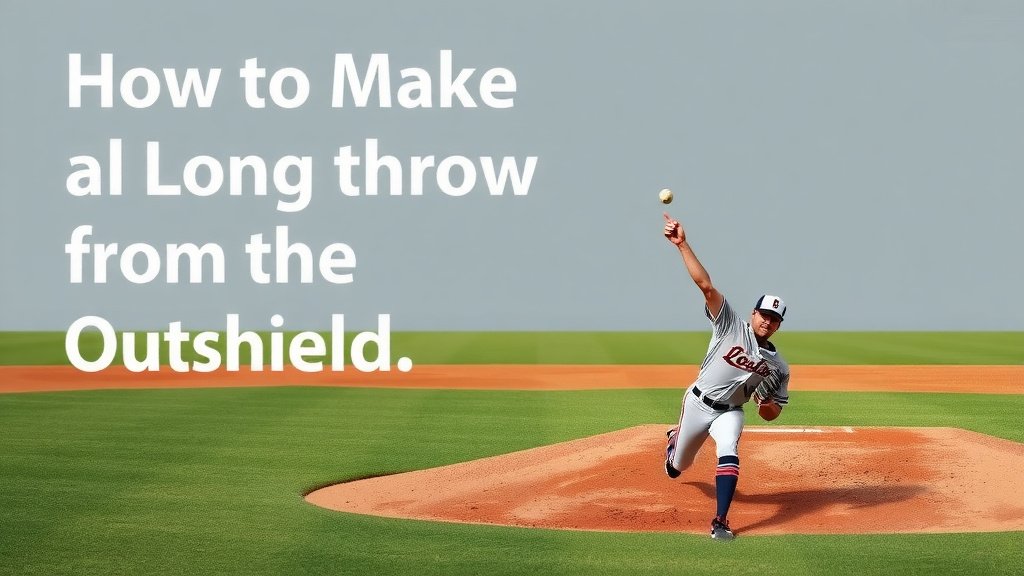
How to Make a Long Throw from the Outfield: 7 Key Steps
The easiest way to make a long throw from the outfield is to use a crow hop, throw over the top with a full arm circle, and release the ball at your max extension point. Your legs generate most of the power, so a strong push off your back foot matters more than a strong arm. We found that players who master this footwork add real distance to their throws without extra strain. Before dialing in your throw, our guide to outfield fundamentals covers positioning and catching the ball cleanly.
Why does this matter? Because a strong arm can turn a double into a single and keep runners from taking that extra base. Many experts say outfielders with accurate, powerful throws change games just as much as big hitters do. The good news is that this skill is learnable, and it starts with simple drills you can practice at any level.
- Use a crow hop to build momentum before you throw.
- Step toward your target and release the ball out front.
- Power comes from your legs and core, not just your arm.
- Practice long toss a few times a week to build arm strength.
- Aim slightly downhill at your cutoff man or the base. For one common target, our guide to throwing to second base breaks down the footwork and aim point.
Ready to gun down runners from deep in the grass? Below, we break down everything you need to know about making a long throw from the outfield, step by step, so you can start improving today.
Throwing Far From the Outfield: A Step-by-Step Breakdown
A long throw starts long before your arm moves. It begins with your feet. We found that players who rush their footwork lose half their power before the ball ever leaves their hand. So slow down for one second — then explode.
Think of your body like a whip. Your legs crack first, your hips follow, and your arm is just the last flick at the end. Many experts say this kinetic chain is what separates strong throwers from average ones.
Get Square to Your Target
Before anything else, line up your shoulders with where you want the ball to go. If you catch a ball off your left shoulder and throw blind, you are guessing. Guessing kills accuracy.
Take a quick shuffle or drop step to square up. This tiny move takes less than a second, and it makes your throw repeatable. Do it every single time, even in practice, until it becomes automatic.
The Crow Hop, Explained
The crow hop is a small hop you take toward your target right after you catch the ball. It replaces your momentum with fresh forward drive. Without it, you are throwing while standing still — like trying to jump from a parked car instead of a moving one.
Here is the rhythm: catch, hop off your back foot, plant your front foot toward the target, then throw. Some players drag their back foot instead of hopping. Both work. The key is that your body moves toward the base, not sideways.
How to Practice the Crow Hop
Start without a ball. Catch position, hop, plant, freeze. Check that your front foot points at your target. Then add a ball and throw at half speed. We found that players who drill this footwork for ten minutes a day get comfortable within two weeks.
Do not sprint through it. Slow reps build muscle memory faster than sloppy fast ones. Record yourself on a phone if you can. You will spot flaws you never noticed.
Arm Action and Release Point
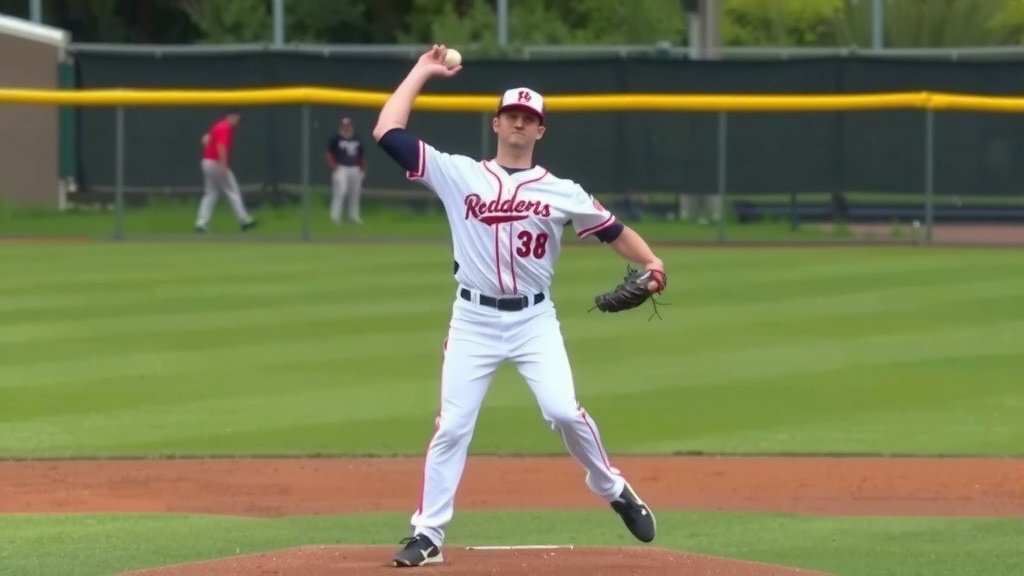
Throw over the top with a full arm circle. A short, choppy arm path steals distance. Your arm should make a big, smooth loop — think of a windmill, not a windshield wiper.
Release the ball out in front of your body at full extension. If you let go too late, near your ear, the ball sails high and dies fast. Many pitching coaches teach that out-front release gives both velocity and accuracy, and outfielders benefit the same way.
Follow through fully. Your hand should finish near your opposite hip. If you cut off your follow-through, you bleed power and stress your elbow.
Building Arm Strength Without Wrecking Your Arm
Arm strength is built, not born. And it is built slowly. Research on youth and high school throwers shows that gradual workload increases protect the elbow and shoulder far better than sudden spikes in throwing volume (NIH).
What does that mean for you? Throw often, but throw smart. Never go from zero to max effort in one day.
Long Toss Basics
Long toss is your best friend. Start at a comfortable distance where your throws stay on a line. Each day, back up a few steps. Keep the same smooth mechanics — no lobbing the ball like a parachute drop.
When you hit your max distance, hold it there for several throws. Then move back in and finish with strong, flat throws. Many coaches say that pulling down to a line-drive trajectory at the end trains your arm for game situations.
A Warm-Up That Protects Your Arm
Cold arms get hurt. Warm arms get strong. Spend at least ten minutes preparing before any hard throwing.
- Jog or do jumping jacks to raise your body temperature.
- Stretch your shoulders, wrists, and forearms gently.
- Throw easy at short distance for five minutes.
- Build up effort gradually — never start at 100%.
- Use a resistance band set for shoulder activation.
The Mayo Clinic notes that a proper warm-up raises blood flow to muscles and lowers injury risk. Five extra minutes of prep beats five weeks on the bench, right?
Where to Aim Your Throw
Distance means nothing if the ball ends up in the dugout. Aim slightly downhill, at a target that helps your team. Here is the simple decision tree we found works best for most players.
| Situation | Your Target | Throw Style |
|---|---|---|
| Runner trying to stretch a single | Cutoff man | Low, one-bounce max |
| Runner tagging from third | Catcher, chest high | Long hop or on the fly |
| Double down the line | Relay man near second | Firm, straight line |
| Bases loaded, deep fly ball | Cutoff, then home | Do-or-die, no bounce |
Hitting Your Cutoff Man
The cutoff man is not optional. A ball thrown over the cutoff’s head often does less damage than one thrown through him, because nobody is there to cut off a bad bounce. Many MLB coaches teach that accurate relays stop more runs than heroic rainbow throws.
Know your arm. If home plate is out of range, hit your cutoff in stride and trust the relay. That is smart baseball, not weak baseball.
Common Mistakes That Kill Distance
Even good players sabotage themselves. Watch for these throw-killers in your own game.
- Throwing flat-footed with no forward momentum.
- Opening your shoulders too early and pulling the ball.
- Short-arming the ball with a small arm circle.
- Releasing late, which makes the ball sail high.
- Stiff legs — remember, power starts from the ground up.
One more sneaky mistake: panicking. You have more time than you think. Field the ball clean first. A clean catch plus a crow hop beats a rushed throw every time.
Your Daily Outfield Throwing Checklist
Print this out or screenshot it. Five minutes of checking these boxes adds up fast.
- Square your shoulders to the target before throwing.
- Crow hop every time — no exceptions.
- Full arm circle, over the top, release out front.
- Aim at the cutoff man or the base, slightly downhill.
- Finish with a complete follow-through across your body.
- Warm up before every hard-throwing session.
How Long Until You See Results?
Honest answer: expect small gains in two weeks and real, noticeable distance in about six to eight weeks of consistent work. Arm strength builds like a suntan — slowly, then all at once.
We found that players who practice long toss three times a week, with good crow-hop mechanics, add distance steadily without soreness. Push past soreness and you risk a setback that costs you a whole season. Rest is part of training, not the opposite of it.
So grab a teammate, find some open grass, and start hopping. Your future assisted outs are waiting.
Conclusion
Making a long throw from the outfield comes down to one thing: your whole body working together. You square up, crow hop for momentum, throw over the top with a full arm circle, and release the ball out front. Your legs do the heavy lifting, your aim keeps the throw useful, and steady long toss builds the arm strength to back it all up.
None of this happens overnight, and that is fine. Small, consistent reps beat one hard session every time. So here is your next step: grab a partner this week, run ten minutes of crow-hop drills, and start your long toss routine. Check back on your distance in a month — you will be surprised how far that ball travels.
Frequently Asked Questions
Do I need to be big or strong to throw far from the outfield?
Nope. Research and coaching experience both point to mechanics over muscle. A smaller player with a clean crow hop and out-front release will out-throw a bigger player throwing flat-footed almost every time.
Should I throw on the fly or let the ball take a bounce?
Whichever gets the ball there faster and under control. If your throw would arrive on one bounce well before a two-hop fly ball, take the bounce. Just aim that bounce low and in front of your cutoff man or the catcher.
How far should I be able to throw as an outfielder?
It depends on your age and field size, but a good benchmark is throwing flat across the infield from your position without a rainbow arc. Instead of chasing a number, measure your progress week to week and let distance climb naturally.
Is it bad to throw a do-or-die throw every play?
Yes, and it hurts your team more than it helps. Max-effort throws on every ball lead to wild throws and sore arms. Save full power for the plays that truly need it, and use your cutoff man the rest of the time.
Can I practice long throws without a partner?
You can. Throw against a wall or backstop from increasing distances, or use a bucket of balls and a target. Just keep the same warm-up routine and mechanics you would use with a partner.