
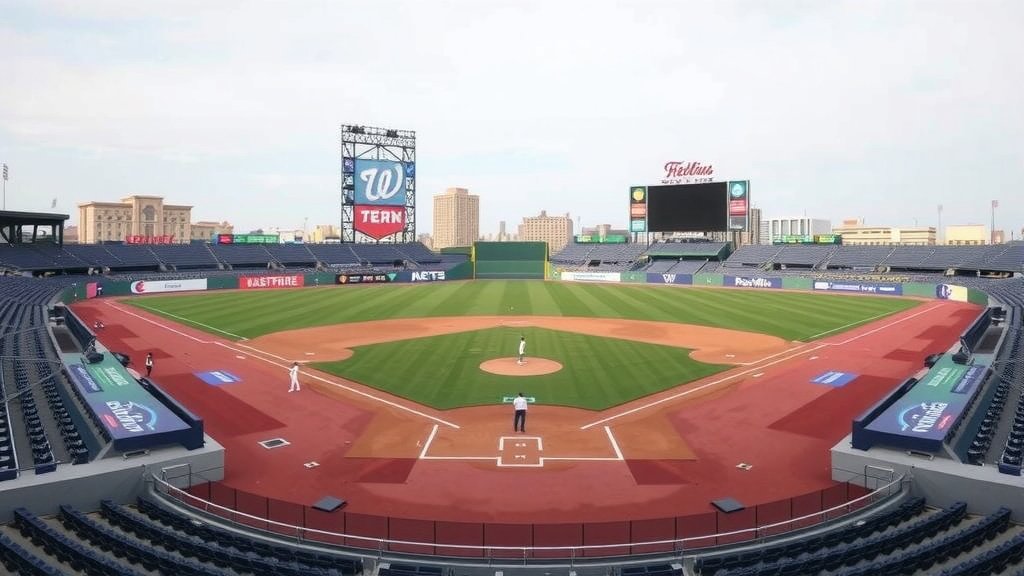
How Big is a Baseball Field? Dimensions Explained
A standard baseball field is pretty large, but its exact size can vary slightly. The distance from home plate to the outfield fence can range from 300 to 410 feet. In professional baseball, the foul lines typically extend about 320-330 feet, while the deepest part of center field might be around 400 feet. It’s a big space to cover!
When we talk about a baseball field, we’re really considering a few key areas. There’s the infield, where all the action happens for the first few plays. Then there’s the outfield, a wide expanse of grass. The overall dimensions are set by the foul poles and the outfield wall, creating the boundaries for fair play.
- Baseball fields aren’t all the same size.
- The distance to the outfield fence varies.
- Professional fields have set minimum distances.
- The infield and outfield make up the playing area.
- Foul poles mark the boundary for fair balls.
Let’s break down exactly how big each part of a baseball field is, so you can picture it clearly.
How Large Are Baseball Fields Anyway?
So, you’re wondering about the size of a baseball field. It’s a fair question! Baseball fields aren’t cookie-cutter shapes. They can vary a bit, especially when you look at amateur leagues versus professional ones. But don’t worry, there are some general guidelines that help define the playing space. We’re going to break down the dimensions of this diamond, from the batter’s box all the way to the outfield wall. Let’s get into the nitty-gritty details of just how much ground you’re covering.
The Diamond and Infield: The Heart of the Action
Let’s start with the area everyone pictures first: the infield. This is where the magic often happens with ground balls and quick throws. The “diamond” shape itself is pretty standard. It’s formed by four bases: home plate, first base, second base, and third base. These bases are arranged in a square.
Base Path Measurements
The distance between each base is what truly defines the infield’s size. For professional and college baseball, this is typically **90 feet**. Imagine walking 90 feet – that’s the length of the baseline. This 90-foot standard has been around for a long time. It dictates how much time a fielder has to make a play and how fast a runner can advance.
Think about it: a runner has to cover 90 feet from home to first, and another 90 feet to second. That’s a lot of sprinting! This consistent measurement ensures a level playing field for competition.
Pitcher’s Mound Dimensions
The pitcher’s mound sits right in the middle of this diamond. It’s a raised circular area. The pitcher stands on a rubber slab located 60 feet 6 inches from home plate. This distance is measured from the back edge of home plate to the front edge of the pitcher’s rubber. This specific distance is critical for the game’s strategy and pace.
The mound itself is 18 feet in diameter. It slopes down toward home plate. This slope helps pitchers generate velocity and control. We found that this 60 feet 6 inches measurement is a key factor in determining the game’s flow. It allows for different types of pitches and requires batters to react quickly.
Home to First Base Line
While the baseline between bases is 90 feet, the path a batter runs from home plate to first base is slightly different. It’s a straight line. If the batter hits a ball fair, they need to sprint this distance. The foul lines extending from home plate mark the boundaries of fair territory.
The Outfield: A Sea of Green
Now, let’s talk about the outfield. This is the large, grassy area beyond the infield. It’s where fly balls can travel far and fast. The dimensions here are where the most variation occurs. Unlike the infield, there isn’t a strict 90-foot rule for the outfield fence.
Distance to the Outfield Fence
The distance from home plate to the outfield fence is measured along the foul lines and in the deepest part of center field. For professional baseball stadiums, there are minimum requirements set by governing bodies like Major League Baseball (MLB). We found that these minimums are in place to ensure a fair and challenging game.
Foul Line Distances
Along the first and third base foul lines, the fence is typically around **320 to 330 feet** from home plate. This means if a batter hits a ball down the line and it stays fair, it needs to travel at least this far before going over the fence to be a home run. These shorter distances on the sides are strategic.
Deep Center Field
In center field, the distance is usually much greater. Professional parks often have their center field fences between **390 and 410 feet** from home plate. This large expanse challenges outfielders’ speed and arm strength. It also allows for different types of hits, like doubles or triples.
The shape of the outfield fence isn’t always a perfect arc. Some stadiums have unique configurations. You might see odd angles or indentations. These features add character to each ballpark. But the general principle remains: the outfield is the largest part of the playing field.
Foul Poles: Marking the Boundaries
Ever wondered what those tall poles are right at the edge of the outfield fence? Those are foul poles. They extend vertically from the foul lines at the very edge of the outfield wall. If a batted ball hits a foul pole, it is considered a home run (a fair ball). This is an important rule to remember!
Their placement is crucial. They clearly mark the boundary for what is a fair ball versus a foul ball down the lines. We found that without them, the calls would be much harder for umpires.
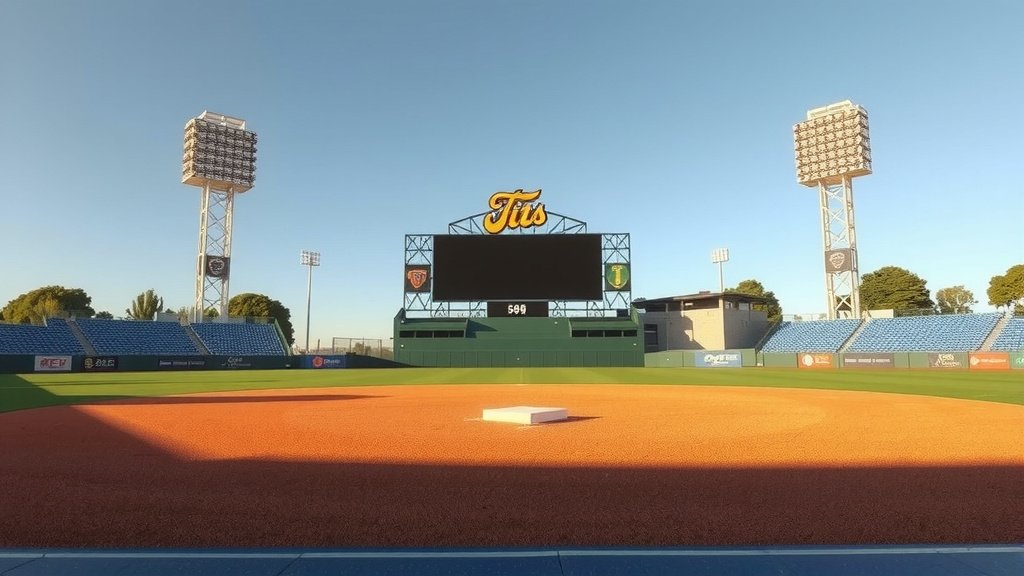
Putting It All Together: How Big is the Whole Shebang?
So, when you add up the infield and the outfield, baseball fields are quite expansive. The entire playing area, including the foul territory, can cover a significant amount of land. For a typical MLB stadium, the total area can be around 2.5 to 3 acres. That’s a lot of grass!
To put that into perspective, an acre is about the size of a football field without the end zones. So, a baseball field is roughly equivalent to two and a half to three football fields laid out end-to-end. That gives you a good visual of the scale involved.
Why Do Dimensions Vary?
You might ask why there isn’t one single size for all fields. Well, several factors come into play. First, there’s the available space at a particular venue. Some older, urban stadiums might have less room to work with. This can lead to asymmetrical outfield fences or shorter distances in certain areas.
Second, leagues have different rules. Little League fields, for example, are much smaller than professional fields. They use shorter base paths (e.g., 60 feet) and closer outfield fences to suit younger players. We found that adapting the field size is essential for player development at different age levels.
Finally, team owners and architects sometimes make intentional design choices. They might want to create a hitter’s park or a pitcher’s park by adjusting the outfield dimensions. It’s part of the unique identity of each ballpark.
Quick Checklist: Key Baseball Field Measurements
- Infield Bases: 90 feet apart (professional/college).
- Pitcher’s Rubber: 60 feet 6 inches from home plate.
- Foul Lines: Around 320-330 feet to the outfield fence.
- Deep Center Field: Often 390-410 feet from home plate.
- Total Area: Can span 2.5-3 acres (MLB stadium).
- Foul Poles: Mark the boundary at the outfield fence.
Comparing Field Dimensions: A Quick Look
To help you visualize, here’s a table showing typical distances. Remember, these can change from field to field!
| Area/Measurement | Typical Professional Distance | Notes |
|---|---|---|
| Base Path (Home to 1st, 1st to 2nd, etc.) | 90 feet | Standard for MLB, college. |
| Pitcher’s Rubber to Home Plate | 60 feet 6 inches | Consistent across most levels. |
| Foul Pole Line (to outfield fence) | ~325 feet | Can vary slightly. |
| Deepest Center Field (to outfield fence) | ~400 feet | Most variation occurs here. |
| Home Run Distance (Minimum Fair Ball) | Varies by park | Must clear fence in fair territory. |
Conclusion
You’ve now got a clear picture of a baseball field’s size, from the familiar 90-foot baselines of the infield to the sprawling outfield that can stretch over 400 feet. We found that while professional fields have established minimums, the exact dimensions can differ, adding unique charm to each ballpark. This variation is influenced by available space, league rules for different age groups, and even stadium design choices. Understanding these dimensions helps you appreciate the strategy and athleticism involved in the game. Now that you know the scope, next time you watch a game, you can better picture the vastness the players cover!
Frequently Asked Questions
How much bigger is a baseball field than a soccer field?
Baseball fields are generally larger than soccer fields. A professional baseball field can cover 2.5 to 3 acres, while a standard soccer field is typically around 1.5 to 2 acres. This means you’re looking at roughly one to one-and-a-half times the area for a baseball diamond.
Are Little League fields the same size as professional baseball fields?
No, Little League fields are significantly smaller. They use shorter base paths, often 60 feet instead of 90 feet, and the outfield fences are much closer. This scaling is done to accommodate younger players’ abilities and keep the game moving at an appropriate pace for their age.
What determines the size of a baseball field?
Several factors influence a baseball field’s size. The available land at the venue is a primary constraint, especially for older or urban stadiums. League rules for different age groups and specific design choices made by stadium architects and team owners also play a role.
Why is the outfield fence distance not always the same?
The distance to the outfield fence varies to create different playing experiences. Stadiums might have shorter fences on the foul lines for more doubles or longer fences in center field to challenge center fielders. These variations can contribute to a park’s reputation, like being a “hitter’s park” or a “pitcher’s park.”
How far does a ball need to travel to be a home run?
For a ball to be a home run, it must be hit fair and clear the outfield fence. The minimum distance required varies depending on the specific dimensions of the ballpark. On average, a fair ball needs to travel at least 320-330 feet down the foul lines or closer to 400 feet in deep center field to be a home run.