How to Make a Curveball Break More: 7 Grip and Release Tips
The best way to make a curveball break more is to throw it with proper finger pressure, snap your wrist downward at release, and keep your arm speed consistent with your fastball. Spin rate and release point matter more than raw arm strength. Get those right, and the ball will drop and sweep harder than ever.
Here’s the thing most pitchers miss: a bigger break isn’t about muscling up. It’s about grip, wrist action, and where the ball leaves your hand. We researched what pitching coaches and former pros actually teach, and the same few fundamentals come up again and again.
- Grip the ball with your middle finger along the seam for max spin
- Snap your wrist down at release, don’t “carry” the ball
- Throw with fastball arm speed to hide the pitch
- Adjust your release point to change vertical vs. horizontal break
- Practice with tape lines or spin-tracking tools to measure progress
Let’s walk through each of these step by step, so you can start making hitters look silly by your next outing.
Getting More Break on Your Curveball
If you want a bigger, sharper curveball, focus on three things: grip, wrist snap, and arm speed. Get those right, and the ball will dive instead of float. We found that most coaching advice boils down to small mechanical fixes, not throwing harder.
Think of it like spinning a basketball. You don’t need big muscles to make it spin fast. You need clean contact and a good flick. Pitching works the same way.
Nailing the Grip First
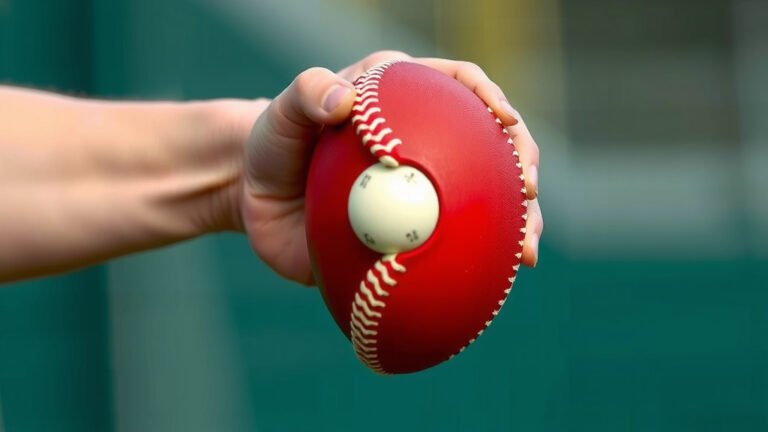
Your grip is the starting point for everything. Hold the ball with your middle finger along (or just inside) the long seam, and your thumb underneath for support. Many coaches teach this as the standard curveball grip because it gives your middle finger the best grip on spin.
Don’t choke the ball to death, either. A death grip kills wrist action. Keep your fingers firm but relaxed, like you’re holding a bird. Too tight, and the ball slips out flat. Too loose, and it squirts out of your hand.
Thumb and Wrist Position Matter
Here’s a detail that gets skipped a lot: your thumb. Press it into the bottom seam lightly. It keeps the ball stable through your delivery and lets your wrist hinge freely at release.
Some pitchers also slide their grip slightly toward or away from the seam to change the tilt of the break. We found that experimenting during flat-ground work beats changing things mid-game. Find what works in practice, then trust it.
The Wrist Snap: Where Break Happens
The break comes from your wrist and fingers at release, not from your arm. Snap your wrist down like you’re pulling a window shade, and let your middle finger rip down the outside of the ball last. That final finger contact is what creates tight, backward spin.
A common mistake is “carrying” the ball, keeping your hand behind it too long like a fastball. When you do that, the pitch comes out loopy and slow, and hitters crush it. The fix? Get your hand on top of the ball earlier in your delivery.
Drills That Build a Better Snap
You don’t need a full mound to fix your snap. These short drills, recommended by many pitching coaches, build muscle memory fast:
- Wrist snaps from a knee: Kneel 20 feet from a partner and flip the ball with only wrist and fingers.
- Seam awareness tosses: Flip the ball and watch the seams spin. If you see red “bars” rotating cleanly, your spin is tight.
- Towel drill: Snap a towel toward a target to feel the downward whip without throwing hard.
- Slow-motion reps: Throw at 50% speed and exaggerate the snap until it feels natural.
Why Fastball Arm Speed Matters So Much
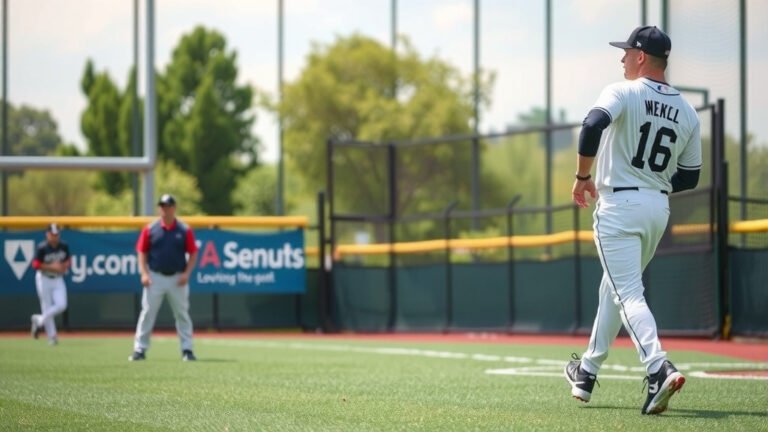
Sneaky curveballs break more because hitters can’t see them coming. That means throwing the curve with the same arm speed as your fastball. If you slow your arm down, every hitter in the dugout knows what’s coming. Curious what fastball arm speed should feel like next to? Our breakdown of major league fastball velocity has the numbers.
Many pros describe it this way: “throw it like a fastball, let the grip do the work.” Hiding the pitch and getting late, hard break are two wins from one fix.
Staying Confident With Full Arm Speed
Terrified of hanging a curveball? That fear makes you slow down, which makes it worse. Start by throwing curves at 70% effort off a mound in bullpens. Build up comfort before you ramp it up.
Also, protect your arm. Warm up properly and never push through elbow pain. Health guidance from sources like the Mayo Clinic and the American Sports Medicine Institute stresses smart throwing workloads, especially for young pitchers. A shiny curveball isn’t worth a season on the shelf.
Release Point: Dialing Up Vertical vs. Horizontal Break
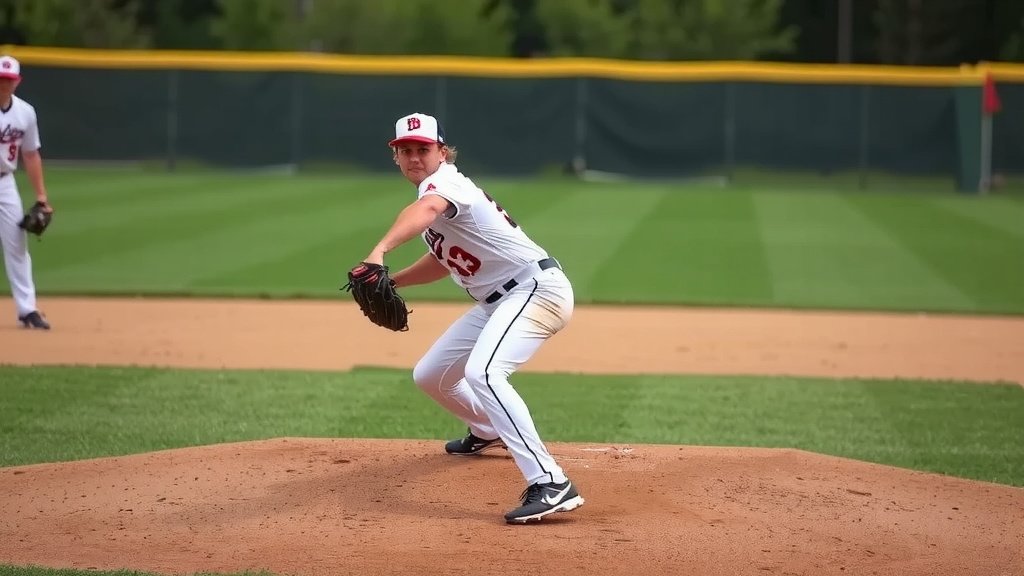
Where the ball leaves your hand decides the shape of your break. Release it with your hand more on top of the ball, and you get a steeper, top-to-bottom drop. Let your hand stay slightly to the side, and you get more sweep, like a slurve.
Neither shape is “better.” It depends on your arm slot and what fools hitters. A high three-quarter slot tends to favor sharper downward break, while a lower slot naturally adds sweep.
| Release Point | Typical Break | Best For |
|---|---|---|
| Hand on top of ball | Sharp vertical drop | Getting hitters to chase down |
| Hand slightly outside | More horizontal sweep | Back-door and back-foot misses |
| Hand behind ball too long | Loopy, slow break | Nothing. Fix this one. |
Common Curveball Mistakes That Kill Break
Most flat curveballs trace back to the same few problems. We found these show up again and again in coaching material:
- Gripping across too few seams: fewer seam contacts mean slower spin.
- Slow arm speed: the pitch becomes a slow-pitch lob.
- Cocking the wrist up instead of snapping down: no top-to-bottom rotation.
- Fishing it out of the hand early: losing finger pressure at release.
- Changing your delivery: a different body motion tips off the pitch.
How to Practice and Measure Your Progress
You can’t improve what you can’t see. Start simple: draw a line with athletic tape on a wall or net, and throw curves to see if the ball crosses it consistently. Spin quality shows up fast this way.
Want real numbers? Spin-tracking tools like Rapsodo or a pocket radar with spin metrics can show your spin rate and efficiency. Research on pitch movement from groups like Driveline Baseball suggests that cleaner spin efficiency leads to sharper movement. Even without gadgets, tight seams and late drop tell you plenty.
Your Weekly Curveball Checklist
Keep this list taped in your bag. Run through it every bullpen session:
- Check grip: middle finger on the seam, thumb under, relaxed pressure.
- Start with 10 slow-motion snaps from a knee.
- Throw 15 curves at 70% effort, focusing on hand on top of the ball.
- Build to 10 reps with full fastball arm speed.
- Watch for tight seam rotation on every single rep.
- Stop if your elbow or forearm hurts. Rest is part of training.
When Will You See a Bigger Break?
Most pitchers notice a difference within two to four weeks of focused work. Grip and wrist snap improve quickly because they’re habits, not strength. Movement shape takes longer, since your body needs time to groove a new release point.
Be patient with yourself. Every big-league curveball you’ve watched started as a loopy mess in someone’s backyard. Keep the reps clean, keep the arm healthy, and the break will come.
Conclusion
A sharper curveball isn’t about throwing harder. It’s about a clean grip, a fast wrist snap, and fastball arm speed. We found that the pitchers who improve fastest keep things simple: middle finger on the seam, hand on top of the ball, and full commitment at release. Small fixes in those areas beat any gadget or secret grip you’ll find online. The best part? You can start today. Grab a ball, kneel down, and run through ten slow wrist snaps before your next bullpen. Do that every session, and you’ll see the break sharpen within a few weeks. Now go make a hitter look silly.
Frequently Asked Questions
At what age should a pitcher start throwing a curveball?
Most youth baseball organizations suggest waiting until ages 13 to 14, when growth plates are more developed. We found that focusing on fastball command and changeup feel first builds a better foundation. Always check with a coach or medical professional before adding breaking balls to a young pitcher’s routine. Wondering when young arms should start throwing curves? Our beginner pitching guide covers that arm-care question.
Does a bigger curveball break hurt my pitching speed?
Not if you keep your arm speed consistent. A tight-spinning curveball thrown at fastball speed actually looks faster to hitters because the break fools their eyes. If you notice a drop in fastball velocity, it’s usually a workload issue, not the curveball itself.
Should I throw a curveball or a slider first?
It depends on your arm slot and comfort. Lower-slot pitchers often pick up the slider faster, while higher-slot arms tend to groove a curveball more naturally. We recommend trying both in a bullpen and sticking with whichever spins cleaner for you.
Can I make my curveball break more without a mound?
Absolutely. Flat-ground work with a partner or a net is one of the best ways to clean up spin. Knee drills, towel snaps, and tape-line targets all translate directly to mound performance. Movement comes from your hand, not the mound.
Why does my curveball sometimes come out as a “hanging” pitch?
A hanger usually means your hand got behind the ball or you slowed your arm at release. It can also happen when you grip too loosely and lose finger pressure. Slow down your practice reps, exaggerate the downward snap, and build confidence back at 70% effort before going full speed.