Boost Your Throwing Accuracy: Essential Tips
Improving your throwing accuracy is totally achievable. The key is focusing on proper form, consistent practice, and understanding your body mechanics. You can throw straighter and more powerfully with dedicated effort.
Many athletes struggle with accuracy. You might feel frustrated when your throws don’t go where you intend. We found that small adjustments can make a big difference. Let’s look at how you can sharpen your aim.
- Focus on your stance and balance.
- Master the follow-through motion.
- Practice with different throwing targets.
- Strengthen your core and shoulder.
Let’s walk through exactly how you can hit your mark more often, step by step.
“`htmlSharpening Your Throwing Aim: A Step-by-Step Guide
Mastering throwing accuracy feels like a superpower. You want your throws to hit their mark consistently. We found that focusing on a few key areas makes a big difference. Let’s dive into the techniques that will improve your aim.
Your Foundation: Stance and Balance
Every great throw starts from the ground up. Your stance is your base. You need to feel stable and ready to generate power.
Finding Your Feet
How you stand is critical. Imagine you’re a sturdy tree. Your feet should be about shoulder-width apart. This gives you a solid foundation. Avoid standing too wide or too narrow. Your feet should be pointed slightly towards your target. This helps your body rotate naturally.
Weight Distribution Matters
Where you put your weight is also key. Most of your weight should be on your back foot. As you prepare to throw, you’ll shift this weight forward. This weight transfer creates momentum. It’s like winding up a spring. A balanced stance means you won’t lose power. It also helps prevent injuries.
Keeping Your Eyes on the Prize
Never underestimate the power of your gaze. Your eyes should be locked onto your target. This is often called “spotting” your target. It’s not just about looking; it’s about focusing. Your body naturally follows your eyes. If your eyes wander, your throw likely will too. Keep your focus sharp and unwavering.
The Throwing Motion: Arm and Body Mechanics
The actual throw involves a coordinated effort. It’s not just your arm doing all the work. Your entire body participates. We found that understanding this chain reaction is vital.
The Kinetic Chain Explained
Think of your body as a series of connected links. This is called the kinetic chain. It starts from your feet and moves up through your legs, hips, torso, shoulder, elbow, and finally your wrist. Each part transfers energy to the next. A smooth transfer means a more powerful and accurate throw. Any weak link slows things down.
Your Arm Slot and Release Point
Your arm slot is the angle of your arm as you throw. Keeping this consistent helps with accuracy. Many coaches recommend a natural arm slot. This is usually around shoulder height. Your release point is when the ball leaves your hand. Aim for a consistent release point. This builds muscle memory. Try to release the ball out in front of your body.
Grip Strength and Ball Control
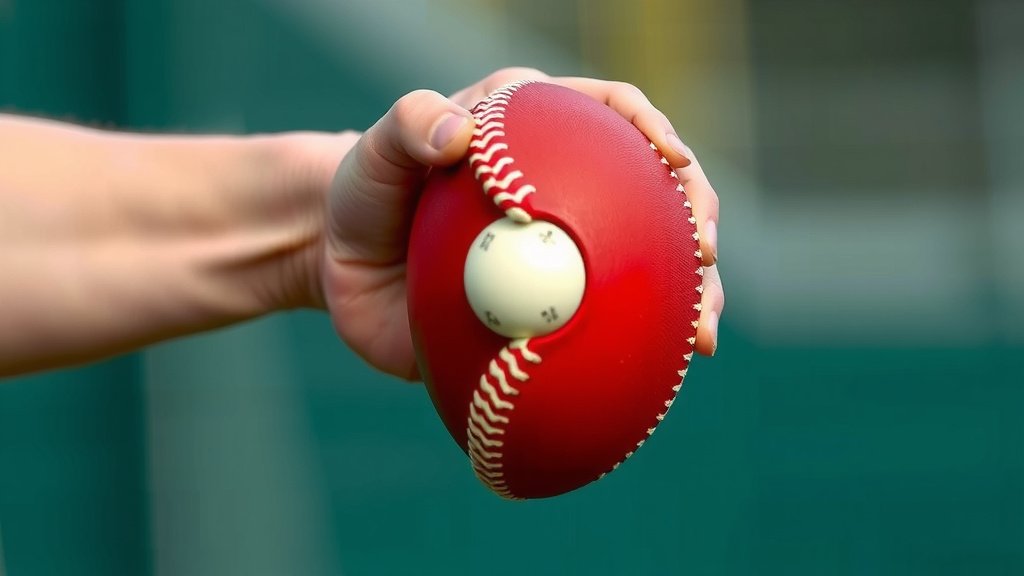
How you hold the ball affects your control. A grip that is too tight can cause tension. This can lead to a less accurate throw. A grip that is too loose means you might lose control. You want a firm but relaxed grip. Research suggests that the fingertips should be on the seams for better spin (Baseball America).
The Power of Practice: Drills and Repetition
Accuracy isn’t born; it’s built. Consistent practice is non-negotiable. You need to put in the work to see results. We found that targeted drills are most effective.
Start Close, Then Move Back
Begin your practice sessions with short distances. This allows you to focus on form. Make sure every throw is deliberate. Once you feel comfortable, gradually increase the distance. This helps you build accuracy at different ranges. It prevents you from developing bad habits.
Target Practice Fun
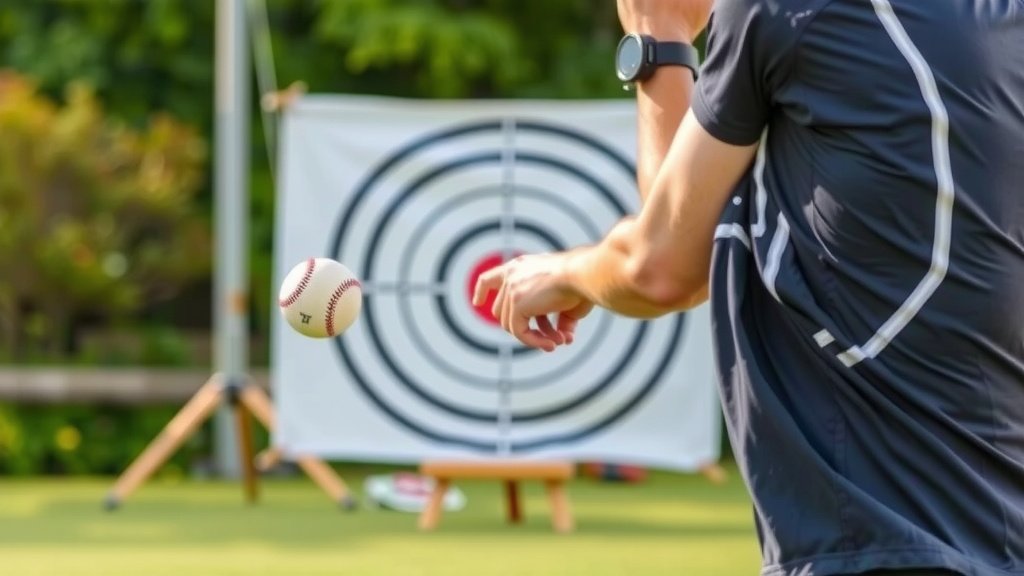
Don’t just throw at a wall. Use actual targets. Buckets, hoops, or even a specific spot on another person can work. This makes practice more engaging. It also simulates game-like conditions. You can even use cones or chalk marks on the ground.
The Importance of Repetition
Muscle memory is built through repetition. The more you practice proper technique, the more natural it becomes. Aim for quality over quantity. A hundred rushed throws won’t help as much as fifty focused ones. We found that short, frequent practice sessions are better than one long, infrequent one.
Strengthening Your Throwing Powerhouse
Your core and shoulder are the engines of your throw. Strengthening these areas will improve both power and accuracy. Many fitness experts highlight this connection. We found that targeted exercises are very beneficial.
Core Strength: The Trunk of the Tree
A strong core is essential for transferring energy. Exercises like planks, Russian twists, and medicine ball throws help build core strength. A strong core stabilizes your body. It allows for a more efficient transfer of power from your legs to your arm. The CDC recommends core strengthening exercises for overall athletic performance.
Shoulder Health and Stability
Your shoulder is a complex joint. It needs both strength and stability. Rotator cuff exercises using resistance bands are vital. They help prevent injuries and improve control. We found that exercises like external rotations and internal rotations are very effective. Don’t forget about the muscles around your shoulder blade, too.
Mastering the Follow-Through
The throw doesn’t end when the ball leaves your hand. The follow-through is just as important as the initial motion. It’s the natural continuation of your throwing action.
Completing the Motion
After you release the ball, let your arm continue its natural arc. Your throwing arm should naturally swing across your body. Your back leg might also come forward. A good follow-through means you’ve used your body efficiently. It ensures you’re not stopping your motion abruptly. This helps prevent injury and improves accuracy.
What a Good Follow-Through Looks Like
Imagine your arm is a whip. It continues to move after it strikes. Your body should feel balanced at the end of the motion. Your chest should be facing the target. Your throwing arm should end up somewhere around your opposite hip or thigh. This indicates a full and powerful motion.
Putting It All Together: A Checklist for Improvement
Ready to start improving? Here’s a quick checklist to keep you on track. We found these steps consistently lead to better results:
Focus on a stable, balanced stance.
Keep your eyes locked on the target.
Practice a consistent arm slot and release point.
Engage your core and strengthen your shoulder.
Complete your throwing motion with a full follow-through.
Practice regularly with varied targets.
Conclusion
Improving your throwing accuracy is within your reach. You’ve learned that a solid stance, precise body mechanics, and consistent practice are your best tools. Remember to focus on your target and your follow-through. Strengthening your core and shoulder provides the power you need. Keep these principles in mind during every practice session. Your next step is to apply one technique you learned today. Go out and make that throw count!
Frequently Asked Questions
How often should I practice throwing to see improvement?
Short, frequent practice sessions are best for building accuracy. Aim for 15-30 minutes several times a week. This helps your muscles learn the correct movements through repetition. Quality practice beats long, infrequent sessions every time.
Can my grip on the ball affect my accuracy?
Yes, your grip is very important for control. A grip that’s too tight can create tension and make your arm stiff. A grip that’s too loose can lead to a lack of spin and wobbling. Find a firm, relaxed grip with your fingertips on the seams for best results.
Is it better to throw hard or accurately?
Accuracy is usually more important than sheer power. A powerful throw that misses the target won’t be effective. Focus on making clean, consistent throws first. As your accuracy improves, you can then work on adding more velocity.
How can I improve my accuracy when throwing from different distances?
Start practicing from short distances to perfect your form. Then, gradually increase the distance. This helps your body adapt to transferring energy effectively over longer ranges. Make sure your focus remains on hitting the target at each new distance.
What’s the most common mistake people make when trying to improve accuracy?
A very common mistake is neglecting the follow-through. Many people stop their motion right after releasing the ball. A proper follow-through allows your body’s energy to release smoothly. This leads to better control and prevents wasted effort or injury.