Major League Fastball Speed: How Quick Is It
A Major League Baseball fastball can travel incredibly fast. Most pitches thrown by big league pitchers average around 90 to 95 miles per hour. The absolute fastest pitches, often thrown by relief pitchers, can exceed 100 miles per hour, making them truly electrifying to watch.
It’s fascinating to think about the speed involved in professional baseball. A hitter only has a fraction of a second to react. We’ve researched how this incredible speed impacts the game. Understanding these speeds helps appreciate the skill involved from both the pitcher and the batter.
- Fastest pitches can break 100 mph.
- Average MLB fastball speed is 90-95 mph.
- Reaction time for hitters is extremely short.
- Pitcher skill is tested by batter’s ability to hit fastballs.
Let’s look closer at what makes a fastball so fast and how hitters try to catch up to that blistering speed.
What’s the Top Speed of a Major League Pitch?
You’ve seen it on TV or maybe even in person: a pitcher fires a baseball. It seems to blur past the batter. Just how fast is that pitch actually traveling? We’re talking about Major League Baseball, where the speeds get serious.
The fastest MLB fastballs regularly push past the 100 miles per hour mark. This is where the game gets truly exciting. It’s a speed that demands incredible reflexes from anyone standing at home plate.
Breaking Down MLB Pitch Speed
The Average Fastball: Not Slow at All!
While the super-fast pitches grab headlines, most fastballs thrown in a Major League game aren’t quite that extreme. We found that the average fastball speed for most pitchers hovers around 90 to 95 miles per hour. This range still represents a tremendous amount of velocity.
Think about that for a second. That 90-95 mph is the typical speed you’ll see. It’s incredibly difficult to hit, even when you expect it. It’s not just about throwing hard; it’s about control and consistency at these speeds.
The 100 MPH Club: Elite Velocity
Hitting 100 mph is an elite feat. Only a select group of pitchers can consistently reach this speed. These pitchers often use their fastball as their primary weapon. They know that few hitters can handle that kind of velocity on a regular basis.
When a pitcher dials it up to 100 mph or more, it’s a real spectacle. It pushes the limits of human reaction time. These pitches are often thrown by relief pitchers, who come into the game for short bursts of intense effort.
Fastest Pitches Ever Recorded
Baseball history is dotted with stories of pitchers throwing at blistering speeds. The officially recognized fastest pitch in MLB history was thrown by Aroldis Chapman. He hit an astounding 105.1 miles per hour. That’s faster than many race cars can accelerate!
While Chapman’s pitch is the record, others have come close. Pitchers like Jordan Hicks and Dellin Betances have also been clocked at over 105 mph in specific instances. These speeds are incredibly rare and represent the absolute peak of pitching velocity.
How Does a Pitcher Throw So Fast?
The Physics of a Fastball
Throwing a baseball at over 100 mph is a marvel of biomechanics and physics. It involves a coordinated effort from the entire body. Pitchers generate power from their legs and core, transferring it through their arm and wrist.
The release point is also critical. A pitcher needs to release the ball as late as possible while still keeping it in the strike zone. This maximizes the perceived speed for the batter. It’s a delicate balance of power and precision.
Physical Attributes and Training
Certain physical traits can contribute to a pitcher’s velocity. Taller pitchers often have a longer arm path, which can help generate more speed. Strong legs and a flexible core are also essential for creating and transferring power.
Dedicated training plays a huge role. Pitchers spend countless hours in the gym working on strength, conditioning, and flexibility. They also focus on proper pitching mechanics. This training helps them throw hard while reducing the risk of injury.
What Does That Speed Mean for the Batter?
The Blindingly Short Reaction Time
This is where the rubber meets the road, or rather, where the bat meets the ball. For a batter facing a 100 mph fastball, the reaction time is incredibly short. From the moment the ball leaves the pitcher’s hand to when it reaches home plate, it’s a blink of an eye.
Research shows a hitter has only about 0.4 seconds to react to a 100 mph pitch. To put that in perspective, that’s less time than it takes to blink your eyes. It’s less time than you need to decide what to have for lunch.
The Batter’s Challenge: Seeing and Hitting
Hitting a fastball requires incredible hand-eye coordination and anticipation. Batters train to recognize the spin and trajectory of the ball as quickly as possible. They also try to anticipate what pitch is coming based on the game situation.
Even when they know a fastball is likely, hitting it is another story. They have to decide to swing and then execute that swing perfectly. The margin for error is microscopic. It makes you wonder how anyone ever gets a hit off of these pitchers!
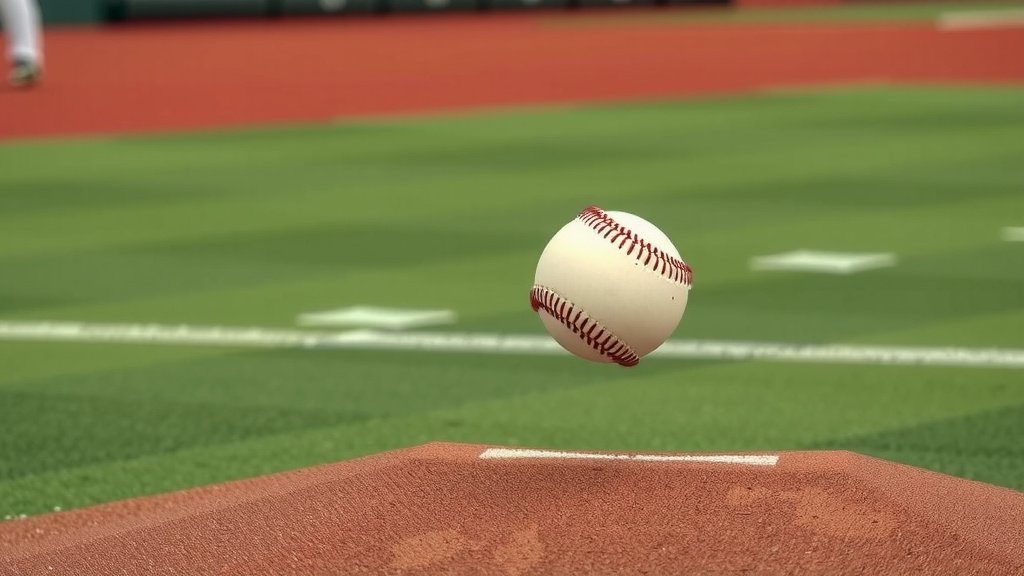
Comparing Pitch Speeds: A Visual
To help you visualize, here’s a look at typical pitch speeds you might see in a MLB game. Keep in mind these are averages, and speeds can vary.
| Pitch Type | Average Speed | Fastest Recorded |
|---|---|---|
| Four-Seam Fastball | 90-95 | 105+ |
| Two-Seam Fastball | 89-94 | 103+ |
| Cutter | 88-93 | 101+ |
| Slider | 80-87 | 97+ |
| Curveball | 70-80 | 88+ |
| Changeup | 78-85 | 90+ |
Factors Affecting Pitch Speed
The Pitcher’s Arm Strength and Mechanics
As we touched on, a pitcher’s natural arm talent is key. Beyond that, their technique matters immensely. Perfecting their stride, arm slot, and follow-through allows them to maximize the force they can apply to the ball.
We found that even small adjustments in a pitcher’s mechanics can lead to noticeable increases in velocity. This is why pitching coaches spend so much time refining a pitcher’s delivery. It’s all about efficiency and power transfer.
The Baseball Itself
Believe it or not, the ball itself plays a small role. Baseballs are regulated for weight and circumference. However, the material and the way the seams are sewn can slightly affect how the ball grips the air and travels. A well-stitched ball can sometimes feel “lively” to a pitcher.
Ballparks and Weather Conditions
While not a huge factor, some elements can influence pitch speed. Altitude can play a minor role; balls tend to travel slightly farther in thinner air. Very cold weather can make the ball harder and potentially slightly faster, but it also makes it harder to grip.
The ballpark dimensions themselves don’t change pitch speed. However, a pitcher might feel more pressure to throw harder if they are pitching in a hitter’s park. It’s all about trying to get outs!
Key Takeaways for Appreciating Fastball Speed
So, what should you remember when you’re watching a game and the pitcher unleashes a heater?
- Most fastballs are between 90-95 mph.
- The 100 mph barrier is for elite pitchers only.
- Reaction time for batters is incredibly short.
- Pitcher mechanics are a blend of power and precision.
- Hitting a fastball requires immense skill and anticipation.
- Even slight variations in speed make a big difference to hitters.
Conclusion
You’ve learned that a Major League fastball is seriously fast, averaging 90-95 mph, with the elite breaking 100 mph. This incredible speed creates a tiny window for hitters, demanding lightning-fast reflexes and pinpoint accuracy. Understanding the biomechanics behind these pitches and the immense skill required from both pitcher and batter deepens your appreciation for the game. The next time you watch a game, pay close attention to that split-second moment when bat meets ball – it’s a testament to athleticism you won’t see anywhere else. You can now better appreciate every 100 mph pitch you witness!
Frequently Asked Questions
What is the fastest baseball pitch ever recorded?
The fastest pitch ever officially recorded in Major League Baseball was 105.1 miles per hour. This incredible feat was achieved by Aroldis Chapman. It truly represents the upper limit of pitching velocity.
How much time does a batter have to react to a 100 mph pitch?
When facing a 100 mph fastball, a batter has only about 0.4 seconds to react. This is less time than it takes for you to blink. It highlights the extraordinary hand-eye coordination needed to hit effectively.
Is hitting 100 mph common for pitchers?
No, hitting 100 mph is not common. It’s an elite achievement reserved for a select group of pitchers. Most MLB fastballs fall within the 90-95 mph range. These 100 mph+ pitchers are truly special athletes.
Does the type of fastball (e.g., four-seam vs. two-seam) affect its speed?
While both four-seam and two-seam fastballs are thrown very hard, there can be slight differences. Our research found that four-seam fastballs often average slightly higher speeds, though both types can break 100 mph. The grip and spin create different movement. The actual speed difference is usually minimal at the elite level.
Can pitchers throw faster than 100 mph consistently?
Consistently throwing over 100 mph is extremely rare. While some pitchers can reach that speed, maintaining it throughout an entire game or season is incredibly challenging. Many pitchers who hit 100 mph do so selectively, often in high-leverage situations.