How to Hit With Two Strikes: Tips That Actually Work
To hit with two strikes, the smartest move is to shorten your swing, widen your stance slightly, and focus on making contact instead of crushing the ball. Your goal shifts from power to putting the bat on the ball and staying alive. Protect the plate, fight off tough pitches, and give yourself another chance.
Why does this matter so much? Because with two strikes, the pitcher has the edge, and one small mistake ends your at-bat. Many hitting coaches agree that the best two-strike hitters choke up a bit, cover the outer part of the plate, and stay ready for offspeed pitches. We researched what top coaches and players teach and found a clear pattern: simple is better when you’re down to your last strike. If you need a refresher on how strikes lead to outs, our simple breakdown walks through it.
Here’s the quick version before we dig in:
- Widen your stance and choke up for better bat control
- Shorten your swing and focus on contact, not power
- Look away and adjust if the pitch breaks over the plate
- Expand your zone slightly and swing at anything close
- Stay relaxed — tension kills two-strike at-bats
Below, we break down everything you need to know about hitting with two strikes, step by step. Let’s get you back in the count instead of back in the dugout.
Approaching Your At-Bat With Two Strikes
Two strikes change everything about your approach at the plate. The pitcher now holds the advantage, and your job is to survive the moment. We found that the hitters who reach base most often with two strikes are the ones who adjust early instead of hoping for a miracle pitch right down the middle.
Think of it like playing defense in basketball. You don’t try to dunk on everyone. You protect the ball and take the good shot when it comes. Hitting with two strikes works the same way.
Adjusting Your Stance and Grip
Your setup is the first thing that should change. Small tweaks here make everything else easier.
Why Choking Up Helps So Much
Slide your hands up the bat an inch or two. Coaches call this choking up, and it shortens the lever you’re swinging. A shorter lever means faster bat control and less sweep in your swing.
Many hitting instructors compare it to using a shorter shovel. Try moving a pile of gravel with a long-handled shovel in a tight space. Tough, right? A shorter one just works better when room is limited.
Widen Your Base for Balance
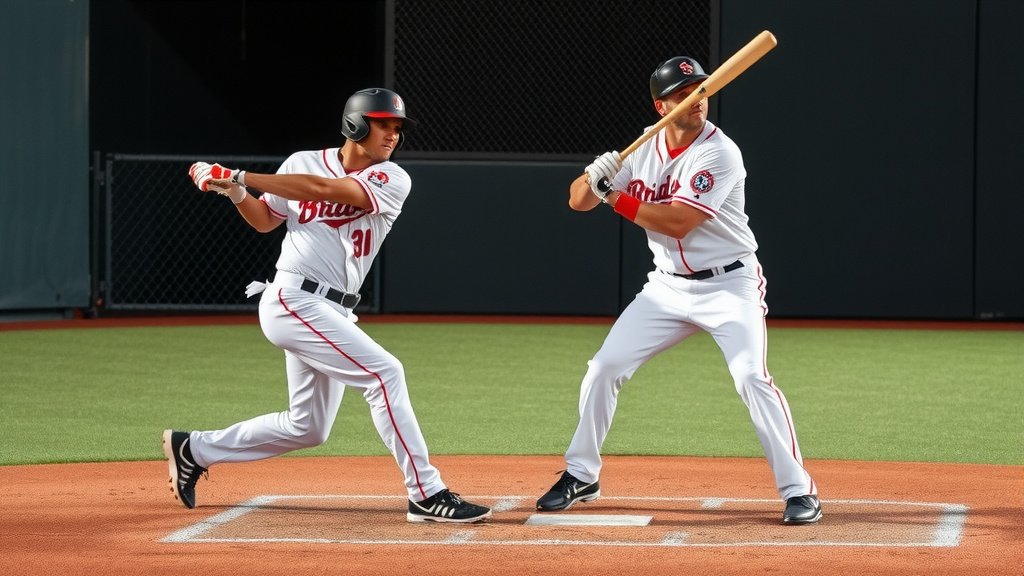
Spread your feet a little wider than normal. This gives you a stable foundation and keeps your head still. A still head means better tracking of pitches that move late.
You’ll also want to cut down on your leg kick or stride. Big movements take time, and time is exactly what you don’t have with two strikes.
Hands and Elbow Position
Keep your hands slightly closer to your body than usual. This tucks the barrel inside and lets you react to inside pitches without getting jammed. We found that hitters who drift their hands away tend to swing around the ball more often.
Shortening Your Swing for Contact
Here’s the heart of the two-strike approach: swing with intent to make contact, not to launch a missile. Cut your swing path down and through the ball. Aim for a compact stroke that stays inside the baseball.
Many coaches teach a “line drive up the middle” mindset here. You’re not trying to pull the ball over the fence. You’re trying to put a good swing on anything hittable and let the game take care of the rest. Our guide to what counts as a single shows the payoff of these contact swings.
A funny thing happens when you simplify, by the way. Pitchers get nervous. A hitter who battles with two strikes forces them to throw more pitches, and mistakes start to show up.
The “Tough Out” Mentality
Foul balls are wins. Remember that. Every tough pitch you spoil is another chance for the pitcher to miss his spot.
- Fight off inside fastballs with your barrel
- Flare breaking balls away to the opposite field
- Keep the ball fair territory only by accident, not design
- Celebrate every foul ball like a small victory
Research on pitcher-hitter matchups suggests that extending at-bats raises pitch counts and can knock a starter out of the game earlier (MLB.com). That’s a team win, even if you fly out.
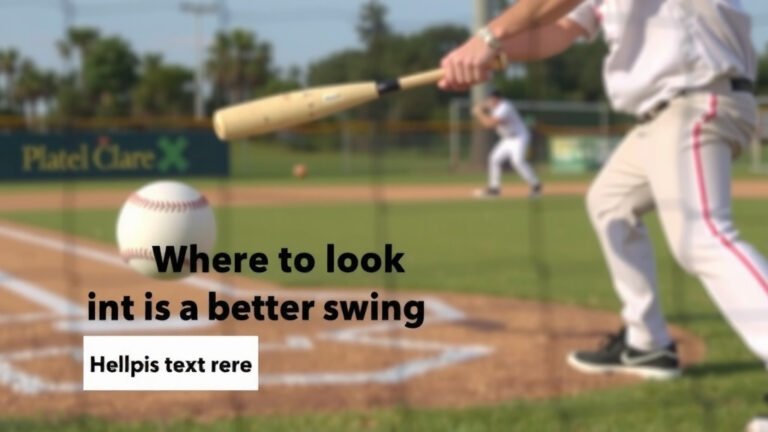
Where to Look: Reading the Pitcher’s Plan
Most pitchers go to their offspeed pitches and breaking balls with two strikes. Why? Because those pitches are harder to hit with contact, and a swing and miss ends the at-bat.
We found that many coaches teach hitters to “look away and adjust in.” In plain terms, expect a pitch on the outer half. If it comes inside, your compact swing can still handle it. If you look inside instead, that low outside curveball will eat you alive.
Handling the Breaking Ball
Breaking balls move down and away late. Your best defense is staying balanced and quiet in your lower body. If your head drifts forward, sliders look like strikes until they’re not.
Keep your weight centered. Let the ball travel deep. The longer you wait, the more information you get.
The Two-Strike Timing Trick
Some hitters start their leg lift a hair earlier with two strikes. This gives them a touch more time to recognize spin. Try it in practice first, not in a big game. Timing tweaks need reps before they’re reliable.
Expanding Your Zone (Wisely)
With two strikes, the strike zone effectively grows. A pitch you’d ignore on an 0-0 count now deserves a swing. Umpires rarely call that borderline pitch your way when a swing and miss ends the inning.
Many officials and coaches note that hitters who protect the plate get more favorable calls over a season than those who take pitch after pitch (MLB.com).
What to Swing At, What to Let Go
Here’s a simple table we put together to keep it straight:
| Pitch Type | Swing or Take? | Why |
|---|---|---|
| Fastball over the heart | Swing hard-ish | Your best chance to do damage |
| Borderline corner pitch | Swing | Protect the plate |
| Dirt-ball breaker | Take | You can’t hit what’s underground |
| Way inside fastball | Defensive swing | Stay alive, foul it off |
| High heat at the letters | Usually swing | Umps often call it |
Notice the pattern? Anything remotely close gets a swing. Only truly buried pitches get taken.
Staying Relaxed Under Pressure
Tension is the silent at-bat killer. When you grip the bat like a hammer, your wrists lock up and your swing gets slow. Sports psychology research on performance under stress supports this: tight muscles and racing thoughts hurt fine motor skills (NIH).
Try this between pitches: take a deep breath in through your nose, out through your mouth. Loosen your grip. Wiggle your fingers on the bat handle. Sounds silly, works great.
Slow the Game Down
Everything feels fast with two strikes. Your job is to slow your own process down. See the ball, keep your head still, and trust your shortened swing.
Remind yourself: you’ve hit thousands of pitches before this one. This pitch is not special. It’s just another baseball arriving on a schedule.
Practicing Your Two-Strike Approach
You don’t develop a two-strike swing in a game. You build it in practice, on purpose. Here’s a quick checklist to run during your next batting practice session:
- Take five rounds choking up and swinging for contact only
- Have a coach call out counts so you treat each pitch like two strikes
- Practice hitting off-speed pitches to the opposite field
- Work on fouling off tough inside pitches without lunging
- Do soft-toss with a smaller bat or training bat for hand speed
- Finish every round with a full-count scenario and battle
Common Two-Strike Mistakes to Avoid
Even good hitters fall into traps when the count gets deep. Watch out for these:
- Keeping your normal power swing — the long swing arrives late against better pitching
- Selling out for a home run — you’ll fly out or strike out trying
- Freezing on borderline pitches — protect the plate, always
- Tensing up your grip — relaxed hands are fast hands
- Changing everything at once — pick two or three adjustments and commit
We found that the biggest one is the last. Hitters panic, change ten things, and end up with no swing at all. Simple beats perfect.
Learning From the Best Contact Hitters
Study the players known for tough at-bats. Watch how they choke up, spread out, and grinds out pitches. Many of the game’s best contact hitters built careers on the exact approach we’ve covered here.
The next time you’re in the cage or watching a game, count how many hitters shorten up with two strikes. It’s more than you’d think, and now you know why. Your at-bat isn’t over until the umpire says so. Go earn your way back into the count.
Conclusion
Two strikes don’t have to mean the end of your at-bat. Choke up, widen your base, and shorten your swing. Look away, protect the plate, and treat every foul ball like a small win. Stay loose, because tight hands lose battles. We found that the hitters who survive deep counts aren’t stronger or more talented — they’re just more willing to simplify. Your next step is easy: take this approach to batting practice this week. Get reps choking up and swinging for contact until it feels natural. Do that, and the next two-strike count becomes your chance instead of your fear.
Frequently Asked Questions
Should I choke up with two strikes every time?
Not necessarily every time, but it’s a great default. If you’re facing a pitcher with good stuff, choking up gives you more barrel control. We found many hitters only choke up against tough relievers or in big situations, and that’s a smart compromise too.
Does a two-strike approach hurt my power?
A little, yes — but that’s the trade. You’re giving up some extra-base potential to stay alive and make contact. The good news is that a shorter, compact swing often produces solid line drives anyway, so you rarely lose as much pop as you think.
How do I know when to protect the plate versus take a pitch?
Watch the ball’s starting trajectory. If it starts at the zone or near it, swing. If it clearly starts well below the zone or far off the plate, take it. Trained catchers and umpires read that first movement, and you can learn to do the same with reps.
Can young players use a two-strike approach too?
Absolutely, and we found it works even better at youth levels. Younger hitters face fewer dominant pitchers, so simple contact swings often find grass. Teach kids to choke up, widen their stance, and swing with a level path. Keep it simple and keep it fun.
What’s the best mental cue when I have two strikes?
Keep it short and repeatable. Something like “see it, hit it” or “battle” works well. We found that one simple cue beats a mental checklist, because your brain has no time for a to-do list mid-swing. Pick your phrase in practice and stick with it.