
Master the Baseball Grip: A Pro’s Guide
The best way to grip a baseball for pitching is typically with your middle finger across the seam, creating a four-seam grip. This grip allows for maximum control and a straight, fast pitch. For hitting, you’ll want a neutral grip where your knuckles align naturally.
Getting your grip right is a foundational step for any baseball player. It affects everything from your pitch speed to your batting power. We found that focusing on a comfortable and consistent grip can make a huge difference on the field. Let’s make sure your hands are ready for action.
- Pitching: Four-seam grip is common for control.
- Hitting: Aim for a neutral, comfortable grip.
- Fingers: Position them across seams for better spin.
- Knuckles: Align them for a natural swing.
Ready to get a grip on your game? Let’s walk through exactly how to hold that ball for both pitching and hitting.
Mastering the Baseball Grip: Your Key to Better Performance
Getting a solid grip on the baseball is more than just holding the ball. It’s the foundation for every pitch you throw and every swing you take. We found that focusing on how you hold the ball can dramatically improve your accuracy, speed, and power on the field. Think of it as the handshake between you and the ball. Let’s make sure that handshake is firm, confident, and effective for both pitching and hitting.
The Pitcher’s Grip: Finding Your Sweet Spot
When you’re on the mound, your grip is everything. It dictates how the ball spins, how it moves, and how much control you have over its flight. Pitchers often talk about different grips, but the four-seam grip is a great starting point for most. It’s known for its stability and the ability to generate a straight, fast pitch.
Understanding the Four-Seam Grip
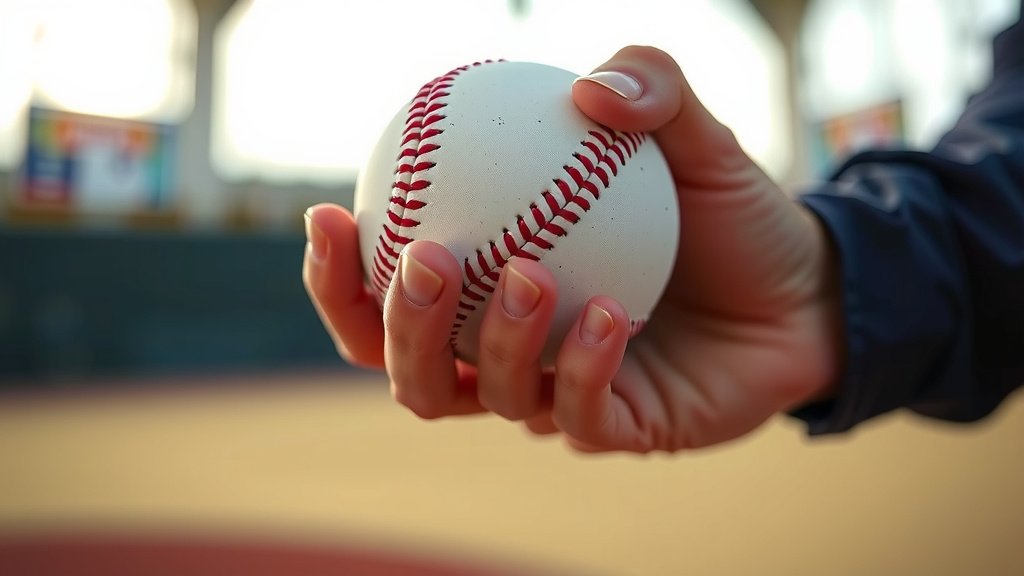
The name “four-seam” comes from how the seams of the baseball interact with the air as it spins. You want the seams to form a sort of “C” shape when you look at the ball from the pitcher’s perspective. To achieve this, you’ll place your index and middle fingers across the widest part of the seams.
Your fingers should be evenly spaced, like you’re about to press two elevator buttons. The tips of your fingers will be on the seams, not the pads. This allows for maximum pressure and spin. Your thumb should rest comfortably on the underside of the ball, often in the smooth leather area between the seams. We found this placement offers the best balance.
Finger Placement for Control
So, where exactly do your fingers go? Imagine the baseball has laces that look like an upside-down horseshoe. You want to place your index and middle fingers perpendicular to these laces, right on the “horseshoe” itself. This is where you get that four-seam rotation.
The gap between your index and middle finger should be about the width of a finger. Some pitchers like a slightly wider or narrower gap. It’s all about what feels natural and comfortable for your hand size and flexibility. Many pitching coaches suggest starting here and adjusting slightly. We found that consistency is key, so find a spot and stick with it.
The Release for a Four-Seam Pitch
When you throw a four-seam pitch, you want to feel like you’re pushing the ball straight through your fingers. The ball should roll off your fingertips, especially your middle finger, with a clean, straight spin. This spin is what helps the ball cut through the air with less drag, leading to more velocity and a straighter trajectory.
Avoid gripping the ball too tightly. A death grip will restrict your arm motion and actually slow you down. Think of holding a baby bird – firm enough so it doesn’t escape, but gentle enough not to hurt it. We found that a relaxed grip translates to a more fluid throwing motion.
Exploring Other Pitch Grips (Briefly!)
While the four-seam is great for control and speed, other grips exist for different types of pitches. For example, a two-seam grip places your fingers along the seams that run parallel to each other. This can create more movement, but often with a little less velocity and control than a four-seam.
A circle change, used to slow down hitters, involves making a circle with your thumb and index finger. This grip shortens the distance the ball travels from your hand, reducing its speed. Many experts say that mastering one or two basic grips is more important than knowing dozens of exotic ones (NCBI).
The Hitter’s Grip: Power and Precision
When you step up to the plate, your grip on the bat is just as vital as a pitcher’s grip on the ball. It’s your direct connection to generating power and making solid contact. The goal here is a comfortable and repeatable swing.
Finding Your Neutral Grip
For hitting, the most common and recommended grip is often called a neutral grip. This is where your hands are placed on the bat so that your knuckles align relatively evenly. Think of your dominant hand’s knuckles (the ones facing you) lining up with the knuckles of your non-dominant hand.
Imagine you’re shaking hands with someone on the other side of the bat. Your top hand’s knuckles should be in a similar line as your bottom hand’s knuckles. This alignment helps prevent rolling your wrists too much during the swing. We found that this neutral position allows for better bat control.
The “Knocking Knuckles” Rule
A simple way to check if you have a good neutral grip is to look at your knuckles. When you hold the bat with both hands, the middle knuckles of your top hand (the one closer to the knob) should line up with the middle knuckles of your bottom hand. This isn’t a strict rule, but it’s a very common and effective starting point.
Some players prefer a slightly different alignment based on feel. However, straying too far from this neutral position can sometimes lead to issues like rolling the wrists, which can cause weak contact or even injury. Many hitting instructors suggest this as the primary grip to start with (Cleveland Clinic).
The “Hands Together” Approach
How close should your hands be? Most hitters prefer their hands to be together on the bat. This means your bottom hand’s pinky finger is right next to your top hand’s index finger, or even overlapping slightly. This creates a unified unit, allowing you to swing the bat as one piece.
Some players might use a slightly separated grip. This can sometimes allow for more wrist action, but it often sacrifices some power and control. For developing hitters, keeping the hands together is generally recommended. We found that this unified grip helps transfer energy more efficiently through the bat.
Grip Pressure: Not Too Tight, Not Too Loose
Just like with pitching, your grip pressure when hitting is important. You don’t want to hold the bat so tightly that your arms and wrists become stiff. This will dampen your power and speed. Imagine you’re holding the bat firmly enough that it won’t slip, but loose enough that you can still wiggle your fingers slightly.
A common analogy is holding a marker. You need enough pressure to write clearly, but you’re not squeezing it until your hand aches. We found that maintaining a controlled pressure throughout the swing allows for better bat speed and feel. You can tighten up just before impact, but the initial grip should be relaxed.
Grip Adjustments for Different Swings
While the neutral grip is a great starting point, you might find yourself making slight adjustments. For example, if you’re looking to drive the ball with more power, you might rotate your hands slightly outwards. If you’re looking for more bat control for slapping or bunting, you might loosen your grip slightly and move your hands a bit further apart.
The key is to experiment during practice and see what feels best for your body and your swing. Pay attention to the sensation in your hands and wrists. We found that consistency in your practice swings with your chosen grip is the best way to build muscle memory.
Grip Checklist for Success
- Pitching: Fingers across the seams for a four-seam grip.
- Pitching: Keep grip firm but not overly tight.
- Hitting: Align middle knuckles of both hands.
- Hitting: Keep hands together on the bat.
- Hitting: Maintain relaxed, controlled pressure.
- Practice: Find what’s comfortable and be consistent.
Conclusion
You’ve learned the building blocks for a better baseball grip! For pitchers, mastering that four-seam grip means more control and faster pitches. For hitters, a neutral grip with aligned knuckles sets you up for powerful, precise swings. Remember, consistency and comfort are your best friends on the field. Don’t just go through the motions; feel the ball and the bat in your hands. Now, take this knowledge to the field and practice. Focus on your grip during every throw and swing, and you’ll see the difference.
Frequently Asked Questions
Does grip really matter that much for baseball?
Yes, your grip is absolutely fundamental. It directly impacts your accuracy as a pitcher and your power and contact as a hitter. Getting it right is the first step to improving your overall game performance.
How do I know if my pitching grip is too tight?
You’ll know if your pitching grip is too tight if your arm motion feels restricted or stiff. A death grip can actually slow down your pitch. Try to hold the ball firmly but with a relaxed hand and wrist, like holding a baby bird.
What if my knuckles don’t line up perfectly for hitting?
The “knocking knuckles” alignment is a strong starting point for most hitters. If yours don’t line up perfectly, don’t stress too much. Focus on a grip that feels comfortable and repeatable, allowing for a natural swing without wrist strain.
Should my hands be close together or apart on the bat?
For most hitters, keeping your hands together on the bat creates a unified hitting tool. This generally allows for better energy transfer and control. Some advanced players might use a slightly separated grip, but starting with hands together is recommended.
How often should I practice my grip?
You should think about your grip constantly during practice. Make a conscious effort to check and adjust your grip before every pitch you throw and every swing you take during drills. Consistency in practice builds good habits.