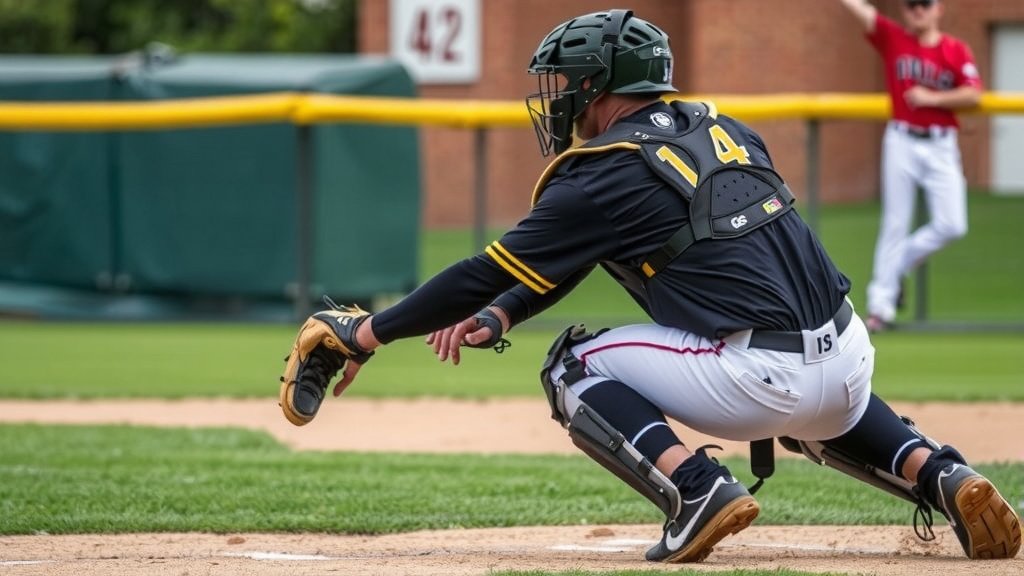
How to Call a Game as a Catcher: Your Guide
Calling pitches as a catcher is all about communication and making smart decisions. You need to understand your pitcher’s strengths and the hitter’s weaknesses. Your main goal is to help your pitcher throw strikes and get outs by suggesting the right pitches at the right times.
This role is more than just throwing signs; it’s about building trust with your pitcher and directing the defense. A good catcher can drastically improve a team’s performance. Many experienced catchers say it’s like being a second coach on the field.
- Know your pitcher’s best pitches.
- Study the batter’s tendencies.
- Use pitch signs clearly and quickly.
- Communicate with your pitcher.
- Adjust calls based on game situations.
Let’s walk through exactly how to call a game as a catcher, step by step.
“`htmlMastering the Art of Calling Pitches as a Catcher
Calling pitches is your secret weapon as a catcher. You’re not just receiving the ball; you’re directing traffic. Think of yourself as the field general. You have the best view of the entire game unfolding. Your decisions impact every player on the field. This skill takes practice, but mastering it makes you indispensable.
It’s about understanding pitchers, hitters, and the game situation. You’re the bridge between the mound and the dugout. A well-called game conserves your pitcher’s arm and keeps the offense off balance. You guide the defense with confidence. Let’s break down how you can become a master pitch caller.
Knowing Your Pitcher Inside and Out
Before any game, you need a deep dive into your pitcher’s arsenal. What are their best pitches when they feel good? What’s their go-to pitch when they’re in a jam?
Understanding Pitch Velocity and Movement
Every pitcher has a fastball, but how lively is it today? Does it have good late movement? We found that understanding the pitcher’s current velocity is key. If their fastball is down a tick, you might lean on off-speed pitches more. Pay attention to how their curveball or slider is breaking. Is it sharp today? Is their changeup looking deceptive?
Pitcher Stamina and Mental State
A pitcher who’s tired might struggle to hit their spots. You might need to call pitches that are easier to throw. Think more fastballs, fewer off-speed pitches that require pinpoint control. Also, observe their body language. Are they frustrated? Confident? This can inform your calls.
Scouting the Opposition: Hitter Tendencies
Every hitter has patterns. Your job is to find them and exploit them. What does the batter do in certain counts? What pitches do they swing at early in the count? What do they chase when they’re behind?
Analyzing the Hitter’s Strengths and Weaknesses
Some hitters love the high fastball. Others struggle with breaking balls low and away. We found that keeping a mental notebook (or a real one!) on hitters is incredibly useful. If a hitter consistently pulls fastballs, maybe you call a pitch away or change the eye level.
Count-Based Strategy for Hitters
The count is your best friend. In a 3-0 count, you want to throw a strike. You probably won’t try to paint the corner. In a 0-2 count, you can expand the zone. You might try to get them to chase a pitch out of the zone. Many coaches say that attacking hitters in advantageous counts is fundamental.
Situational Hitting Awareness
Is there a runner on second with less than two outs? The hitter might be looking to move the runner over. You might call a pitch that’s harder to drive. A runner on third with two outs? They might be trying to get that run in with a fly ball or a base hit. Adjust your calls accordingly.
Developing Your Pitch Calling System
A clear system makes communication smooth. It prevents confusion between you and your pitcher. This system is built on trust and practice.
Mastering the Sign Language
Your signs need to be clear and quick. A common system involves your glove. Different finger placements in the pocket signal different pitches. For example, one finger for fastball, two for curveball, etc. Many leagues have standardized signals, but your team might have its own.
Practice these signs until they are second nature. The pitcher needs to see and understand the sign instantly. You don’t want to hold up the game while you fumble for a signal. Think about how visible your signs are. Are they easily picked up by the opposing team? Some catchers use subtle shifts or wrist snaps to make their signs harder to steal.
Communicating Effectively with Your Pitcher
Signs are great, but sometimes a quick word is needed. A nod. A gesture. These non-verbal cues can be just as important. If your pitcher seems off, a quick trip to the mound for a mound visit can be helpful. Use this time to talk about what’s working and what isn’t. Are they feeling their mechanics? Is something bothering them?
Remember, this is a partnership. You are a team. You want to build a rapport where your pitcher feels comfortable shaking off a sign if they disagree. This trust is built over many innings and many games. Many players find that open communication channels lead to fewer mistakes.
Game Management: Adjusting Your Calls on the Fly
A game plan is a starting point, not a rigid rulebook. You must be ready to adapt. The game is fluid, and so should your calls be.
Reacting to the Opponent’s Adjustments
Did the hitter just get a big hit on your curveball? They might be sitting on it. You might want to think twice before calling it again. Conversely, if your pitcher is hitting their spots with their slider, use it! Keep the hitters guessing. We found that successful teams make adjustments rapidly.
The Importance of Pitch Sequencing
It’s not just about the pitch itself, but the order in which you call them. Think about setting up pitches. A well-placed fastball early in the count can make a later-breaking curveball much more effective. Or, use an off-speed pitch to keep them honest before coming back with heat. You’re telling a story with each pitch.
When to Trust Your Gut (and When to Trust the Book)
Sometimes, you’ll have a feeling about what pitch to throw. You’ve studied the hitter, you know your pitcher, and a certain pitch just feels right. Trust that instinct. However, don’t abandon the scouting report entirely. The data and your observations should guide you, but your intuition can be a powerful tool.
Many experienced catchers say that the best pitch calls come from a blend of preparation and instinct. You’ve done your homework, now let it flow. You might also consider the game situation. Are you trying to get a ground ball to escape a jam? A sinker might be the call. Need a strikeout? Maybe a swing-and-miss pitch like a curveball or a high fastball.
Catcher’s Checklist for Effective Pitch Calling
Here’s a quick checklist to keep in mind:
- Know your pitcher’s best 2-3 pitches for today.
- Identify hitter tendencies for the current batter.
- Check the count and adjust your pitch call.
- Communicate clearly with your pitcher using signs.
- Be ready to adjust if the plan isn’t working.
- Watch the runners and the game situation.
Conclusion
You’ve learned that calling pitches as a catcher is a dynamic skill. It blends deep knowledge of your pitcher and the hitters with sharp game awareness. Mastering this art means you’re not just receiving pitches; you’re actively shaping the game. You guide your pitcher, control the tempo, and lead your defense. Keep practicing, keep communicating, and keep building that trust with your pitcher. Your next step is to start applying these principles in your very next game. Focus on one or two areas to improve, like pitcher stamina or hitter tendencies, and build from there.
Frequently Asked Questions
How do I get better at reading hitter tendencies?
Study game footage and keep a small notebook to jot down what each hitter does in different counts. Watch which pitches they swing at early, and which ones they chase when behind. Observing them during warm-ups can also give you clues.
What should I do if my pitcher is struggling?
When your pitcher is having an off day, focus on calling pitches that are easier to control and keep the ball around the plate. You might rely more on their fastball or a pitch they consistently hit their spots with. A quick mound visit can also help you both reset.
How important is pitch sequencing?
Pitch sequencing is extremely important because it sets up future pitches. You’re not just calling the next pitch, but the next few. A well-placed fastball early can make a curveball later more effective, or vice-versa. Think of it as telling a story with your pitches.
Should I always trust the scouting report?
The scouting report is a great starting point, but it’s not the whole story. You also need to trust your gut instinct and observe how the hitter is reacting in real-time. If a hitter is seeing a certain pitch well, don’t be afraid to deviate from the plan.
How can I make my pitch signs harder to steal?
Use subtle variations in your signs, like a slight wrist movement or a quick, almost imperceptible shift of your body. Practicing your signs in front of a mirror can help you see what’s visible to opponents. The key is for the sign to be clear to your pitcher but obscure to the other team.