Master Baseball Base Running: Key Tips for Success
You can improve your baseball base running by focusing on a few key techniques. Mastering the lead off, understanding when to take an extra base, and knowing how to read the ball are fundamental. Practicing these skills can make a big difference in your game. Good base running is about smart decisions and quick reactions.
We’ve researched and found that effective base running involves more than just speed. It’s about baseball IQ and taking calculated risks. Knowing your pitcher, the outfielders, and the situation is critical. Being a smart runner can turn singles into doubles and get you into scoring position more often. It’s a skill that separates good players from great ones.
- Always look for opportunities to advance.
- Understand your pitcher’s tendencies.
- Practice your leads and jumps.
- Know when to slide and when to run through.
- Be aware of the game situation.
Below, we’ll walk you through the essential baseball base running tips that can help you become a more effective runner on the diamond.
Becoming a Smarter Base Runner
You’ve seen them. The players who seem to magically advance an extra base. They’re not always the fastest, but they have a knack for making the right read. This guide is here to help you develop that same instinct. We’ll focus on actionable techniques. You’ll learn how to get better jumps, read situations, and avoid costly mistakes. Let’s turn you into a base-running menace!
Mastering the Art of the Lead Off
Your lead off is your first chance to gain an edge. It’s more than just how far you step off the bag. It’s about creating leverage and being ready to react. A good lead can make all the difference.
The Importance of a Good Lead
Think of your lead as your launchpad. A bigger lead means less distance to cover if you decide to steal. It also puts more pressure on the pitcher. They have to be more deliberate with their pick-off attempts. Many experts suggest a lead of about 15-20 feet off the base (Baseball America). A bigger lead also puts more pressure on the pitcher, making them more deliberate with their pick-off attempts.
Finding Your Sweet Spot
Every player is different. You need to find a lead distance that feels comfortable and safe. You want to be far enough to get a good jump, but close enough to get back to the bag easily. Practice this in drills. Your coach can help you find that perfect spot.
The “Shuffling” Technique
Don’t just step off the base and stand still. Many successful runners use a shuffling motion. This keeps your momentum going forward. It allows for a quicker reaction to a ground ball or a pick-off attempt. It’s like a sprinter before the gun.
Reading the Pitcher’s Tendencies
This is where baseball IQ comes into play. Watch your pitcher. Do they have a long or short wind-up? Do they step directly towards home plate, or do they turn their back? These details can tell you when a pitch is coming.
Many coaches stress observing the pitcher’s glove and body language. Some pitchers have tells. They might look at the runner before delivering. Or their front foot might signal their intention. Learning these tells gives you a huge advantage.
Taking the Extra Base: When to Be Bold
This is where smart base running truly shines. Knowing when to push for an extra base can turn a single into a scoring threat. It’s about calculated risks, not recklessness.
Assessing the Situation
Always ask yourself: What’s the situation? Who is the outfielder? How strong is their arm? What’s the score? How many outs are there? These factors determine if an extra base is a smart play.
If there are two outs, you might be more aggressive. The play is over if you’re out. But if there’s only one out, an out on the base path could end the inning. It’s a delicate balance.
Reading the Outfielders
Pay attention to where the outfielders are playing. Are they playing deep? That might give you a chance to take an extra base on a shallow hit. Are they playing shallow? You might have to hold up more.
We found that understanding outfielder arm strength is key. A strong-armed outfielder can throw you out at an extra base easily. A weaker arm means you have a better chance. Watch them throw during warm-ups.
The “Hit and Run” Strategy
When you’re on base during a hit and run, you must run on the pitch. Your job is to break for the next base as soon as the ball is put in play. You have to assume the ball will be a base hit. Don’t wait to see where it goes. Your teammates are counting on you.
Reading the Ball: Your Eyes Are Your Best Tool
You can’t steal bases or advance on errors if you don’t know where the ball is going. This skill is paramount for any successful base runner.
Ground Balls: The “See It, Hit It” Principle
For ground balls, the general rule is to read the ball off the bat. If it’s hit sharply and looks like a base hit, you’re going. If it’s a soft chopper or looks like it might be a fielder’s choice, you need to be ready to stop or go back.
Many coaches teach runners to focus on the fielder’s reaction after they field the ball. If the fielder immediately looks to throw, you might need to be cautious. If they hesitate, that’s your cue to push for more.
Fly Balls: Tagging Up Wisely
When a fly ball is hit, your first instinct might be to get off the base. But before you do, assess the situation. Is the ball deep enough for a tag? Is there a chance it will be caught?
You need to be ready to tag up and advance if the ball is caught. This means getting back to the base and waiting for the catch. Don’t run until you see the ball secured in the fielder’s glove.
We found that many runners make the mistake of breaking too early. This can lead to being doubled off the base. Wait for the catch, then make your break. It’s a safer and often more effective strategy.

The Slide: When and How
Sliding isn’t just for dramatic movie moments. It’s a skill that can help you avoid tags and protect yourself.
When to Slide
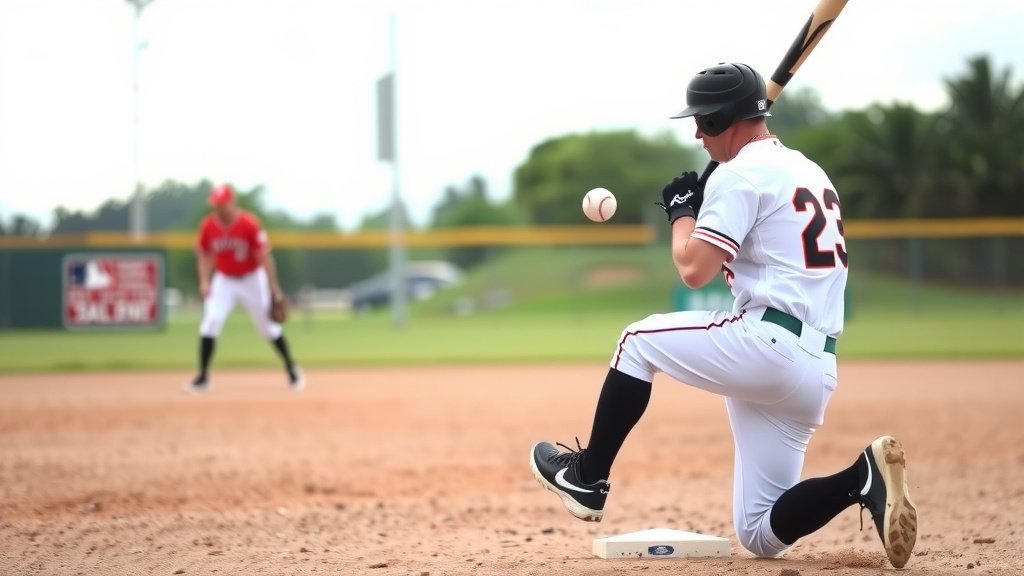
You should slide when you want to avoid a tag. This is usually when you are trying to get into scoring position, or when you’re taking an extra base and feel you might be close.
If you’re stealing second or third, sliding is almost always a good idea. It makes you a smaller, harder target. It also helps you maintain momentum.
The Hook Slide and the Pop-Up Slide
The hook slide is useful for making yourself smaller. You throw your back leg out and try to hook the base. This can help you avoid a tag from a fielder reaching for you.
The pop-up slide is great for getting back to your feet quickly. You slide in, then push off the ground to stand up. This is helpful if you think you might be able to advance on an overthrow or a dropped ball.
Checklist for Smarter Base Running
Here’s a quick rundown to keep in mind every time you get on base:
- Know the situation: Always be aware of outs, score, and inning.
- Watch the pitcher: Learn their tells and wind-up.
- Read the ball: See it off the bat and know if you’re going or holding.
- Anticipate: Think ahead about where you can go next.
- Be ready to slide: Practice your slides and know when to use them.
- Communicate: Talk to your teammates and coaches.
Conclusion
You’ve learned that smart base running is a blend of technique and awareness. Mastering your lead off, understanding when to take an extra base, and skillfully reading the ball are essential. Practice these skills consistently to build your baseball IQ. Remember to always assess the situation, watch the pitcher, and know your opponents. Put this advice into action during your next practice or game to see your base running improve.
Frequently Asked Questions
How far should my lead off be from the base?
A good starting point is about 15-20 feet off the base. You need to find a distance that feels comfortable and allows you to get a quick jump. Practice this to see what works best for your speed and reaction time.
When is the best time to attempt an extra base?
Consider the outs, the score, and the outfielder’s arm strength. If there are two outs, you can be more aggressive. If the outfielder is playing deep or has a weaker arm, that’s a good opportunity to push for an extra base.
How do I know if I can advance on a ground ball?
Read the ball off the bat and watch the infielder. If it’s hit sharply and looks like a clean single, go. If it’s a softly hit ball or the fielder makes a quick, clean play, you might need to hold up or go back.
What’s the safest way to tag up on a fly ball?
Get back to the base as soon as the ball is hit in the air. Wait until you see the ball securely in the fielder’s glove before breaking for the next base. Don’t run too early or you risk being doubled off.
When should I use a hook slide versus a pop-up slide?
Use a hook slide when you need to make yourself a smaller target to avoid a tag. A pop-up slide is useful when you think you might be able to advance further on an overthrow or a bobbled ball, as it gets you back on your feet faster.