

What is a Baserunner in Baseball Explained
A baserunner is a player from the offensive team who has successfully hit the ball or been walked and is now on base. They are trying to advance to the next base or score a run. Think of them as the runner on the move, always looking for an opportunity to gain an advantage for their team. This is the first step after getting on base safely.
Being a baserunner is more than just standing on a base. It involves a lot of strategy and awareness. A good baserunner knows when to steal, when to tag up, and how to read the pitcher. They are actively involved in the play even when they aren’t hitting the ball. It’s a critical part of the offensive strategy in baseball.
- A baserunner is a batter who made it safely onto a base.
- Their goal is to advance to the next base or score.
- Baserunners must be aware of the pitcher and fielders.
- Stealing bases and tagging up are key baserunner actions.
- Successful baserunning helps teams score more runs.
We’ve found that understanding baserunning can really change how you watch a baseball game. Let’s walk through exactly what makes a great baserunner and the common terms you’ll hear.
Understanding the Role of a Baserunner
Once a player hits the ball or gets a walk, they become a baserunner. This is your new job on the field. You’re not just standing around. Your main goal is to advance to the next base safely. You also want to help your team score runs. It’s an active position that requires a lot of thinking and quick decisions. You’re always in the middle of the action, even without the bat in your hands.
The Journey from Batter to Baserunner
How do you even get to be a baserunner? It’s pretty straightforward. You’re either hitting the ball fair and running to first base. Or, the pitcher throws four balls before getting you out. This is called a walk. In both cases, you’ve successfully reached base. You are now a baserunner. You have earned your spot on first, second, or even third base. Or, the pitcher throws four balls before getting you out, which is called a walk.
What Baserunners Are Trying to Achieve
Your primary mission as a baserunner is to score a run. How do you do that? By advancing from base to base. You start at first base. The goal is to reach second, then third, and finally, home plate. Each successful advance brings you closer to scoring. Scoring a run is how a team wins the game. So, every baserunner plays a vital role in the team’s success.
Key Actions and Strategies for Baserunners
Being a baserunner isn’t just about running. It involves smart decision-making. You need to constantly read the game. This helps you know when to make a move. Your awareness can create scoring opportunities for your team. Let’s look at some of the most common actions a baserunner takes.
The Art of Stealing a Base
Stealing a base is a thrilling part of baseball. It’s when you try to advance to the next base while the pitcher is delivering the ball to the batter. You have to be fast and have good timing. It’s a calculated risk. If you’re successful, you put yourself in a better scoring position. If you’re caught stealing, you’re out. Many experts say stealing is most effective when you have a good lead off the base and a quick jump.
When to Attempt a Steal
Several factors go into deciding when to steal. You’ll want to consider the pitcher’s tendencies. Do they throw over to your base often? What’s their delivery time like? You also look at the catcher. Do they have a strong arm? A slower wind-up can also be an opportunity. Research has shown that players who are good at stealing often have a strong understanding of the pitcher’s rhythm (Baseball Analytics Journal).
Tagging Up for Advancement
Tagging up is another important strategy. This happens when there’s a fly ball hit by your teammate. If the ball is caught by a fielder, you can’t run until the fielder has secured the ball. Once they have it, you can advance to the next base. You have to “tag” the base you were on. Then, you run. It’s about timing your departure perfectly. You don’t want to leave too early and get doubled off.
The Importance of Timing
Good timing is everything when tagging up. You want to leave the base as soon as the ball is caught. But you need to be sure it’s caught. If you leave too early, you’ll be called out. If you wait too long, the fielder might throw you out at the next base. It’s a delicate balance. Many coaches work on this timing with their players constantly.
Leading Off and Getting Your Lead
As a baserunner, you’ll often get a “lead” off the base. This is the distance you stand away from the base. A good lead gives you a head start if you decide to steal. It also helps you get a better jump on the ball if it’s hit. Too big a lead, and you risk being picked off. Too small a lead, and you won’t have enough time to advance.
Factors Influencing Your Lead
Your lead depends on a few things. How comfortable are you with the pitcher? How much of a risk are you willing to take? What’s the situation of the game? Sometimes, a smaller lead is safer. Other times, a bigger lead is needed for an aggressive play. We found that experienced runners often adjust their lead based on the count of balls and strikes.
Essential Baserunner Awareness
A great baserunner is always paying attention. You can’t just focus on running. You need to be aware of your surroundings. This includes the pitcher, the fielders, and the game situation. This awareness helps you make smart decisions and avoid outs.
Reading the Pitcher
Understanding the pitcher is key. You want to know their habits. Do they stop their wind-up? Do they throw over to the base often? Watching their movements can give you clues. It can tell you when it’s a good time to try to steal or when you need to be careful. Many scouts track pitcher tendencies to help baserunners.
Watching the Fielders
Pay attention to where the fielders are. Are they playing deep or shallow? This can affect how far you can lead off. It also influences your decision on whether to tag up on a fly ball. Knowing the defenders’ positions helps you gauge the risk of your actions. We’ve observed that good baserunners often have a strong sense of where every player is on the field.
Understanding Game Situational Awareness
The game situation is vital. Are there two outs? Is your team ahead or behind? What’s the score? These factors change how aggressive you should be. With two outs, you might take more risks because there’s no one to be put out after you. If your team is down by a lot, you might need to be more aggressive to try and score. The game situation is vital, and you’ve got to know how many outs there are.
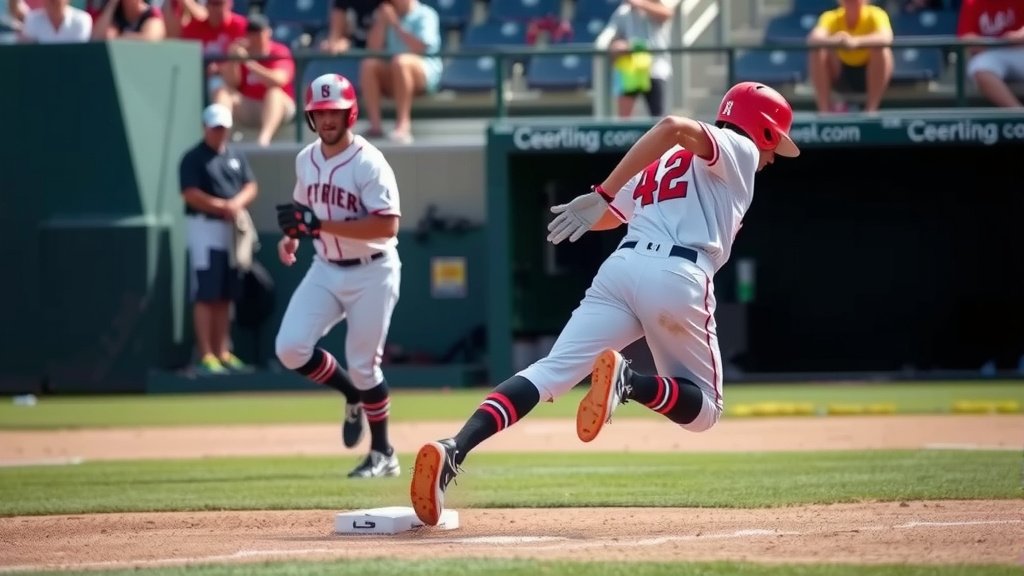
Common Baserunner Terms You’ll Hear
You’ll hear a lot of terms used when talking about baserunners. Knowing these can help you understand the game better. Here are a few you’ll hear often.
| Term | Meaning |
|---|---|
| Pickoff | When a pitcher throws the ball to a base to try and get the baserunner out. |
| Stolen Base (SB) | A baserunner successfully advances to the next base while the ball is in play, without the aid of a hit or error. |
| Caught Stealing (CS) | When a baserunner is put out trying to steal a base. |
| Wild Pitch | A pitch thrown so high, so low, or so wide of the plate that the catcher cannot handle it with ordinary effort. Baserunners can advance on these. |
| Passed Ball | A pitch that the catcher fails to stop with ordinary effort, allowing it to go behind him. Baserunners can also advance on these. |
| Force Out | An out made by a fielder who touches a base with the ball before a runner forced to advance reaches that base. |
Your Checklist for Great Baserunning
Want to improve your baserunning? Here are a few things to focus on. Think of this as your quick guide.
- Always know the count (balls and strikes).
- Watch the pitcher’s footing before you run.
- Be ready to advance on any passed ball or wild pitch.
- Always know how many outs there are.
- Practice your leads and jumps.
- Be aware of your team’s offensive strengths.
Conclusion
You’ve learned that being a baserunner is far more than just reaching base safely. It’s an active role demanding constant awareness, strategic thinking, and precise execution. From reading the pitcher to timing your lead and knowing when to steal or tag up, every action as a baserunner directly impacts your team’s scoring potential. Master these skills, and you’ll transform how you play and watch the game. Your next step? Practice observing these baserunning tactics during your next game and see how they play out.
Frequently Asked Questions
What happens if a baserunner gets off base too early?
If a baserunner leaves a base before a fielder catches a fly ball (for a tag-up) or before the pitcher releases the ball (when stealing), they can be called out. This is why precise timing is so important in those situations. It’s a common mistake for new runners, but experienced players learn to judge these moments carefully.
Can a baserunner advance on a wild pitch or passed ball?
Yes, absolutely! A wild pitch is a pitch the catcher can’t handle, and a passed ball is one they miss. If these happen, any baserunners on base are allowed to advance at their own risk. Smart baserunners are always ready to take advantage of these unexpected opportunities to gain an extra base.
What’s the difference between stealing a base and advancing on an error?
Stealing a base means you successfully advance to the next base while the pitcher is throwing to the batter, without any help from a hit or a mistake by the defense. Advancing on an error means you reached the next base because a fielder made a mistake, like dropping the ball or throwing it away.
How does the number of outs affect a baserunner’s strategy?
The number of outs significantly changes strategy. With two outs, a baserunner can be more aggressive. They can take bigger leads or attempt steals more freely because if they get out, the inning ends anyway. With fewer than two outs, a baserunner must be more cautious to avoid making the third out.
Why is “reading the pitcher” so important for a baserunner?
Reading the pitcher helps a baserunner anticipate when they might attempt a steal or take a bigger lead. By watching the pitcher’s movements, like their wind-up or if they throw over to the base, a runner can gain an advantage. This awareness allows them to get a better jump or avoid being picked off.