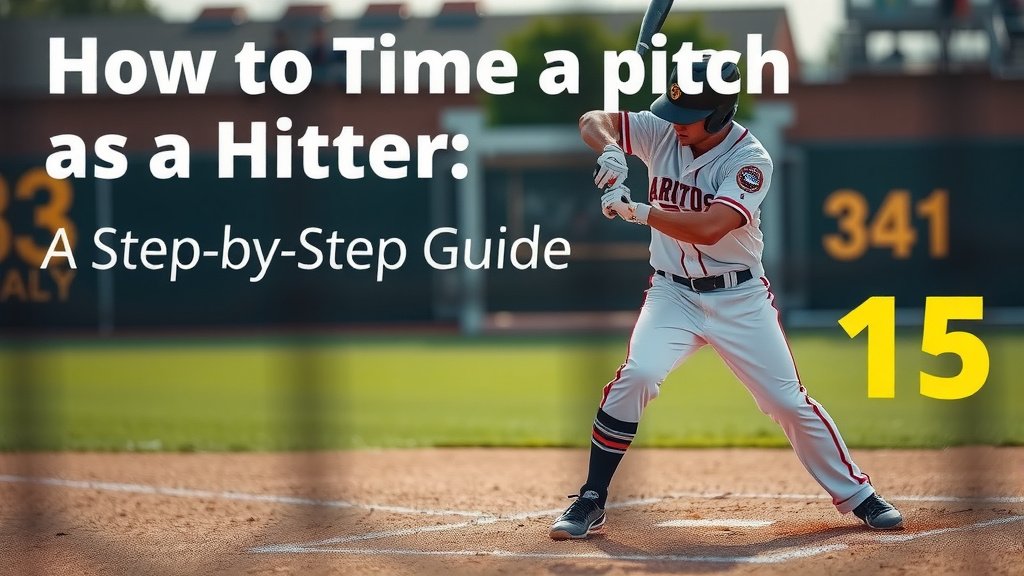
How to Time a Pitch as a Hitter: A Step-by-Step Guide
Timing a pitch as a hitter comes down to starting your load as the pitcher releases the ball and letting your eyes pick up the release point. You start your swing early enough that the bat arrives on time. That’s the whole secret in a nutshell.
Sounds simple, right? But we all know a 90 mph fastball doesn’t give you much time to think. The good news is that pitch timing is a skill you can train, not just a gift you’re born with. We researched what hitting coaches and players actually do, and we found a handful of simple habits that make a big difference. Things like reading the pitcher’s rhythm, keeping a steady timing trigger, and adjusting to different arm speeds.
- Start your load right as the pitcher releases the ball.
- Keep one simple timing trigger so you’re not guessing every pitch.
- Track the ball from release point to contact zone.
- Adjust your timing for fastballs, offspeed pitches, and different arm angles.
- Practice with soft toss, batting practice, and live pitching to lock it in.
So if you’ve been swinging late, early, or somewhere in between, don’t sweat it. We’ve got you. Below, we break down how to time a pitch step by step, so you can start squaring up more balls instead of fouling them off.
Mastering Pitch Timing at the Plate
Great timing starts before the pitcher even lets go of the ball. You want your load (that little weight shift back) to begin right at release. From there, everything flows forward together. Miss the start, and you’re chasing the pitch instead of meeting it.
Think of it like jumping rope. You don’t jump when the rope hits the ground. You jump based on the rhythm of the swing. Pitching works the same way. Once you lock into the pitcher’s tempo, your body knows when to go.
Why Timing Is So Hard (And Why That’s Okay)
A big-league fastball takes about 400 milliseconds to reach the plate. That’s less than half a second. Research on human reaction time shows the simple visual reaction takes roughly 200 milliseconds, meaning hitters have a split second to decide and swing (NIH). No wonder even pros foul off pitches they’re late on. Our breakdown of big-league fastball speed shows what that velocity means for a hitter’s reaction window.
Here’s the good news. Hitters don’t react to the ball. They anticipate it. Your brain uses the pitcher’s motion, release point, and early ball flight to predict where and when the pitch will arrive. That’s a skill, and skills can be trained.
The Three Parts of Every Swing’s Timing
Coaches often break timing into three phases. Get each one right, and the whole swing feels easier.
- Load: Your weight shifts back slightly as the pitcher releases.
- Stride: Your front foot lands as the ball crosses the middle of the plate area.
- Swing: The bat comes through to meet the ball in your contact zone.
If you’re consistently late, one of these steps is starting too late. If you’re early, you’re probably guessing or jumping at the ball. We found that fixing the load timing fixes most problems downstream.
Finding Your Personal Timing Trigger
A timing trigger is the pitcher’s movement that tells your body, “Go now.” Most hitters use the pitcher’s front leg landing or the moment the ball leaves the hand. Pick one and stick with it.
Why one trigger? Because your brain loves consistency. When you use the same cue every pitch, your swing becomes automatic instead of a thinking exercise. Switching cues pitch to pitch is like changing your golf grip mid-round. Nothing feels right.
Common Triggers and Who They Work For
| Trigger | Best For | Watch Out For |
|---|---|---|
| Front foot landing | Hitters who are often late | Can rush you against slow pitchers |
| Ball release | Players with quick hands | Too slow if your load is long |
| Pitcher’s leg lift | Younger players learning rhythm | Harder with quick-pitch guys |
Try each in practice. Many hitting instructors suggest starting with the leg lift if you’re young or new, then tightening toward release as your hands get quicker.
Reading the Pitcher Instead of Guessing
You can’t time what you can’t see. So train your eyes on the right spots. Watch the pitcher’s release point closely during the first couple of innings. Some guys hide the ball, some sling it from a low slot. Every delivery is a little different.
We found that the best hitters pick up small clues early: arm speed, grip, even the pitcher’s tempo between pitches. A slow windup with a deliberate leg lift? Probably offspeed coming. Quick, compact delivery? Expect the gas.
Drills That Sharpen Your Eyes
Color Ball Drill
Have a coach throw balls with different colored markings. Call out the color before swinging. This forces you to track the ball instead of swinging at a blur.
Delayed Front Toss
During front toss, have the tosser vary the timing of the release. Sometimes pause, sometimes go quick. Your eyes and body learn to wait, then react. It’s annoying in the best way.
Pitcher Mimicking in the On-Deck Circle
Mimic the pitcher’s delivery from the on-deck circle. Match his rhythm with your load. By the time you step in, your internal clock is already set.

Adjusting to Different Pitch Speeds
Here’s where timing gets tricky. A changeup looks like a fastball out of the hand. Your body starts its swing on schedule, and suddenly the ball is still on its way. You look like you’re swinging in slow motion. Embarrassing? Sure. Fixable? Absolutely. Seeing the pitcher’s side helps here, and our guide to how pitchers use offspeed pitches explains the deception you’re facing.
The key is staying back. Keep your weight centered longer on offspeed pitches so you can wait. Many coaches teach hitters to use the same trigger for every pitch but adjust the stride and hands. Same start, different finish.
- Fastball: Start your load on time, let the hands fire.
- Changeup: Same trigger, but keep the front side closed longer.
- Curveball: Look for the downward spin, trust your eyes.
- Slower pitcher: Delay your trigger slightly; don’t rush.
Fixing Common Timing Problems
Late swing? You’re likely starting your load too late or striding too long. Shorten the stride and start earlier. Early swing? You’re guessing or tensing up. Relax your hands and trust your trigger. Rolling over ground balls? Your timing is close, but your hands are ahead of your hips. Slow down the load and let the body work together.
One more thing. Vision matters more than most players think. Sports vision researchers note that tracking a small object moving fast is one of the most demanding visual tasks in sports (NCBI). If you’re squinting at the plate, get your eyes checked. Seriously. It’s a five-minute fix that some hitters never consider.
Practice Plan to Lock In Your Timing
Repetition builds rhythm. But mindless reps won’t do it. Here’s a simple checklist we put together from what coaches and players recommend:
- Tee work first: Groove your load and stride before speed enters the picture.
- Soft toss with varied timing: Random release times force real adjustments.
- Live batting practice: Face real pitching at game speed whenever you can.
- Track one trigger for a full week: Don’t switch cues every practice.
- Video your swings: Compare your load against the pitcher’s release.
- Rest your eyes: Fatigued eyes track worse; sleep and breaks matter (CDC).
Do this consistently, and you’ll notice something funny. The ball starts looking bigger. It isn’t, of course. Your timing just got better, and now you’re swinging with confidence instead of hope. That’s when hitting gets fun again.
Conclusion
Timing a pitch isn’t magic. It’s a rhythm you build, one rep at a time. Start your load at release, pick one trigger and stick with it, and train your eyes to pick up the ball early. Adjust for offspeed by staying back, not by changing your whole approach. When things go wrong, and they will, fix the load first. Everything downstream usually follows.
Here’s your next step: pick a single trigger tonight, then take 50 focused swings off a tee this week grooving your load against an imaginary release. Video it if you can. Small, consistent work beats a bucket of hack every time. Go get your timing back.
Frequently Asked Questions
Should I watch the ball all the way to the bat?
You should track it as far as your eyes allow, and most hitters can follow it to just in front of the plate. What matters more is picking it up cleanly at release. A clean first look makes the rest of the flight feel slower.
Do faster pitchers mean I should swing harder?
No. Against harder throwers, you need to start earlier, not swing harder. Swinging harder actually slows you down because tension messes with your sequence. Stay loose and let your load do the timing work.
Can I time a pitcher I’ve never faced before?
Yes, and most of that work happens before your first at-bat. Watch his tempo and release point from the dugout or on-deck circle. By your first pitch, you should already have a rough internal clock set.
Is timing harder for older players or slower bat speeds?
Slightly, but experience often makes up for it. Veterans anticipate pitches better because they’ve seen thousands of deliveries. If your bat speed is a concern, a shorter, more efficient load buys you extra time.
How long does it take to fix bad timing?
Most players we found report noticeable improvement within a few focused sessions, with real consistency taking a few weeks. The key is picking one fix at a time. Chasing three corrections at once usually leaves you worse off than when you started.