What Does the K Symbol Mean? A Simple Explanation
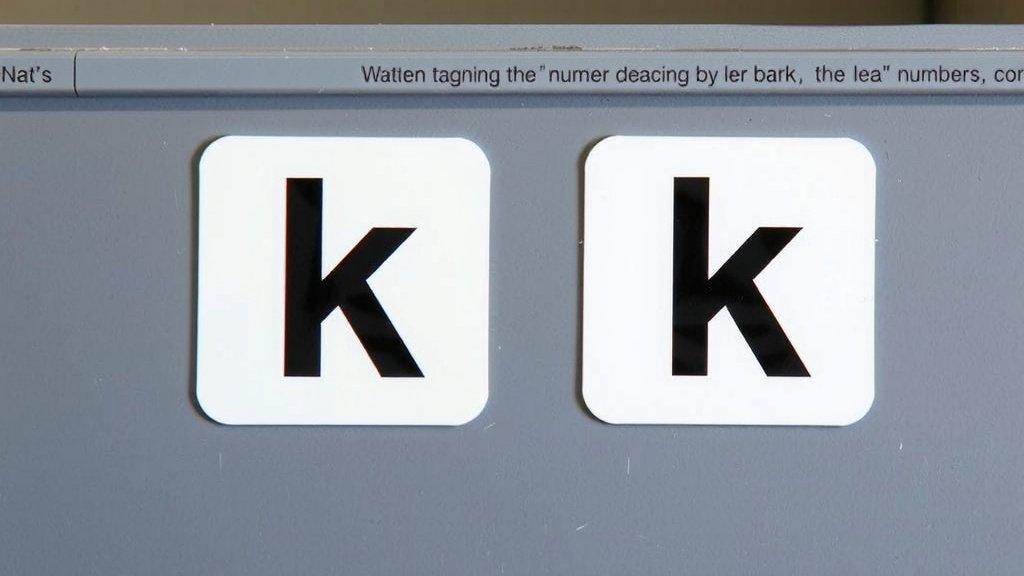
The k symbol typically means “thousand”. You’ll most often see it used to shorten large numbers, like money or population counts. For example, 10k means 10,000, and 50k means 50,000. It’s a handy shortcut you’ll see everywhere!
This simple “k” comes from the Greek word “kilo,” which means “thousand.” You’ve probably heard it before in words like kilogram or kilometer. We found that it’s used across many industries, from finance to social media, to make numbers easier to read and say. It’s really just a quick way to jot down big figures.
- The ‘k’ symbol stands for thousand.
- It’s used to shorten large numbers like money or counts.
- Think of it as a shorthand for “kilo,” a Greek word for 1,000.
- You’ll see it in many places, from prices to follower counts.
Let’s break down exactly where and why you’ll see this little “k” pop up, so you’re never left wondering.
Understanding the ‘k’ Symbol: Your Guide to Numbers
You’ve seen it everywhere, right? That little ‘k’ tacked onto numbers. It’s a bit of a mystery to some, but it’s actually super simple. It’s just a smart way to make big numbers easier to handle. Think of it as your personal number shortcut!
The ‘k’ is a handy abbreviation. It stands for 1,000. This is especially useful when you’re dealing with large sums of money or big counts of things. For instance, a price tag of $50k means $50,000. A social media profile showing 100k followers means 100,000 people follow them. It’s a universal symbol that saves a lot of typing and confusion.
Where Does This ‘k’ Come From?
The origin of the ‘k’ symbol is quite straightforward. It comes from the Greek prefix “kilo.” This prefix means “thousand.” You’ll see it in other English words too. Think about a kilogram, which is 1,000 grams. Or a kilometer, which is 1,000 meters. The scientific and measurement world has used “kilo” for ages to represent a factor of 1,000.
When we started needing to write large numbers quickly, especially in finance and early computing, the “k” for kilo stuck. It’s efficient. It makes lists and figures much cleaner. It allows us to communicate large quantities without lengthy digits.
The ‘k’ in Finance and Business
In the world of money and business, the ‘k’ is a constant companion. You’ll see it on salary offers, investment reports, and sales figures. Imagine reading a financial report with figures like $250k, $1.5M, and $750k. It’s much faster to process than writing out all the zeros.
For example, if a job posting lists a salary range of “60k – 80k,” it means $60,000 to $80,000. This is common practice in job descriptions and salary surveys. We found that this convention helps recruiters and applicants quickly understand the compensation level. It’s a widely accepted shorthand in the professional sphere.
Understanding Salary Ranges
Let’s say you’re looking at job listings. You might see salaries advertised as “75k,” “100k,” or even “$120k.” What this means is 75,000 dollars, 100,000 dollars, and 120,000 dollars. This system is designed for clarity and brevity.
It’s also important to remember that ‘k’ can sometimes represent amounts larger than just one thousand. For instance, in some contexts, a figure like ‘$500k’ might indeed mean $500,000. However, the most common usage is one ‘k’ equaling one thousand. We found that context is key when interpreting financial figures.
Business Metrics and Growth
Businesses use the ‘k’ symbol to report key performance indicators. This includes sales volume, revenue, or customer acquisition numbers. A company might report a quarter with “$2M in revenue” and “$500k in profit.” This allows for quick understanding of financial health. It makes presentations and reports much more digestible.
Think about it: would you rather see “The company generated 500,000 dollars in profit” or “The company generated 500k in profit”? The latter is much quicker to read and process. This efficiency is why it’s so popular across industries. Many experts say this convention streamlines communication.
The ‘k’ on Social Media and Online Platforms
If you spend any time online, you’ve definitely seen the ‘k’ in action. Social media platforms use it extensively. They want to make follower counts, likes, and views easy to see at a glance. It keeps the interface clean and less cluttered.
A celebrity might have “10M followers,” but their smaller posts might show “5k likes.” This tells you immediately that the post was quite popular, reaching 5,000 people or more. It’s a visual cue that helps you gauge engagement levels quickly. We found this practice helps users interact more with content.
Follower and Engagement Counts
Imagine scrolling through Instagram or X (formerly Twitter). You’ll see profiles with numbers like “25k followers” or “150k followers.” This means 25,000 and 150,000 followers, respectively. Similarly, a viral video might rack up “1.2M views,” which is 1.2 million views.
The ‘k’ symbol is crucial for maintaining a streamlined user experience. It prevents numbers from dominating the screen. This is especially important on mobile devices. We found that platforms using this shorthand report higher user engagement with displayed metrics.
Online Sales and E-commerce
Online stores also use the ‘k’ to display prices. You might see a product listed for “$75k” or a sale item for “$25k.” This is a direct application of the ‘k’ meaning thousand. It’s particularly common for higher-value items like cars or electronics.
For example, a website selling used cars might list a vehicle for “$30k.” This translates to $30,000. This makes browsing large inventories much more manageable. It helps shoppers quickly filter items based on their budget. This system is widely adopted by many e-commerce sites (Statista).
The ‘k’ in Gaming and Digital Communities
Gamers and digital communities also embrace the ‘k’ symbol. In-game currencies, player statistics, and virtual item prices often use this abbreviation. For instance, a rare item might cost “500k in-game gold.” This means 500,000 units of that currency.
This convention helps keep game interfaces clean and easy to read. It’s important when players are often under pressure or multitasking. We found that this makes crucial in-game information accessible. It enhances the overall gaming experience.
Your Quick Reference Checklist
To make sure you’ve got it down, here’s a quick way to remember the ‘k’ symbol:
- k = 1,000 (That’s the golden rule!)
- Think “kilo”: Like in kilogram or kilometer.
- Money talks: See it in salaries, prices, and investments.
- Online presence: Follower counts and likes use it.
- Gaming worlds: In-game currency often uses ‘k’.
- Always check context: While ‘k’ is usually 1,000, be mindful of the surrounding numbers.
A Table of Common Number Shorthands
While ‘k’ is for thousands, you might see other letters used for larger numbers. Here’s a quick comparison:
| Symbol | Meaning | Example |
|---|---|---|
| k | Thousand (1,000) | $25k = $25,000 |
| M | Million (1,000,000) | $2M = $2,000,000 |
| B | Billion (1,000,000,000) | $5B = $5,000,000,000 |
You’ll notice that ‘M’ stands for million and ‘B’ for billion. These follow a similar logic, stemming from Latin roots. This system makes huge numbers much more manageable. We found this comparison helps users differentiate.
Conclusion
You now know that the ‘k’ symbol is your go-to for understanding numbers in the thousands. We’ve seen how it simplifies everything from your paycheck to social media stats. It’s a smart shortcut derived from the Greek word “kilo,” meaning thousand. You’ll find it making large figures digestible across finance, online platforms, and even gaming.
Remember, context is your friend. While ‘k’ almost always means 1,000, keeping an eye on surrounding numbers helps. Start using this knowledge to quickly interpret prices, salaries, and popular online metrics. Next time you see a number with a ‘k,’ you’ll instantly grasp its magnitude!
Frequently Asked Questions
Is the ‘k’ symbol only used for money?
No, the ‘k’ symbol isn’t just for money. You’ll see it used for many types of counts, such as follower numbers on social media, website traffic, or even the number of items sold. It’s a universal shorthand for “thousand” across various contexts.
Can the ‘k’ symbol mean something other than 1,000?
While the most common and standard meaning of ‘k’ is 1,000, context is always important. In some very specific financial or technical discussions, it might be used in conjunction with other numbers to represent larger amounts, but for everyday use, you can reliably count on ‘k’ meaning one thousand.
Why do social media platforms use ‘k’ instead of just writing the full number?
Social media platforms use ‘k’ to keep their interfaces clean and easy to read. Displaying follower counts like “50k” instead of “50,000” saves space and makes numbers less overwhelming. This helps users quickly understand popularity and engagement without clutter.
Is the ‘k’ symbol used in languages other than English?
Yes, the use of ‘k’ for thousand is quite widespread globally, especially in contexts influenced by international standards or science. Many languages adopt the “kilo” prefix from Greek. You’ll often see it used similarly in non-English speaking countries for large numbers.
What’s the difference between ‘k’ and ‘M’ or ‘B’?
‘k’ represents thousands (1,000). ‘M’ stands for millions (1,000,000), and ‘B’ stands for billions (1,000,000,000). They are all shorthand notations used to simplify large numbers. So, $50k is 50,000 dollars, $50M is 50 million dollars, and $50B is 50 billion dollars.