How to Field a Slow Roller: Key Infield Tips for Baseball
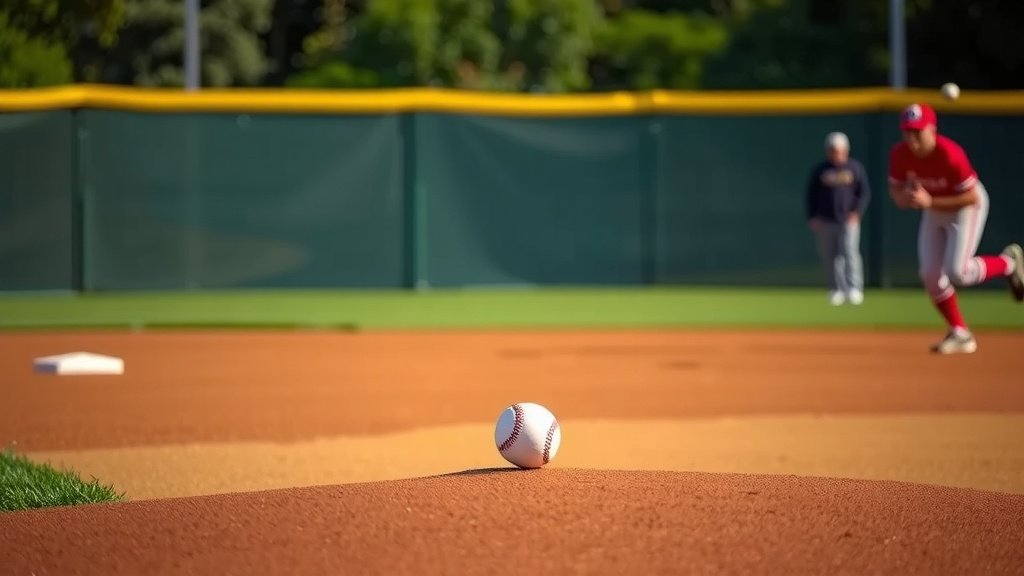
To field a slow roller, charge the ball hard, field it with your bare hand or glove in front of your body, and throw in one smooth motion. Speed matters more than perfection here. The faster you attack the ball, the more time you buy yourself to make the throw.
Why does this play trip up so many infielders? Because the ball sits in that awkward zone—too slow to backhand, too fast to just jog over. Many experts say the biggest mistake players make is hesitating or trying to make a perfect glove play when a quick barehand scoop works better. We found that learning the right footwork and timing takes this play from scary to routine.
TL;DR — What you need to know:
- Charge the ball with aggressive, controlled footwork
- Round the ball to keep your body between it and the runner
- Use your bare hand when the ball is moving slowly
- Set your feet or throw on the run, depending on how much time you have
- Practice it daily—it’s a reps game, not a talent game
Below, we break down everything you need to know about fielding slow rollers, step by step. By the end, you’ll know exactly what to do the moment that ball starts dribbling your way.
Fielding a Slow Roller Step by Step
Here’s your playbook: sprint at the ball, decide glove or barehand early, scoop through it, and fire. That’s the whole recipe. Now let’s break each piece down so it becomes automatic.
Many experts say the best infielders treat this play like a basketball layup—simple, repeatable, done at full speed. We found that players who slow down to think end up rushing the throw. Players who commit to a plan make it look easy.
Step 1: Read the Ball Off the Bat
Your first job is deciding, fast. Watch the ball’s first hop. If it’s dying in the grass, attack. If it’s carrying, drop back. That first-half read decides everything that comes next.
Hesitation is the enemy here. Think of it like a stoplight: green means charge, yellow means hold. We found that players who make the call within two steps almost always get there in time.
Step 2: Attack With Smart Footwork
Sprinting at a rolling ball sounds scary, right? The trick is controlled aggression. Stay on the balls of your feet, take short quick steps, and keep your hips loose.
- First two steps: explode forward
- Middle approach: shorten your stride for control
- Last few steps: round the ball slightly so your chest faces the throw
Coaches call that last part rounding the ball. Instead of running in a straight line and stopping, curve a little to one side. Your momentum then carries toward first base instead of dying at the ball. Our guide to playing third base covers charging slow rollers and bunts from the hot corner.
Step 3: Choose Barehand or Glove
This decision trips up tons of players. Here’s a simple rule we found works: if the ball is rolling slowly enough that you’ll beat it easily, use your bare hand. If it’s still moving with any pace, keep the glove on.
Why barehand? Because you skip the transfer. Glove comes off, ball comes out—that’s two motions. Barehand is one motion. Every motion you remove buys you a fraction of a second, and slow rollers are decided by fractions.
When the Barehand Play Backfires
Barehand only works on a truly slow ball. If you scoop with your bare hand and the ball skips off the wet grass, now you’re chasing it with no glove. Many experts say when in doubt, glove it and throw quick instead of getting fancy.
Step 4: Field It Out Front
Whether you’re using your hand or glove, field the ball in front of your body, not beside it. Extend your arm, scoop low to high, and keep your eyes on it all the way in.
Scooping low to high matters more than you’d think. Start your glove or hand below the ball and lift through it. This way, a bad hop bounces off your forearm instead of skittering past you. We found that players who sweep sideways are the ones who end up wearing the ball.
Getting Your Body in the Right Position to Throw
Fielding the ball is only half the job. The throw is where slow rollers go to die, so let’s fix that part.
Throw on the Run vs. Setting Your Feet
You have two options, and the clock picks for you. Plenty of time left? Plant, set, throw. Running out of time? Throw on the run—field the ball and let your momentum carry the arm through.
| Situation | Best Choice | Why It Works |
|---|---|---|
| Slow ball, you’re close | Set your feet | Full body throw, better accuracy |
| Ball dying, runner fast | Throw on the run | Saves half a second |
| Deep in the hole | Glove and go | Distance needs arm strength |
Throwing on the run doesn’t mean throwing wild. Keep your hips pointed at your target and your arm loose. Think of it like skipping a stone—smooth, not forced.
Protecting Your Arm During All-Out Throws
Max-effort throws from awkward angles are where arms get sore. Many experts say a proper warm-up routine before games is the best injury prevention you can do (Mayo Clinic). If your shoulder or elbow aches after a game, don’t ignore it—rest beats rotator cuff regret every time.
Common Slow Roller Mistakes (And Quick Fixes)
Even good infielders botch this play. Here are the big offenders and how to stop doing them.
- Jogging to the ball: Sprint. You can always ease up; you can’t make up lost time.
- Fielding with a dead stop: Round the ball so you keep moving toward first.
- Barehand on a moving ball: Save the barehand for truly slow ones.
- Overthrowing: A firm, on-target throw beats a rocket in the dugout.
- Watching the runner instead of the ball: Eyes on the ball until it’s in your hand.
We found that most errors come from rushing the decision, not the throw. Decide early, then trust your plan. It’s like parallel parking—panic at the wheel, and you end up on the curb.
Drills to Make This Play Automatic
Repetition is the secret sauce. The play only becomes routine when your body knows it without asking your brain. Here’s a simple checklist to run through in practice:
- Coach rolls ten balls per round; you sprint and barehand each one
- Alternate glove fielding and barehand fielding every five reps
- Add a runner from home to first to build real-time pressure
- Practice throwing on the run from three different approach angles
- Time yourself weekly and aim to shave your best mark
- Do five reps with a wet or scuffed ball for ugly-hop realism
Many experts say short, frequent sessions beat one long Sunday marathon. Ten focused minutes a day builds muscle memory faster than an hour once a week (NIH).
Building Confidence Under Game Pressure
Practice is calm. Games are not. To bridge that gap, add consequence to your drills—miss a rep, you run. It sounds harsh, but pressure in practice makes games feel easy.
We found that the mental side matters just as much. Researchers studying performance anxiety point out that breathing and routine help steady the body under stress (Cleveland Clinic). Take one breath, pick your plan, and go. Nerves shrink when the plan is clear.

Barehand Technique for Soft Hands
Your bare hand should work like a scoop, not a swat. Fingers down, palm up slightly, wrist relaxed. Sweep through the ball and let it settle into your palm.
Keep your throwing-side arm doing the fielding when possible. That way the ball is already in the hand that throws. If you field with your glove-side hand bare, you’ve just added a cross-body transfer for no reason.
Harder Balls and Wet Fields
On a damp field, that “slow” roller speeds up as it skids. Adjust by giving yourself a cushion—charge a touch harder and let the ball come to your scoop. Grass and moisture change everything, so read the field before the inning starts.
Quick Answers to Situations You’ll Actually Face
Real games throw curveballs at your slow rollers. Here’s how to handle the weird ones.
- Ball stops dead halfway: Charge, barehand, throw on the run.
- Fast runner, slow ball: Barehand, one-step throw, aim chest high.
- Slow runner, easy ball: Take your time, set your feet, make a clean throw.
- Ball takes a bad hop: Stay low, block with your body, recover fast.
Many experts say the best infielders are the ones who’ve already made the decision before the ball arrives. Picture the play in your head during the pitch. When it happens for real, your body just follows the script.
Conclusion
The slow roller isn’t a trick play—it’s a test of commitment. You now know the full recipe: read the ball fast, attack with controlled footwork, round it so your momentum works for you, pick barehand or glove based on speed, and throw in one clean motion. We found that players who trust their first instinct make this play look routine, while the ones who second-guess end up hurrying everything.
The good news? This is one of the most fixable skills in baseball. It rewards effort, not genetics. Grab a partner or a coach, roll ten balls at you tomorrow, and start your reps. In two weeks, you’ll wonder why this play ever made you nervous.
Frequently Asked Questions
Should young players use the barehand play on slow rollers?
We found it depends on their throwing arm strength. Younger players often benefit from barehand because it simplifies the transfer, but if they struggle to make accurate throws, keep the glove on. Start them with glove plays, then introduce barehand once their footwork gets comfortable.
How do you know if a ball is slow enough for a barehand play?
Use the “you’ll beat it” test from the article, but there’s another check: watch the grass. If the ball is rolling through dew or wet turf and still losing speed, barehand it. If it’s skipping or picking up pace, stay gloved. When you’re torn, the glove is always the safer bet.
Does fielding a slow roller differ at third base versus shortstop?
Yes, mostly because of throw distance. Third basemen can afford to set their feet more often since the throw is shorter, while shortstops need to throw on the run more frequently. Third basemen also need sharper reads because a bunt or push bunt dies in their area much faster.
What should I do if the ball stops completely in the infield grass?
A dead ball is actually the easiest version of this play. Sprint all the way there, scoop it with your bare hand, and throw on the run. The danger only appears when you jog—give a fast runner half a second, and the easy out becomes an infield hit.
Can outfielders use the same technique for slow ground balls?
The core principles transfer well. Charge hard, field out front, and keep momentum moving toward your target. The main difference is distance: outfielders have much longer throws, so they should prioritize setting their feet whenever possible and only throw on the run when the runner is pressing. Our outfield play guide explains how charging and throwing fundamentals change beyond the infield.