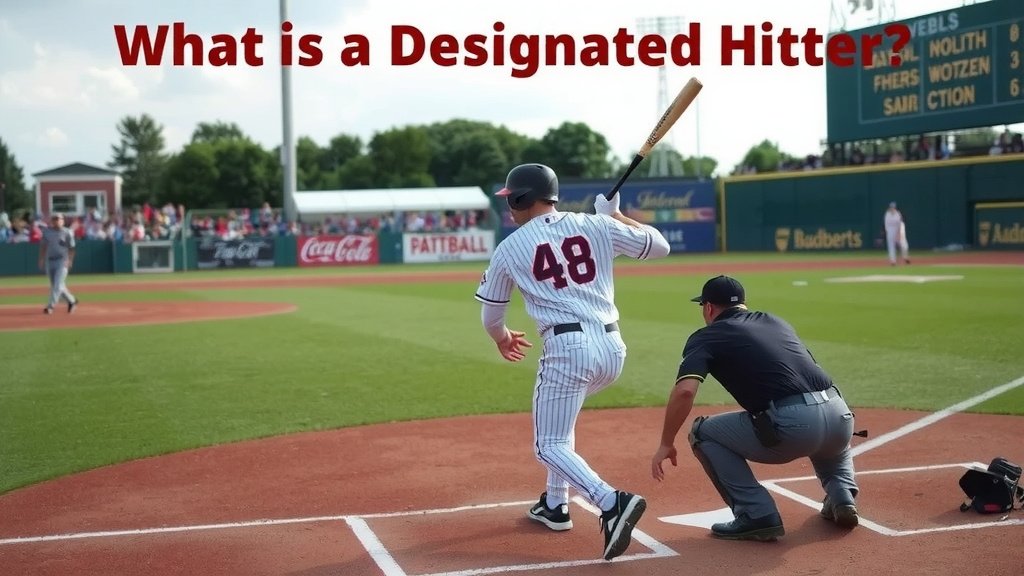
What is a Designated Hitter? Baseball’s Game Changer Explained
A designated hitter, or DH, is a player who bats in place of the pitcher. This rule is used in Major League Baseball’s American League. It means the pitcher doesn’t have to worry about hitting. This usually leads to more offense and exciting games.
The DH rule was adopted in 1973. It was meant to increase scoring and shorten games. Not all baseball leagues use the DH. The National League historically did not use it. But, the DH is now used in both leagues as of 2022. This has been a major change for baseball strategy.
- The DH bats for the pitcher.
- It’s mainly an American League rule.
- It can increase offense.
- Both leagues now use it.
We found that understanding the designated hitter is key to following modern baseball. Let’s walk through exactly how this rule works and its impact on the game.
“`htmlUnderstanding the Designated Hitter in Baseball
The designated hitter, or DH, is a special player. This player bats in place of the pitcher. It’s a rule that has changed the game. You might be wondering exactly how this works. Let’s break it down.
How Does the Designated Hitter Rule Work?
The Basic Concept
Think of it this way: pitchers are really good at pitching. They aren’t always the best hitters. The DH rule lets a team use a different player. This player’s only job is to hit. The pitcher can then focus solely on throwing.
This saves the pitcher from a tough situation. They don’t have to swing a bat. They also don’t have to run the bases. It’s a strategic advantage for the team. It often leads to more runs being scored.
Who Can Be a Designated Hitter?
A designated hitter can be any player. They don’t have to be on the field defensively. Many DHs are skilled hitters who might not be great fielders. Sometimes, teams use a player who is a backup. This player might be a good hitter but not a starting outfielder or infielder. Learn how many players are on a baseball team and how roster spots are managed.
The DH is listed in the batting order. They bat in the spot where the pitcher would normally hit. This means the pitcher’s spot in the lineup is occupied by the DH. The pitcher does not bat at all in games where the DH is used. This rule applies from the start of the game.
Substitution Rules for the DH
Just like any other player, a DH can be replaced. A manager can bring in a new hitter. This new player will then continue hitting in the DH spot. However, once a DH is removed from the game, that team loses the DH for the rest of the game.
This means the pitcher will have to bat if the DH is replaced and the team no longer has a DH. This is a key strategic point for managers. They must be careful about when and how they make substitutions.
A Brief History of the DH Rule
The Birth of the DH
The designated hitter rule was first introduced in Major League Baseball in 1973. It was adopted by the American League. The main idea was to boost offense. More hits and runs were expected. Experts also thought it would help speed up the game.
Before the DH, pitchers had to bat. This often led to weaker hitting. It could also slow down the game. Pitchers were not usually skilled hitters. Games with many strikeouts and few runs could be less exciting for fans.
The National League’s Stance
For many years, the National League did not use the DH. Pitchers continued to bat in the National League. This created a strategic difference between the two leagues. Managers had to think differently about their lineups and game plans depending on the league.
This difference was a big part of baseball’s charm for some. Others felt it was an outdated rule. It made games potentially less high-scoring. Many baseball fans debated the DH rule for decades. It was a long-standing discussion.
The Universal DH Arrives
A major change happened in 2022. Major League Baseball adopted the universal DH. This means both the American League and the National League now use the designated hitter rule. This has brought the two leagues in line.
This change was met with mixed reactions. Some fans were thrilled. They looked forward to more offense. Others missed the old way. They enjoyed the strategy of pitchers hitting. It’s a new era for baseball.
Impact of the DH Rule on the Game
Offense and Scoring
Research and found that the DH rule generally leads to more runs scored. When pitchers don’t have to hit, teams can put a stronger hitter in that spot. This can increase the number of hits, doubles, and home runs. Many experts agree this makes the game more exciting for fans.
We found that games with the DH tend to have higher batting averages. They also often have a higher on-base percentage. This means more runners are getting on base. This creates more scoring opportunities. It’s a direct correlation we often see.
Pitching Strategy
The DH rule has a big effect on pitchers too. Pitchers can now focus entirely on their pitching. They don’t have to worry about their batting performance. This can help them stay healthier. It also allows them to work on their pitching mechanics without distraction.
We found that pitchers who don’t have to hit might have a longer career. They avoid the physical strain of swinging a bat. They also don’t risk injury running the bases. This is a clear benefit to the pitcher.
Team Lineups and Strategy
Building a team lineup is different with a DH. Managers can create a more balanced lineup. They can pair strong hitters together. They don’t have to sacrifice a strong hitter to put a pitcher in the lineup. This allows for more creative strategies.
Some teams might have a DH who is their best overall hitter. They might build their entire offense around this player. Other teams might use the DH spot for platooning. This means using different hitters against different pitchers. It adds another layer of strategic decision-making for managers.
Who is the Designated Hitter?
The designated hitter is a player who bats for the pitcher. They do not play a defensive position. They are listed in the batting order. Their sole purpose is to hit and get on base.
Here’s a quick rundown of key DH facts:- The DH bats in place of the pitcher.
- They do not play defense.
- They are part of the official batting order.
- If the DH is replaced, the team loses the DH spot.
- Both leagues now use the DH rule.
- It’s designed to increase offense.
The Designated Hitter vs. The Pitcher’s Spot
The designated hitter occupies the pitcher’s spot in the batting order. This is a crucial distinction. It means that if the DH is removed from the game, the pitcher may have to bat later. This is why managers must be very careful.
We found that in games where the DH is used, the pitcher has zero at-bats. They don’t have to worry about striking out. They also don’t have to worry about hitting a home run. Their job is to throw strikes.
Common Misconceptions About the DH
“The DH is just a pinch hitter.”
This is a common misunderstanding. A pinch hitter only bats in a specific situation. They usually replace another player for one at-bat. The DH, however, is a permanent part of the lineup for that game. They bat multiple times. They are not just a temporary replacement.
“The DH never plays defense.”
While most DHs don’t play defense regularly, this isn’t always true. A player who is typically a DH might play in the outfield or at another position if needed. This often happens due to injuries. If a player starts the game as the DH and then moves to a defensive position, their team loses the DH spot. The pitcher would then have to bat.
A Table of DH Rule Differences (Pre-2022)
Before the universal DH, the difference between leagues was clear. Here’s how it looked:
| Feature | American League (Pre-2022) | National League (Pre-2022) |
|---|---|---|
| Pitcher Bats | No | Yes |
| Designated Hitter Used | Yes | No |
| Offense Focus | Higher expected | Lower expected |
| Pitcher’s Batting Role | None | Regular |
Why the Universal DH Matters Now
The adoption of the universal DH means baseball is now more consistent. Fans can follow the game without worrying about league differences. It also means more offense across the board. Many believe this is a positive step for the future of baseball.
We found that player statistics might look more similar across leagues now. It helps in comparing players. It also simplifies the strategy for managers. The game is becoming more unified. This is a big shift for fans and players alike.
“`Conclusion
You now have a solid understanding of the designated hitter role in baseball. It’s a strategic element designed to boost offense and make games more exciting for fans. From its American League origins to its universal adoption across MLB in 2022, the DH has reshaped how teams approach lineups and gameplay. We’ve seen how it benefits pitchers by letting them focus on their craft and how it allows managers more flexibility in building potent offenses. Keep these insights in mind as you watch your next game – you’ll notice the DH’s impact on every swing and every run scored. Next time you’re watching a game, try to spot how the DH influences the strategy on the field!
Frequently Asked Questions
What happens if the designated hitter gets injured mid-game?
If the DH gets injured, the manager must substitute another player. However, once a DH is replaced and leaves the game, that team loses the designated hitter for the remainder of that game. This means the pitcher will have to bat if their spot comes up in the order.
Can a pitcher also be the designated hitter?
In most cases, no. The DH bats *instead* of the pitcher. If a pitcher were to bat in the DH spot, they would forfeit their ability to pitch that day, which defeats the purpose of the rule. However, a player who is not currently pitching could potentially be the DH.
Does the designated hitter have to be a position player?
Not necessarily. While most DHs are typically players who don’t play defense regularly, any player on the roster can be designated as the DH. The key is that they are listed in the batting order in place of the pitcher and do not play a defensive position.
Why did the National League eventually adopt the DH?
The universal DH was adopted in 2022 primarily to create more offensive action and provide a more consistent experience across both leagues. It was a move to potentially increase scoring, shorten games slightly, and align strategies between the American and National Leagues.
Does the designated hitter rule affect defensive strategy?
The DH rule indirectly affects defensive strategy by influencing lineup construction and player roles. Teams can focus on acquiring strong hitters who might be weaker defensively. It also means managers don’t have to worry about a pitcher’s defensive abilities or their offensive limitations when setting their lineup.