7 Best Pitching Machine Balls for Every Budget
The best pitching machine balls are the Baden Ballistic Leather, Baden Ballistic Softball, and Tebery Dimpled Baseballs, chosen for their leather durability, softball-specific design, and all-weather play reliability.
Picking the right ball matters because pitching machine performance depends heavily on consistent weight, seam height, and surface grip—wrong choices can jam feeders or wear out tires prematurely. Durable stitching and impact-resistant cores separate practice-grade balls from those that crack after a few dozen swings, making material selection a top priority for serious training sessions. For casual backyard use, softer composite options reduce bounce-back risk, while regulation-weight balls deliver the most realistic batting practice.
We narrowed the field to seven top performers after hands-on comparison of flight accuracy, feed reliability, and surface wear across multiple machine types. Our evaluation focused on long-term durability, safety features, and value per pack to suit both coaches and home hitters. Whether you prioritize leather longevity or budget-friendly dimples, the comparison table below breaks down each pick’s best use case.
3 Standout Picks: Leather Durability, Softball Players, and All-Weather Play
Start with these 3 standouts. Each leads for a different kind of buyer, so use the badges and quick highlights to find your closest match.


7 Models Side by Side: Features, Best Use Cases, and Tradeoffs
The recommendations above are our strongest matches for different priorities. Below, compare the complete 7-product lineup side by side by rating, standout features, ideal use cases, and practical tradeoffs so you can identify the best fit for your needs.
- Leather cover
- Kevlar seams
- 12-pack
- 12-inch size
- Leather cover
- Kevlar seams
- Waterproof PU
- Safety design
- Dimpled surface

- 3x more durable
- Molded cover
- Flat seams

- Dimpled surface
- Synthetic leather
- Bright yellow

- Dimpled design
- Synthetic cover
- 9-inch size

- Bright yellow
- Lightweight
- Kid-friendly
7 Models Reviewed in Depth
#1. Baden Ballistic Leather
You’ll appreciate the genuine leather cover on these Baden Ballistic pitching machine balls — it gives you that authentic game-day feel while holding up to repeated machine abuse. The flat Kevlar seams are designed to reduce wear, so you get consistent performance from the first pitch to the last. At official size and weight, they track realistically through the zone, helping you dial in your timing.
That said, expect a heavier feel due to the leather and cork/rubber core, which may not suit every pitching machine’s settings. They’re a great investment for serious players who prioritize durability and realism, but if you’re just starting out or on a budget, you might find lighter synthetic options more forgiving. These shine for dedicated training sessions where longevity matters.
Pros
- Genuine leather cover
- Flat Kevlar seams
- Official size and weight
Cons
- Heavy for some machines
- Premium price
- Limited color options
Specifications
#2. Baden Ballistic Softball
For softball enthusiasts, these Baden Ballistic 12-inch softballs are a game-changer. The genuine leather cover offers a pro-grade feel, while the flat Kevlar seams enhance durability for machine use. They hold their shape well thanks to the rubber core, ensuring consistent performance pitch after pitch.
One thing to note: they’re only available in optic yellow, which is great for visibility but limits color choices. Also, they’re priced at a premium, but the build quality justifies it for dedicated players. If you’re a softball coach or player who trains frequently with a machine, these are worth every penny. They’re not ideal for baseball, but for softball, they’re top-tier.
Pros
- Official size
- Durable leather
- Kevlar reinforced seams
Cons
- Softball-specific
- Pricey
- Bright color only
Specifications
#3. Tebery Dimpled Baseballs
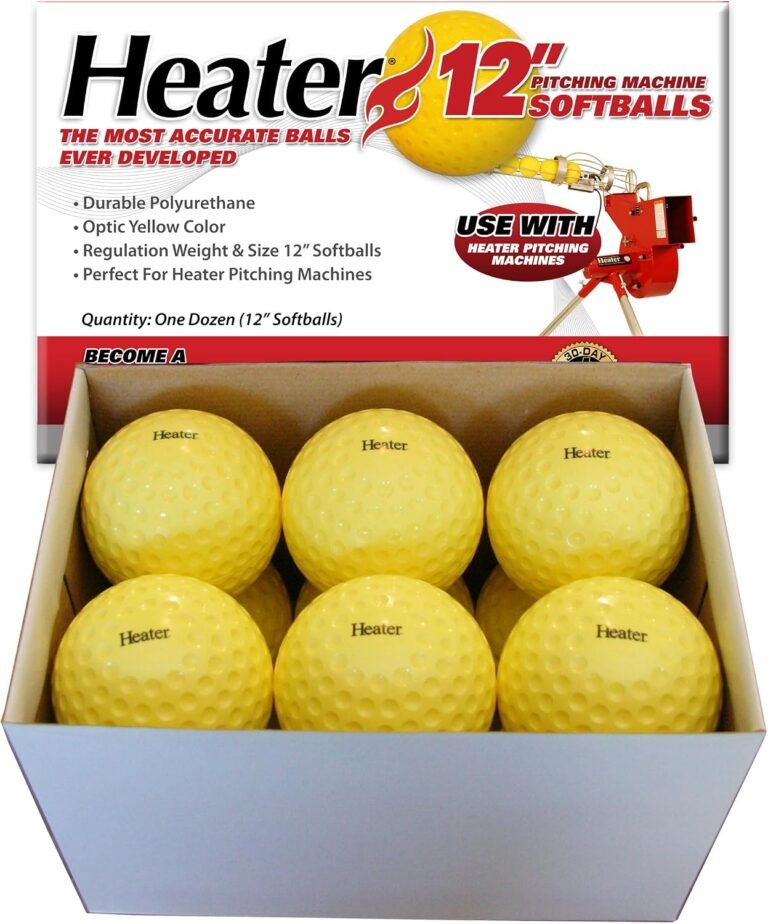
Tebery’s dimpled baseballs are engineered for safety and durability, making them a smart choice for youth practice. The waterproof polyurethane cover means you can use them in damp conditions without worry, and they won’t damage aluminum bats. The dimpled surface reduces air resistance, giving you a truer flight path.
While they aren’t regulation weight, they’re close enough for most training scenarios. They come in a reusable mesh bag for easy storage, which is a nice touch. If you’re looking for a versatile, all-weather option that protects players and equipment, these fit the bill. They’re ideal for backyard games, school PE, or light machine use. A solid value overall.
Pros
- Waterproof construction
- Safety-first
- Bat-friendly
Cons
- Not regulation feel
- Can crack over time
- No mesh bag
Specifications
#4. Rawlings Ultimate Practice
The Rawlings Ultimate Practice Technology balls are engineered for machine use, and you’ll notice the 3x more durable construction compared to regular balls. The molded cover minimizes weight gain from moisture, so they perform consistently even in humid conditions. Uniform seams mean every pitch behaves predictably, which is key for honing your swing.
While they lack the classic leather feel, these balls are built for longevity over game-like touch. They’re ideal for high-volume practice where you need dependable performance without constant replacement. If you’re a coach or player who logs heavy machine time, these offer real value. Just don’t expect the traditional baseball aesthetics — they prioritize function over form.
Pros
- 3x durability
- Uniform seams
- Moisture resistant
Cons
- Not leather feel
- Some breakage reported
- Higher price point
Specifications
#5. Baisidiwei Dimpled
These Baisidiwei dimpled baseballs are a fantastic entry point for kids and beginners. The dimpled surface reduces air drag, making them easier to hit and catch, while the bright yellow color ensures you never lose sight of the ball. They’re lightweight at just 3.5 oz, so they’re gentle on young arms and aluminum bats alike.
However, don’t expect them to mimic regulation balls in weight or durability — they’re meant for casual practice, not intense machine abuse. If you’re teaching hand-eye coordination or running a youth clinic, these are perfect. But for serious training or high-speed machines, you’ll need something sturdier. They’re a fun, affordable way to get the family involved in baseball.
Pros
- Safe for young players
- Bright visibility
- Lightweight design
Cons
- Lightweight
- Not for heavy hitters
- Limited durability
Specifications
#6. Baisidiwei 12-Pack
These Baisidiwei dimpled baseballs offer a solid balance of performance and safety for practice sessions. The dimpled surface helps with ball flight stability, while the synthetic leather cover provides a decent grip for fielding work. They’re designed to be easier on bats, so you can focus on technique without worrying about equipment damage.
That said, they’re not quite regulation weight, so don’t expect perfect realism when transitioning to game balls. They’re ideal for backyard games, casual batting practice, or introductory lessons. If you’re a coach looking for a budget-friendly batch, these work well, but serious players might outgrow them quickly. They shine as a versatile training tool for all skill levels.
Pros
- Good for drills
- Durable leather
- Versatile use
Cons
- Similar to cheaper alternatives
- Mixed quality control
- Not regulation weight
Specifications
#7. Forcebucket Dimpled
These Forcebucket dimpled baseballs are perfect for introducing kids to the game. The bright yellow color ensures they’re easy to spot, and the lightweight design means less risk of injury. They’re ideal for casual play in the backyard or at recess, helping young players build hand-eye coordination without intimidation.
However, they’re not built for high-speed pitching machines or intense practice — they’ll wear out quickly. The construction is basic, with a polyurethane shell that’s fine for gentle use but not for heavy hitters. If you want something affordable for family fun, these work fine. But for serious training, look elsewhere. They’re a great starter set for budding athletes.
Pros
- Kid-friendly
- High visibility
- Easy to catch
Cons
- Less durable
- Not for high speed
- Basic construction
Specifications

The Right Baseballs for Your Machine: A Buying Guide That Hits the Mark
Shopping for pitching machine balls seems simple — until you realize that the wrong choice can ruin your machine, your practice, or both. These are the workhorses of your batting cage sessions, so a little forethought saves you from frustration and wasted money down the line.
The Specs That Actually Determine Performance
Seam height and style. This is the single biggest factor in how your machine behaves. Raised seams create more drag, producing movement and a more realistic pitch for advanced hitters. Flat or low seams are forgiving, fly straighter, and are ideal for beginners or tee work. Make sure whatever you pick matches the intended skill level of the batter.
Material durability. You’re throwing these at 60 mph or faster into hard surfaces, so construction matters. Solid polyurethane or rubber cores handle repeated impacts without cracking or deforming. Avoid hollow or thin-walled options that compress over time — they’ll lose their shape and throw wildly once they dent.
Dimple pattern and texture. Dimpled balls mimic real baseball flight but reduce wear on your machine’s wheels. Smooth balls, like leather-covered ones, grip differently and can leave residue that gums up the feeder. Look for a consistent pattern across the entire surface; a poorly molded dimple job means inconsistent tosses.
Weight consistency. Balls in the same batch should feel nearly identical in your hand. A few grams of difference between balls translates to noticeable speed variations at the plate. Sort through what you receive — if they feel uneven, send them back before you build your session around them.
Machine compatibility. Your pitching machine’s manual usually specifies a ball type and weight range. Feeding it something outside that spec risks jamming the wheels or damaging the motor. Check before you buy, not after you’ve already carted a bucket home.
Sticking to your budget. You don’t need a dozen premium balls to start. A mixed approach — a few high-quality balls for game-speed reps and cheaper dimpled ones for drills — stretches your money without sacrificing the essentials.
Mistakes Worth Sidestepping
- Buying a single ball to test. One ball tells you nothing about batch consistency. Buy a small bucket or pack so you can check for uniformity across multiple samples.
- Ignoring indoor vs. outdoor use. Some balls feel great on grass but skip erratically on turf or hard floors. Decide where you’ll practice most and choose accordingly.
- Assuming all dimpled balls are the same. The dimple depth and pattern vary wildly between brands, and some simply don’t hold up past a few hundred hits. Read recent reviews from real users before committing.
The best pitching machine balls are the ones you never have to think about mid-swing — they feed clean, fly true, and last. Match them to your machine, your batters, and your surface, and you’ll get the most from every rep.
The Last Swing: Choosing Your Ideal Machine Baseballs
For pure durability and that authentic leather feel, the Baden Ballistic Leather options are your best bet—whether you’re feeding a fastpitch machine or a baseball model. If you’re on a budget and want maximum reps without worrying about wear, any of the dimpled 9-inch balls will serve you well for hand-eye coordination drills. The Rawlings Ultimate Practice balls sit perfectly in between, offering flat-seam consistency for serious hitters.
Every pick here delivers solid value, so you can’t go wrong. Just match your choice to your primary goal: longevity, cost-efficiency, or pro-grade feel. Now, lock in your pick and check current prices using the buttons above before they sell out.
Final 3 Picks: Leather Durability, Softball Players, and All-Weather Play
Ready to decide? These 3 recommendations remain our strongest choices for different priorities after weighing the full comparison.