How to Take the Best Route to a Fly Ball in Baseball
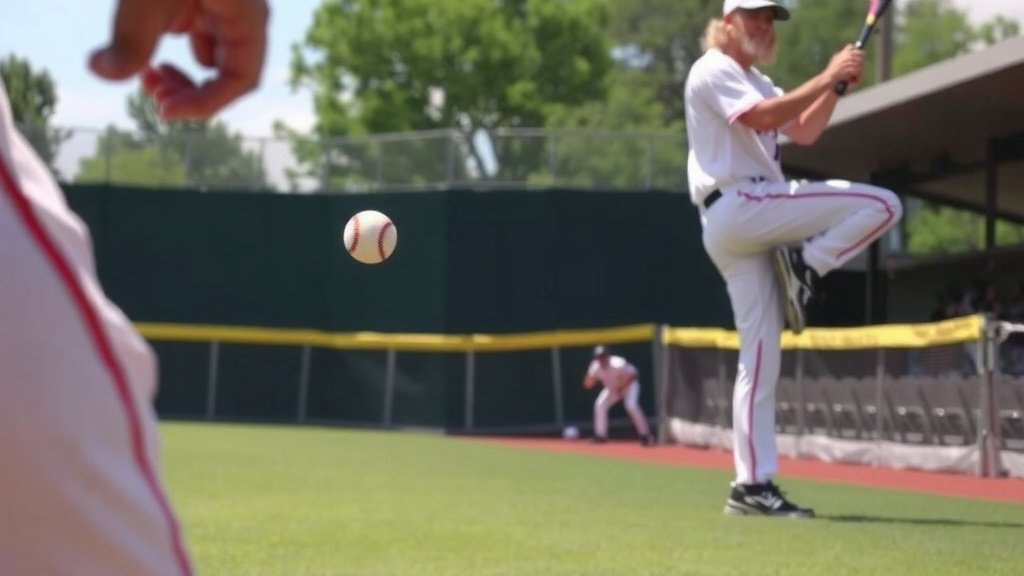
Taking a good route to a fly ball starts the moment the ball leaves the bat. The easiest way to do it is to read the ball off the bat, take your first step back at an angle, then run to the spot where you predict it will land—not where it currently is. That one shift in thinking makes everything easier.
Here’s the tricky part: while the ball is in the air, it looks different from behind and from the side. Many experts say great outfielders use small adjustment steps to stay on line with the ball instead of sprinting blindly. We found that keeping your eyes locked on the ball and running at the right speed beats pure speed every time. Our guide to playing center field goes deeper on tracking fly balls from the toughest spot in the outfield.
- Watch the ball’s angle and height off the bat first.
- Take your first step back, then turn and run.
- Aim for the landing spot, not the ball itself.
- Use small adjustment steps to stay on your line.
- Catch with two hands above eye level whenever you can.
Let’s walk through exactly how this works step by step, so your next fly ball feels less like a scramble and more like a plan.
Reading the Ball Off the Bat
The first half-second tells you almost everything. Watch the angle and the sound of contact. A high, lazy arc means you have time. A line drive with climb means hurry.
Many hitting instructors teach batters to pick up the pitcher’s release point. Fielders should do the same thing in reverse. Lock your eyes on the barrel, then track the ball as it jumps out (American Baseball Coaches Association teaching guides make the same point).
What the First Two Steps Tell You
Your brain does the math fastest when you move early. Research on visual tracking shows athletes judge depth better while in motion than standing still (NIH studies on dynamic vision support this). So don’t wait for certainty. Move toward your best guess.
- High arc? Step back calmly, then settle under it.
- Flat and hard? Turn and sprint immediately.
- Spin on the ball? Expect it to hook or slice; shade your line accordingly.
The Drop Step: Small Move, Big Results
Here’s the move that saves more plays than any other. Take one step back at an angle with your lead foot before you turn and run. Why? Because turning your head and sprinting blind is how fly balls end up on the grass behind you.
Think of it like merging onto a highway. You glance, position yourself, then go. The drop step lets you keep the ball in view for those first critical moments.
Running to the Landing Spot, Not the Ball
This is the mental shift that separates smooth outfielders from frantic ones. Chase the destination, not the traveler. If you run at the ball itself, every arc change drags you sideways. If you run at the predicted spot, you arrive early and wait. Starting in the right spot makes this easier, and our outfield positioning guide explains how to set your depth before each pitch.
We found that players who think “where will it land?” make cleaner catches than those who think “where is it now?” It sounds simple. Under pressure, it isn’t—unless you drill it.
Picking Your Line and Staying On It
Once you choose a path, protect it. Veering left and right kills your speed and jumbles your depth judgment. Many coaches describe good routes as a straight line with a curved finish.
Adjustment Steps Explained
Adjustment steps are quick, choppy shuffles—never lunges. They let you fine-tune your position without breaking stride. Picture a waiter carrying a full tray across a busy room. Small steps, steady pace, no crashes.
Use them when the ball hooks, drifts, or when the wind betrays you. Two or three quick steps usually fix your line. One desperate dive usually doesn’t.
Speed Control: Why Slower Is Often Faster
Sprinting full-out from the crack of the bat sounds brave. It’s usually wrong. You need enough gas in the tank to correct course mid-route.
A study of outfielder tracking found that controlled pacing with late acceleration produced better positioning than max effort from step one. Go about 80 percent early, read the flight, then kick it into gear for the final few yards.
| Situation | Early Speed | Late Speed |
|---|---|---|
| Deep fly ball | Steady jog back | Sprint to spot |
| Bloop hitter | Explosive first steps | Break down at catch |
| Line drive at you | Full sprint | Hold stride, extend |
Wind, Sun, and Fence Awareness
Conditions mess with the ball more than most players admit. A ball hit into the wind dies faster than it looks. A tailwind carries it deeper. Check which way the flags point before the first pitch, not during the play.
And the sun? Every fielder has a horror story. Learn the sun’s angle at your position during warmups so you can shield your eyes with your glove or cap instead of flinching at the worst moment.
Playing Near the Wall
Know your fence. Count the warning-track steps during practice. When chasing a deep drive, many experts say you should glance at the wall once, mid-route, so the last three strides are confident and full-speed.
Catching Clean: Finishing the Route Right
A perfect route means nothing if the ball pops out. Get there early, square your body, and catch with two hands above eye level. Two hands absorb impact and protect against the bounce-out.
The CDC’s guidance on sports safety emphasizes landing and deceleration control, and the same logic applies here: plant balanced, then catch. Never catch off-balance if you can help it.
Calling It Like a Pro
If anyone else is near the ball, call it loud and early. “Mine! Mine! Mine!” Communication prevents collisions and weird hesitation hops. Centers of youth-sports safety guidance list clear verbal calls among the top collision preventers.
Your Pre-Pitch Routine Checklist
Great routes start before the swing. Run through this list every inning:
- Check the wind direction and strength.
- Note the sun angle at your position.
- Count your steps to the fence or boundary.
- Creep a step toward your likely depth.
- Say your coverage out loud with teammates.
- Reset your stance—weight on the balls of your feet.
Drills That Build Better Routes
You can’t think your way to instinct. Repetition builds it. Try these three classics:
- Blind toss drill: A coach yells “go,” you turn, then find the ball in the air.
- Fence series: Track the wall distance while running full speed.
- Wrong-ball look: Coach points one way, throws another, forcing quick recovery reads.
Practice perception-action training and your reactions sharpen measurably, according to sports-science reviews (NCBI). Even ten minutes per practice adds up fast over a season.
Common Mistakes and Quick Fixes
Most route errors fall into a few buckets. Spot yours, fix it fast:
- Backpedaling too long: Turn and run sooner; backpedal is slow and risky.
- Watching your feet: Trust your body; eyes belong on the ball.
- Guessing on spin: Shade toward the hook side; most curveballs bend that way.
- Late breakdown: Slow your last steps so you can adjust and catch balanced.
Fix one mistake at a time. Add them all at once and you’ll feel like a giraffe on ice skates—one correction, drilled until it sticks, then the next.
Conclusion
A good route to a fly ball isn’t about being the fastest player on the field. It’s about making a plan in the first half-second and sticking to it. Read the ball off the bat, drop step at an angle, then run to the landing spot with controlled speed. Along the way, use small adjustment steps to stay on your line, respect the wind and sun, and finish with a balanced, two-handed catch. We found that players who drill these habits in practice make the plays that look impossible in games. Your next step is simple: pick one drill from the list above and run it at your next practice. Ten focused minutes today becomes a highlight-reel catch by season’s end.
Frequently Asked Questions
Should I backpedal or turn and run for a fly ball over my head?
Turn and run almost every time. Backpedaling is slower, throws off your balance, and hides the ball from view when you need it most. Use a drop step to keep the ball visible, then rotate and sprint to your spot.
How do I judge a fly ball at night under the lights?
Stadium lights create high fly balls that vanish into the darkness against the sky. Track the ball against a fixed reference like the light bank or the top of the infield, and listen to contact sound for height cues. Get your first step back early, since you’ll have less visual information to work with than in daylight.
What should I do if two players are both going for the same fly ball?
The fielder with the clearest angle to the ball should call it immediately and loudly, ideally more than once. The other player should peel off and become a backup, not a second catcher. If you didn’t call it, defer—hesitation and collisions cause far more errors than a dropped ball.
How can I practice taking better routes if I don’t have a coach or batting practice?
Recruit a friend with an arm or a bucket of balls and have them hit fungos or launch high tosses from varying angles. You can also work solo by tossing a tennis ball off a wall or bat and chasing it down. The key is mixing up directions and heights so your reads stay honest.
Do gloves affect how I should run my route?
Not your route itself, but your finish. Keep your glove off your face while running so it doesn’t block your vision or slow your stride. Bring it up into position during your last few steps, right as you break down and square your body for the catch.