How to Prevent Shoulder Injuries When Pitching: 8 Key Tips
The best way to prevent shoulder injuries pitching is to warm up properly, limit your pitch count, and build strength in your rotator cuff before problems start. Throwing a baseball puts a lot of stress on your shoulder, so smart habits matter more than luck. Do those three things consistently, and you’ll protect your arm for the long haul.
Here’s the thing: most pitching injuries don’t come from one bad throw. They build up over time from overuse, poor mechanics, or not enough rest between outings. Many experts say young pitchers are especially at risk because their growing bodies can’t handle heavy workloads. And if you’ve ever iced a sore shoulder after a game wondering if it’s serious, you’re not alone.
TL;DR — Quick tips to keep your shoulder safe:
- Always warm up your arm and shoulder before throwing.
- Follow pitch count limits and take rest days seriously.
- Strengthen your rotator cuff and shoulder muscles with simple exercises.
- Fix poor throwing mechanics before they cause damage.
- Stop immediately if you feel pain — soreness that lingers is a warning sign.
Below, we break down everything you need to know about protecting your arm, step by step. We researched what physical therapists and pitching coaches recommend, so you can keep throwing without worrying about your shoulder. Let’s get into it.
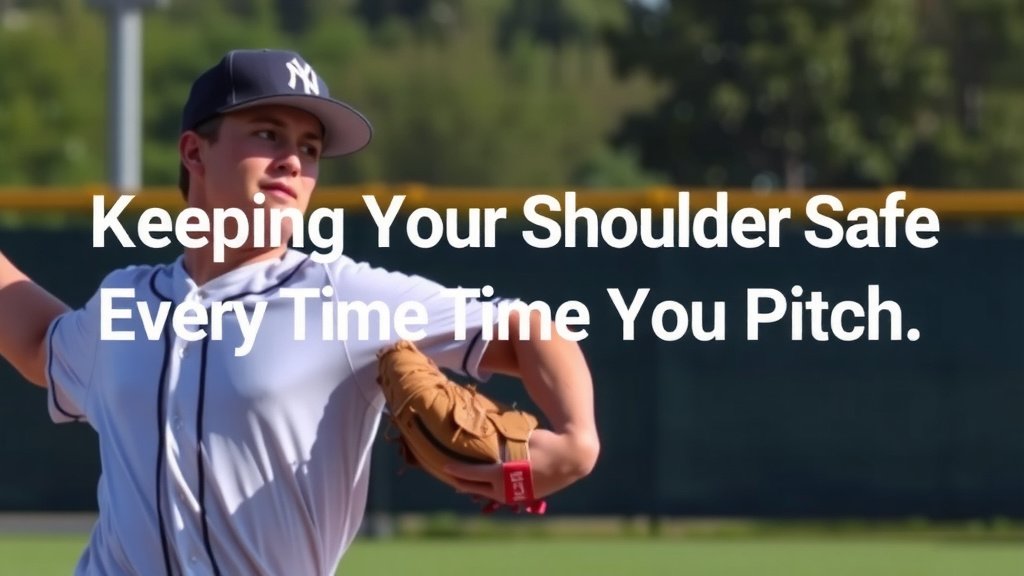
Keeping Your Shoulder Safe Every Time You Pitch
The smartest way to protect your shoulder is to treat your arm like a pitcher’s arm every single day, not just on game day. That means warming up, watching your workload, and building strength between starts. Do these things and your shoulder will thank you later.
Think of your shoulder like a car engine. You wouldn’t redline a cold engine, right? Same idea here. Let’s walk through what actually works.
Why Pitching Hurts Shoulders in the First Place
Every throw puts serious stress on your shoulder. Research shows the shoulder rotates at extremely high speeds during a pitch, and the muscles and tendons take the brunt of it (NIH). One pitch won’t hurt you. Hundreds of pitches, week after week, can.
Here’s the part most players miss: damage adds up quietly. You might feel fine today, then suddenly your shoulder aches out of nowhere. What really happened? Months of small wear with no rest.
Overuse Is the Number One Culprit
Studies tracking young pitchers found that throwing too many pitches and pitching while tired raises injury risk a lot (NCBI). Fatigue changes your mechanics, even if you can’t feel it. Your body starts compensating, and that’s when things break down.
So ask yourself honestly: are you pitching because you feel good, or because the team needs you? Those are very different reasons.
Warm Up Like You Mean It
A proper warm-up gets blood flowing and loosens the joint before you throw hard. Many experts recommend starting with light cardio, then dynamic stretches, then easy throwing from short distance (Mayo Clinic). Jumping straight into full-speed throwing is like sprinting out of bed. Don’t do it.
A Simple Pre-Throwing Routine
- Jog or jump rope for 5 minutes to raise your body temperature.
- Do arm circles, both directions, slow and controlled.
- Stretch your chest, shoulders, and forearms gently.
- Play easy catch at short range for 5 to 10 minutes.
- Gradually back up and add velocity only when your arm feels loose.
Skip the long static stretches before throwing, by the way. Research suggests holding deep stretches right before activity can temporarily reduce power. Save those for after the game.
Know Your Pitch Count Limits
Pitch counts exist for a reason. Major League Baseball and youth baseball organizations publish limits based on age, and we found they’re worth following even if nobody’s checking. Younger arms need fewer pitches and more rest between outings.
Here’s a rough guide many youth leagues use:
| Age | Max Pitches Per Day | Required Rest After |
|---|---|---|
| 8 and under | 50 | 1-2 days |
| 9-12 | 85 | 1-4 days depending on pitch count |
| 13-16 | 95 | 1-4 days depending on pitch count |
| 17-18 | 105 | 1-4 days depending on pitch count |
Also watch for other throwers stacking up. Catching a long game the day before you pitch counts as throwing, too. Coaches and parents, this one’s on you to track.
Watch for These Fatigue Warning Signs
- Your velocity drops noticeably late in the outing. Our guide to how fast pitchers throw at every level shows what a normal velocity range looks like.
- Your mechanics fall apart and you start muscling the ball.
- Your arm feels heavy or “dead.”
- You can’t repeat your release point.
If any of these show up, it’s time to hang it up for the day. No coach’s opinion beats a tired arm.
Build a Stronger Rotator Cuff
Your rotator cuff is a group of four small muscles that hold your shoulder joint together. Pitching hammers them. Strengthening these muscles is one of the best things you can do, and physical therapists recommend targeted work several times a week (Cleveland Clinic).
The good news? You don’t need a gym. A light resistance band and a little space will do.
Band Exercises That Actually Help
We found these four moves come up again and again in physical therapy programs:
- External rotations: Keep your elbow pinned to your side and rotate your arm outward against the band.
- Internal rotations: Same setup, pull the band across your body.
- Band pull-aparts: Great for the muscles between your shoulder blades.
- Scaption raises: Raise your arms at a slight angle in front of you, thumbs up, light weight.
Keep the resistance light. This is about endurance and control, not maxing out. High reps with a floppy band beat heavy weight with bad form every time.
Don’t Forget Your Legs and Core
Here’s a secret coaches love: your arm isn’t doing most of the work. Power comes from your legs and core, then transfers through your body. Weak legs mean your shoulder picks up the slack.
Add squats, lunges, and planks to your weekly routine. Your shoulder will quietly thank you.
Fix Your Mechanics Before They Fix You
Bad mechanics are like a leaky roof. Small problem now, big problem later. Common issues include throwing all arm with no leg drive, dropping your back side too early, or leading with your elbow.
Get an experienced coach or knowledgeable adult to watch you throw. A phone video works too. Compare your motion to healthy pitchers and look for obvious differences. Small fixes now can save you months of rehab later. Our beginner’s guide to playing pitcher breaks down the fundamentals of a sound, arm-friendly motion.
Mechanics Mistakes to Avoid
- Throwing across your body consistently.
- Short-arming the ball instead of a full arm swing.
- Not finishing with your arm extended toward your target.
- Rushing toward the plate and losing your balance.
Rest and Recovery: Your Secret Weapon
Rest isn’t lazy. It’s where your body actually repairs itself. Many experts say at least 4 months off from throwing each year is smart for young players (NCBI). That break lets growing shoulders recover fully.
Between outings, sleep well, hydrate, and eat real food. Ice sore spots if they ache, and never pitch through sharp pain.
Know When to See a Doctor
Soreness that fades in a day? Probably fine. Pain that sticks around, gets worse, or shows up during everyday activities? Time to get it checked. The Cleveland Clinic recommends seeing a doctor for shoulder pain that lasts more than a few days or comes with weakness and limited motion.
Don’t play tough guy here. Early treatment for a minor issue is way easier than surgery for a major one. We’ve seen too many players wish they’d spoken up sooner.
Your Shoulder-Saving Checklist
Pin this list somewhere you’ll see it before practice:
- Warm up with cardio and easy throwing before every session.
- Track your pitch count and rest days honestly.
- Do band exercises for your rotator cuff 2-3 times a week.
- Strength-train your legs and core weekly.
- Video your mechanics and review them with a coach.
- Take at least a few months off from throwing every year.
Do these six things consistently, and you’ll be pitching long after the guys who ignored them hang up their cleats.
Conclusion
Protecting your shoulder comes down to habits, not heroics. Warm up before every throw, respect your pitch counts, and build a stronger rotator cuff with simple band work a few times a week. Add solid mechanics, real rest between outings, and a yearly break from throwing, and you’ve covered just about everything that puts pitchers on the disabled list. Remember, pain is your body’s way of speaking up — listen early and you’ll avoid the long, boring rehab road. So here’s your next step: grab a light resistance band this week, and do your first rotator cuff session. It takes ten minutes, and your future self will be glad you did.
Frequently Asked Questions
Can I still throw if my shoulder is only a little sore?
We’d be careful here. Mild soreness that fades within a day is usually normal, but if it lingers, worsens, or shows up every time you throw, that’s your cue to rest. When in doubt, take a few days off and see how the arm responds.
What’s better for a sore pitching shoulder — ice or heat?
Ice works best right after throwing, when inflammation and aching are the issue. Heat is better before activity or on stiff, tight days because it boosts blood flow. Many trainers we looked into suggest ice after games and heat before light throwing sessions.
How long should I wait between pitching outings?
It depends on your age and how many pitches you threw, but most youth guidelines call for one to four days of rest. If you threw a heavy workload, lean toward the longer end. When your arm still feels heavy or weak, add another day.
Do certain pitches hurt your shoulder more than others?
Research we reviewed suggests the fastball puts similar or more stress on the arm than breaking balls, and overall workload matters far more than pitch type. That said, young pitchers should focus on command and mechanics before adding fancy pitches. A well-thrown fastball beats a sloppy curveball every time.
Are long toss and flat-ground throwing safe for shoulder health?
Yes, when done with a loose arm and sensible distances. Many coaches use long toss to build arm strength without the stress of pitching off a mound. Keep throws smooth, stop when your arm tightens up, and never try to outrun your natural arm strength.