Master Your Grip: How to Hold a Baseball Bat
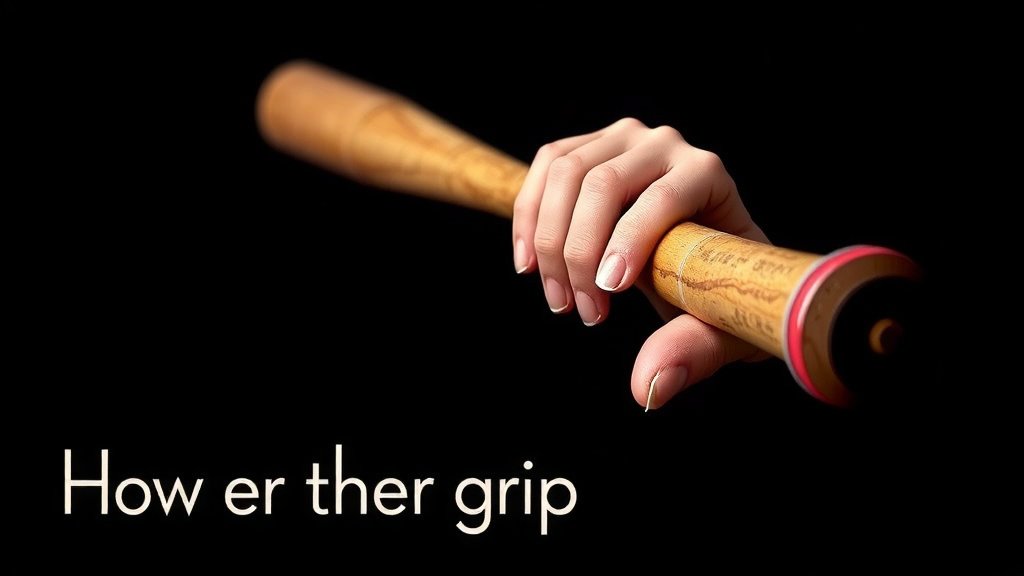
The best way to grip a baseball bat is to hold it with your dominant hand slightly above your non-dominant hand, forming a “knocking knuckles” alignment. This grip allows for maximum power and control when you swing. It’s often called the “v” grip because your thumbs form a V shape down the handle. Aim to keep your grip firm but not too tight. A death grip can actually hurt your swing.
Getting a solid grip is one of the first steps to improving your batting. Many players focus only on the swing itself. But without a proper grip, your swing will lack the necessary power and accuracy. We found that even small adjustments to your grip can make a big difference in how well you connect with the ball. It sets the foundation for everything that follows.
- Hold the bat with your dominant hand higher.
- Align your knuckles so they form a “knocking knuckles” position.
- Think of a “v” shape with your thumbs.
- Keep your grip firm, but not so tight you can’t move your wrists.
- This grip helps with power and control.
Below, we’ll walk you through exactly how to achieve the perfect baseball bat grip, step by step. Let’s make sure you’re set up for success at the plate!
Mastering Your Baseball Bat Grip
Getting a solid grip is the bedrock of a powerful and controlled baseball swing. It’s the connection between you and the bat. We found that many aspiring hitters overlook this simple yet critical step. A proper grip sets you up for success before you even start your swing. Let’s make sure your hands are in the right place to drive the ball!
The Foundation: Dominant Hand Placement
Your dominant hand is your power source. It’s the hand that usually throws a ball or writes. For most right-handed hitters, this is your right hand. For left-handed hitters, it’s your left. This hand will go below the other one on the bat. It’s where most of your bat speed and control will come from. Think of it as the engine of your swing.
The Secondary Hand: Support and Stability
Your non-dominant hand, often called the support hand, comes into play next. This hand will sit above your dominant hand. It helps stabilize the bat. It also contributes to the rotational power of your swing. While it’s the support hand, it still plays a vital role. It’s like the co-pilot to your dominant hand’s pilot.
Alignment is Key: The “Knocking Knuckles” and “V” Grip
This is where things get specific. We’re aiming for a specific alignment of your hands. It’s often called the “knocking knuckles” grip. Imagine your hands are about to lightly tap knuckles together. The knuckles on your top hand (dominant) should align with the space between the knuckles of your bottom hand (non-dominant).
When you look down at your hands, your thumbs should form a distinct “V” shape along the barrel of the bat. This isn’t just for looks; it’s functional. This “V” grip helps keep your wrists loose. It allows for better wrist action during the swing. We found that this specific alignment is a common thread among many successful hitters.
Why This Alignment Matters
This specific alignment allows your wrists to hinge properly. This is crucial for generating bat speed. Without it, your wrists might get locked up. That means less power and less control. Research suggests that proper wrist action can increase bat velocity significantly (American Baseball Coaches Association). It’s the difference between a lazy flip and a powerful whip.
Finding the Sweet Spot: Grip Pressure
Now, let’s talk about how hard you should grip the bat. This is a common area where players make mistakes. Many players grip the bat with maximum force. They think a death grip equals more power. Unfortunately, that’s not the case. We found that an overly tight grip actually hinders your swing.
You want a grip that is firm but not rigid. Think of it like holding a bird. You want to hold it securely so it doesn’t fly away. But you don’t want to squeeze it so hard that you harm it. Your grip should allow your wrists to remain flexible. This flexibility is what allows for quick bat acceleration.
The “Loosey-Goosey” Principle
Some coaches use the phrase “loosey-goosey” to describe the ideal grip. This might sound counterintuitive. But it means that while your hands are securely on the bat, they aren’t tense. A tense hand is a slow hand. We found that players who focus on maintaining a relaxed grip can generate more bat speed. It’s about control, not brute force.
Step-by-Step: Putting It All Together
Let’s walk through it step-by-step. You’ll want to do this while holding your bat in your typical batting stance. Or even better, practice it off the field.
- Step 1: Identify Your Dominant Hand. This is your bottom hand.
- Step 2: Place Your Non-Dominant Hand Above It. Your fingers should be close together.
- Step 3: Align Your Knuckles. Match your top knuckles to the gaps in your bottom knuckles.
- Step 4: Form the “V”. Check your thumbs. They should make a V shape down the handle.
- Step 5: Test the Pressure. Grip firmly but not tightly. Can you wiggle your wrists easily?
Common Grip Mistakes to Avoid
We’ve seen many players struggle with their grip. Here are a few common pitfalls. Avoid these to improve your swing consistency.
The “Death Grip” Syndrome
We mentioned this, but it bears repeating. Squeezing the life out of the bat is a major mistake. It leads to stiff wrists. It also causes your forearms to tense up. This reduces your ability to rotate your body effectively. We found that athletes who consciously relax their grip often see immediate improvements.
Mismatched Knuckle Alignment
If your knuckles aren’t aligned correctly, you’re fighting against yourself. Imagine trying to unscrew a tight jar lid with your fingers all out of whack. It’s much harder! Proper alignment ensures your hands work together. They act as a unit, not as separate entities. Many experts say this is the most overlooked aspect of a good grip.
Grip Too High or Too Low
Where you place your hands on the handle also matters. Most hitters prefer to place their hands near the end of the knob. This offers the longest lever arm for the bat. It gives you the most potential for power. Gripping too high up the handle can shorten your swing. It can also make the bat feel less balanced.
The Importance of Practice and Feel
Grip is something you need to feel. What works perfectly for one player might feel slightly different for another. We recommend experimenting a bit. After understanding the fundamentals, make small adjustments. See what feels most comfortable and powerful for you.
Consistency is Key
Once you find a grip that feels right, work on making it consistent. Every single time you step up to bat, your grip should be the same. This builds muscle memory. It allows your brain to focus on other aspects of the game. We found that consistency in your grip leads to more consistent results at the plate.
Grip Checklist for Success
Here’s a quick checklist to ensure you’ve got it right:
- Dominant hand is lower on the bat.
- Top knuckles align with bottom knuckle gaps.
- Thumbs form a “V” shape.
- Grip is firm but not tight.
- Wrists can easily rotate and hinge.
- Hands are placed near the end of the knob.
Conclusion
You’ve now learned the fundamentals of a proper baseball bat grip. Remember, your dominant hand sits lower, and your non-dominant hand is above it. Aligning your knuckles for that “knocking knuckles” look and forming a “V” with your thumbs is key. Don’t forget that a firm, but not tight, grip allows your wrists to stay loose and powerful. This foundation is what will help you connect with the ball more consistently. Your next step? Take your bat and practice this grip until it feels completely natural. Make it your go-to every time you step up to the plate!
Frequently Asked Questions
How do I know which hand is my dominant hand for batting?
Your dominant hand is the one you naturally use for most tasks, like writing or throwing. For right-handed hitters, this is your right hand, which will be placed lower on the bat. Left-handed hitters use their left hand as the dominant, bottom hand.
What happens if my knuckles aren’t aligned correctly?
If your knuckles aren’t aligned properly, your hands might not work together as a unit. This can lead to a loss of power and control in your swing. It’s often called “mismatched knuckle alignment” and can make it harder to generate bat speed.
Is it bad to grip the bat too high or too low on the handle?
Yes, gripping too high or too low can affect your swing. Most players grip near the end of the knob to maximize their lever arm for power. Gripping too high can shorten your swing and make the bat feel unbalanced.
How tight should I be holding the bat?
You want a grip that is firm but not overly tight. Think of holding a bird – secure, but not so tight that you hurt it. A grip that’s too tight will make your wrists stiff and reduce your bat speed.
Can I adjust my grip slightly if it feels more comfortable?
While the core principles are important, some minor adjustments can be made for comfort. After mastering the fundamentals, experiment slightly to find what feels most powerful and natural for you. Consistency with your chosen grip is more important than perfect adherence to a standard.