Understanding the Infield Fly Rule: A Simple Explanation
The Infield Fly rule is a special baseball rule designed to **prevent unfair advantages** for the defense. It states that if a fair fly ball can be caught by an infielder with **ordinary effort**, the umpire can declare it an infield fly. This makes the batter automatically out, even if the ball isn’t caught. It’s a way to keep the game **fair for runners on base**.
This rule is primarily used with runners on first and second base, or with the bases loaded, and less than two outs. Its purpose is to stop infielders from intentionally dropping a catchable fly ball to get a **double play**. Without it, runners might be forced to freeze, fearing a dropped ball that would lead to an out and potentially more. We found this rule keeps the game moving logically.
- The Infield Fly rule makes the batter automatically out.
- It applies when runners are on first and second, or bases loaded, with less than two outs.
- The ball must be a fair fly ball that an infielder can catch easily.
- It prevents the defense from intentionally dropping a ball to force outs on runners.
- The umpire calls “Infield Fly!” to signal the rule is in effect.
So, how exactly does the umpire decide when to call it and what happens next? Let’s walk through the specifics of the Infield Fly rule step by step.
Understanding the Infield Fly Rule in Baseball
This baseball rule might seem a bit confusing at first. But once you grasp its purpose, it makes perfect sense. It’s all about fairness. The Infield Fly rule protects the runners on base from a potentially unfair defensive play. We’ll break down exactly when and why it’s called.
When Does the Infield Fly Rule Apply?
This rule doesn’t come up in every game. It has very specific conditions. You’ll almost always see it when there are runners on base. And there’s a time limit, too.
The Key Situations
The Infield Fly rule is invoked only under certain game conditions. You need runners on base. And there can’t be too many outs.
Runner and Out Requirements
Here are the exact conditions for the Infield Fly rule to be considered:
- Runners on Base: There must be at least one runner on second base. This can be runners on first and second base, or the bases loaded. A runner on first base only doesn’t trigger it.
- Fewer Than Two Outs: The defense must have fewer than two outs. So, zero outs or one out is required. Two outs means the rule doesn’t apply.
- Fair Fly Ball: The batted ball must be a fair fly ball. This means it’s hit into fair territory. It also must be a fly ball, not a ground ball or a line drive.
- Ordinary Effort Catch: The ball must be catchable by an infielder with ordinary effort. This is the umpire’s judgment call. It’s not a pop-up that requires a diving catch. It’s more like a short, easy pop.
What is “Ordinary Effort”?
This is the most subjective part of the rule. The umpire watches the play. They decide if an infielder could catch the ball without a difficult maneuver. Think of a short pop-up near home plate. Or a fly ball that lands in the infield grass. An infielder can usually get to those easily.
If the ball is hit high and deep into the outfield, it’s usually not an infield fly. If it’s a tricky, swirling pop-up that could be hard to track, it’s also probably not an infield fly. It has to be a relatively straightforward catch for an infielder.
The Umpire’s Role and Call
Once the conditions are met, the umpire makes the call. This is a critical moment. The umpire’s decision is final.
Signaling the Infield Fly
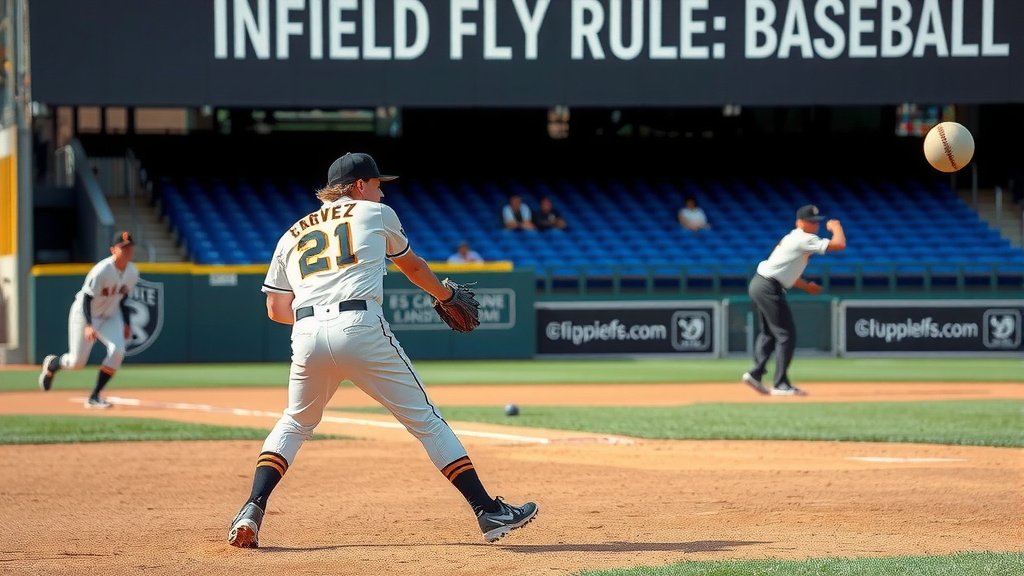
When the umpire sees a situation that meets the Infield Fly criteria, they will signal it. The umpire will raise their hand and yell “Infield Fly!”. Sometimes you might also hear “Infield Fly, if it drops!”. This is for clarity. The call is made while the ball is in the air.
This call tells everyone on the field what’s happening. It alerts the runners. It also informs the fielders. The umpire’s job here is to ensure fair play. They are not guessing. They are applying a specific rule to prevent an unfair advantage.
What Happens After the “Infield Fly” Call?
The moment the umpire calls “Infield Fly,” the batter is automatically out. This is the core of the rule. But what happens to the runners? This is where things can get interesting.
Batter is Automatically Out
As soon as the umpire calls “Infield Fly!”, the batter is out. This is true even if the ball is not caught. It’s like the batter committed an out just by hitting the ball in that specific situation. The ball is still live, though. This means runners can advance or be put out if they choose to run.
Runners’ Options and Risks
This is the most important part for the runners. They are no longer forced to run if the ball is dropped. However, they are not frozen either.
If the infielder catches the ball, the batter is out. The runners can advance at their own risk, just like on any other caught fly ball. If the infielder drops the ball intentionally or unintentionally, the batter is still out. But the ball is live.
This means runners can try to advance to the next base. They do so at their own risk. The fielders can still try to tag them out. Or they can try to throw them out at the next base. This is where a double play could still happen if the runners aren’t careful.
When the Ball is Dropped
Let’s say the umpire calls “Infield Fly!” and the infielder drops the ball. The batter is out. The ball remains live. Runners on base can advance. They must be tagged out or forced out. If a runner is off their base, a fielder can tag them. Or they can throw to the base the runner is advancing to before the runner gets there.
We found that many fans get confused here. They think the runners are safe if the ball is dropped. That’s not the case. The runners can advance, but they can still be put out. The Infield Fly rule prevents the *intentional* drop for an easy force out at multiple bases. It doesn’t grant immunity from being tagged if they run.
Why is the Infield Fly Rule Important?
The rule exists to prevent a specific type of unfair play. It keeps the game fair for both the offense and the defense.
Preventing Double Play Abuse
Imagine this scenario. Runners are on first and second base. There are zero outs. The batter hits a short pop fly into the infield. Without the Infield Fly rule, the infielder could easily let the ball drop. The runners would be forced to advance. The infielder could then pick up the ball and tag the runner coming from first base. Then they could throw to second base to get the runner advancing from second base. This would be an easy double play. It feels unfair because the batter didn’t really hit the ball well. It also punishes the runners for doing what they are supposed to do.
The Infield Fly rule stops this. By calling the batter out immediately, the force play is removed. Runners are no longer obligated to advance. They can choose to stay put. Or they can attempt to advance at their own risk if the ball is dropped. This makes the play more dependent on the runners’ decisions and the fielders’ ability to execute a tag or throw.
Protecting Runners’ Decisions
Without the rule, runners would have to make a split-second decision. Do they run on a ball they see might be caught? Or do they freeze? Freezing might save them from an out if the ball is caught. But if the ball drops, they might have missed their chance to advance. The Infield Fly rule removes this dilemma. Runners know the batter is out. They can then decide their next move based on whether the ball is caught or dropped.
Quick Checklist: Infield Fly Rule Essentials
Here’s a quick rundown to help you remember the key points:
- Batter is automatically out.
- Runners are not forced to advance.
- Call happens with runners on 1st & 2nd or bases loaded.
- Requires less than two outs.
- Infielder must be able to catch it with ordinary effort.
- Umpire calls “Infield Fly!”.
Common Misconceptions About the Rule
Even experienced fans sometimes misunderstand parts of the Infield Fly rule. Let’s clear up a couple of common points of confusion.
Is the Ball Dead?
No, the ball is never dead when an Infield Fly is called. This is a crucial distinction. The batter is out, but the ball is live. Runners can advance, and fielders can try to make outs. If the ball is caught, it’s a standard fly out for the batter, and runners advance at their risk. If it’s dropped, the batter is still out, but the ball is live, and runners can advance and be tagged out.
Does it Apply to Outfielders?
Generally, no. The rule is called the “Infield” Fly rule for a reason. It’s specifically for a fair fly ball that an infielder can catch with ordinary effort. If an outfielder has to come in and make a play on a ball that would otherwise be an infield fly, the rule generally doesn’t apply. Umpires are trained to judge based on an infielder’s ability. An outfielder playing deep is not typically considered when making the “ordinary effort” judgment.
Conclusion
You’ve now got a solid grasp on the Infield Fly rule. Remember, it’s all about keeping the game fair by preventing the defense from gaining an unfair advantage with runners on base and fewer than two outs. We’ve seen how it makes the batter automatically out and protects runners from being forced into tricky situations. By understanding the conditions, the umpire’s call, and what happens next, you’ll never be caught off guard by this rule again. Next time you’re at the ballpark, keep an eye out for those specific situations – you’ll be able to spot an Infield Fly call like a pro!
Frequently Asked Questions
What if the ball is hit into foul territory but looks catchable by an infielder?
The Infield Fly rule only applies to balls hit into fair territory. If a fly ball is hit into foul territory, even if an infielder could easily catch it, the rule is not in effect. It would be a normal foul ball.
Can an umpire call “Infield Fly” if there’s only a runner on first base?
No, the Infield Fly rule requires at least a runner on second base. This means the conditions are met with runners on first and second base, or with the bases loaded. A runner on first base alone is not enough to trigger the rule.
What happens if the umpire *doesn’t* call “Infield Fly” on a catchable popup, and the fielder drops it?
If the umpire does not make the “Infield Fly” call, and a fielder drops a catchable fly ball, the ball is live. The batter is not automatically out. The runners are still forced to advance if they were on base in a force situation, and the fielders can then try to make outs on the runners.
Does the Infield Fly rule apply if the ball is hit hard and low, like a line drive that an infielder might catch?
No, the Infield Fly rule is specifically for a “fly ball.” This means a ball hit into the air that an infielder can catch with ordinary effort. It does not apply to line drives or ground balls, even if an infielder could easily snag them.
If an Infield Fly is called and the ball is dropped, do runners have to run?
No, runners are not forced to run when an Infield Fly is called and the ball is dropped. The batter is out, and the ball remains live. Runners can choose to advance at their own risk, or they can choose to stay on their base, as the force play is removed.