Pitcher’s Mound Distance: Official Baseball Measurements
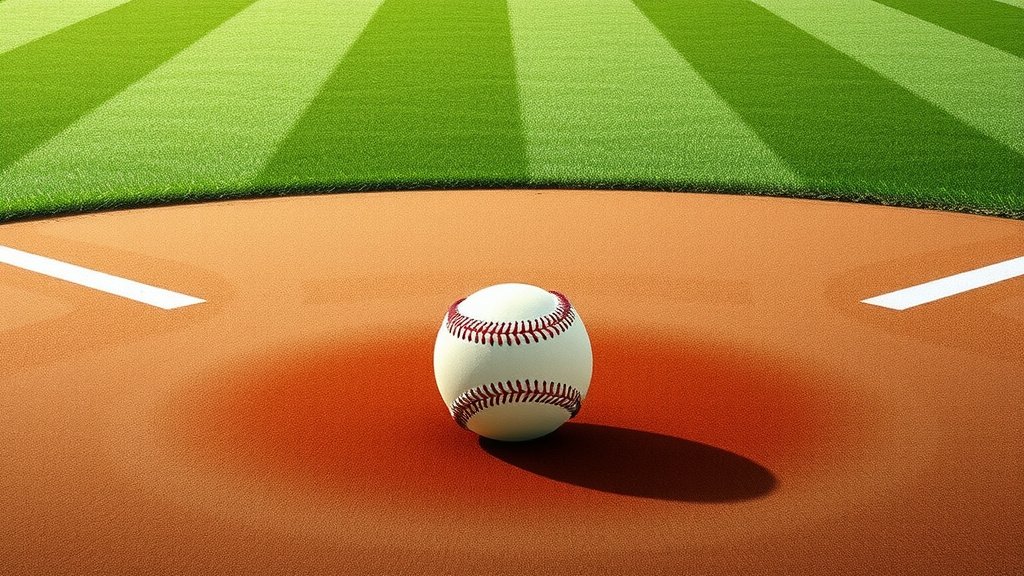
The pitcher’s mound is set at 60 feet, 6 inches from home plate. This distance is standard for all levels of professional and amateur baseball. It’s a critical measurement that impacts the game’s strategy and the pitcher’s challenge.
This specific distance isn’t just a random number. It was established after years of testing and adjustments in baseball history. The 60 feet, 6 inches mark offers a balance. It gives pitchers enough room to throw hard while still allowing batters a fair chance to hit.
- The pitcher’s mound is 60 feet, 6 inches from home plate.
- This distance is standard across most baseball leagues.
- It balances pitching power with hitting opportunity.
- The measurement has evolved over baseball’s history.
Let’s walk through how this measurement affects the game and what it means for you, whether you’re a player or a fan.
You might be wondering about the exact distance from the pitcher’s mound to home plate. It’s a measurement that feels just right for the game. We’ll break down why this distance matters so much.
Understanding the Pitcher’s Mound Distance
The pitcher’s mound is set at 60 feet, 6 inches from home plate. This specific measurement is used in nearly all levels of baseball. It applies to Major League Baseball (MLB), minor leagues, and most amateur leagues.
The Official Measurement Explained
This 60’6″ distance is the official line. It’s measured from the front edge of the pitcher’s rubber. That rubber is a white, rectangular slab. It’s embedded in the mound. The measurement is to the back point of home plate. This distance has been the standard for a long time. It’s a number that has shaped how baseball is played. It impacts everything from pitching velocity to hitting strategy.
Why This Exact Distance?
So, why 60 feet, 6 inches? It wasn’t always this way. Baseball history shows this distance evolved. Early baseball had different measurements. Rules changed over decades. The goal was to find a sweet spot. This distance balances the pitcher’s power. It also gives the batter a fair chance. Too short, and hitters would dominate. Too long, and pitchers would have an unfair advantage. Research and experience led to this mark (MLB). It creates a challenging yet fair contest.
The Impact of the 60’6″ Mark on the Game
This measurement is more than just a number on a field. It affects the entire game. Pitchers must deliver the ball with accuracy. Hitters need to time their swings perfectly. Every pitch is a duel within this specific range.
For the Pitcher: A Test of Skill
Imagine standing on that mound. You have the ball in your hand. You look at the batter standing 60 feet, 6 inches away. That distance requires precise control. Pitchers train for years. They work on velocity, control, and different pitches. The mound’s height also plays a role. It gives them a slight downward angle. This angle adds deception. It makes the ball seem faster to the hitter. A pitcher’s success hinges on mastering this distance.
Velocity and Reaction Time
A fastball thrown at 90 mph travels that 60’6″ distance very quickly. We found that a hitter has less than half a second to react. That’s about 0.4 seconds. This includes seeing the pitch, identifying it, and starting their swing. It’s an incredibly short window. This short time makes hitting challenging. It highlights the pitcher’s skill in getting the ball over the plate quickly and accurately.
For the Hitter: A Strategic Challenge
For the batter, it’s a different kind of pressure. They stand at home plate. They watch the pitcher on the mound. They have to anticipate the pitch. Is it a fastball? A curveball? A slider? The 60’6″ distance means they can’t just guess. They need to read the pitcher’s delivery. They need to see the spin on the ball. And they need to decide if they can hit it. It requires quick reflexes and sharp eyes.
The Art of Hitting
Hitting is often called the hardest thing to do in sports. This distance plays a big part. A batter must not only have good eyesight but also perfect timing. The 60 feet, 6 inches creates a dynamic. It allows for exciting plays. Home runs are thrilling. But so are strikeouts. This distance makes both possible.
The Role of the Mound’s Height
While the distance is key, the mound’s elevation is also important. The pitcher’s mound is raised 10 inches above the level of home plate. This difference in elevation creates an angle. It’s about a 4-degree downward trajectory. This angle helps pitchers. It makes their pitches harder to track. It can make a fastball look faster than it is. It also helps them hide the ball better. This adds another layer of difficulty for the hitter.
Historical Evolution of the Pitcher’s Mound
The 60 feet, 6 inches distance wasn’t set in stone from the start. Baseball’s rules have changed. The pitcher’s mound has moved. Let’s look at how we got here.
Early Baseball Days
In the early days of baseball, pitchers threw from much closer. Sometimes, they even threw underhand. The pitching distance varied a lot. For example, in 1860, the distance was only 45 feet. By 1887, the distance was set at 50 feet, then moved to 55 feet the following year. These early changes show a constant search for balance.
The Move to 60 Feet, 6 Inches
The 60 feet, 6 inches distance was officially adopted in 1893. This was a deliberate change. It was made to level the playing field. The pitchers were starting to dominate too much. This new distance was intended to help hitters. It gave them a bit more time. The height of the mound was also part of this change. It was set at 10 inches. These adjustments created the modern pitching duel we see today. The distance has remained constant since then (National Baseball Hall of Fame).
Measuring Up: What the Distance Means for Different Leagues
You might see some variations in baseball and softball. It’s good to know what distance applies to you.
| League/Level | Pitching Distance |
|---|---|
| Major League Baseball (MLB) | 60 feet, 6 inches |
| Minor League Baseball | 60 feet, 6 inches |
| College Baseball (NCAA) | 60 feet, 6 inches |
| High School Baseball | 60 feet, 6 inches |
| Little League Baseball (Youth) | Varies by age group, but generally shorter (e.g., 46 feet for younger divisions) |
| Softball (Fastpitch, Women’s College/Pro) | 43 feet |
As you can see, the 60’6″ measurement is very common. Youth leagues often use shorter distances. This helps younger players develop. Softball uses a different, shorter distance. That’s because the ball is larger and thrown differently.
Putting It All Together: The Pitcher’s Mound Challenge
The 60 feet, 6 inches from the pitcher’s mound to home plate is a foundational element of baseball. It dictates much of the strategy. It creates the balance of power between pitcher and hitter. It’s a distance that requires incredible skill.
Think about it the next time you watch a game:
- Pitcher steps onto the mound.
- Takes a deep breath.
- Checks the runner on first.
- Looks at the batter.
- Delivers the pitch across that 60’6″ gap.
- It’s a moment of intense focus.
This distance is why baseball can be so thrilling. It’s a perfect blend of physics, skill, and strategy. It’s a measurement that has stood the test of time. And it continues to define the game we love.
Conclusion
You’ve learned that the 60 feet, 6 inches distance from the pitcher’s mound to home plate is a cornerstone of baseball. This measurement creates a fair challenge, balancing a pitcher’s velocity and a hitter’s timing. We’ve seen how this distance evolved historically and how it impacts every pitch thrown. Understanding this measurement helps you appreciate the skill and strategy in every game. So next time you’re watching, think about that critical 60’6″ gap. It’s where the magic of the game truly happens. Consider trying to pitch or hit from a similar distance in a batting cage or on a field yourself to really feel the challenge.
Frequently Asked Questions
Why is the pitcher’s mound distance exactly 60 feet, 6 inches?
This precise distance was established through historical testing to create a balanced game. It gives pitchers enough space to generate velocity while allowing hitters a fair chance to react and make contact. Research and adjustments over time led to this sweet spot.
Does the pitcher’s mound distance change for different age groups?
Yes, youth leagues, like Little League, typically use shorter distances to accommodate younger players’ development. As players get older and stronger, they move up to regulation distances, eventually reaching the standard 60 feet, 6 inches.
Is the measurement from the front of the rubber or the back?
The official measurement of 60 feet, 6 inches is from the front edge of the pitcher’s rubber (the white slab) to the back tip of home plate. This is the standard used in all professional and most amateur leagues.
Why is the mound elevated if the distance is the main factor?
The mound’s 10-inch height is crucial because it creates a downward angle for the pitch. This angle adds deception, making the ball appear faster to the hitter and harder to track, adding another layer of difficulty.
What is the pitching distance in softball compared to baseball?
Softball pitching distances are shorter than in baseball. For example, fastpitch softball, used in college and professional leagues, has a pitching distance of 43 feet. This difference is due to the larger softball and different pitching mechanics.