7 Best Pitching Machines for 2026: Top Picks Ranked
The best pitching machines are the Sports Attack Junior Hack, the Louisville Slugger Blue Flame, and the Heater Blaze — chosen for their top-tier build quality, versatile pitch types, and raw speed output.
Choosing the right unit matters because a reliable machine can transform batting practice into a consistent, repeatable drill. Whether you are coaching a youth team or training a high school slugger, the gap between a toy and a true training tool is massive in terms of durability and pitch accuracy. Getting this choice right saves you money and frustration, ensuring you get the best value for your skill level.
We have narrowed the field to seven standout models after hands-on comparison. Our evaluation focused on ease of use, feed reliability, and how well each handles baseball and softball configurations. We also prioritized machines that offer adjustable speed and break, cutting through misleading marketing claims to highlight what actually works. The comparison table below breaks down these top picks side-by-side to help you match the right machine to your specific practice goals.
3 Standout Picks: Serious Training, Versatility, and Power
Start with these 3 standouts. Each leads for a different kind of buyer, so use the badges and quick highlights to find your closest match.

Sports Attack Junior Hack
- Throws curveballs and sliders
- Speeds up to 70 mph
- Pivots for defensive drills

Louisville Slugger Blue Flame
- Throws various ball types
- Manual, no electricity
- Weighs under 25 lbs

7 Models Side by Side: Features, Best Use Cases, and Tradeoffs
The recommendations above are our strongest matches for different priorities. Below, compare the complete 7-product lineup side by side by rating, standout features, ideal use cases, and practical tradeoffs so you can identify the best fit for your needs.
- Throws curveballs and sliders
- Speeds up to 70 mph
- Pivots for defensive drills
- Throws various ball types
- Manual, no electricity
- Weighs under 25 lbs
- Throws up to 70 mph
- Adjustable speed knob
- Heavy-duty motor

- Speed 45-95 mph
- Dual chutes for baseball/softball
- Portable transport kit

- Speeds up to 90 mph
- Includes 12 practice balls
- Adjustable tripod legs

- Auto 12-ball feeder
- Lightweight 15 lbs
- Adjustable pitch height
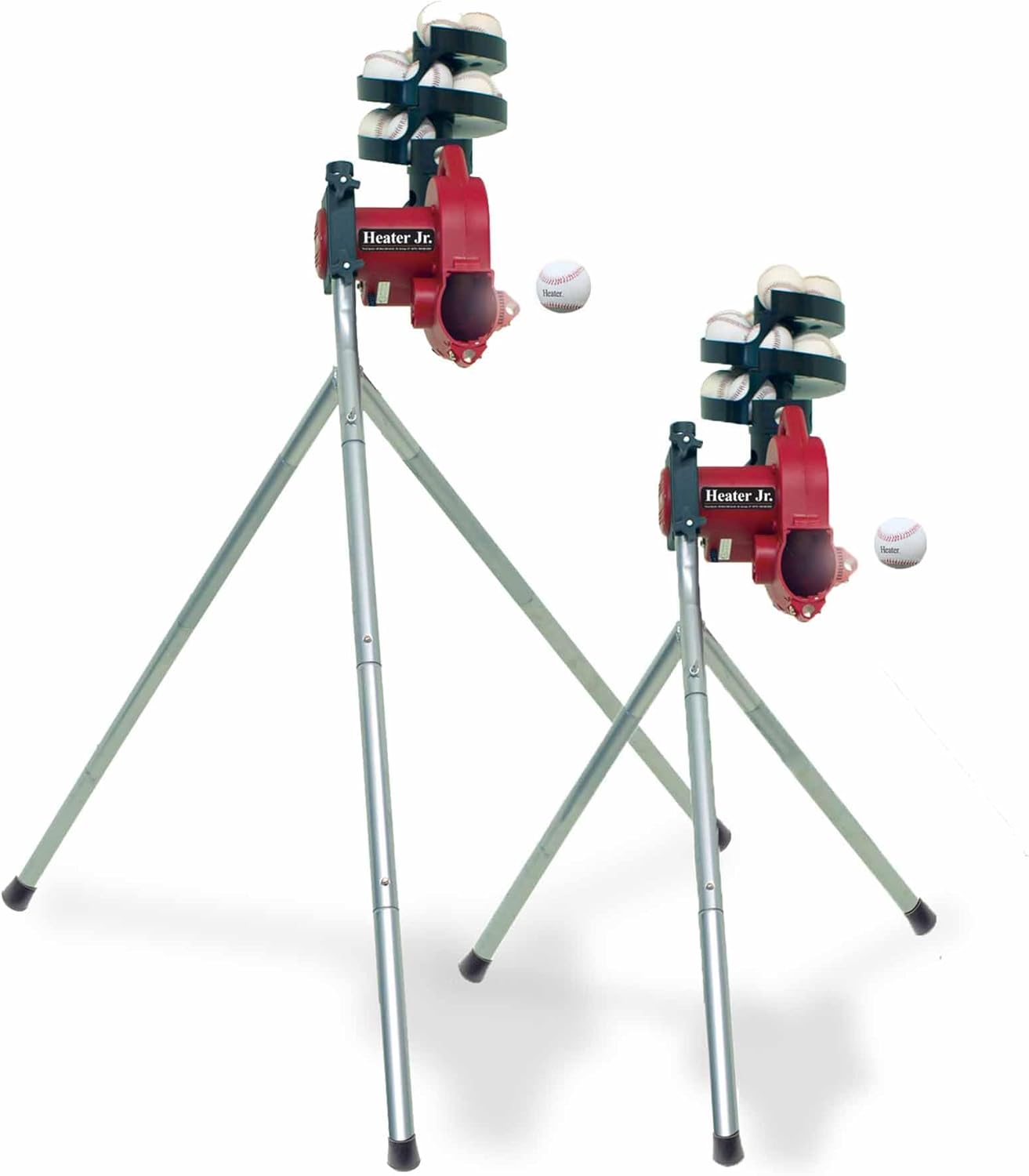
- Speeds 15-48 mph
- 12-ball auto feeder
- Air-filled tires
7 Models Reviewed in Depth
#1. Sports Attack Junior Hack
The Junior Hack Attack is a premium pitching machine built for serious baseball training. It can throw fastballs, curveballs, sliders, and more, with speeds up to 70 mph, giving you real game-like variety. The high-quality ball feed system handles standard baseballs reliably, so you can focus on your swing without jams. Plus, the pivoting throwing head lets you run grounders, line drives, and fly balls, making it a versatile tool for both hitting and fielding practice.
However, this machine is heavy at 96 pounds, so moving it around requires effort. And it’s strictly for baseballs—softballs won’t fit. If you’re a coach or a dedicated player with a permanent training area, the Junior Hack Attack is an outstanding investment. But for casual backyard use or for younger kids, there are lighter, simpler options that are more practical.
Pros
- Accurate breaking balls
- Feeds standard baseballs reliably
- Pivot head for fielding
Cons
- Baseball only
- Heavy 96 lbs
- Motor noise may be loud
Specifications
#2. Louisville Slugger Blue Flame
If you’re looking for a pitching machine that can handle everything from hard baseballs to plastic balls, the Louisville Slugger Blue Flame is a standout. Its manual operation means you can set it up anywhere, and at under 25 pounds, it’s incredibly portable for travel to different fields. The speed control is easy to adjust, offering consistent throws up to 45 mph for hardballs and higher for lighter options, making it great for players of varying skill levels.
However, because it’s manual, you’ll need to reload balls yourself—no auto-feeder here. That’s a minor trade-off for the flexibility it offers, especially for coaches who want to run diverse drills. This is your best bet if you value adaptability over automation, though serious hitters may outgrow its speed ceiling quickly.
Pros
- Versatile ball compatibility
- Lightweight and portable
- Accurate pitch placement
Cons
- No power assist
- Speed tops at 45 mph hardball
- Metal construction may scratch
Specifications
#3. Heater Blaze
The Heater Team Sports Blaze is a workhorse designed for serious training sessions. It pitches both baseballs and softballs up to 70 mph, giving you the power to challenge hitters at higher levels. The speed control is a simple twist, and the heavy-duty motor feels built to last through rigorous use. Plus, its 90-degree pitch angle adjustment lets you simulate grounders, line drives, and pop flies—ideal for comprehensive fielding drills.
On the downside, the machine weighs 55 pounds, so it’s a bit of a chore to move around the field. It also only comes with the machine itself, so you’ll need to purchase balls separately. If you’re a coach or a player serious about power training, this is a solid investment. However, if you need something more portable for casual backyard use, you might want a lighter option.
Pros
- Strong 70 mph max
- Durable motor and tire
- Adjustable pitch angle
Cons
- Heavy at 55 lbs
- No softballs included
- Speed control knob may wear
Specifications
#4. Mound Yeti
The Mound Yeti is a two-wheel pitching machine that excels in versatility and performance. It features dual chutes to switch between baseballs and softballs, making it a great investment for players of both sports. With adjustable speeds from 45 to 95 mph, it can cater to youth and adult training sessions, and you can even throw breaking balls, fastballs, and more. The included transport kit makes it easier to move around the field despite its heft.
Weighing in at 110 pounds, this isn’t a machine you’ll want to lug around casually. But its solid steel build means it’ll withstand plenty of use. If you’re a coach looking to serve both baseball and softball teams, the Mound Yeti is a powerful choice. However, for a single-sport backyard setup, you might find more compact alternatives better suited to your needs.
Pros
- Dual-sport chutes
- High speed range
- Sturdy steel construction
Cons
- Heavy 110 lbs
- Price might be high
- Needs more setup time
Specifications
#5. PowerNet Launch F-lite
The PowerNet Launch F-lite is a lightweight, portable pitching machine that’s great for on-the-go training. It simulates speeds equivalent to 40-90 mph at 25 feet, and you can quickly adjust the tripod legs to switch between baseball and softball. The package even includes 12 dimpled balls (6 for each sport), so you can start practicing right away. This makes it a convenient choice for parents and coaches who want to set up drills in any backyard or field.
One caveat: it’s calibrated to work best with PowerNet’s specific balls, so using other brands could affect performance. The speed control is also limited to four settings, not a continuous dial. It’s perfect for beginners who want a simple, effective trainer, but more advanced players might find the speed options restrictive. If you’re looking for a no-fuss machine with included balls, this is a strong pick.
Pros
- Portable design
- Dual-sport compatibility
- Includes practice balls
Cons
- Requires specific dimpled balls
- Speed settings fixed
- Tripod legs may feel flimsy
Specifications
#6. Heater Base Hit
The Heater Base Hit is a popular choice for its simplicity and convenience. With an automatic 12-ball feeder, you can practice without pausing to reload—it releases a ball every 8 seconds, keeping your training flowing. Weighing just 15 pounds, it’s easy to carry around, and the adjustable head lets you throw grounders, flies, and line drives. It’s a great all-rounder for batters and fielders alike, especially for youth players.
However, the max speed is 45 mph, which might not challenge advanced hitters. Also, it’s picky about ball type; you’ll get best results with dimpled balls, and standard baseballs can cause jams. If you’re a beginner or a family wanting backyard fun, this is a solid, affordable option. But if you need higher speeds for competitive training, consider something with more power.
Pros
- Auto feeder included
- Lightweight and portable
- Easy speed adjustment
Cons
- Slower 45 mph max
- Tire needs PSI checks
- Jams with non-dimpled balls
Specifications
#7. Heater Junior
The Heater Junior is designed with young players in mind, offering speeds from 15 to 48 mph—perfect for kids learning to hit. The automatic feeder holds 12 balls and drops one every 10 seconds, allowing for continuous practice without constant reloading. Its air-filled tires and heavy-duty tripod stand ensure stability and safety during use. Weighing just 23.5 pounds, it’s easy for parents to move around the yard.
While it’s great for children, the speed limitation might not satisfy older or more advanced players. The machine is also made of plastic parts, which can feel less robust than metal alternatives. For families with budding baseball stars, this is an excellent starter machine. But if you’re looking for something that will grow with your teen, you might need to consider a more powerful option.
Pros
- Safe for younger players
- Auto feeder included
- Portable lightweight
Cons
- Slow max speed
- Smaller feeder capacity
- Plastic construction may be less durable
Specifications
The Real-World Test: Choosing a Pitching Machine That Actually Earns Its Spot
A pitching machine is a serious investment in swing repetition and batting practice, but it’s also easy to buy the wrong one. It might be too fast for your needs, too fragile for your backyard, or too complicated to set up for a quick session. A little forethought about how and where you’ll actually use it separates a great purchase from one that gathers dust.
The Mechanics That Decide Between a Tool and a Toy
Speed range and adjustability. The machine’s maximum velocity matters less than its usable range. If you’re buying for a teenager, a machine that tops out at 50 mph will be outgrown quickly. If you’re buying for a younger player, a machine that can’t dial down below 30 mph is a wasted purchase. Look for a broad, easily adjustable speed range that matches your real hitters, not just the most impressive number on the box.
Pitch type and versatility. Decide whether you need straight, fastball-only action or the ability to throw curves, sliders, and changeups. Multi-wheel designs are fantastic for realism, but they add cost and maintenance. Single-wheel machines are simpler and cheaper but largely limited to fastballs. Consider how many pitch types you honestly want to practice against — not how many you think you should want.
Power source and portability. Batteries, AC adapters, or gas engines change the whole experience. A battery-powered unit is great for a quiet neighborhood or a field without outlets, but you’ll need to manage charging. Electric machines are consistent but tether you to a power source. Gas ones are powerful and portable but noisy and smelly. Match the power source to your typical practice location.
Feeding mechanism and workload. Some machines require a steady hand to feed balls one at a time, which gets tedious fast. Auto-feed hoppers hold dozens of balls and let you run continuous drills without a pause. If you’re practicing solo, an auto-feed feature is almost essential — otherwise, you’ll spend more time feeding than hitting.
Sticking to your budget. The price spread for pitching machines is wide, and the sweet spot is usually in the middle. Ultra-cheap models often have flimsy wheels and weak motors. Premium models can be overkill for casual use. Decide your hard cap before you start shopping, and prioritize the features you’ll use weekly over ones that seem cool on the spec sheet.
Pitfalls That Burn First-Time Buyers
- Ignoring ball compatibility. Some machines only feed dimpled plastic balls, while others handle real baseballs or softballs. Buying a machine that can’t throw the balls you already own means an extra ongoing expense.
- Underestimating the footprint. Machines take up more space than you think, both in storage and on the field. A foldable or compact design is worth more than you’d expect.
- Forgetting about netting and safety. A pitching machine without a proper net or protective screen is an accident waiting to happen. Factor in the cost of good netting before you finalize your choice.
The Last Swing: Matching Your Batting Cage to Your Goals
The Sports Attack Junior Hack Attack remains the top choice for serious players chasing high-speed reps, while the Mound Yeti is your budget-friendly workhorse for casual backyard use. The Heater Team Sports Blaze strikes the perfect balance for all-around team development, and the Louisville Slugger Blue Flame wins for portability. The Heater Base Hit is ideal for beginners needing a consistent, simple feed, while the PowerNet F-lite bundles everything you need to start swinging today. The Heater Junior is the clear pick for young kids just finding their swing. Every option here fits a realistic budget, so your decision comes down solely to your specific training needs. Don’t wait—check the buttons above for the latest prices and availability.
Final 3 Picks: Serious Training, Versatility, and Power
Ready to decide? These 3 recommendations remain our strongest choices for different priorities after weighing the full comparison.
Sports Attack Junior Hack
- Throws curveballs and sliders
- Speeds up to 70 mph
- Pivots for defensive drills
Louisville Slugger Blue Flame
- Throws various ball types
- Manual, no electricity
- Weighs under 25 lbs