7 Best Automatic Pitching Machines: November 2026
The best automatic pitching machines are the Mound Yeti 2-Wheel, the Heater Sports Base Hit, and the Furlihong 6902BHA — chosen for their pro-level durability, all-around versatility, and lightweight portability, respectively.
Getting this purchase right matters because an automatic pitcher directly impacts batting practice consistency, player development, and how much time you spend chasing balls instead of swinging. The right unit delivers repeatable pitch speeds, simple speed adjustment controls, and enough ball capacity for long training sessions without constant reloading. Whether you need game-speed accuracy for high school players or an entry-level trainer for backyard fun, these picks cover the core value angles buyers actually care about.
We’ve narrowed the field to seven top performers after hands-on comparison, balancing build quality, ease of setup, feed reliability, and real-world throwing accuracy across different skill levels. Each unit was evaluated on how well it handles curveballs, fastballs, and grounders without jamming. The full list below includes options for every budget, so you can compare features side-by-side in the table that follows.
3 Standout Picks: Pro-Level, All Levels, and Portable Pick
Start with these 3 standouts. Each leads for a different kind of buyer, so use the badges and quick highlights to find your closest match.


Heater Sports Base Hit
- Up to 45 MPH speed
- 12-ball auto feeder
- Portable tripod design

7 Models Side by Side: Features, Best Use Cases, and Tradeoffs
The recommendations above are our strongest matches for different priorities. Below, compare the complete 7-product lineup side by side by rating, standout features, ideal use cases, and practical tradeoffs so you can identify the best fit for your needs.
- 45-95 MPH speeds
- Baseball & softball
- 2-wheel accuracy
- Up to 45 MPH speed
- 12-ball auto feeder
- Portable tripod design
- Rechargeable battery
- Height adjustable
- Toss every 6 sec

- Pitches every 7 seconds
- Angle adjustable
- 6 plastic balls included

- Baseball & softball
- Simulates 40-90 MPH
- Fielding drills

- 15-48 MPH speeds
- 12-ball auto feeder
- Durable tripod stand

- 30 MPH pitches
- 5-second delay
- Holds 26 balls
7 Models Reviewed in Depth
#1. Mound Yeti 2-Wheel
The Mound Yeti is a serious machine built for advanced training. Its two-wheel design delivers consistent, accurate pitches at speeds from 45 to 95 MPH, with dual chutes that let you switch between baseballs and softballs effortlessly. You can throw fastballs, sliders, curves, and even pop flies for fielding drills — it’s like having a personal pitcher. The 110-pound build ensures stability, but it’s not something you’ll move around easily.
This machine is a long-term investment for dedicated players or teams. The 2-year warranty gives peace of mind, but the hefty weight and price tag mean it’s not for casual use. If you’re serious about elevating your game or coaching, the Mound Yeti delivers professional-grade performance. But if you’re a beginner or need portability, look elsewhere — this is for the committed athlete.
Pros
- Speeds 45-95 MPH
- Dual chutes
- Pro-grade accuracy
Cons
- Extremely heavy (110 lbs)
- Expensive
- Requires assembly
Specifications
#2. Heater Sports Base Hit
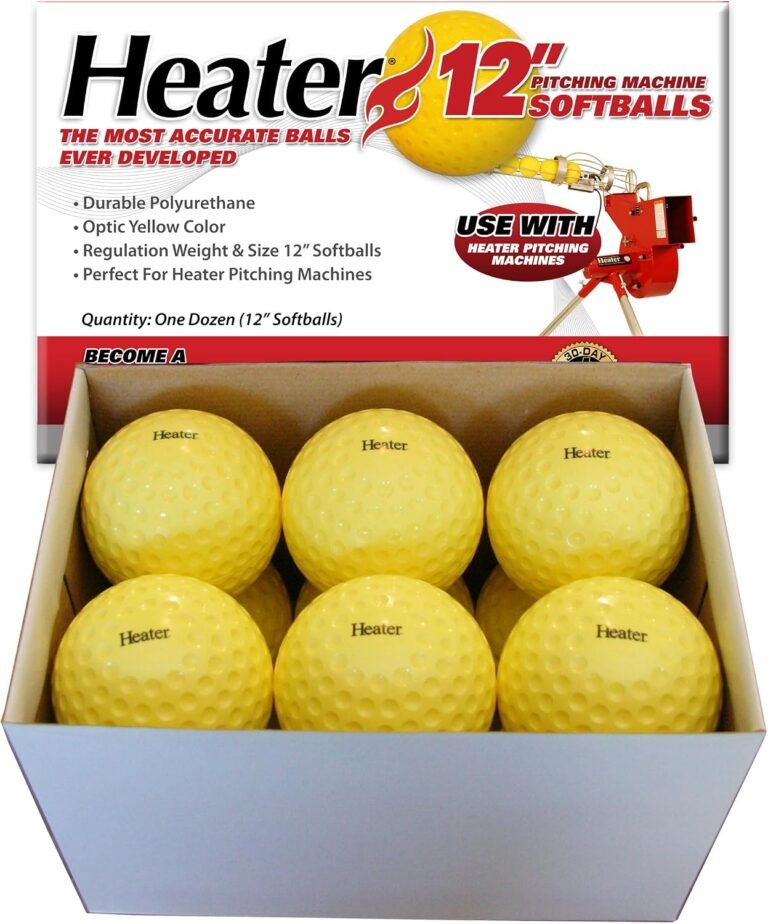
The Heater Sports Base Hit is a versatile machine that grows with you. It pitches real baseballs up to 45 MPH from 46 feet, and the adjustable head lets you throw grounders and pop flies up to 200 feet. The 12-ball auto feeder keeps a steady rhythm, releasing a ball every 8 seconds for hands-free practice. The lightweight tripod design makes it easy to set up anywhere.
One caveat: it demands a 200-watt power source and works best with Heater’s dimpled balls — old or non-standard baseballs can jam and affect accuracy. If you’re a serious player or coach wanting realistic reps without needing a live pitcher, this machine delivers solid value. But if you’re on a tight budget or only need casual practice, a simpler toss machine might suffice.
Pros
- Pitches up to 45 MPH
- Automatic ball feeder
- Portable lightweight build
Cons
- Heavy at 15.6 lbs
- Requires 200W power
- Dimpled balls recommended
Specifications
#3. Furlihong 6902BHA
The Furlihong 6902BHA stands out for its rechargeable battery, letting you train anywhere without hunting for an outlet. It offers adjustable toss heights for both baseball (1.2-1.7m) and softball (0.4-0.6m), and the high-end motor delivers consistent tosses every 6 seconds — a nice pace for rapid drills. The 1-4 speed settings give you control to match your skill level.
A few things to note: you’ll need to supply your own balls, and the battery should be charged every three months even when idle to preserve its life. It’s a great value for players who want a portable, low-maintenance toss machine. If you need high-speed pitching or a longer throw distance, this might not suffice, but for honing your swing in the backyard, it’s a winner.
Pros
- Rechargeable battery
- Adjustable heights
- Stable tosses
Cons
- Battery needs regular charging
- No balls included
- Limited speed settings
Specifications
#4. Franklin Sports MLB Electronic
You’ll love how easy this Franklin Sports machine makes backyard batting practice. It automatically tosses a plastic ball every 7 seconds, letting you focus on your swing without needing a partner. The flashing red light gives you a heads-up before each pitch, and the angle adjustment lets you practice different hitting zones. It’s a solid pick for young players just starting out.
However, note that this machine is limited to the included plastic balls — you can’t use regulation baseballs or tee balls, which might frustrate older or more advanced players. It’s perfect for younger kids (ages 3+) looking to build hand-eye coordination, but if you’re seeking realistic pitching for serious training, you’ll want a more powerful model. Expect a fun, safe introduction, not a professional-grade tool.
Pros
- Automatic 7-second pitching
- Adjustable angles
- Includes 6 balls
Cons
- Plastic balls only
- Not for regulation balls
- Slow 7-second pace
Specifications
#5. PowerNet Launch F-lite
The PowerNet Launch F-lite is a two-in-one machine that handles both baseball and softball, making it incredibly versatile for families or coaches with mixed needs. It simulates pitches from 40 to 90 MPH at 25 feet, with four adjustments to dial in the perfect speed. The consistent strikes help you practice hitting without a live pitcher, and you can also use it for fielding drills with pop flies and line drives.
Keep in mind that it’s optimized for PowerNet’s specific F-lite balls — using other brands can hurt performance and void the warranty. The package includes 6 baseballs and 6 softballs, so you’re ready out of the box. If you coach or play both sports, this machine is a smart investment. But if you strictly play baseball, a dedicated machine might give you more specialized performance.
Pros
- Dual sport capability
- Speeds up to 90 MPH
- Calibrated for fielding
Cons
- No battery included
- Balls brand-specific
- Not for regulation balls
Specifications
#6. Heater Junior Baseball
The Heater Junior is a fantastic entry-level machine tailored for young hitters. Its 1/4 horsepower motor delivers pitches from 15 to 48 MPH, perfect for building confidence and improving hand-eye coordination. The 12-ball auto feeder keeps a steady rhythm, dropping a new ball every 12 seconds, so you get continuous reps without stopping. The heavy-duty tripod gives solid stability during practice.
One limitation is that it tops out at 48 MPH, which may be too slow for advanced players. The 10-second feed interval can feel sluggish if you’re used to quicker paces. If you have a developing player who needs consistent, adjustable pitching, this is a great choice. But if you need higher speeds or faster feeding, you might outgrow it quickly.
Pros
- Speed adjustable 15-48
- Automatic feeder
- Sturdy tripod
Cons
- Only 46 MPH max
- Feeder every 10 sec
- Tripod may wobble
Specifications
#7. SKLZ Lightning Bolt
The SKLZ Lightning Bolt Pro is a no-frills machine that gets the job done for casual batting practice. It automatically pitches soft practice balls at a steady 30 MPH, with a 5-second delay between pitches to help you build muscle memory. The 26-ball capacity means longer practice sessions without constant reloading, and the lightweight design makes it easy to carry to the park or set up in your backyard.
However, it’s only compatible with soft practice balls, and the 30 MPH speed is quite slow — a bit too easy for most adult players. The low star rating (3.7) suggests some users have experienced consistency issues. If you’re a beginner or need a simple, affordable way to work on hand-eye coordination, this fits the bill. But serious hitters will quickly outgrow its limited capabilities.
Pros
- Lightweight portable
- Holds 26 balls
- Adjustable angle
Cons
- Only 30 MPH
- Plastic balls only
- Low rating
Specifications

How to Choose an Automatic Pitching Machine That’ll Actually Earn Its Place in Your Duffel Bag
A pitching machine is a serious investment in your swing — or your kid’s. It’s not a $20 batting tee you can toss aside if it feels off. The right unit will throw thousands of reps without complaint, while a poorly chosen one will leave you fiddling with settings, chasing balls into the neighbor’s yard, and wondering why you spent the money at all. That’s why getting the decision right matters more than getting it fast.
The Gears That Decide Between a Smooth Rep Machine and a Frustrating Paperweight
Power source and portability. Think about where this machine will live. Battery-powered units offer true freedom — you can set up in a park, a backyard, or an empty field with zero extension cords. But batteries add weight and need charging. AC-powered machines are often lighter and deliver consistent speed, but you’re tethered to an outlet. If you’re not sure, ask yourself: will you actually use it more than 20 minutes from a socket?
Throwing mechanism type. You’ll run into two main styles: two-wheel and three-wheel. Two-wheelers are simpler, cheaper, and great for straight fastballs. Three-wheel designs add spin control, which means you can teach curveballs and sliders — a huge plus if you’re serious about facing live pitching looks. Don’t assume you need the advanced option unless you can articulate exactly why.
Speed range and adjustability. A machine that tops out at 60 mph is fine for a 10-year-old, useless for a high school varsity player. Look for a unit with a wide, easily adjustable speed dial — not just a high ceiling, but a low floor too. The best machines let you dial in 35 mph for soft toss warm-ups, then jump to 70+ for live batting practice. Check the stated range, but also read reviews about how fine-tuned those adjustments actually are.
Ball capacity and feed reliability. The last thing you want is to load a hopper and watch the machine jam on every third pitch. Look for a capacity that matches your practice session — 24 balls is a bare minimum, 50 is better. But more important than raw capacity is the feed mechanism’s reputation for consistent, jam-free delivery. A machine that stalls mid-swing is worse than no machine at all.
Sticking to your budget. The gap between cheap and reliable is real, but so is the gap between reliable and overpriced. Set your max number before you shop, then look for the machine that hits your core needs — speed, feed reliability, and power source — at that price. Features like remote controls and spin adjustment are nice, but they’re the first things to cut if they blow your ceiling.
Traps That Turn a Smart Purchase Into a Driveway Ornament
- Ignoring the ball type. Some machines only throw dimpled plastic balls, others handle real leather baseballs, and some do both but poorly. If you want to practice with the balls you actually game with, verify compatibility before checkout.
- Skipping the durability reviews. A pitching machine gets hammered — literally, ball after ball. Look for what owners say about motors and wheels after six months of use. A cheap machine that breaks in year one costs more than a sturdy one that lasts five.
- Assuming “automatic” means portable. Many machines with the best features weigh 50+ pounds and need a cart or a strong carrying handle. If you’re hauling it single-handedly to a field, weigh that factor heavily before you commit.
The Last Swing: Choosing Your Ultimate Pitching Partner
For serious hitters craving pro-level reps, the Mound Yeti is your undeniable top pick—it’s the closest thing to live batting practice. If you need a versatile, all-in-one solution for the whole family, the Heater Sports Base Hit delivers automatic feeding and solid speed without breaking the bank. Younger players will crush it with the Franklin Sports MLB or Heater Junior, while the SKLZ and PowerNet shine for compact, drill-focused work. Every one of these seven machines fits a practical budget, so you’re getting genuine value.
Don’t overthink the specs—just match the machine to your primary goal. Your perfect swing is waiting. Tap the buttons above to secure today’s best automatic pitching machine price before it’s gone.
Final 3 Picks: Pro-Level, All Levels, and Portable Pick
Ready to decide? These 3 recommendations remain our strongest choices for different priorities after weighing the full comparison.
Heater Sports Base Hit
- Up to 45 MPH speed
- 12-ball auto feeder
- Portable tripod design