Master Baseball Throwing Mechanics: Improve Your Velocity
Mastering baseball throwing mechanics means throwing harder, more accurately, and staying injury-free. It’s about creating a fluid motion from your legs to your fingertips. We’ll show you the key steps for a powerful, safe throw. Getting your mechanics right is key to better performance on the mound or in the field.
Think of your throw as a chain reaction. Each part of your body works together. From your stride to your follow-through, every movement matters. Understanding these connected movements can drastically improve your velocity and control. It’s not just about arm strength; it’s about using your whole body effectively.
- Grip the ball properly for control.
- Develop a strong, stable base.
- Use your legs and core for power.
- Focus on proper arm path and release point. Our guide on how to throw to second base can help refine your accuracy.
- Finish your throw with a good follow-through.
Ready to transform your throwing? Let’s walk through the essential baseball throwing mechanics step by step to help you reach your full potential.
Building a Better Baseball Throw: Your Mechanics Breakdown
So, you want to throw a baseball like a pro? It’s all about proper mechanics. We’re talking about turning your body into a well-oiled machine. Your goal is to transfer energy efficiently. This starts from the ground up. Let’s break down the throwing motion. We’ll look at each piece of the puzzle.
The Foundation: Grip and Stance
Before you even think about throwing, you need the right grip. A standard four-seam fastball grip is a good start. Place your index and middle fingers across the seams. Your thumb should rest underneath the ball. This grip offers the most stability. It helps you control the ball’s direction. You’ll feel more confident. This is a foundational step for accuracy.
Finding Your Feet: The Stance
Your stance is your launching pad. For a right-handed thrower, your left foot should point toward your target. Your right foot will be parallel to your landing spot. Keep your weight balanced. You should feel stable and ready to move. A good stance prevents wasted motion. It sets you up for power. Many coaches stress this early step.
Generating Power: The Kinetic Chain
Throwing a baseball isn’t just an arm thing. It’s a full-body effort. We call this the kinetic chain. Energy starts in your legs and travels up. You need to use your entire body. This makes your arm do less work. It also increases your throwing velocity. Research shows this connection is key for power.
Leg Drive: The Engine of Your Throw
Your legs are your primary power source. As you begin your throw, bend your back leg. This creates tension. Then, push off that back leg. Drive forward toward your target. Think of it like a spring uncoiling. This powerful leg drive is essential. It gets your body moving. Many young players neglect this.
Core Engagement: The Transfer Point
Your core muscles connect your lower and upper body. This includes your abs and obliques. As your legs drive, you need to rotate your hips. Then, bring your shoulders through. Your core acts as a transfer point. It sends the energy from your legs to your arm. Engaging your core makes your throw much more powerful. It also helps prevent injury. Experts often highlight core strength.
| Phase | Action | Benefit |
|---|---|---|
| Leg Drive | Bend back leg, push off | Generates initial power |
| Core Rotation | Rotate hips and torso | Transfers leg power to upper body |
| Arm Action | Bring arm forward | Delivers the ball with velocity |
| Follow-Through | Allow arm to decelerate naturally | Reduces stress on arm, improves control |
The Arm Path and Release
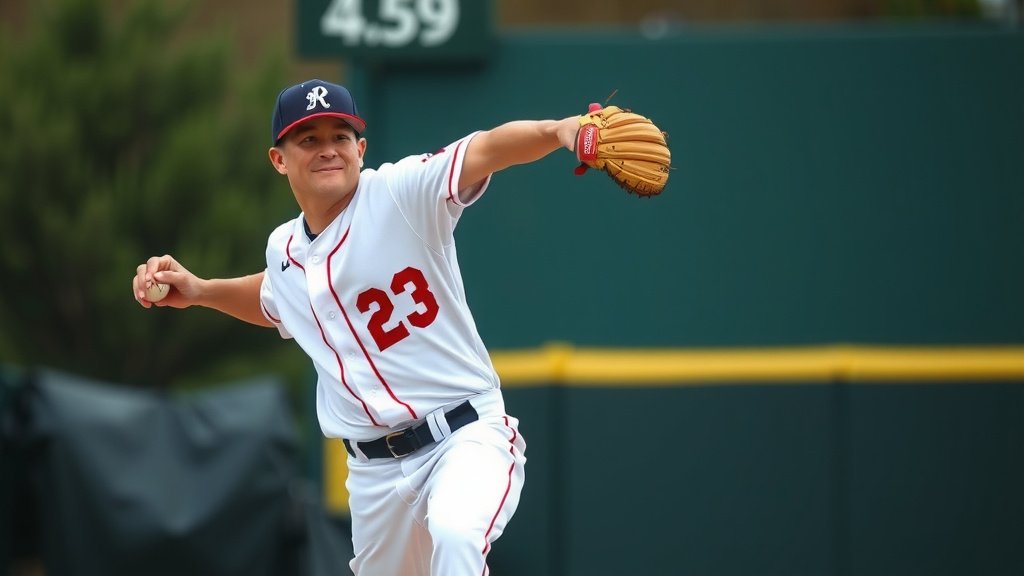
Once your body is in motion, your arm comes into play. The path your arm takes is critical. You want a smooth, consistent arm path. Avoid dropping your elbow too low. This can lead to injury. Your arm should come up and back. Then, it whips forward towards the target. Think of an “L” shape as your arm comes back.
Creating Separation: Arm Lag
A key element is arm lag. This is when your arm lags behind your body’s rotation. As your torso rotates, your arm stays back. This creates elastic energy. When you release, the arm snaps forward. This increases velocity. Many amateur players bring their arm forward too early. This reduces power.
The Release Point: Accuracy Matters
Your release point directly impacts accuracy. You want to release the ball out in front of your body. This should be consistent for every throw. Imagine reaching out to shake hands with your target. A consistent release point helps you hit your spots. It makes your pitches predictable for you, but not for the batter.
Finishing the Throw: The Follow-Through
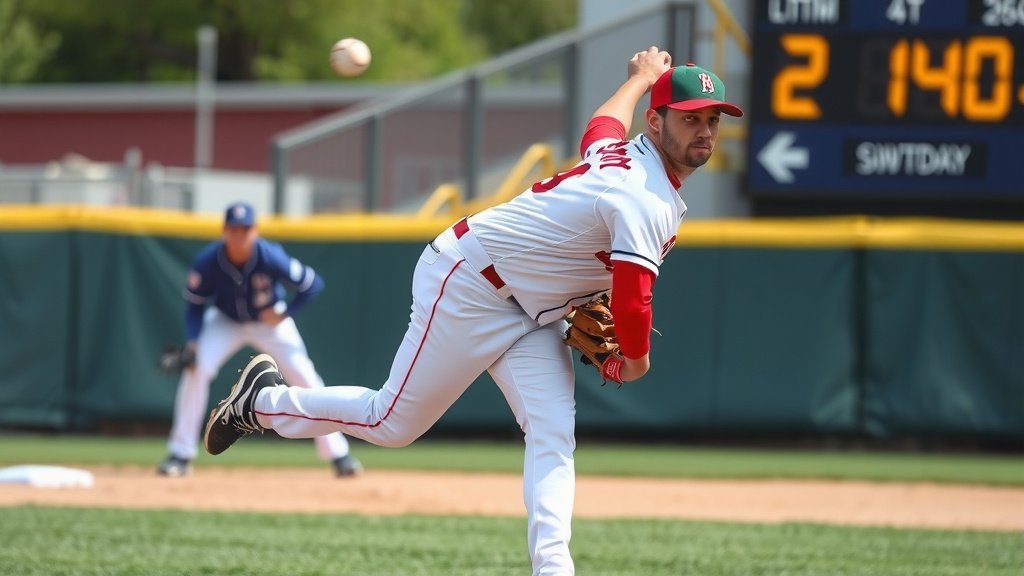
Don’t stop throwing once the ball leaves your hand. Your follow-through is just as important. It’s how your body decelerates. Allow your arm to continue its natural motion across your body. Your throwing shoulder should end up pointing towards the target. Your back leg might come forward. A good follow-through helps prevent arm injuries. It also aids in overall balance. The CDC has noted the importance of proper deceleration for arm health (CDC).
Why is a Follow-Through So Important?
A proper follow-through helps distribute the forces of the throw. Instead of the arm suddenly stopping, the momentum is carried through the body. This reduces the stress on your elbow and shoulder. Think of it like a car’s brakes; a smooth stop is better than slamming on the brakes. It’s about controlled deceleration.
Putting It All Together: Your Checklist
Ready to practice? Here’s a quick checklist to keep in mind:
- Grip the ball correctly for every throw.
- Maintain a stable base with balanced weight.
- Use your legs and core to generate power.
- Keep a consistent arm path and avoid dropping the elbow.
- Finish with a full, natural follow-through.
- Focus on one or two mechanics at a time.
Mastering these mechanics takes time and repetition. Be patient with yourself. Focus on quality over quantity. Your arm will thank you. Your performance will improve.
Conclusion
You’ve learned how to transform your baseball throw by focusing on the kinetic chain, from your leg drive to your follow-through. Mastering proper baseball throwing mechanics means using your whole body efficiently. This not only increases your velocity and accuracy but also protects your arm from injury. Remember to start with a solid grip and stance, engage your core, and finish every throw. Put in the practice consistently, focusing on quality reps. You’ve got this!
Frequently Asked Questions
How often should I practice throwing mechanics?
Consistency is key. Aim to practice your mechanics several times a week, focusing on quality over quantity. Even short, focused sessions can make a big difference. Always warm up properly before throwing.
What’s the biggest mistake young players make with their throwing?
Many young players rely too much on arm strength alone. They often neglect using their legs and core effectively. This can lead to lower velocity and increased risk of arm injury. Focusing on the entire kinetic chain is vital.
Can I improve my throwing mechanics without a coach?
Yes, you can make great progress on your own! Use videos to record yourself and compare your form to professional pitchers. Focus on one or two specific mechanics at a time. Understanding the principles is the first step.
How do I know if my release point is consistent?
Your release point should feel natural and repeatable. If you’re consistently missing high or low, your release point might be the issue. Try to throw in front of your body, extending your arm towards the target. Video analysis can be very helpful here.
What’s the best way to warm up before focusing on throwing mechanics?
Start with light cardio to get your blood flowing, then dynamic stretching. This includes arm circles, leg swings, and torso twists. After that, begin with short, easy throws and gradually increase distance and intensity. This prepares your body for the demands of throwing.