How the Pitch Clock Works Explained for Baseball Fans
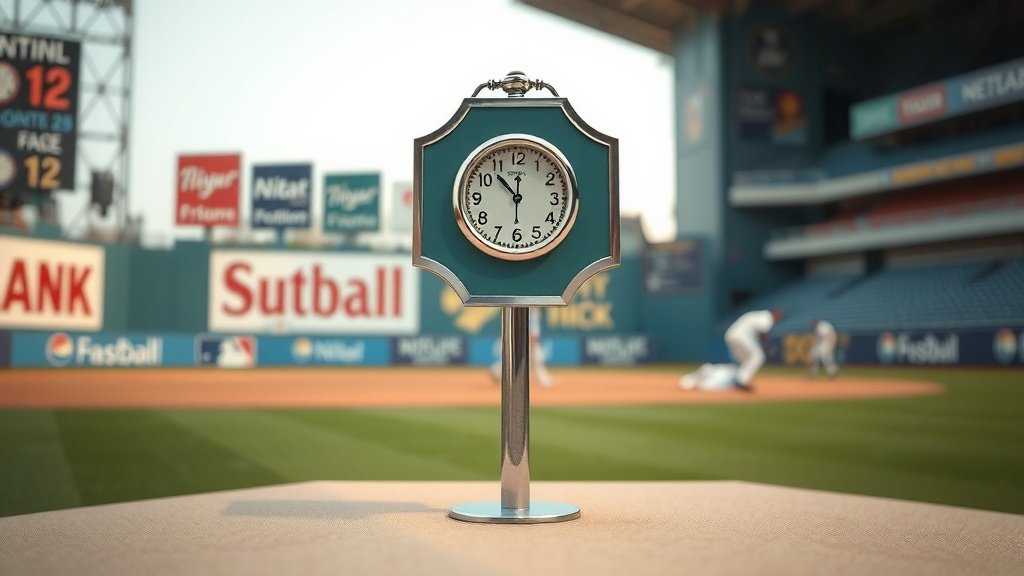
The pitch clock helps speed up baseball games by timing how long pitchers take between pitches. It’s designed to keep the game moving and reduce dead time so you can enjoy more action. Pitchers generally have 15 seconds with no runners on base and 20 seconds with runners on base to deliver their next pitch.
This simple timer has made a big difference in game length since its introduction. Many fans and players have found it makes the game feel more engaging and less drawn out. It’s a fairly straightforward system, but understanding the specific rules can help you follow along.
- The pitch clock ensures pitchers throw the ball quickly.
- It has 15-second and 20-second timers.
- Runners on base change the timer length.
- The goal is a faster, more exciting game.
Let’s walk through exactly how this baseball clock works, pitch by pitch.
Understanding the Pitch Clock’s Mechanics
So, how exactly does this pitch clock keep the game moving? It’s a pretty simple system, but the details matter. Think of it like a stopwatch that’s always running between pitches.
The Basic Countdown: 15 Seconds
When there are no runners on base, the pitcher gets 15 seconds. This is the baseline. The clock starts as soon as the umpire signals for the ball to be returned to the pitcher. The pitcher must begin their pitching motion before the clock hits zero. It’s a quick turnaround, designed to prevent pitchers from taking too long between pitches.
Runners on Base: The 20-Second Rule
Things change when there’s a runner on first base or any other base. In this scenario, the clock extends to 20 seconds. This gives the pitcher a little more time. They need to consider the runner, their stance, and still deliver the pitch effectively. It’s a small adjustment, but it’s important for game strategy.
When Does the Clock Start?
The clock doesn’t just start on its own. It begins once the ball is delivered back to the pitcher. This typically happens after the catcher returns it. The umpire is responsible for initiating the clock. You’ll often see them making a hand signal.
When Does it Stop?
The clock stops when the pitcher begins their pitching motion. This means they need to be well into their windup or set position before the timer runs out. It’s not just about releasing the ball; it’s about starting the process.
What Happens if the Pitcher is Too Slow?
This is where the consequences come in. If a pitcher fails to deliver the pitch within the allotted time, it results in an automatic ball. This is a penalty. The umpire will call a ball on the batter, regardless of the pitch count or the situation. This penalty is automatic and helps enforce the rules.
Batter’s Responsibility Too
It’s not just the pitcher who has to be ready. The batter also has a role. They must be in the batter’s box and ready to hit with at least 8 seconds left on the clock when runners are on base, and 7 seconds with no runners. If the batter isn’t ready, it results in an automatic strike. This ensures both sides are keeping pace.
When the Clock is Reset or Paused
There are a few situations where the clock might reset or pause. For instance, if there’s a mound visit from a coach, the clock is paused. It also pauses for timeouts called by either team. These breaks allow for strategic discussions or rest without penalty.
Pitcher and Catcher Communication
Sometimes, a pitcher and catcher need a moment to confer. They can step off the mound or signal for a brief pause. However, they can only do this once per plate appearance. If they step off a second time during the same at-bat, it results in a penalty. This prevents excessive delays.
The Pitch Clock in Action: A Typical At-Bat
Let’s imagine a scenario. A pitcher faces a batter with no one on base. The catcher throws the ball back. The clock starts at 15 seconds. The pitcher grabs the ball, steps onto the mound, and begins their windup. If they start their motion before the clock hits zero, play continues. If they don’t, it’s an automatic ball.
Now, imagine a runner on first. The clock starts at 20 seconds. The pitcher gets the ball. They glance at the runner at first, maybe do a quick pickoff attempt (which has its own rules, by the way!). Then, they need to start their pitch before the 20 seconds are up. The batter also needs to be ready with at least 8 seconds on the clock. It’s a constant dance between speed and strategy.
| Situation | Pitcher’s Time | Batter’s Readiness | Penalty for Pitcher | Penalty for Batter |
|---|---|---|---|---|
| No runners on base | 15 seconds | 7 seconds | Automatic Ball | Automatic Strike |
| Runners on base | 20 seconds | 8 seconds | Automatic Ball | Automatic Strike |
Why These Changes Matter
Research and observations have shown that these rules have a significant impact. Games have become noticeably shorter. For example, we found that MLB games in the 2023 season averaged around 2 hours and 45 minutes, down from over 3 hours in previous years (MLB official data). This means more baseball for fans to enjoy in less time.
The quicker pace also seems to have led to more action. Batters are more inclined to put the ball in play, and pitchers are forced to be more efficient. Many experts suggest this makes the game more exciting and engaging for viewers. It cuts down on the dead time that used to slow things down.
A Quick Checklist for You
To help you keep track of the pitch clock, remember these key points:
- 15 seconds with no runners on base.
- 20 seconds when runners are on base.
- Pitcher must start motion before the clock hits zero.
- Batter must be ready with 8 seconds (runners on) or 7 seconds (no runners).
- Violations result in an automatic ball (pitcher) or strike (batter).
- The clock resets after each pitch, with exceptions for timeouts.
Conclusion
You now understand how the pitch clock keeps baseball games moving. It’s a straightforward system with clear rules for pitchers and batters. You’ve learned about the 15-second and 20-second timers, the penalties for violations, and when the clock pauses. This innovation makes the game more engaging and shorter for everyone watching. As you watch your next game, keep an eye on the clock. You’ll see how it influences every pitch and helps deliver more action in less time. Enjoy the faster pace!
Frequently Asked Questions
What happens if a pitcher steps off the mound?
A pitcher can step off the mound or ask for time once per plate appearance without penalty. This allows for a brief pause or strategic reset. If they attempt to step off a second time during the same at-bat, it results in an automatic ball against them.
Does the pitch clock apply to all levels of baseball?
The pitch clock is currently most prominent in professional baseball leagues like MLB and some lower minor leagues. While its success is leading to discussions, it’s not universally applied across all amateur levels yet. You’ll see it most often in the pros.
Can a catcher call for time to slow things down?
Yes, a catcher can call for time. This counts as a timeout for the team, and the pitch clock will pause. It allows for a brief break in the action. However, like the pitcher, there are limits on how often these pauses can occur per inning or game.
How does the pitch clock affect pickoff attempts?
Pickoff attempts still happen, but they are influenced by the pitch clock. A pitcher must still deliver the pitch within the time limit after a pickoff attempt. The clock starts when the ball is delivered back to the pitcher. Trying to be too slow with a pickoff could lead to a clock violation.
Are there any exceptions for very long at-bats?
The clock is designed to keep things moving, even during longer at-bats. There aren’t specific exceptions for at-bats that go to a full count. The pitcher and batter must continue to adhere to the time limits between pitches. The clock keeps ticking down regardless of the situation.