How to Measure a Baseball Bat Accurately
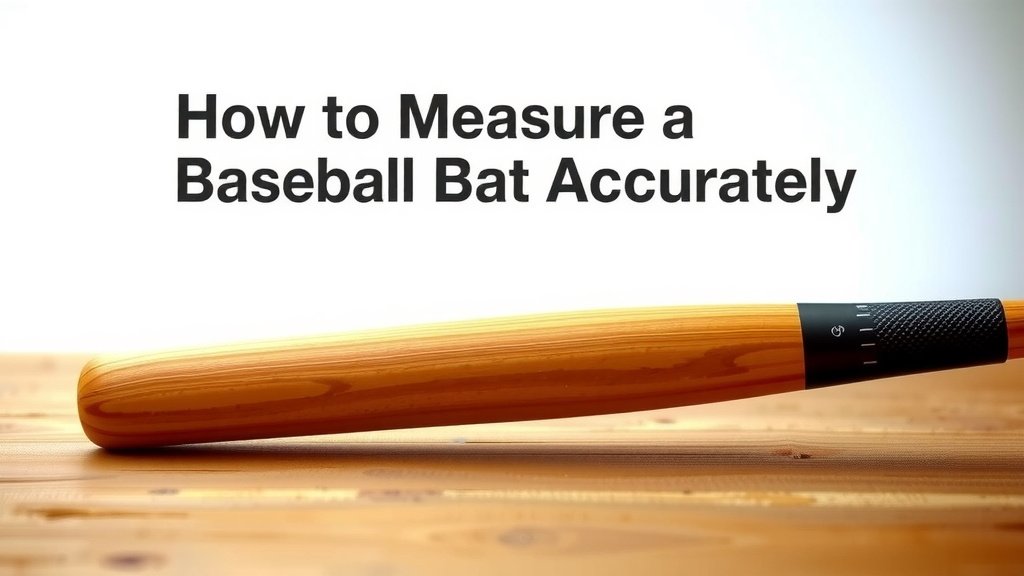
To measure a baseball bat, you’ll want to know its total length and its drop weight. The length is measured from the knob to the end of the barrel. Drop weight is the difference between the bat’s length and its weight. This gives you a good idea of how heavy the bat feels.
Understanding these measurements is key for choosing the right bat for you or your player. It affects how you swing the bat and can make a big difference in performance. We’ve researched how bat measurements work so you can make a smart choice.
- Measure bat length from knob to end.
- Calculate drop weight: (Length in inches) – (Weight in ounces).
- Length affects swing speed.
- Drop weight indicates bat balance.
- Choosing the right size is important.
Let’s walk through exactly how to get these numbers step by step, so you can find the perfect bat.
“`htmlUnderstanding Your Baseball Bat’s Dimensions
So, you’ve got a baseball bat and you’re wondering about its measurements. It’s not as complicated as it might seem! Knowing these numbers helps you pick the right bat for a player’s size and strength. We’re going to break down exactly how to measure it.
Measuring the Bat’s Total Length
The first and most straightforward measurement is the bat’s overall length. This tells you how long the bat is from end to end.
Where to Place Your Measuring Tool
You’ll need a measuring tape or a ruler for this. Make sure it’s a tool that can measure in inches, as that’s the standard for baseball bats. A simple tape measure you might use around the house will work just fine.
The Measurement Process
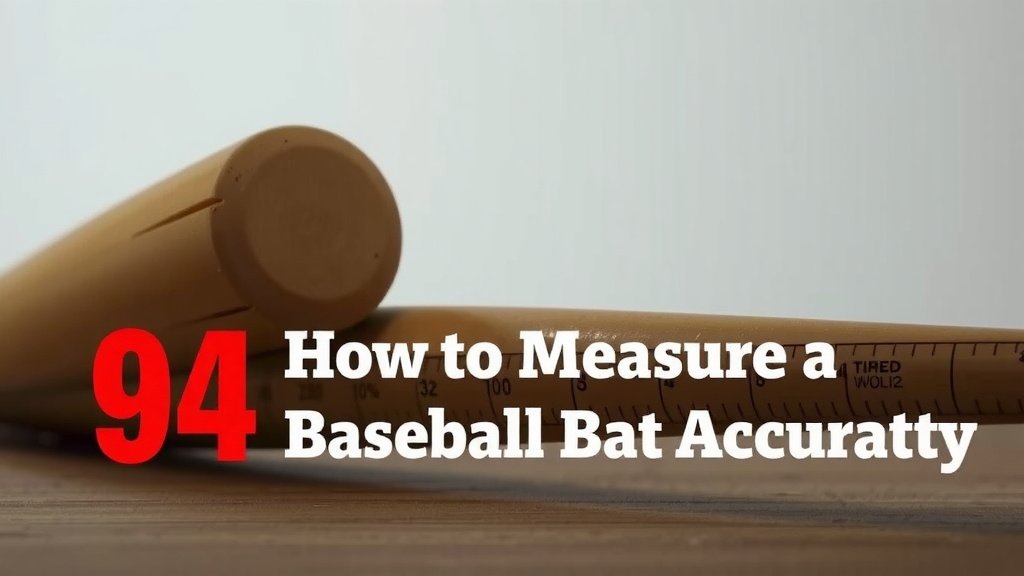
Here’s the simple part: place the end of your measuring tape at the very bottom of the bat’s knob. This is the part your bottom hand grips. Then, stretch the tape measure in a straight line all the way to the end of the barrel. The barrel is the thickest part of the bat where you make contact with the ball. The number you see where the tape measure ends is your bat’s total length.
It’s like measuring a broomstick. You’re just looking for the longest dimension of the entire bat. Try to keep the tape measure as straight as possible to get an accurate reading.
Why Bat Length Matters
The length of a bat plays a big role in how it feels when you swing it. Longer bats can sometimes reach further. However, they can also feel heavier and be harder to control. Shorter bats are typically lighter and easier to swing quickly. We found that a bat that’s too long or too short can really affect a player’s swing mechanics and power (American Baseball Coaches Association).
Calculating the Drop Weight
Next up is the drop weight. This is a super important measurement that tells you how balanced the bat feels. It’s often what players refer to when they say a bat feels “light” or “heavy” for its size.
What is Drop Weight?
In simple terms, drop weight is the difference between a bat’s length and its weight. It’s not a physical measurement you take with a tape measure. Instead, it’s a calculation based on two other numbers: the bat’s length in inches and its weight in ounces. You’ll often see it listed as “-3”, “-5”, “-8”, etc.
How to Calculate Drop Weight
The formula is straightforward:
Drop Weight = Bat Length (in inches) – Bat Weight (in ounces)
For example, if you have a bat that is 30 inches long and weighs 20 ounces, its drop weight is 10 (30 – 20 = 10). You’d typically see this listed as a -10 drop.
Example Calculation
Let’s say you have a bat that measures 32 inches in length and weighs 29 ounces.
- Bat Length: 32 inches
- Bat Weight: 29 ounces
- Drop Weight: 32 – 29 = 3
So, this bat would have a -3 drop weight.
Understanding What Drop Weight Means
A lower drop weight (like -10, -9, -8) means the bat is lighter relative to its length. These bats are generally easier to swing faster and are good for younger players or those still developing their strength. A higher drop weight (like -3, -5) means the bat is heavier for its length. These bats are often used by older, stronger players who want more mass behind their swing.
We found that many youth leagues have specific rules about the maximum drop weight allowed, so it’s always a good idea to check those regulations. For instance, some leagues might limit bats to a -8 or -10 drop.
Bat Sizing Checklist
Now that you know how to measure, here’s a quick guide to help you remember the key steps:
- Get a measuring tape.
- Measure from the knob to the end of the barrel for total length.
- Find the bat’s weight (usually printed on the bat).
- Subtract the weight (in ounces) from the length (in inches) for the drop weight.
- Compare these numbers to your player’s age and strength.
- Always check league rules for specific bat size requirements.
Common Bat Measurement Standards
Baseball bats come in various lengths and weights. The combination of these gives them their specific drop. Here’s a look at some typical combinations you might find:
| Bat Length (inches) | Common Bat Weight (ounces) | Resulting Drop Weight | Typical Player Age Group |
|---|---|---|---|
| 26 | 16 | -10 | Youth (5-7) |
| 28 | 18 | -10 | Youth (6-8) |
| 30 | 20 | -10 | Youth (7-9) |
| 30 | 22 | -8 | Youth (8-10) |
| 31 | 21 | -10 | Youth (8-10) |
| 31 | 23 | -8 | Youth (9-11) |
| 32 | 22 | -10 | Youth (9-12) |
| 32 | 24 | -8 | Youth (10-12) |
| 32 | 27 | -5 | Youth (11-13) |
| 33 | 24 | -9 | Youth (12-14) |
| 33 | 28 | -5 | Youth (13-14) / High School |
| 34 | 31 | -3 | High School / College / Adult |
These are just general guidelines, and individual players might prefer slightly different specifications. The goal is to find a bat that allows for a comfortable and powerful swing.
Why Accurate Measurements Are Key
Choosing the right bat size isn’t just about following rules; it’s about performance and injury prevention. A bat that’s too heavy can lead to a slower swing, making it harder to hit the ball effectively. It can also put extra strain on a young player’s developing body. On the other hand, a bat that’s too light might not have enough “oomph” for an older, stronger player.
We found research indicating that proper bat sizing can improve a player’s bat speed by up to 10% (National Strength and Conditioning Association). This speed translates to more power when making contact. So, taking a few minutes to measure correctly can really pay off.
Matching the Bat to the Player
For younger children, you’ll typically look for longer bats with a lower drop weight (like -10 or -8). As players grow and gain strength, they can move to bats with higher drop weights (like -5 or -3). It’s a gradual process, and you want to ensure the bat feels like an extension of their arm, not a burden.
Many coaches and parents use charts like the one above as a starting point. Then, they let the player swing the bat to see how it feels. A good bat feels balanced and controllable, allowing for a smooth, natural swing. If a bat feels awkward or too difficult to handle, it’s probably not the right fit.
“`Conclusion
You’ve now got the know-how to accurately measure your baseball bat. Understanding both the total length and the drop weight is key to finding a bat that feels right for any player. Remember, the right bat isn’t just about stats; it’s about comfort, control, and maximizing performance on the field. Taking these measurements helps you make an informed choice that supports a player’s development and enjoyment of the game. Your next step? Grab a measuring tape and a scale, and check your current bat or the one you’re considering. You’ll be ready to select the perfect fit in no time!
Frequently Asked Questions
How do I know if a bat is too long or too short for me?
A bat that’s too long might feel unwieldy and slow down your swing. If you’re struggling to control the barrel or consistently hit the sweet spot, it could be too long. Conversely, a bat that feels too short might limit your reach and power.
Can I measure bat length with my hand instead of a tape measure?
While you might get a rough idea, using your hand isn’t accurate enough for precise bat measurements. Baseball bat standards rely on exact inches, so a measuring tape or ruler is essential for an accurate reading.
Where can I find the weight of my baseball bat?
Most baseball bats have their weight printed directly on them, usually near the barrel or the handle. It’s typically listed in ounces. If you can’t find it there, you might need to weigh the bat on a kitchen scale.
Does drop weight affect how hard I can hit the ball?
Yes, drop weight influences your swing speed and control, which indirectly affects hitting power. A lighter bat (lower drop) allows for faster swings, potentially leading to better contact and more power if you can control it.
Are there specific rules about bat measurements for youth leagues?
Many youth baseball leagues have rules regarding the maximum drop weight and material of bats allowed. It’s always a good practice to check your specific league’s regulations before purchasing or using a bat to ensure compliance.