Mastering the Baseball Lineup Card: A Step-by-Step Guide
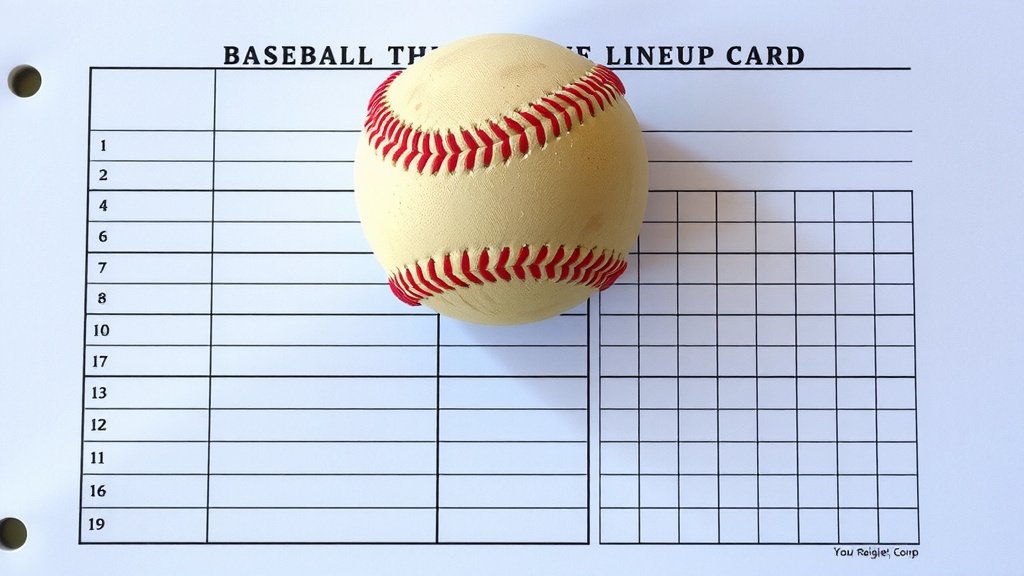
Filling out a baseball lineup card is simple once you know the basics. You’ll need to write down your starting players, their positions, and their batting order. Make sure all the information is clear and easy to read for the umpire and the opposing team. This ensures a smooth start to your game and avoids any confusion about who’s playing where.
Understanding the lineup card helps coaches and managers organize their team effectively. It’s more than just a list of names; it’s a strategic document. A well-filled card can prevent unnecessary delays and potential penalties. It’s a key part of game day preparation that every coach should master.
- Lineup cards list starting players and their batting order.
- Positions must be clearly indicated.
- Accuracy prevents game delays and penalties.
- It’s a key coaching preparation tool.
Let’s walk through exactly how to fill out your baseball lineup card step by step, ensuring you’re ready for game day.
“`htmlPutting Together Your Baseball Lineup Card
Filling out a baseball lineup card might seem like a small detail, but getting it right sets the stage for a well-organized game. Think of it as your team’s official report card for the umpire and the other team. It’s your chance to show you’re prepared and ready to play ball. Let’s break down exactly what you need to include and how to do it clearly.
The Essential Information Needed on a Lineup Card
At its core, a lineup card is a record of who is playing, where they are playing, and in what order they will bat. This information is vital for fair play and efficient game management. We’ll cover each section to make sure you don’t miss a beat.
Player Names and Numbers
This is the most straightforward part. You’ll need to list the full name of each player starting the game. Next to their name, you must include their uniform number. Make sure the numbers are accurate. Umpires use these numbers to identify players on the field, especially if names are similar (we’ve all seen those moments!).
It’s also a good idea to list your substitute players. While they aren’t in the starting lineup, their names and numbers need to be on the card. This way, if you need to make a substitution, the umpire knows who is available to enter the game. This helps avoid confusion when the game is already underway.
Player Positions
For each starting player, you need to indicate their primary defensive position. Standard abbreviations are usually acceptable. For example, C for Catcher, 1B for First Base, 2B for Second Base, 3B for Third Base, SS for Shortstop, LF for Left Field, CF for Center Field, RF for Right Field, and P for Pitcher.
What if a player is playing a position they don’t normally play? No problem. Just write down the position they are playing in *this* game. For instance, if your usual shortstop is pitching today, you’d write P next to their name. If your catcher is playing second base, you’d write 2B. This is where accuracy is really important.
Batting Order
This is the sequence in which your players will take their turns at bat. You’ll list the numbers 1 through 9 (or more, if your league uses a continuous batting order). Each number corresponds to a player. The player listed at ‘1’ bats first, the player at ‘2’ bats second, and so on.
The batting order must remain the same throughout the game, with one key exception. If a player is substituted, the new player entering the game must bat in the same spot in the order as the player they replaced. You can’t just move the new player to a different spot in the lineup. This rule helps maintain fairness and prevents teams from gaining an advantage by constantly shuffling their batting order.
How to Handle Specific Game Situations
Baseball has a lot of unique rules, and your lineup card needs to reflect how those rules apply. Let’s look at a few common scenarios.
Designated Hitter (DH) Rule
Some leagues use a Designated Hitter. This means a player bats in place of the pitcher. If your league uses the DH, you’ll need to indicate it. Typically, you’ll write ‘DH’ next to the player who is hitting for the pitcher. The pitcher then does not bat. The player playing defense at pitcher would then be listed with ‘P’ as their position.
Remember, if you use a DH, that player bats for the pitcher. The pitcher themselves does not need to be in the batting order. The player who takes the mound will simply be listed with the position ‘P’. It’s about designating who hits and who plays defense clearly.
Continuous Batting Order
Other leagues, especially at younger levels, use a continuous batting order. This means *everyone* on the team bats, regardless of position. If you’re in one of these leagues, your lineup card will have more than nine batting slots. You’ll list every player on your roster in the order they will bat.
In a continuous batting order, substitutions are more flexible. A player can be substituted for at any time, and the new player can enter the game at any spot in the lineup. However, the original player cannot re-enter the game in a different spot. They must re-enter in the same spot they left. Many coaches find this simpler to manage.
Pitcher and Catcher Changes
Pitchers and catchers often require special attention. If your starting pitcher is removed from the game, you’ll need to note that. Similarly, if your starting catcher is taken out, you must fill in that information. This helps track who has played these key positions.
When a pitcher or catcher is removed, their replacement takes their spot in the batting order. This is true even if the new pitcher or catcher is a different player than the one originally listed in that batting slot. It’s like a relay race; the baton (the batting spot) is passed, not the runner.
Tips for a Crystal Clear Lineup Card
A legible lineup card is a happy umpire’s delight. Here are some pointers to make yours easy to read and understand.
Legibility is Key
Use a pen, not a pencil. Ink won’t smudge or erase accidentally. Write clearly and neatly. If your handwriting isn’t the best, take your time. Imagine you’re trying to read it from across the field. Large, block letters can help immensely. A neat card shows respect for the game and the officials.
Double-Check Your Work
Before you hand in your lineup, do a quick review. Are all the names spelled correctly? Are the numbers right? Is the batting order logical? Did you list the correct positions? A quick scan can catch errors that might cause problems later. Many coaches have a player or assistant coach give it a final look-over.
Know Your League Rules
Rules can vary slightly from league to league. Some leagues have specific rules about how many pitchers can be used or how substitutions work. It’s always best to check the official rulebook for your league. This prevents misunderstandings and potential penalties. For example, some youth leagues have pitch count limits that must be tracked.
A Quick Checklist for Your Lineup Card
Here’s a handy checklist to ensure you’ve covered all your bases before game time:
- All starting player names and numbers are present.
- All starting players have their defensive positions listed.
- The batting order is clearly numbered 1 through 9 (or more).
- Any substitute players are also listed with names and numbers.
- If applicable, the Designated Hitter (DH) is noted.
- Your handwriting is clear and legible for the umpire.
Mastering the lineup card is a small but important step in becoming a great coach or manager. It shows attention to detail and a commitment to fair play. With these tips, you’ll be filling out your cards like a pro in no time, ready for whatever the game throws your way!
“`Conclusion
You’ve now learned how to fill out a baseball lineup card with confidence! We covered listing players, their numbers and positions, and setting the correct batting order. You also know how to handle special situations like the DH and continuous batting orders. A clear, accurate lineup card ensures a smooth game for everyone involved. Your next step is to practice filling one out before your next game. You’ll be a lineup card pro in no time!
Frequently Asked Questions
What is the difference between a starting lineup and substitutes on the card?
The starting lineup lists the players who begin the game on the field and in the batting order. Substitutes are listed separately, usually at the bottom, so the umpire knows who is available to enter the game if needed. This ensures you have a readily available roster for quick changes.
Can I change a player’s position on the lineup card during the game?
You must list the position a player is playing *for that specific game* when you fill out the card. If you need to move a player to a different defensive position later in the game, you typically don’t need to update the lineup card itself unless it involves a substitution. However, always confirm with your league’s specific rules.
What happens if I forget to list a substitute player on the card?
If you try to substitute a player not listed on the card, the umpire may disallow the substitution. It’s important to list all available players beforehand to avoid potential issues. Always double-check your card for completeness before submitting it.
How do I correctly handle a player returning to the game after being substituted?
In most leagues with a traditional lineup (not continuous batting order), a player who has been substituted out can re-enter the game. They must re-enter in the *same batting spot* in the lineup that they occupied before being removed. They cannot take a different spot.
Is there a penalty for an incorrect lineup card?
Yes, there can be penalties for an incorrect or illegible lineup card. This could range from a warning to forfeiting the game, depending on the severity of the error and the league’s rules. Ensuring accuracy prevents these potential problems and shows respect for the game.