How to Relay a Throw From the Outfield: A Step-by-Step Guide
To relay a throw from the outfield, the nearest infielder sprints to a spot in line with the target, catches the outfielder’s throw, and fires it onward to the base. The key is to get in position early, face the target, and make a quick, accurate throw. Done right, a relay can turn a single into an out at the plate.
Why does this matter so much? Because an outfielder’s arm can’t always reach the plate on its own, and a good relay keeps the ball moving fast. We found that many youth teams give up extra runs simply because nobody knows where to line up. Research and coaching clinics agree on one thing: communication and positioning win these plays.
- The infielder closest to the ball’s path should be your relay person.
- Line up between the outfielder and the target base, arms up as a clear target.
- Call for the ball loudly so everyone knows you’re taking it.
- Catch with two hands, turn your hips, and throw to the chest of your cutoff man.
- Practice it often, because slow relays lose ball games.
Below, we break down everything you need to know about relaying outfield throws, step by step. Let’s get you ready to make that game-saving throw look easy.
Relaying Outfield Throws the Right Way
Relaying an outfield throw comes down to three things: positioning, communication, and a clean catch-and-throw. If you nail those, the ball travels faster and straighter than any one arm could manage alone. Let’s walk through each piece so you’re ready the next time a runner rounds second with dreams of home.
Why the Relay Exists at All
Here’s a quick thought experiment. Could you throw a ball 300 feet on a line? Most players can’t, and even big leaguers lose accuracy at that distance. A relay breaks one long throw into two shorter, stronger ones. Our guide to baseball field dimensions shows just how far those outfield throws really travel.
We found that shorter throws are simply more accurate and easier to keep on target. Think of it like a bucket brigade. Nobody carries the whole bucket alone; they just pass it well.
Who Should Be Your Relay Man
The infielder closest to the ball’s path takes the relay. Usually that’s the shortstop or second baseman for throws going left of center, and the third baseman for balls hit down the right-field line.
Whoever it is, the decision should be loud and instant. Silence on a relay is like a traffic light with no power. Everyone hesitates, and nobody moves.
Calling for the Ball
The relay man should yell something clear, like “I’ve got it!” or “Relay!” once, loudly. One call. Not five.
We found that teams who use a single agreed-on word avoid the classic disaster: two infielders converge, the ball drops between them, and the runner cruises home laughing.
Getting to the Right Spot
Sprint to a spot directly between the outfielder and your target base. Coaches call this “getting in line.” Your goal is to be settled and balanced before the ball arrives, not catching on the run.
Where exactly should you stand? It depends on the throw.
| Situation | Relay Depth | Why |
|---|---|---|
| Weak throw, runner safe anyway | Closer to outfielder | Catch it first, limit damage |
| Close play at the plate | Halfway, adjusted on the fly | Shortest total transfer time |
| Throw offline | Shade toward the ball’s path | Cover more ground quickly |
Keep moving your feet as the ball travels. Small adjustment steps beat one big lunge every time.
Presenting a Clear Target
Raise both hands to chest height, arms extended. You’re basically saying, “Here, throw here.” An outfielder under pressure needs a big, obvious target, not a shoulder shrug and a prayer.
Face the incoming ball with your chest. Square shoulders make you look bigger and help the outfielder aim.
The Catch, Turn, and Throw
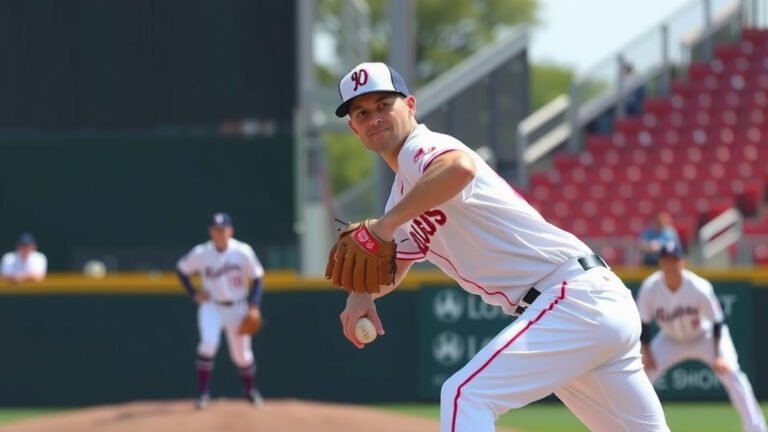
Here’s the heart of the play. Catch clean, turn fast, throw true. Sounds simple, right? It is, but only with practice.
Catch With Two Hands
Catch over your chest with two hands, glove hand pulling the ball into your throwing hand. One-handed catches look cool in highlights. They also add a half second you can’t afford.
Many experts say the catch-to-throw transfer is where most relays lose their speed. So make the transfer part of the catch itself, not a separate event.
The Hip Turn
After the catch, turn your hips toward the target and throw. Some coaches prefer a jump pivot, others a drop step. Either works if your feet stay quick and quiet.
What you should never do is catch and stare. The ball has somewhere to be.
Where to Throw the Ball
Throw to the chest of the cutoff man or catcher on their glove side. Never bounce it at the plate unless the field is soaked, and even then, be sure.
We found that throws aimed at a chest-height target get handled far more often than throws aimed at a base. Bases don’t catch balls. People do.
Communication That Actually Works
Great relays are loud. The catcher or pitcher often calls out where the relay should go, like “Second base!” or “Home!” That frees the relay man to just catch and throw.
Set this up before the game, not during one. Decide who talks, what they say, and what everyone else does. Two minutes of planning saves three runs in July.
- Agree on one relay call word for the season.
- Catcher or pitcher directs traffic on deep balls.
- Relay man echoes the target before the throw.
- Other infielders cover bases, not the relay.
- Outfielder hits the target, hands up, every time.

Common Relay Mistakes to Avoid
Even teams that know the drill make the same errors under pressure. We found these five show up again and again at every level.
- Drifting out of line to “help” the throw instead of staying between the ball and base.
- Catching flat-footed instead of with active feet.
- Two players calling for the ball, then neither taking it.
- Throwing to a spot instead of a person’s chest.
- Watching the first throw instead of preparing the second.
None of these are talent problems. They’re all habit problems, which is good news, because habits are fixable.
Drills to Sharpen Your Relays
Repetition is your best coach. These simple drills take ten minutes and pay off fast.
Line Relay Race
Split the team into two lines, thirty feet apart. Ball goes down the line and back. First group done wins. It teaches quick transfers without anyone overthinking.
Live Cutoff Scrimmage
Run a runner from second on a single, full speed, full communication. Nothing beats game-speed reps for building instinct.
Quick Pre-Practice Checklist
- Confirm your relay call word with the team.
- Assign relay duties by position.
- Practice catch, hip turn, throw in slow motion first.
- Add speed only when the motion is clean.
- Time the play and try to shave a second each week.
- Celebrate clean relays like you celebrate home runs.
Do that consistently, and you’ll stop dreading balls to the gap. You’ll start wanting them. There’s no better feeling than gunning down a runner who thought he had an easy run coming.
Conclusion
Relaying an outfield throw isn’t rocket science, but it does demand habits built before the seventh inning. Get in line early, call for the ball with one loud voice, catch with two hands, and throw to a chest, not a base. Every piece we covered — positioning, communication, drills — exists to shave half a second off the play. That half second is the difference between a runner standing on third and a runner heading back to the dugout. So here’s your next step: bring one relay drill to your very next practice and run it until it’s boring. Boring in practice wins close games in the season.
Frequently Asked Questions
Do you need a relay on every deep outfield hit?
No. If the outfielder has a strong arm and the runner isn’t trying to take an extra base, the outfielder can throw directly to the base. The relay earns its keep on long throws where accuracy fades. Coaches often decide this in advance based on who’s in the outfield.
Can an outfielder be the relay man instead of an infielder?
Usually no, because an infielder is already closer to the target and facing the right direction. That said, some situations — like a ball hit far down the line — might use a nearby outfielder as a cutoff. The rule of thumb stays the same: the person who can get in line fastest should take it.
What if two players both call for the ball?
This is exactly why teams pick one relay word before the season starts. If it still happens, the player closest to the incoming throw should take it, and the other should peel off immediately. It’s better to have one imperfect catch than two players frozen in hesitation.
Should the relay man look at the runner before throwing?
No. Checking the runner adds a beat you can’t afford, and the catcher or cutoff man can see the runner better than you can. Trust your teammates to direct the play. Your only job on a relay is catch, turn, throw.
How far apart should the outfielder and relay man be?
Most coaches aim for a distance that lets both players make strong, accurate throws — often somewhere between 80 and 150 feet total. The exact split matters less than the relay man being settled and in line before the ball arrives. Adjust on the fly based on the strength of the throw.