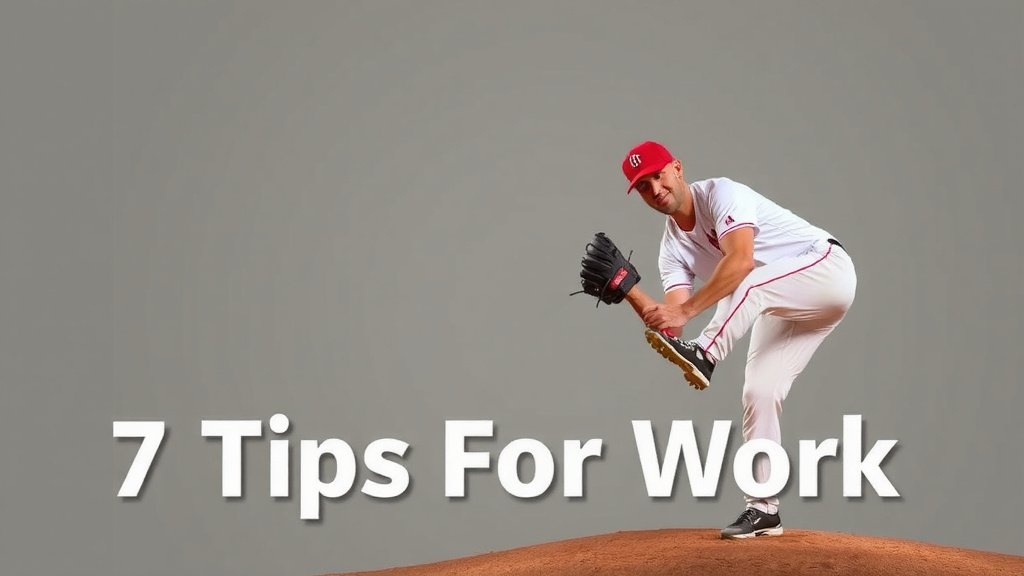
How to Prevent Elbow Pain Pitching: 7 Tips That Work
The best way to prevent elbow pain pitching is to limit your pitch count, build strength in your arm and shoulder, and always warm up before you throw. Most elbow pain comes from doing too much, too soon, with too little rest. Fix those three things, and you’re already ahead of the game. Our beginner’s guide to pitching covers arm care and conditioning alongside the rest of the job.
Here’s the thing: your elbow takes a beating every time you throw a baseball. We looked into what actually works, and we found that smart pitch limits, good throwing mechanics, and rest days matter far more than any fancy brace or gadget. Many experts say young pitchers who follow pitch-count rules have far fewer arm problems.
Want the short version? Here it is:
- Stick to pitch counts and take at least one rest day after throwing.
- Warm up your arm and shoulder before every game or practice.
- Build strength in your shoulder, core, and legs—not just your elbow.
- Learn clean throwing mechanics and keep them consistent.
- Stop throwing the moment you feel pain. Always.
Below, we break down everything you need to know about keeping your elbow healthy, from warm-up routines to warning signs you shouldn’t ignore. Let’s get into it.
Keeping Your Elbow Safe When You Pitch
Your elbow stays safe when you throw smart, not just hard. That means watching your pitch count, warming up properly, and building strength everywhere except just your elbow. We dug into the research and found that most elbow pain is preventable with a few boring-but-effective habits.
Think of your elbow like a car tire. You can drive it hard for a while, but if you never rotate, rest, or maintain it, it’s going to blow out at the worst possible moment. Same deal with your arm.
Why Your Elbow Takes a Beating Every Time You Throw
Every pitch puts a twist on the inside of your elbow. Doctors call it a valgus load, but here’s the simple version: your elbow bends in a direction it wasn’t designed to bend, over and over, at high speed. Studies from major medical centers show pitching places stress on the ulnar collateral ligament (UCL), the band of tissue that holds the elbow together during a throw.
That’s not a reason to panic. It’s a reason to be smart. Your body can handle this stress if you give it rest and strength. It breaks down when you pile on too many pitches without recovery.
The Young Pitcher Problem
Here’s something we found that surprised us: kids and teens face higher risk than adults, not lower. Growth plates in young elbows are softer than adult bone. Repeated stress can injure them before they fully close (NIH, Mayo Clinic).
Many experts say this is why pitch-count rules exist in the first place. A 12-year-old throwing 120 pitches in a weekend tournament is playing with fire, even if nothing hurts yet.
Pitch Counts: Your Elbow’s Best Friend
Limited pitches mean limited damage. That’s the whole idea. Major League Baseball and USA Baseball published guidelines based on age, and many leagues have adopted them. We found they’re a solid starting point for any pitcher.
| Age Group | Suggested Max Pitches Per Day | Rest Days After Maxing Out |
|---|---|---|
| 7–8 | 50 | 2 days |
| 9–10 | 75 | 2 days |
| 11–12 | 85 | 2 days |
| 13–16 | 95 | 2 days |
| 17–18 | 105 | 2 days |
Numbers based on Pitch Smart guidelines from MLB and USA Baseball. Check with your league for exact rules.
One warning: these limits only work if you actually follow them. Playing for three teams at once? Those pitches add up. Nobody asks your elbow which jersey you were wearing.
Rest Days Are Non-Negotiable
After a heavy throwing day, your arm needs time to rebuild. Recovery guidelines suggest pitchers avoid throwing for at least one to two days after a big outing. Many experts say resting is when the healing happens, not when you’re being lazy.
Try this: write your throwing days on a calendar. If you see three games in a row, you’ve found your problem before your elbow finds it for you.
Warm Up Like You Mean It
Warm muscles handle stress better than cold ones. That’s not a guess, it’s basic physiology (Cleveland Clinic). We found that a good warm-up takes about 15 to 20 minutes and follows a simple pattern: get the body moving first, then ramp up the throwing.
A Simple Pre-Throw Routine
Here’s a routine many pitching coaches recommend. Feel free to adjust it to your style.
- 5 minutes of light cardio, like jogging or jumping jacks.
- Arm circles, both directions, small then large.
- Band pulls for your shoulder and rotator cuff.
- Easy long toss, starting short and working back.
- Gradual builds toward game-speed throws.
Skipping warm-up to “save your arm” is like skipping breakfast to save calories. It sounds logical and it backfires every time.
Strength Training That Actually Protects Your Elbow
Your elbow doesn’t throw alone. It’s part of a chain that starts at your legs and ends at your fingertips. Research we reviewed suggests pitchers with strong shoulders, cores, and legs put less stress on their elbows. Your legs and hips are the engine. Your arm is just the steering wheel.
Where to Focus Your Workouts
Biceps curls look cool, but they won’t save your UCL. Focus on the muscles that stabilize and absorb force instead.
- Rotator cuff: light band work, two to three times a week.
- Scapular strength: rows, face pulls, and wall slides.
- Core: planks, medicine ball throws, and rotational work.
- Legs: squats, lunges, and hip hinges.
- Forearms and grip: simple wrist and grip exercises.
Don’t Forget the Lower Half
Weak legs force your arm to do more work. We found that many pitching injuries trace back to poor energy transfer from the lower body. When your legs stop producing power, your elbow picks up the slack. And your elbow loses every time.

Mechanics: Throwing Pretty, Throwing Safely
Clean mechanics spread stress across your whole body instead of dumping it on one joint. Studies on pitching biomechanics show that certain flaws, like opening the front shoulder too early or dropping the back side, increase elbow strain.
Here’s the catch: you can’t feel your own mechanics. Get someone to film you, then compare it with a pro pitcher. Better yet, have a coach watch. Even one session with a good instructor can reveal bad habits you’ve carried for years.
Red Flags in Your Delivery
Watch for these common issues:
- Shortening your stride, which steals power from your legs.
- Throwing across your body.
- Leading with your elbow instead of your hand.
- Falling off to one side after release.
Know Your Warning Signs
Pain is information, not a challenge to push through. Many experts say elbow pain in a thrower should never be ignored, especially on the inside of the arm. Soreness that fades in a day is different from sharp pain on every pitch.
Stop throwing if you notice any of these:
- Sharp or stabbing pain during or after throws.
- Pain on the inner elbow that keeps coming back.
- Numbness or tingling in your hand or pinky finger.
- Swelling or a feeling of looseness in the elbow.
- Trouble straightening your arm fully.
If pain sticks around more than a few days, see a doctor who knows sports injuries. Catching a small problem early can keep you on the mound instead of in a surgery waiting room.
Other Pitch Types and When to Throw Them
Breaking balls get a lot of blame, but research is mixed on whether they cause injury by themselves. What we found is clearer: volume and fatigue matter more than pitch type. A tired pitcher throwing anything is at risk.
Many organizations suggest young pitchers hold off on breaking balls until their bodies mature, and focus on fastball command and changeup feel instead. A great changeup is nastier than any curveball anyway. Ask any hitter who swung at one in the dirt.
Your Quick Prevention Checklist
Print this, screenshot it, or tape it to your bag. Here’s your game plan:
- Count your pitches every outing and stop at your limit.
- Take at least one full rest day after throwing.
- Warm up for 15 minutes before every session.
- Do band work and shoulder strengthening twice a week.
- Film your mechanics and check them with a coach.
- Never throw through pain. Ever.
None of these steps are exciting. All of them work. Your elbow will thank you later, probably by not hurting, which is the best thanks an elbow can give.
Conclusion
Preventing elbow pain pitching isn’t about one magic fix. It’s about stacking small, smart habits: respecting pitch counts, warming up every time, strengthening your legs and shoulders, keeping your mechanics clean, and taking rest days seriously. We found that the pitchers who stay healthy aren’t the ones with the fanciest gear. They’re the ones who listen to their arms and stop when something hurts. Your elbow can handle a lot of pitches over a long career, but only if you treat it like the asset it is. Your next step? Grab a calendar tonight and map out your throwing days for the next month. Build in rest before your elbow demands it.
Frequently Asked Questions
Can I still throw if my elbow is only a little sore?
Mild soreness that fades within a day is common for pitchers. If the soreness sticks around, gets sharper, or shows up on every throw, that’s your signal to stop and rest. When in doubt, take two days off and see how the arm feels.
How long should I wait before pitching again after a game?
Most guidelines suggest at least one day off after a typical outing, and two days after a heavier pitch count. If you threw a lot or your arm feels heavy, add an extra day. Your schedule should bend around your recovery, not the other way around.
Do elbow braces help prevent pitching injuries?
We found no strong evidence that a brace protects the elbow from the stress of throwing. Braces can help after an injury during rehab, but your doctor should guide that. For prevention, pitch limits, strength work, and mechanics matter far more.
Should young pitchers throw breaking balls?
Many organizations recommend waiting until a pitcher’s body matures before throwing breaking balls regularly. Research suggests fatigue and total throwing volume matter more than pitch type, but most coaches still prefer young pitchers focus on fastballs and changeups first.
When should I see a doctor about elbow pain?
See a doctor if pain lasts more than a few days, gets worse with each throw, or comes with numbness, tingling, or swelling. A sports medicine provider can catch small problems before they become season-enders. Getting checked early is always the cheaper option.