How to Shorten Your Swing: Simple Fixes for Better Contact
To shorten your swing, choke down on the grip, narrow your stance slightly, and focus on making a three-quarter backswing instead of a full one. This keeps your swing path controlled and helps you hit the ball more consistently. Many experts say a shorter swing beats a long, wild one almost every time.
Why does this matter? Because a long swing gives you more chances to get out of sync, and we found that most mishits start way before the club ever meets the ball. A compact swing improves your timing, boosts contact quality, and often adds accuracy without giving up much distance. Sounds like a fair trade, right?
Here’s the quick version:
- Choke down on the grip for better control
- Make a three-quarter backswing, not a full one
- Keep your lead arm connected to your body
- Start down with your hips, not your hands
- Finish balanced every single time
Below, we walk through exactly how to shorten your swing step by step, plus the common mistakes to avoid along the way. Grab a club, and let’s get started.
Shortening Your Golf Swing Step by Step
The fastest way to a shorter swing is to make three small changes: grip down an inch, narrow your stance, and stop your backswing when your lead arm reaches parallel. Do those three things and your swing gets shorter without any painful rebuild. Let’s walk through each one.
Grip Down for Instant Control
Choking down is the easiest fix in golf. Slide your hands an inch or two down the grip before you swing. That alone shortens the club’s arc, which makes the whole motion more manageable.
Think of it like using a shorter broom to sweep a tight corner. Less length means less swing-out. Many teaching pros call this the “free” shortening trick because it takes zero practice.
Make a Three-Quarter Backswing
Here’s where most of us get greedy. A full backswing feels powerful, but research and top instructors suggest that control beats raw length almost every time.
Check Your Lead Arm
Stop your backswing when your lead arm hits parallel to the ground. That’s roughly three-quarters of your old swing. It might feel awkward at first, like whispering when you’re used to shouting.
A good drill: place a glove under your lead armpit. If it drops, your arm is drifting too far or getting disconnected. We found that this simple check fixes both length and connection at once.
Feel Your Torso Stop Rotating
Turn your chest until it faces slightly away from the target, then stop. Your shoulders don’t need to point behind the ball. A compact turn loads the swing without over-rotating your spine.
Sports medicine sources, including the Cleveland Clinic, note that oversized rotation adds stress to the lower back. Shorter swings are kinder to your body. That’s a win beyond just scorecards.
Narrow Your Stance a Touch
Bring your feet in by a couple of inches from your normal width. A narrower base limits how far you can wind up, which naturally shortens your backswing. It also makes your balance easier to keep.
Think of a boxer. They never take huge wide steps before throwing a punch. Quick and stable wins.
Starting the Downswing the Right Way
The downswing is where shortened swings either shine or fall apart. The key move: start with your hips, not your hands. When your lower body leads, the club drops into the correct slot almost automatically.
We found that many amateur golfers do the opposite. They fire their hands first, which throws the club over the top. That’s the slice factory, and nobody wants a tour of it.
The Hips-First Feeling
As you finish your backswing, think about bumping your lead hip toward the target. Small move. Just an inch or two of shift is plenty.
Then let your arms fall. Don’t pull them. Gravity does most of the work while your hips clear out of the way.
Staying Connected Through Impact
Keep your lead arm close to your chest as you swing down. That connection keeps the clubface square and your contact clean.
A quick checkpoint: at impact, your hands should be slightly ahead of the ball. If they’re behind, you’re flipping with your wrists. Shorten that thought and let your body rotation deliver the club.
Finishing Balanced Every Time
Here’s a truth we love: how you finish tells the truth about your swing. If you can hold your follow-through for three seconds, your balance is solid. If you’re falling toward the ball, something upstream went sideways.
Hold your finish, chest facing the target, back heel up. Many instructors use this “frozen finish” test as a quality check. It’s free feedback on every single shot.
Common Mistakes When You Shorten Your Swing
A shorter swing can go wrong in predictable ways. Here’s what to watch for:
- Decelerating through the ball. Shorter swing, same speed through impact.
- Stopping the backswing with your arms but still over-rotating your shoulders.
- Squeezing the grip too hard, which kills wrist hinge and feel.
- Standing too close to the ball after narrowing your stance.
- Expecting it to feel natural on day one. It won’t, and that’s normal.
That last one matters most. Any change feels strange for the first few range sessions. Give it time.
Short Swing vs. Full Swing: What You Give Up and Gain
Wondering what the trade actually looks like? Here’s a simple breakdown we put together:
| Factor | Full Swing | Shortened Swing |
|---|---|---|
| Potential distance | Maximum | Slightly less (often 5–10%) |
| Fairways hit | More misses | More consistent |
| Timing demands | High | Lower |
| Body stress | Higher | Easier on back and shoulders |
| Best for | Skilled, practice-heavy players | Most everyday golfers |
Many experts say the distance gap is smaller than golfers fear. A ball struck in the center of the face flies farther than a badly hit bomb. Center contact is the real distance secret.
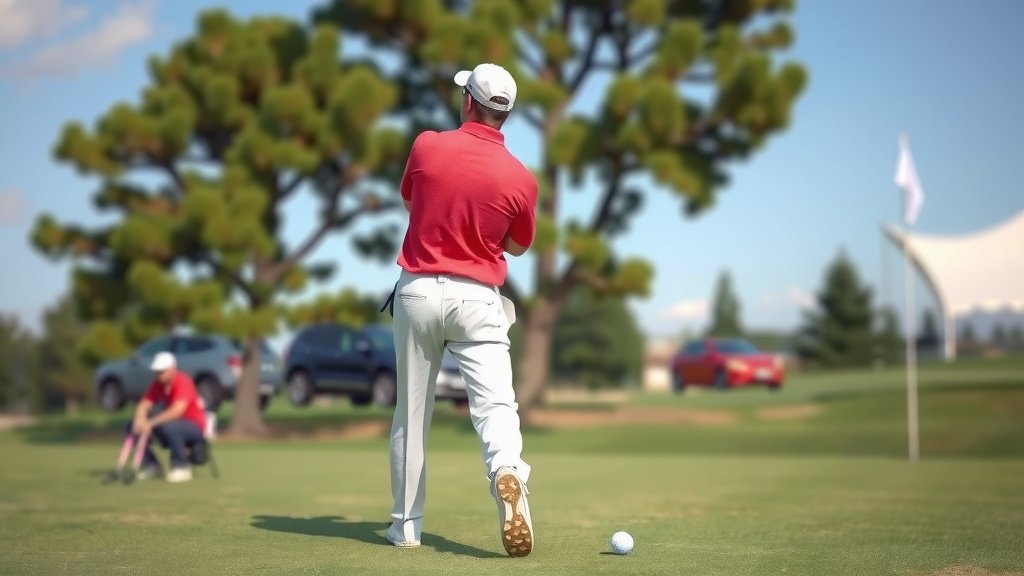
Drills to Groove Your New Swing
Practice makes the change stick. These drills take minutes, not hours:
The Feet-Together Drill
Hit half-speed shots with your feet touching. It’s nearly impossible to overswing this way. Your balance and tempo improve fast, and you’ll feel what a controlled turn is like.
The 9-to-3 Drill
Swing the club back to waist height and through to waist height. No more, no less. Focus on crisp contact. This drill builds the rhythm that a compact swing needs.
The Count Drill
Say “one-two” as you swing. “One” is the backswing, “two” is through. It sounds silly. It works, because counting prevents that rushed, snatchy transition we all hate.
Your Quick-Start Checklist
Before your next round, run through this list:
- Choke down one to two inches on every club
- Narrow your stance slightly at address
- Stop your backswing at lead arm parallel
- Bump your lead hip to start the downswing
- Hold your finish for three seconds
- Commit for at least five practice sessions
We found that golfers who use a simple checklist like this make changes faster than those who just “try to remember.” Write it on a card. Stick it in your bag. Whatever keeps it front of mind.
When Should You Use a Shorter Swing?
Honestly? Most of the time. But there are smart moments to reach for it on purpose:
- When the fairway is narrow and trouble looms
- In wind, where a lower, controlled ball flight helps
- When you’re tight or tired late in a round
- On tough lies in thick rough
- Anytime your full swing starts misbehaving mid-round
That last bullet is the real gift. A reliable shorter swing is your reset button. When your big swing goes rogue on hole 7, you have a fallback that keeps the round alive.
Golf doesn’t reward heroics as often as it rewards repeats. Build the compact version, and you’ll have a swing you can trust when it counts.
Conclusion
Shortening your swing isn’t about playing small. It’s about playing smart. Grip down an inch, make a three-quarter backswing, let your hips lead the way down, and finish balanced. None of these changes require a swing rebuild or a boot camp of practice. They just require a little patience while your hands learn something new.
We found the biggest obstacle isn’t technique. It’s ego. A compact swing that finds the fairway beats a long, loud one that finds the trees, every single time.
Your next step is simple. Head to the range this week, choke down, and hit 30 balls at three-quarter length. Your scorecard will thank you.
Frequently Asked Questions
Will a shorter swing cost me distance?
Probably a little at first, but usually less than you’d expect. When we looked at how center-face contact affects ball speed, we found that a well-struck shorter swing often outperforms a poorly struck full one. Fairways are worth more than a few extra yards you can’t predict.
How long does it take to feel comfortable with a shorter swing?
Most golfers need around three to five focused practice sessions before the new motion stops feeling strange. Range balls help, but playing a few holes with it matters more. Give yourself a couple of weeks and don’t judge the change on day one.
Should I use a shorter swing with every club?
You can, and many instructors recommend it for consistency. That said, wedges and irons are the easiest place to start. Save driver experiments for the range until the motion feels natural with shorter clubs.
Does a shorter swing help with the yips or a jerk at the top?
It often does. A shorter backswing gives you less time and space to make a herky-jerk transition, which smooths out rushed tempo. Many teaching pros use it as a trust-builder for players fighting the shanks or sudden yips.
Can I still generate power with a compact swing?
Absolutely. Power comes from solid contact and good sequencing, not just a long arc. When your hips lead and the clubface arrives square, you transfer energy far better than an overswing ever will. Speed through impact matters more than length behind you.