Mastering the Baseball Swing: Mechanics Explained
Mastering your baseball swing mechanics is all about creating a repeatable, powerful motion. You achieve this by focusing on proper weight transfer, a strong core rotation, and efficient bat speed. Getting these key elements right will help you hit the ball harder and more consistently.
We found that understanding the sequence of your swing, from your feet to your hands, is absolutely vital. Many players struggle because they rush certain parts of the motion. Focusing on the kinetic chain – how energy moves through your body – can make a huge difference in your performance on the field.
- Weight transfer is your power source.
- Core rotation drives the swing.
- Bat speed comes from efficiency.
- Understand the swing’s sequence.
- Think of your body as a chain of power.
Let’s break down the essential baseball swing mechanics step by step to help you improve your game.
Building a Powerful Baseball Swing
Let’s dive into the mechanics that make a baseball swing work. You want to generate maximum power with every cut. This means understanding how your body moves in sequence. We’ve broken down the key elements to help you build a more effective swing. Getting these right can truly transform your hitting.
The Foundation: Your Stance and Setup
Your stance is where it all begins. A good setup helps you stay balanced and ready to react. Think of it as your launchpad for power. You want to be athletic and coiled, not stiff or slouched.
Finding Your Balance
Stand with your feet shoulder-width apart. Your knees should be slightly bent, like you’re about to sit in a chair. This posture keeps you loose and ready for action. Your weight should be balanced evenly on the balls of your feet. This allows for quick weight transfer forward.
Grip and Hand Placement
Your grip on the bat matters a lot. You don’t want to strangle the bat. Hold it firmly but not too tight. Many players find success with a “neutral” grip. This means your knocking knuckles should align. This allows your wrists to snap through effectively. Your hands should be close to your body, not reaching out.
The Kinetic Chain: How Power Flows
Baseball experts talk a lot about the kinetic chain. This is how energy moves from your feet all the way to the bat head. Each part of your body works together. If one link is weak, your power suffers. We found that understanding this sequence is key to hitting harder.
Starting the Motion: The Load and Stride
Before you swing, you need to prepare. This involves a subtle movement called the “load.” You shift your weight back slightly. This coils your muscles. Then comes the stride. This is a small step forward with your front foot. It helps you get your timing and start your forward momentum. Don’t stride too far; it can throw off your balance. Many coaches suggest a stride of only a few inches.
Weight Transfer: Pushing Off the Back Leg
This is your main power source. As you stride forward, your weight shifts from your back leg to your front leg. Think of it as pushing off the ground with your back foot. This action drives your hips forward. Proper weight transfer creates the initial force for your swing. Without it, your swing will feel weak and out of sync.
Hip Rotation: The Engine of the Swing
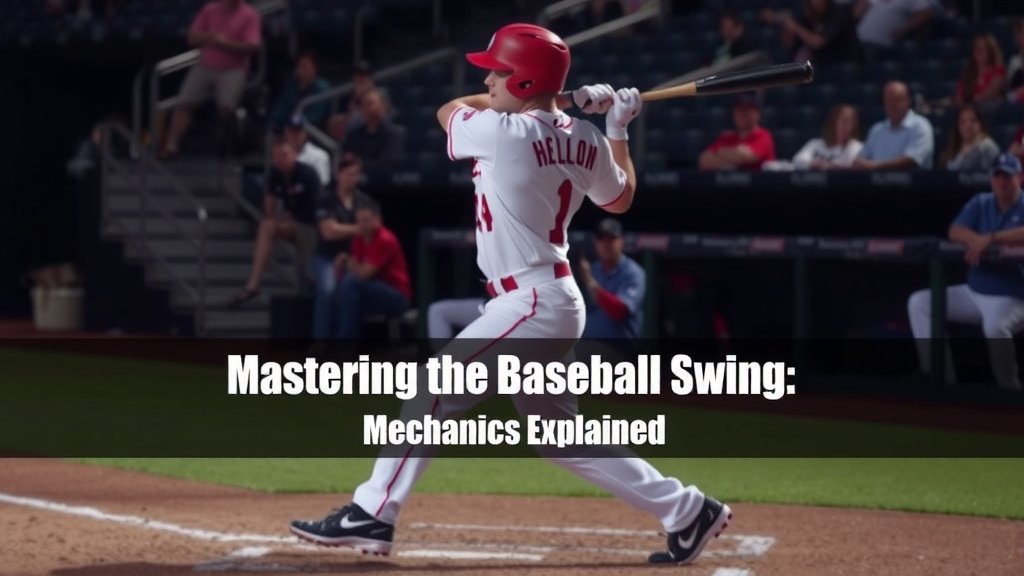
Your hips are the true engine of your swing. Once your weight is on your front leg, your hips rotate forward rapidly. This rotation whips your torso around. It’s this powerful hip rotation that transfers energy up your body. Many players focus too much on their arms. The real power comes from the hips. Research suggests hip rotation speed is a major factor in bat velocity (National Strength and Conditioning Association).
The Core and Torso: Connecting the Power
Your core muscles connect your lower body to your upper body. As your hips rotate, your core stays connected. It then whips your torso around. This transfer of energy is crucial. A strong core helps maintain balance and control during the swing. It prevents energy leaks and ensures power goes to the bat. A weak core leads to a disconnected, less powerful swing.
Arm Action and Hand Path: Delivering the Barrel
Your arms and hands are the final delivery system. They don’t initiate the power; they follow the body’s rotation. As your torso turns, your hands come through the hitting zone. You want a direct path to the ball. Avoid “casting” the bat, which means throwing it away from your body. Keep your hands inside the ball. This allows for a more compact and powerful swing.
Bat Speed: Generating Quickness
Bat speed is what makes the ball jump off the bat. It’s a combination of all the previous mechanics working together. Efficient sequencing leads to higher bat speed.
The Role of the Wrists and Forearms
As your body rotates, your wrists and forearms come into play. They “whip” the bat through the zone. This action adds significant speed to the barrel. Proper wrist lag and snap are vital. This is why a good grip is so important. It allows for that quick release of energy.
Keeping the Barrel Through the Zone
You want the bat head to stay in the hitting zone for as long as possible. This increases your chances of making solid contact. A long, efficient swing path helps with this. It’s not about swinging harder; it’s about swinging smarter and more efficiently. Think of driving the barrel through the ball, not just at it.

Common Swing Flaws and How to Fix Them
Many players struggle with similar issues. Identifying these can help you make targeted improvements. Let’s look at a few common ones we’ve found.
Swinging Up vs. Level Swing
One common mistake is swinging too far up. This often results in fly balls or pop-ups. A more effective swing path is often level or slightly upward. This allows you to drive the ball. Research shows that a flatter swing plane can lead to more line drives (Baseball America).
“Casting” the Hands
This is when your hands break away from your body too early. It causes a loss of power and control. It often looks like you’re throwing the bat head out. Focus on keeping your hands inside the ball. Feel like they are being pulled through by your body’s rotation.
Poor Weight Transfer
If you feel like you’re swinging with just your arms, your weight transfer might be off. Are you pushing off your back leg effectively? Are your hips leading the charge? Video analysis can often reveal this issue. Many players just don’t get their hips rotating aggressively enough.
Checklist for a Better Swing
Use this quick checklist to review your mechanics:
- Are your feet shoulder-width apart with bent knees?
- Is your grip firm but not too tight?
- Is your weight balanced before the stride?
- Does your weight transfer smoothly from back to front?
- Are your hips leading the rotation of your upper body?
- Do your hands stay inside the ball through the zone?
Conclusion
You’ve now seen how mastering your baseball swing mechanics boils down to a well-timed kinetic chain. It starts with your stance and setup, builds through proper weight transfer and hip rotation, and finishes with efficient arm action and bat speed. Remember, it’s about connecting your whole body, not just your arms. Focus on sequencing and making sure your hips lead the way. Your next step is to practice these movements deliberately. Record yourself or work with a coach to identify areas you can improve. You’ve got the knowledge – now it’s time to put it into action on the field.
Frequently Asked Questions
How do I know if my weight transfer is correct?
A good weight transfer feels like you’re pushing off your back leg and driving your hips forward. You should feel balanced on your front leg at the point of contact. If you feel off-balance or are still back on your heels, your transfer might be late or incomplete.
What’s the best way to improve my bat speed without swinging harder?
Focus on efficiency and sequencing. A proper load and stride create tension that can be released quickly. Make sure your hips rotate powerfully and that your core stays connected to your torso. Think about a whip-like action, where the hands and bat lag slightly behind your body’s rotation.
Why do my hands seem to “cast” away from my body?
Casting often happens when you try to initiate the swing with your hands instead of your hips. It can also stem from a poor grip or trying to generate too much power too early. Focus on keeping your hands in close to your body and letting your hip rotation pull them through the zone.
Is a completely level swing path always the best for hitting line drives?
While a flatter swing path generally helps drive the ball, some slight upward or downward angle can be effective depending on pitch location and your goals. Research suggests a level or slightly upward plane is often more efficient for creating line drives. The key is maintaining that path through the hitting zone.
How important is my grip strength in my swing?
Your grip should be firm but not overly tight. A death grip can actually hinder your bat speed by making your wrists stiff. You want a grip that allows for quick wrist action and snap through the ball. Aim for your knuckles to align, which often promotes a good neutral grip.