Mastering Baseball Pitching Mechanics for Velocity and Control
Mastering baseball pitching mechanics is key to throwing faster and with more accuracy. Great mechanics reduce the chance of arm injuries. It’s all about building a smooth, powerful kinetic chain from your legs to your fingertips. We’ll show you how to get there.
Understanding how your body moves is crucial for effective pitching. It’s not just about throwing hard; it’s about throwing smart. We found that focusing on your balance and rotational power makes a huge difference. This approach helps pitchers perform better and stay healthier on the mound.
- Proper pitching mechanics reduce injury risk.
- Balance and leg drive are fundamental.
- Torso rotation adds velocity and control.
- Follow-through prevents strain.
- Consistency comes from good mechanics.
Ready to transform your pitch? Let’s walk through the essential steps to improve your baseball pitching mechanics right now.
Building a Better Pitch: Your Guide to Pitching Form
We know you want to throw harder and with better control. Improving your pitching mechanics is the best way to get there. It’s not about magic; it’s about using your body efficiently. A good mechanical foundation helps you reach your potential and stay healthy on the mound. Let’s break down what makes a great pitch.
The Kinetic Chain: Your Body’s Power Source
Think of your body as a whip or a spring. Energy starts in your legs and moves up through your torso, arm, and finally to the ball. This is called the kinetic chain. Every link in this chain needs to work together smoothly. If one part is weak or out of sync, you lose power and risk injury. We’ve seen pitchers struggle because they ignore this connection.
Leg Drive: The Foundation of Velocity
It all starts from the ground up. Your legs are the engine for your pitch. A strong leg drive transfers energy to your core. When you push off the rubber, you want a powerful, controlled movement. This isn’t just about speed; it’s about creating a solid base.
The Stride
Your stride should be controlled and balanced. Aim for a stride length that feels comfortable and allows you to maintain balance. Too long, and you might fall off balance. Too short, and you won’t generate enough power. Many studies show that proper stride length is key for consistency (American Baseball Academy).
Weight Transfer
As you stride forward, your back leg needs to push off the rubber. This push transfers your body’s weight forward. Imagine shifting your weight from your back foot to your front foot. This transfer is what generates much of your pitching velocity. We found that pitchers who focus on this get a noticeable boost.
Torso Rotation: Unleashing Power
Once your lower body is driving forward, your torso starts to rotate. This rotation is where a lot of the magic happens for pitching speed. Your core muscles are essential here. They connect your legs to your throwing arm.
The Separation
As your hips rotate forward, your upper body should lag behind slightly. This creates a separation between your hips and shoulders. This separation is like stretching a rubber band. It stores elastic energy that will be released as you continue to rotate and throw. Many coaches stress this “separation” for increased velocity.
Full Rotation
You want to rotate your torso quickly and powerfully. Your front shoulder should stay closed for as long as possible. Then, it opens up rapidly as you throw the ball. This full, explosive rotation is critical. It helps you get the most out of your body.
Arm Action: The Delivery Phase
Your arm action should be fluid and efficient. It’s the final piece of the kinetic chain delivering the ball. Think of it as the tip of the whip snapping. It needs to be fast but also controlled to avoid injury.
The Arm Slot
Your arm slot is the angle at which you throw the ball. Common arm slots are high, over-the-top, and sidearm. Consistency in your arm slot is more important than the specific slot itself. Changing your arm slot drastically can lead to inconsistent pitches and injury. Many experts suggest finding a slot that feels natural and sticking with it (Pitching Performance Institute).
Arm Speed and Timing
Arm speed is vital, but timing is everything. Your arm needs to come through at the right moment. It should be synchronized with your body’s rotation and stride. A common mistake is to “arm the ball” too early. This means your arm is trying to do all the work. We’ve observed that proper timing allows your body to do most of the heavy lifting.
Elbow and Wrist Position
Keep your elbow slightly above or even with your shoulder during the motion. A common injury risk comes from dropping your elbow too low. Your wrist should be in a good, strong position. This helps transfer energy efficiently to the ball without stressing your arm. Guidelines from sports medicine professionals often highlight elbow position as a key factor in injury prevention (American Journal of Sports Medicine).
Follow-Through: Completing the Motion
Don’t stop your motion after you release the ball! A proper follow-through is essential. It allows your arm and body to decelerate safely. Without it, you’re putting a lot of stress on your arm and shoulder. It’s like slamming on the brakes.
Why Follow-Through Matters
A good follow-through helps decelerate your arm gradually. This reduces the strain on your elbow and shoulder ligaments. It also helps you maintain balance after your pitch. Many pitchers neglect this part, leading to arm soreness. We found that dedicated follow-through practice leads to fewer injuries.
Executing a Proper Follow-Through
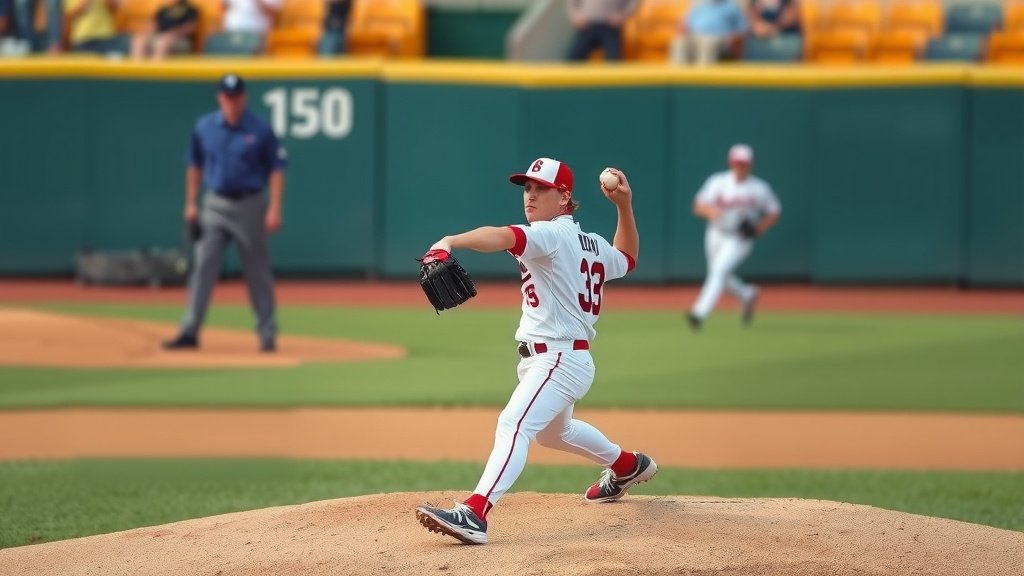
Your throwing arm should naturally swing across your body towards the opposite knee. Your back leg might come forward as you decelerate. The goal is a smooth, balanced finish. It should feel like a natural continuation of your pitch, not an afterthought. This helps your body dissipate the energy from your throw.
Checklist for Better Mechanics
Here’s a quick way to check your progress:
- Maintain a balanced, controlled stride.
- Feel the weight transfer from back to front.
- Ensure your torso rotates powerfully.
- Keep your arm slot consistent.
- Complete a full, smooth follow-through.
- Focus on a fluid kinetic chain.
Consistency is Key
Mastering these mechanics takes time and repetition. Don’t get discouraged if it doesn’t happen overnight. Consistent practice is what builds muscle memory. You’ll start to feel your body working together more efficiently. This leads to more velocity, better control, and fewer injuries. Remember, you’re building a repeatable, powerful motion.
Conclusion
You’ve learned how building a strong pitching motion is about more than just arm strength. It’s a coordinated effort, a kinetic chain starting from your legs and flowing through your torso to your arm. Focusing on that powerful leg drive, controlled torso rotation, and a smooth follow-through will make you a more effective and durable pitcher. Remember, consistent practice is your path to mastering these mechanics. Your next step is to take one of these points – maybe your leg drive or follow-through – and focus on improving it during your next bullpen session.
Frequently Asked Questions
How can I improve my leg drive without overstriding?
Focus on maintaining balance during your stride. Your stride length should feel natural and allow you to transfer weight effectively. Practice controlled pushes off the rubber, feeling your back leg extend fully. We found that gradual increases in stride length, paired with balance drills, work best.
What’s the best way to practice torso rotation for more power?
Think about separating your hips and shoulders. As your hips start to rotate towards the plate, keep your upper body back slightly longer. This stretch builds elastic energy. Imagine “leading” with your core and allowing your arm to trail. Core strengthening exercises can also help.
Is it bad to have a lower arm slot if it feels natural?
Consistency in your arm slot is far more important than the specific slot itself. A natural, repeatable slot reduces injury risk. If your arm slot feels comfortable and you can throw strikes with it, stick with it. However, always monitor your arm health and consult a coach if you have concerns.
How long does it typically take to see improvement in pitching mechanics?
Improving pitching mechanics is a journey, not a race. You might feel small improvements within weeks, but significant changes can take months of dedicated practice. Consistent repetition is key to building new muscle memory. Don’t get discouraged if progress feels slow at times.
Can bad follow-through cause arm pain?
Absolutely. A weak or incomplete follow-through means your arm decelerates too quickly, putting immense stress on your elbow and shoulder. A proper follow-through allows your arm to slow down gradually and safely across your body. This is a vital step for arm health.