How to Recognize Pitch Types in Baseball: A Fan’s Guide
The easiest way to recognize pitch types is to watch three things: the ball’s speed, its spin, and how it moves on the way to the plate. A fastball comes in hard and straight, a curveball drops sharply, and a slider darts sideways. Once you know what to look for, picking pitches gets much easier.
Here’s the thing, though. Watching spin and movement from your couch is one skill, and hitting against those pitches is another beast entirely. We researched what coaches and former players teach, and we found that most beginners start by tracking release point and velocity before anything else. It takes a little practice, but your eyes adjust faster than you’d think.
TL;DR — Quick tips for spotting pitches:
- Fastballs are the fastest and travel the straightest.
- Curveballs slow down and drop hard as they cross the plate.
- Sliders look like fastballs early, then break sideways late.
- Changeups arrive much slower than they look out of the hand.
- Watch the pitcher’s grip and release point for extra clues.
Below, we break down each major pitch type step by step, with simple visual cues you can use whether you’re on the couch or standing in the batter’s box. Let’s get into it.
Spotting Pitch Types From the Stands and the Box
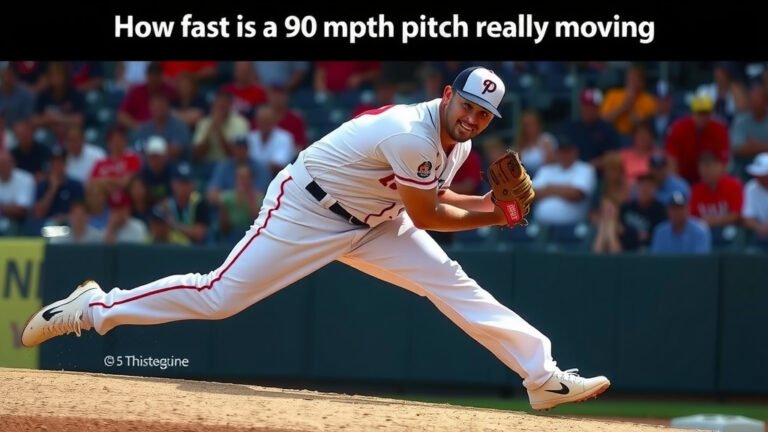
Spotting pitches comes down to reading speed, spin, and break in a split second. Many experts say the first thing to lock in is velocity, because every other pitch hides behind the fastball. Once you know what a pitcher’s heater looks like, everything else becomes easier to label.
Start With the Fastball as Your Baseline
Think of the fastball as the reference point for everything else. Most pitchers throw it harder than anything else in their bag. We found that coaches often tell beginners to watch the first three fastballs closely before worrying about breaking balls. If you’re curious how hard the pros actually throw, our guide to major league fastball speed breaks down the numbers.
Here’s why. If you don’t know the baseline, you can’t judge what’s slower or what’s moving differently. It’s like calibrating a scale before you weigh anything. Get the fastball firmly in your mind, then compare.
What Four-Seam and Two-Seam Look Like
A four-seam fastball stays straight and true. It looks like a sealed envelope flying to the plate. A two-seamer (or sinker) shows a little sideways tilt and dips down late, often producing ground balls. Researchers who study pitch tracking have found that seam orientation changes how the air pushes on the ball, which explains the difference you see with your own eyes.
Reading Velocity Without a Radar Gun
You don’t need broadcast graphics to judge speed. Watch how quickly the ball beats the bat path. A true fastball makes the hitter feel rushed, like the mail arrived before you wrote the letter.
One trick we found helpful in our research: count the pitcher’s rhythm. If his arm motion looks identical every time but the ball arrives late, you’re probably seeing an off-speed pitch. Late arrival is the tell.
The Breaking Ball Family: Curveballs and Sliders
Breaking balls are where most fans get fooled, and honestly, that’s the point. The pitcher wants them to look like fastballs until the last possible moment. Your job is to catch the early clues.
Curveball: The Rainbow Drop
A curveball is the easiest breaking pitch to spot because it visibly humps. The ball seems to rise slightly, then falls off a table. MLB pitch-tracking data shows curveballs are typically the slowest pitches in a starter’s mix, often 15 or more miles per hour slower than his fastball.
You’ll sometimes see the pitcher’s hand finish with a sharp downward snap. Old-school scouts call it “turning the doorknob.” If you watch the release and see that wrist action, expect the drop.
Slider: The Snake That Slithers
The slider is sneakier. It comes out looking like a fastball, then breaks sideways late and sharp. Not as slow as a curveball, not as straight as a heater. Somewhere in between, and that’s exactly why hitters hate it.
A helpful comparison from pitching analysts: a curveball drops, a slider sweeps. If the ball darts left or right more than it falls, call it a slider. If it falls more than it darts, call it a curve.
Changeups and Off-Speed Deception
The changeup might be the most honest-looking liar in baseball. The arm speed is identical to a fastball. The grip isn’t. The ball just arrives 10 to 15 mph slower, and bats swing through thin air.
Sports science coverage, including work cited by researchers studying motor timing, suggests that hitters time their swings off visual cues. When those cues lie, the swing comes early. That’s why the best changeup gets called “the great equalizer” by folks who’ve spent decades around the game.
Clues in the Grip and Hand
Some pitchers tip their pitches with the grip. A changeup often sits deep in the palm or held with a circle made by the thumb and finger. A splitter looks like a fastball grip but with fingers split wide, like the ball is wearing tiny antennae.
You won’t catch every grip from the stands. But if you’re watching a broadcast with tight camera work on the pitcher, you’d be surprised what you can pick up over nine innings.
Quick Reference: Pitch Comparison Chart
Sometimes a picture is worth a thousand words, so here’s a thousand words in table form.
| Pitch | Speed | Movement | Best Early Clue |
|---|---|---|---|
| Four-seam fastball | Fastest | Straight | Blazing arm speed, no break |
| Sinker / two-seamer | Fast | Down and in slightly | Sideways spin visible at release |
| Slider | Medium-fast | Sideways, late | Looks like fastball, darts late |
| Curveball | Slow | Sharp downward drop | Visible hump and wrist snap |
| Changeup | Slow | Slight fade | Fastball arm, slow arrival |
Watching Release Point Like a Pro
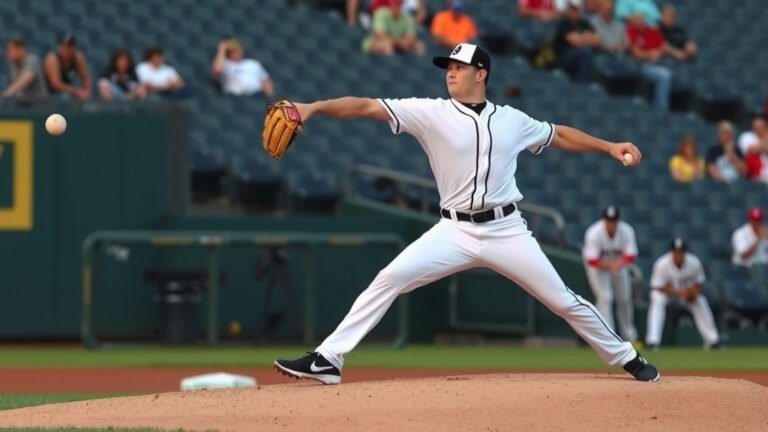
Release point is the single best habit you can build. Most pitchers release every pitch from roughly the same spot, which means differences show up in the hand and arm angle, not the body. Coaches at nearly every level teach hitters to pick up the ball as early as possible out of the hand.
The earlier you see the ball, the more time your brain has to process it. Vision research on athletes, much of it summarized in sports science journals, supports this: elite hitters track the ball sooner and make fewer late corrections. You can borrow that habit without a $200 million contract.
Drills to Sharpen Your Eye at Home
You can train this on your couch, which is our favorite kind of training. Try these:
- Watch a game with the sound off and call each pitch before the graphic shows.
- Focus on one pitcher for a full inning and track his release point every time.
- Guess speed first, movement second, then check the broadcast readout.
- Replay one at-bat three times, watching a different pitcher cue each pass.
- Keep a small notebook of what each pitcher’s curveball looks like versus his slider.
After a few games, you’ll start calling pitches before your friends do. That’s a small but delicious victory.
Recognizing Pitcher Tendencies and Sequencing
Pitchers are creatures of habit. Many analysts note that pitchers lean on certain pitches in certain counts, like breaking balls with two strikes or fastballs ahead in the count. You don’t need to be a scout to use this. Just pay attention to patterns.
Ask yourself simple questions. Does he throw the curveball when behind? Does the changeup show up only against lefties? Patterns repeat, and repeating patterns are free information. For a deeper look at count-based pitch patterns, our guide to calling a game as a catcher covers the strategy from behind the plate.
Common Mistakes When Learning to Read Pitches
Everyone messes this up at first, so don’t sweat it. Here’s a quick checklist of traps to avoid:
- Don’t judge a pitch by the pitch before it; judge it on its own flight.
- Don’t stare at the catcher’s target; watch the ball, not the glove.
- Don’t assume slow means curveball; changeups are slow too.
- Don’t rely on one cue; combine speed, spin, and break.
- Don’t get frustrated when you’re wrong, because even MLB hitters get fooled nightly.
- Don’t skip the fastball baseline; it anchors everything else.
Training Your Eye Over a Full Season
Like anything worth doing, this takes reps. We found that fans who commit to pitch-calling for a full season start picking up spin and break naturally by mid-year. Your brain builds a library, and each new pitch gets compared against every pitch you’ve ever watched.
Start with one game a week. Watch one pitcher closely. Before long, you won’t just be watching baseball. You’ll be reading it, pitch by pitch, like a scout in aLazy-Boy. And honestly? That’s half the fun.
Conclusion
Reading pitches boils down to three habits: establish the fastball baseline, watch the release point, and judge each pitch on speed, spin, and break. Once those clicks, curveballs stop looking scary and changeups stop looking sneaky. We found that the fans who improve fastest are the ones who practice on purpose, calling pitches during a game instead of just watching them. You don’t need a radar gun or a scout’s pedigree. You need a couch, a broadcast, and a little patience with yourself when you guess wrong. So here’s your next step: pick one pitcher in the next game you watch and call every pitch he throws for a full inning. Your eye will thank you by the seventh inning stretch.
Frequently Asked Questions
How can I tell a slider from a curveball in real time?
Focus on the direction of the break, not just the speed. A curveball drops sharply with a visible arc, while a slider moves mostly sideways and late. If the ball sweeps more than it sinks, lean slider.
Do pitchers try to hide their grips from the camera?
Most do, yes. Many pitchers adjust their glove or re-grip the ball inside it before the windup to hide clues. That said, some still tip their pitches without realizing it, so keep watching the hand after the glove comes free.
Why do changeups look so much like fastballs?
Because the pitcher throws them with identical arm speed, only the grip changes. Your eyes read the arm action and expect a heater, then the ball arrives 10 to 15 mph slower. That late arrival is the biggest tell.
Can I learn to read pitches just from watching MLB broadcasts?
Absolutely, and it’s one of the best free training tools around. Broadcast cameras are positioned right behind the pitcher, and the graphics give you instant feedback on your guesses. Watch one pitcher per game closely and check yourself against the readouts.
How long does it take to get good at spotting pitch types?
Most dedicated fans start calling pitches with decent accuracy within a few weeks of consistent viewing, and we found that real confidence tends to show up around mid-season. It’s like any skill, your brain needs reps. Keep a notebook if you want to speed things up.