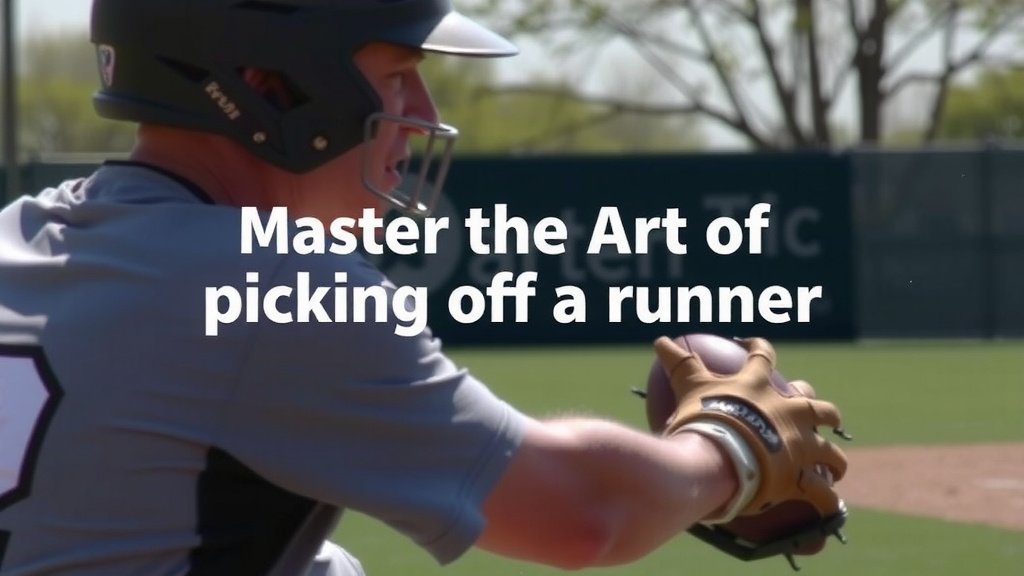
Master the Art of Picking Off a Runner
Picking off a runner in baseball is all about quick thinking and accurate throws. You’ll want to catch the ball cleanly and immediately pivot towards the base. The goal is to get the ball to the infielder covering the base before the runner arrives.
This defensive play can really shift the momentum of a game. It requires good communication between the catcher and the infielders. Knowing when to attempt a pickoff is also key; you don’t want to give up an easy passed ball or wild pitch by being too aggressive.
- Understand the runner’s lead.
- Get a good grip and a clean catch.
- Quickly pivot and throw to the base.
- Aim for your infielder’s glove.
- Communicate with your teammates.
Let’s walk through exactly how to execute a successful pickoff attempt step by step.
“`htmlMastering the Pickoff: Your Guide to Throwing Out Runners
So, you want to snag a runner trying to get a little too much real estate? A pickoff can be a huge momentum swinger for your team. It’s not just about having a strong arm. It’s about being smart, quick, and working with your infielders.
We’re going to break down exactly what goes into a successful pickoff attempt. Think of it as a strategic chess match on the diamond. You’re anticipating your opponent’s move and striking first.
Understanding the Runner’s Tendencies
Before you even think about throwing, you need to watch the runner. Where do they like to take their lead? Do they creep off the bag slowly, or do they take a big jump as soon as the pitcher begins their motion? Observing this can give you a huge advantage.
The “Leaning” Runner
Some runners lean heavily off the base. This means they’re committed to getting a good secondary lead. They might be looking to steal on the next pitch. A runner who is “leaning” is often less prepared for a sudden throw.
The “Dancing” Runner
Others might do a little “dance” off the base. They’ll take a few shuffle steps, testing the pitcher’s attention. These runners are often more aware and might be quicker to react. You need to be extra sharp with these guys.
The “Aggressive” Runner
Then there are the pure speedsters who just want to steal. They’ll take big leads, hoping to catch you off guard. If you can pick one of these off, it’s a massive statement.
The Catcher’s Role: Catch, Pivot, Throw
Your job as the catcher is absolutely vital here. It starts the moment the ball hits your mitt. You need to be ready to act instantly.
Receiving the Pitch
First, you have to catch the ball cleanly. No bobbles, no letting it get away. A good, solid catch sets everything up. If the pitch is wild, forget about the pickoff. Focus on preventing a passed ball.
The Quick Pivot
This is where the magic happens. As soon as you get the ball, you need to pivot. You’re not just turning; you’re turning with purpose and speed. Your body needs to be squared up towards the base you’re throwing to. Think of it like a dancer’s quick turn, but with a baseball.
Accurate Throwing Mechanics
Your throw needs to be on the money. You’re not trying to blast it through the infield wall. You’re aiming for a specific spot: your infielder’s glove. A chest-high throw right to the bag is ideal. Too high, and they have to reach. Too low, and it’s a tough hop.
Targeting the Base Infielder
This isn’t a solo mission. You and your infielder need to be in sync. The infielder needs to know who is covering the base. They should be getting to the bag at the right time, with their glove out and ready. You’re aiming for that glove, not just the general area of the base.
Timing is Everything
The timing of your throw is absolutely critical. You want to throw when the runner is furthest from the base. This usually happens when they’re looking back at the pitcher or starting their next shuffle step. If you throw too early, they’ll be back on the bag easily. Throw too late, and they’ve already made it.
Communication is Key: Working with Your Infielders
A successful pickoff is a team effort. You can’t do it alone. Clear communication is vital before and during the play.
Pre-Pitch Signals
Before the pitch, you might give a signal to the infielder covering the base. This lets them know you’re thinking about a pickoff attempt. It could be a subtle nod, a tap on your glove, or a quick hand signal. This prepares them to move to the bag.
Verbal Cues
Sometimes, you might need a quick verbal cue. If you see a runner getting too comfortable, a quiet “Let’s go!” or “On it!” directed at the infielder can be enough. But remember, you don’t want to alert the runner!
Who Covers the Base?
The decision of who covers the base often depends on the situation. Is there a runner on first and second? The shortstop or second baseman might cover first. If it’s a runner on second, the shortstop or third baseman usually covers.
Many coaches work through these scenarios in practice. They establish clear roles so everyone knows their job without needing a lot of thinking on the fly.
When to Attempt a Pickoff
Not every situation is ideal for a pickoff. Being too eager can backfire. You need to pick your spots wisely.
Runner’s Lead Size
As we’ve mentioned, a big lead is your best friend for a pickoff. If the runner is hugging the bag, it’s usually not worth the risk. You might give them an easy path to advance if you miss.
The Score and Inning
In a tight game, especially late innings, a failed pickoff can be costly. Giving up an error or a passed ball could allow the runner to advance an extra base. Consider the game situation. Is a single out going to make a big difference?
Pitcher’s Tendencies
Some pitchers have a really quick move to the plate. Others have a slower wind-up. If the pitcher has a strong, fast throw to the mound, that’s a good sign for a pickoff. If their motion is very deliberate, it might be harder for you to get the ball there quickly enough.
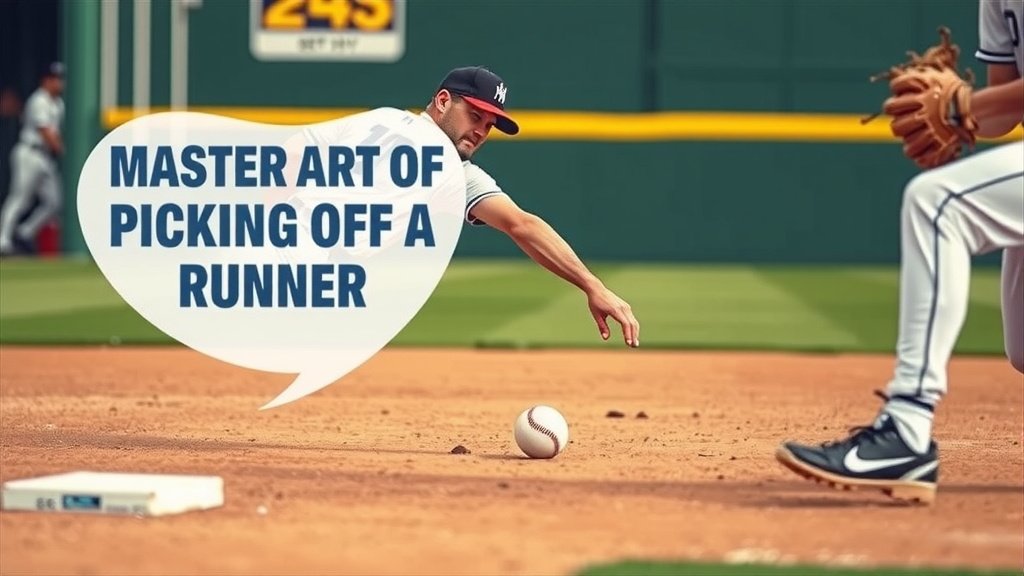
Common Mistakes to Avoid
Even experienced players make pickoff mistakes. Knowing what to look out for can help you avoid them.
- Hesitation: The biggest killer of any pickoff is hesitation. If you pause for even a second, the runner will notice.
- Bad Throws: Throwing wild or erratically is worse than not attempting it. You don’t want to give the runner a chance to advance on your mistake.
- Ignoring the Runner: Not paying attention to the runner’s lead is a fundamental error. You have to know your target.
- Poor Communication: Assuming your infielder knows what you’re doing can lead to misplays. Talk it out!
Practice Makes Perfect: Drills to Improve Your Pickoff Game
Like any skill in baseball, pickoffs get better with practice. Here are a few drills you can work on.
The “Quick Catch and Throw” Drill
Have a pitcher throw pitches, and you practice receiving them cleanly. Immediately pivot and throw to a designated spot at the base. Focus on speed and accuracy.
The “Runner on Lead” Drill
Have a coach or teammate stand off the base with a lead. Practice throwing to them as they “dance” or “lean” off the bag. This simulates game-like conditions.
The “Communication” Drill
Run through scenarios with your infielders. Practice signals and verbal cues. Make sure everyone knows who covers which base in different situations.
Pickoff Checklist for Success
Here’s a quick rundown to keep in your head:
- Observe the runner’s lead – know their tendencies.
- Catch the pitch cleanly – no room for error.
- Pivot quickly and square up – face the target.
- Throw accurately – aim for the infielder’s glove.
- Communicate with your team – be on the same page.
- Time your throw – strike when they’re vulnerable.
Executing a successful pickoff is a satisfying play. It shows defensive prowess and smart baseball. Keep these tips in mind, practice them, and you’ll be throwing out runners in no time!
“`Conclusion
Mastering the pickoff is more than just a good arm; it’s about sharp observation and quick execution. You’ve learned to read a runner’s lead, perfect your catch-and-throw, and communicate effectively with your infielders. Remember, timing and accuracy are your best friends on the diamond. Don’t let hesitation cost you an out. Now, go out there, practice these techniques, and put that runner back in their place!
Frequently Asked Questions
What’s the biggest mistake players make during a pickoff attempt?
The most common mistake is hesitation. Even a slight pause after catching the ball gives the runner time to react and get back to safety. It’s about instant reaction and a decisive throw to your target.
How important is the infielder’s role in a pickoff?
The infielder’s role is absolutely vital. They need to be ready to cover the base at the right time and present a clean target for your throw. Good communication ensures you’re both on the same page.
When should I absolutely NOT attempt a pickoff?
You should avoid attempting a pickoff when the runner is hugging the base tightly or if you’re worried about giving up an easy passed ball. Also, consider the game situation; a risky pickoff in a crucial moment might not be worth it.
Can I practice pickoffs effectively by myself?
While team practice is best, you can practice parts of it alone. Focus on your clean catch and the speed of your pivot and throw to a target spot on the base. You can also work on recognizing lead sizes by watching runners from the dugout.
What’s the best way to communicate a pickoff intention to my infielder?
Subtle signals before the pitch are ideal, like a nod or a quick glove tap. During the play, a quiet verbal cue like “Cover!” or “Let’s go!” can work if delivered discreetly. The goal is to alert your teammate without alerting the runner.