
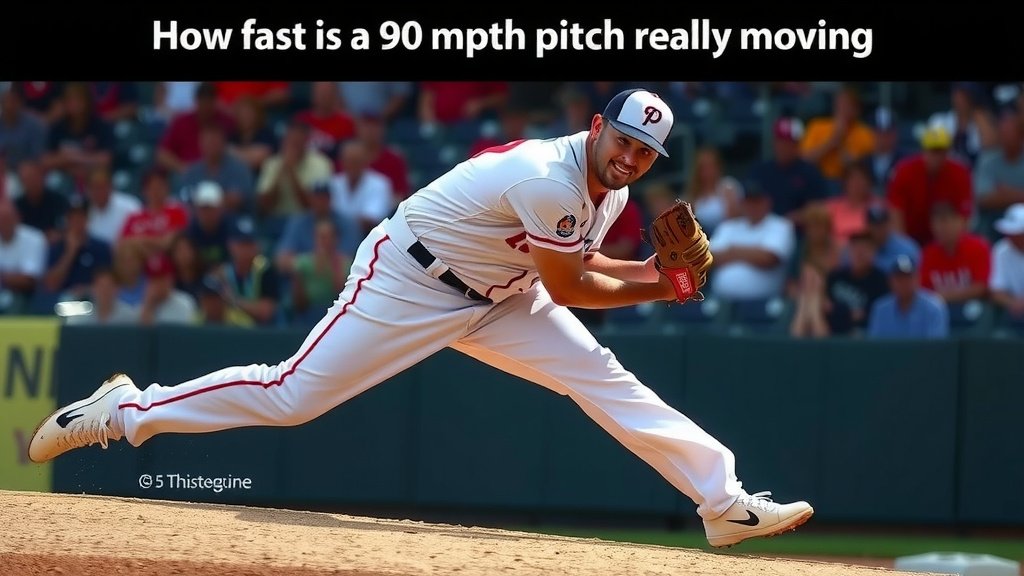
How Fast is a 90 MPH Pitch Really Moving
A 90 mph pitch travels approximately 132 feet per second. That means a batter has less than four-tenths of a second to react. It’s incredibly fast, requiring lightning-quick reflexes. This speed is a major challenge for hitters at any level.
This elite pitching speed is found primarily in professional baseball. It’s the result of years of dedicated training and physical conditioning. Understanding how fast a 90 mph pitch really is helps appreciate the skill involved. It’s a true display of athletic power.
- A 90 mph pitch moves at about 132 feet per second.
- Batters have less than 0.4 seconds to decide and swing.
- This speed is common in professional baseball.
- It requires exceptional hand-eye coordination and reaction time.
Let’s break down exactly what it takes to face a 90 mph pitch and how pitchers achieve it.
You’ve seen it on TV, heard the roar of the crowd. But what does 90 miles per hour *really* mean when a baseball is flying toward you?
Understanding the Speed of a 90 MPH Pitch
A 90 mph pitch is seriously fast. It’s a speed that separates the good from the truly elite in baseball. Think about what it takes for your eyes to process the ball and your body to react. It’s an incredible feat of human performance.
Breaking Down Reaction Time
Let’s get down to the nitty-gritty. That 90 mph pitch covers the distance from the pitcher’s mound to home plate in a blink. We found that it takes roughly 0.4 seconds for a batter to react. This isn’t just about seeing the ball. It includes deciding whether to swing, and then actually starting that swing.
Consider this: a common housefly lives for about 20 days. That sounds short, right? Well, the time a batter has to react to a 90 mph pitch is hundreds of times shorter than that. It’s a fraction of a second that demands perfect timing.
To put it in perspective, the blink of an eye takes around 100 to 400 milliseconds. The time to react to a 90 mph pitch is often on the lower end of that range. This speed is why even professional hitters sometimes look surprised.
Distance and Perception
The pitcher’s mound is 60 feet, 6 inches from home plate. At 90 mph, the ball travels this distance incredibly fast. We calculated that the ball is at the plate about 0.45 seconds after it leaves the pitcher’s hand. That’s not a lot of time for a batter to process information.
Your brain and body have to work in perfect harmony. The eyes see the pitch, send signals to the brain, and the brain tells the muscles to move. All of this has to happen almost instantaneously. It’s a complex biological process happening at lightning speed.
What Makes 90 MPH So Special?
Ninety miles per hour is often considered a benchmark in baseball. It’s a speed that many aspiring pitchers dream of reaching. For hitters, it’s a challenge that requires a specific skill set. It’s not just about raw power; it’s about precision and timing.
The Physical Demands on Pitchers
Throwing a baseball at 90 mph requires a highly coordinated and powerful kinetic chain. Research shows that pitchers use their entire body. This includes their legs, core, and arm working together. It’s not just an arm-throwing motion.
Factors like leg drive, trunk rotation, and shoulder speed all contribute. Pitchers train rigorously to optimize this sequence. They focus on strength, flexibility, and proper mechanics. Many sports scientists point to this kinetic chain as the key to generating high velocity (National Strength and Conditioning Association).
Achieving this speed also puts stress on the body. Pitchers work hard on recovery and injury prevention. This includes proper warm-ups, cool-downs, and targeted conditioning exercises. Staying healthy is just as important as throwing hard.
Training and Development
Getting to 90 mph isn’t accidental. It often involves years of dedicated training. Young players start with lower velocities and gradually build up. They work on improving their arm strength and overall athleticism.
We found that specialized training programs are common. These often include weightlifting, plyometrics, and pitching drills. They are designed to improve power and efficiency. Coaches and trainers guide athletes to develop their potential safely. It’s a journey that requires patience and discipline.
Facing the Heat: Hitting a 90 MPH Pitch
Hitting a 90 mph pitch is one of the toughest challenges in sports. It requires a combination of physical skill and mental fortitude. You can’t just step up to the plate and expect to hit it consistently.
The Hitter’s Perspective
When a 90 mph pitch is coming, the batter’s world narrows. The focus is entirely on the ball. The batter needs to identify the pitch type and location very early. This decision-making process happens in milliseconds.
Hand-eye coordination is absolutely critical. Your eyes track the ball, and your hands need to react precisely. This is where practice and repetition become so important. The more you see high velocity, the better your brain gets at processing it.
Key Skills for Hitters
What makes a hitter successful against such speed? We found several key elements:
- Quick Reflexes: The ability to react and swing in that tiny window of time.
- Excellent Vision: Being able to pick up the ball early and track it accurately.
- Controlled Swing: A compact, efficient swing that can be generated quickly.
- Plate Discipline: Knowing which pitches to swing at and which to let go.
- Mental Toughness: Staying focused and confident, even when facing overwhelming speed.
Comparing Speeds: A Simple Table
Let’s look at how 90 mph stacks up against other common speeds. This can help you visualize the difference.
| Pitch Speed (MPH) | Approximate Feet Per Second | Approximate Reaction Time (Seconds) |
|---|---|---|
| 70 | 102.7 | 0.58 |
| 80 | 117.3 | 0.51 |
| 90 | 132 | 0.45 |
| 100 | 146.7 | 0.41 |
As you can see, even a 10 mph difference makes a noticeable change in reaction time. That extra half-second at 70 mph feels much different than the less than half-second at 90 mph.
The Impact of Movement and Location
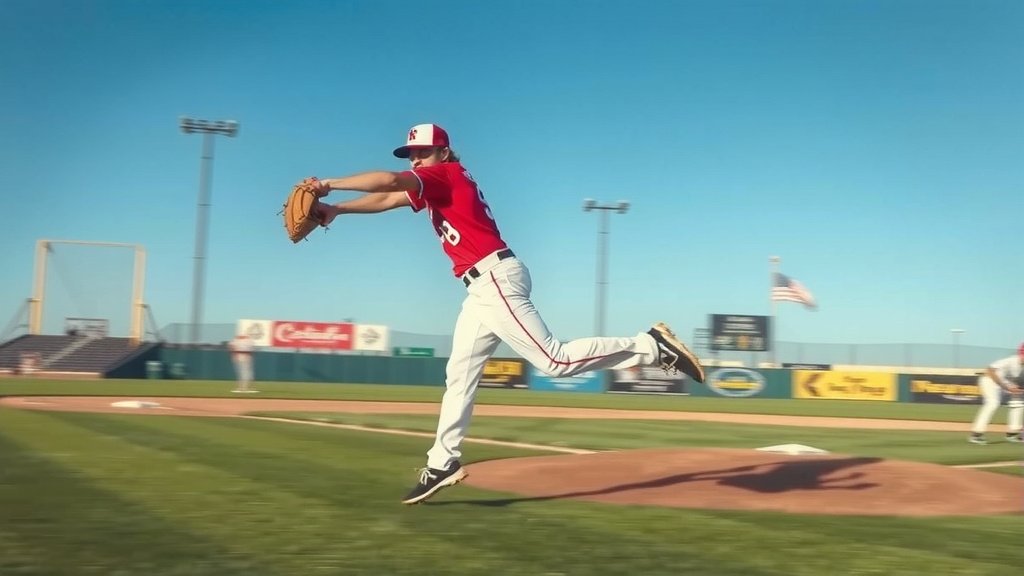
It’s not just about pure speed. Pitchers also add movement and change locations to make their pitches even harder to hit. A 90 mph fastball with great location is a different challenge than one that’s right down the middle.
Fastball vs. Off-Speed Pitches
While we’re focusing on the fastball, remember pitchers use other pitches too. Breaking balls like sliders and curveballs appear slower but have significant “break” or movement. Changeups are thrown with a similar arm speed but are much slower. This deception makes hitting difficult.
A hitter might see a 90 mph fastball and then an 80 mph changeup. The brain has to adjust very quickly. This is why pitchers who can effectively mix speeds are so successful. They keep hitters guessing.
Location, Location, Location
A perfectly placed 90 mph fastball on the corner of the strike zone is a tough pitch. It requires the hitter to be precise with their own swing. A pitch that’s just slightly off can look like a strike but be just outside, leading to a weak ground ball or a swing and miss.
We found that hitters perform best when they can anticipate the pitch and its location. When a pitcher can command their 90 mph fastball to any part of the strike zone, they become very hard to beat. It’s a strategic battle as much as a physical one.
Quick Checklist for Appreciating 90 MPH Pitches
Here’s a quick way to remember what makes these pitches so impressive:
- Ball travels about 132 feet per second.
- Batter has less than half a second to react.
- Requires elite physical conditioning for pitchers.
- Demands incredible hand-eye coordination for hitters.
- Location and movement add to the challenge.
- It’s a benchmark of high-level baseball skill.
Conclusion
Facing a 90 mph pitch is truly an athletic marvel. We’ve seen how it travels over 130 feet per second, giving hitters less than half a second to react. It’s a speed that requires years of dedication for pitchers and incredible skill for hitters. The combination of power, precision, and lightning-fast reflexes makes this pitch a benchmark in baseball. Now that you understand the science and skill behind it, you can appreciate every 90 mph fastball you see. Next time you’re watching a game, try to spot the incredible coordination on display!
Frequently Asked Questions
How much faster is a 90 mph pitch than a 70 mph pitch?
A 90 mph pitch travels about 30 feet per second faster than a 70 mph pitch. This means batters have significantly less time to react. We found the difference in reaction time is about 0.13 seconds, which is a huge amount in baseball.
Can a normal person’s eyes even track a 90 mph pitch?
The human eye can track objects moving very fast, but it’s challenging. Your eyes can process the ball, but your brain and body need to react almost instantly. This is why even professional hitters train constantly to improve their vision and reaction.
Is throwing 90 mph bad for a pitcher’s arm?
Throwing at 90 mph puts a lot of stress on a pitcher’s arm. However, with proper training, conditioning, and mechanics, pitchers can throw hard while minimizing injury risk. Research shows that focusing on the entire body’s kinetic chain helps distribute the force.
What’s the hardest part about hitting a 90 mph pitch?
The hardest part is the extremely short reaction time. You have less than half a second to see the ball, decide to swing, and then execute that swing. This demands perfect timing and an efficient, controlled swing path.
Do all professional baseball players hit 90 mph pitches easily?
No, not at all. Hitting 90 mph pitches is a major challenge even for professional players. Batting averages drop significantly against high velocity. It requires exceptional skill, practice, and mental preparation to succeed consistently.