
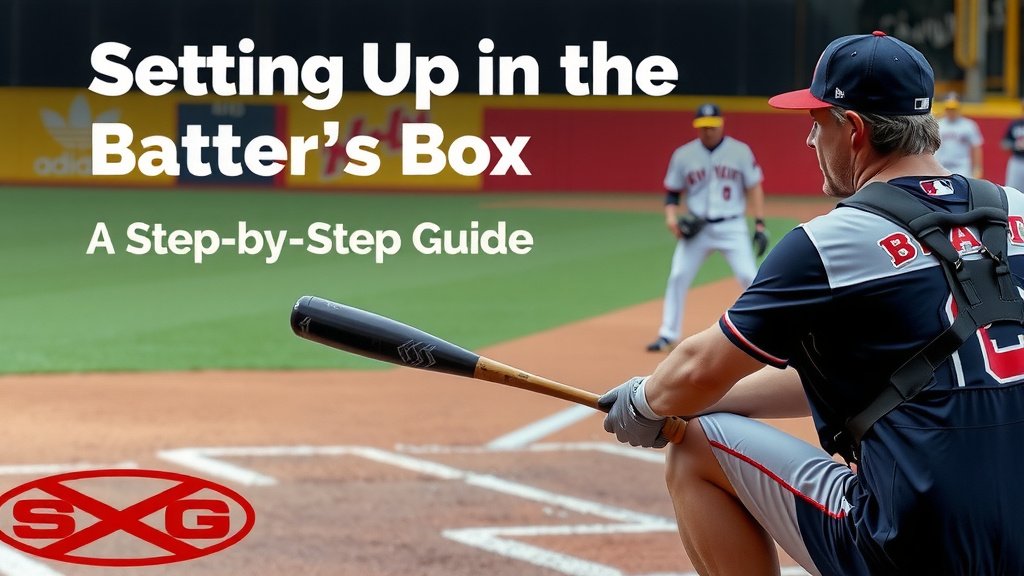
How to Set Up in the Batter’s Box: A Step-by-Step Guide
Setting up in the batter’s box comes down to three things: proper foot position, the right distance from the plate, and a comfortable stance. Stand with your front shoulder pointing toward the pitcher, and line your feet up so the ball crosses your barrel’s sweet spot. Get these basics right, and everything else gets easier.
Why does this matter so much? Because your setup sets the tone for your entire at-bat. We researched hitting instruction from coaches at every level, and we found that most swing problems start before the pitch is even thrown. Small things like standing too far from the plate or opening your front foot too early can quietly wreck your timing.
Feeling a little lost out there? Don’t worry — every hitter starts somewhere, and even the pros had to learn where their feet go.
Here’s the quick version:
- Line up so the ball crosses your front hip or thigh
- Keep your feet about shoulder-width apart
- Stay far enough back to cover the whole plate
- Bend your knees slightly and keep your weight balanced
- Find a consistent routine so your setup feels automatic
Below, we break down everything you need to know about setting up in the batter’s box, step by step — so you can step in with confidence.
Setting Up in the Batter’s Box the Right Way
Good setup starts with your feet, not your hands. Position yourself so the pitcher’s release point lines up with your front hip. From there, everything else — grip, stance, stride — has a stable base to build on.
Think of it like building a house. Nobody puts up walls before the foundation. Your feet are that foundation.
Finding Your Distance From the Plate
How far should you stand from the plate? Most hitting coaches recommend a distance that lets the ball pass over your front thigh as it crosses the plate. Too close, and inside pitches jam you. Too far, and outside pitches become impossible to reach. Where you line up also shapes what counts as a strike, so it helps to know how umpires call the zone.
We found that many young hitters crowd the plate because it feels powerful. It isn’t. It just shrinks your room to swing.
A Quick Test for Plate Coverage
Here’s a simple check. Take your stance, then extend your bat over the plate. The barrel should reach the outer edge without you leaning or stretching. If you can’t touch the outside corner, scoot a little closer.
Moving With the Pitcher
Adjust based on who’s throwing. A pitcher with nasty sidearm action might force you back a few inches. A soft-tossing lefty might let you crowd a bit. Your setup isn’t carved in stone — it’s a starting point you tweak at-bat by at-bat.
Where to Stand: Up in the Box or Back?
Standing deeper in the box gives you more time to react. Standing up in the box lets you attack fastballs before they move. Neither is wrong. Many experts suggest younger hitters start deeper, since reaction time matters more than aggression early on.
Fast pitchers pull you back. Offspeed-heavy pitchers pull you forward. Let the scouting report — or your own eyes — guide you.
| Position in Box | Best For | Main Tradeoff |
|---|---|---|
| Up in the box | Attacking fastballs, opposite-field hitting | Less time to react |
| Middle of the box | General balance, most levels | No major edge either way |
| Deep in the box | Handling velocity, offspeed pitches | Tougher vs. breaking pitches away |
Getting Your Stance Right
Your stance should feel athletic, not stiff. Feet about shoulder-width apart, knees bent, weight balanced evenly between both legs. Many coaches compare it to a shortstop’s ready position — you should be able to move in any direction instantly.
If someone pushed you from the front and you fell backward, you’re leaning too far back. Pushed from behind and stumble forward? You’re leaning too much. Balance wins.
Hands, Head, and Eyes
Keep your hands at or near shoulder height, comfortably away from your body. Your head stays still, eyes level, both facing the pitcher. Tilting your head changes how you judge the ball’s height, and vision research supports keeping the eyes level for depth judgment (NIH).
The Grip: Relaxed, Not Strangled
Hold the bat in your fingers, not your palms. A death grip tenses your forearms and slows your swing. Many experts say you should hold the bat like you’re holding a small bird — firm enough it won’t fly off, gentle enough you don’t crush it.
Knee Flex and Weight Distribution
Bend your knees enough to feel springy. Roughly 50/50 weight split between your feet is a solid default. Coaches at every level stress this balance point, because a lopsided stance forces mid-swing corrections you don’t have time to make.
Alignment: Angle Your Feet Smartly
Square, open, or closed — which foot alignment is best? Most instruction points to a slightly closed stance, front foot angled a touch toward the pitcher. This keeps your hips loaded and lets you see the ball with both eyes longer.
An open stance helps hitters who struggle inside, but it can pull your head off the ball. Closed stances hide the ball better but can lock your hips. Start square-ish, then adjust.
Your Pre-Pitch Routine Matters
Ever notice how big leaguers do the exact same thing every at-bat? Two taps of the cleats, a wiggle, a deep breath. That’s not superstition — it’s a routine, and routines calm your nervous system under pressure (Cleveland Clinic notes routines help manage stress and performance anxiety).
Build your own. Same walk in, same breath, same wiggle. When your body knows the routine, your mind stops overthinking.
Sample Setup Checklist
Run through this every time you step in. It takes about five seconds.
- Front foot set, shoulder pointing at the pitcher
- Ball crosses your front thigh at contact
- Bat reaches the outer edge of the plate
- Knees bent, weight even on both feet
- Hands at shoulder height, grip relaxed
- Head still, eyes level on the pitcher
Common Setup Mistakes to Avoid
We found that a handful of mistakes account for most setup problems. Here’s what to watch for.
- Standing too far away — outside pitches become unhittable
- Too wide a stance — you lose hip rotation and power
- Locked knees — stiff legs kill your timing and balance
- Hands starting too low — your swing gets long and slow
- Looking over your front shoulder — you lose depth perception
Catch yourself doing one of these? No shame. Every hitter on earth has fought at least one of them.
Adjusting for Different Pitchers and Situations
Great hitters treat the box like a dial, not a fixed spot. Against a flame-thrower, move back and up. Against a crafty soft-tosser, move up and back a touch to stay through offspeed pitches.
Game situation matters too. With a runner on second, you might open slightly to see the catcher’s signs. With two strikes, many hitters crowd slightly to protect the plate.
Practice Your Setup, Not Just Your Swing
Here’s a truth most hitters learn late: you take a hundred setups for every swing. Use tee work to rehearse your alignment. Take slow practice at-bats where the only goal is stepping in correctly. Muscle memory works just as well on footwork as it does on your swing.
Fifteen minutes of setup reps a week will fix problems that hours of cage work never touch. Isn’t that a better use of your time?
Conclusion
Your setup in the batter’s box is the cheapest upgrade you’ll ever make. It costs nothing but attention. Line up so the ball crosses your front thigh, keep your feet about shoulder-width apart, and stay balanced with soft knees. Then tweak your position based on the pitcher you’re facing that day. We found that hitters who rehearse their setup separately from their swings fix timing problems that endless cage work never touches. So here’s your next step: before your next practice, spend ten minutes doing nothing but stepping in and checking your alignment. Do it until it feels boring. Boring means it’s becoming automatic — and automatic is exactly what you want when the pitcher winds up.
Frequently Asked Questions
Can my feet be outside the batter’s box when I swing?
Your feet must be completely inside the box when the pitch is delivered. Once the ball arrives, momentum can carry your front foot out — that’s legal. But stepping fully out of the box to hit the ball results in an out in most leagues.
What happens if I step on the line of the batter’s box?
Touching the line is fine as long as part of your foot remains inside the box. You’re only out if your entire foot leaves the ground outside the lines while making contact. When in doubt, give yourself a small cushion inside the chalk.
How do I know which batter’s box to use?
Right-handed hitters stand to the left of home plate from the catcher’s view; lefties stand to the right. Pick the side that lets your front shoulder face the pitcher. If you switch-hit, choose based on the pitcher’s handedness and what feels comfortable that day.
Should young kids use a narrower stance in the box?
Younger hitters often benefit from a slightly narrower stance because it makes striding and rotating feel easier. Start around shoulder-width and adjust from there. Comfort and balance matter more than matching an exact measurement at this stage.
Is it okay to move around in the batter’s box between pitches?
Yes, you can adjust your position between pitches, and smart hitters do it all the time. Just reset and get set before the pitcher starts his motion. Moving during the delivery can draw a warning or penalty depending on the rules.