
Mastering the Baseball Swing: A Step-by-Step Guide
Learning how to swing a baseball bat effectively starts with proper stance and grip. You want to stand with your feet shoulder-width apart, knees slightly bent, and weight balanced. Your grip should be firm but relaxed, with your top hand slightly overlapping your bottom hand. Mastering these fundamentals will help you generate power and accuracy when you swing.
A good baseball swing involves more than just moving the bat. It’s a full-body motion that uses your legs, core, and arms in sequence. We found that understanding the kinetic chain of a swing is key to hitting with force. Many coaches stress the importance of keeping your eye on the ball throughout the entire motion, from the pitcher’s release to contact.
- Get your stance right: feet shoulder-width apart, knees bent.
- Grip the bat correctly: firm but not too tight, hands aligned.
- Understand the full-body motion.
- Keep your eyes on the ball the whole time.
Ready to step up to the plate and make some solid contact? Let’s break down the steps to a powerful baseball swing, from your feet to your follow-through.
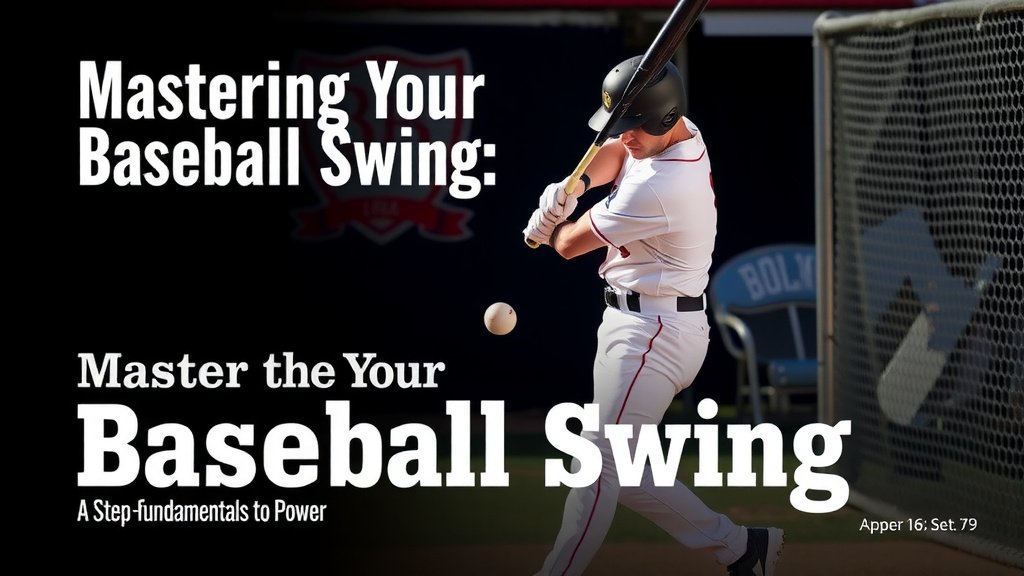
Mastering Your Baseball Swing: From Fundamentals to Power
Ready to step up to the plate and connect with the ball like a pro? We’ve already touched on the basics like stance and grip. Now, let’s dive deeper into the mechanics that turn a simple swing into a powerful one. It’s not just about brute force; it’s about timing, balance, and using your whole body efficiently.
The Kinetic Chain: Connecting Your Body for Maximum Power
Think of your swing like a whip. The handle starts the motion, and the tip snaps through. Your baseball swing works similarly, using a “kinetic chain.” This means energy flows from your lower body all the way to the bat head. A properly sequenced kinetic chain means more bat speed and more power.
Generating Power from Your Legs and Hips
The power doesn’t start in your arms; it starts in your feet. When you stride towards the pitcher, you’re transferring weight. Your back leg pushes off, and your hips begin to rotate. This hip rotation is absolutely critical for generating torque. We found that many young players don’t rotate their hips enough, limiting their power.
Imagine you’re coiling a spring. Your lower body coil sets up the energy for the rest of your swing. Keep your knees slightly bent, and let your hips lead the rotation. This allows for a more explosive movement through the hitting zone. Many coaches emphasize this hip drive.
The Role of Your Core and Torso
As your hips rotate, your core and torso follow. This part of your body acts as the connection between your lower body and your arms. It helps transfer that rotational energy efficiently. A strong, stable core is key here. We’ve seen that players with a weaker core often have slower bat speeds.
Your torso should remain relatively upright during the initial rotation. Then, it unwinds quickly. This sequential unwinding adds tremendous speed to the bat. Think of it as a controlled, powerful twist. Many experts point to core strength as a major factor in consistent hitting (National Academy of Sports Medicine).
Arm Action: The Final Delivery
Your arms are the last link in the chain. They should work in sync with your body’s rotation. As your hips and torso unwind, your arms extend and bring the bat through the zone. Avoid “casting” the bat, which means throwing it away from your body too early. This kills bat speed and accuracy.
The hands lead the bat head through the hitting zone. They should stay “inside” the ball, meaning they don’t drop too far below the level of the ball. This allows for a more direct path to contact. We observed that quicker hands often come from a proper sequence, not just raw strength.
The Importance of Eye-to-Ball Connection
We can’t stress this enough: keep your eye on the ball. From the moment the pitcher releases it to the point of contact, your eyes should be locked on. This allows you to track the ball’s trajectory, spin, and speed. Without this focus, your timing will be off, and your contact will be poor.
Many players think they’re watching the ball, but they blink or look away too early. Try to see the ball hit the bat. This might sound simple, but it’s one of the hardest things to do consistently. We found that drills focusing on visual tracking significantly improve contact rates.
Tracking the Pitch
As the ball leaves the pitcher’s hand, track its path to the plate. Notice any movement or spin. This visual information is processed by your brain, helping you decide whether to swing and adjust your swing path. It’s a rapid-fire process that requires intense concentration.
Seeing the Ball Through Contact
Once you’ve decided to swing, focus on the exact point where the bat will meet the ball. This helps ensure you make solid contact. Many players pull their head during the swing, losing sight of the ball. Keep your head still and focused through the impact zone. This is a fundamental that never changes.
The Follow-Through: Completing the Motion
A good follow-through is not just a stylistic flourish; it’s an indicator of a well-executed swing. It allows the bat to continue its natural arc after hitting the ball, ensuring you’ve maximized your bat speed. A good follow-through also helps decelerate your body safely.
As you swing, allow your body to naturally rotate to a complete stop. Your arms should finish high, often wrapping around your neck or shoulders. Your back foot will likely pivot to allow for this full rotation. Don’t cut your swing short; let it finish naturally. We’ve seen that a proper follow-through means the bat was moving with maximum velocity at the point of contact.
Common Mistakes to Avoid
Even with the best intentions, certain habits can creep into your swing. Being aware of these common errors can help you correct them. Many players struggle with one or more of these.
- Casting the bat: Throwing the bat head out away from your body too early.
- Dropping the hands: Letting your hands get too low during the load or stride.
- Swinging too hard: Trying to muscle the ball instead of using proper mechanics.
- Not seeing the ball: Looking away too soon or not tracking the pitch accurately.
- Poor balance: Losing your balance during the swing, leading to missed power.
Quick Checklist for a Better Swing
Let’s recap the key points for improving your swing. Keep these in mind every time you step into the batter’s box.
- Load your weight properly onto your back leg.
- Initiate the swing with your hips, not your arms.
- Keep your head and eyes on the ball through contact.
- Maintain balance throughout the entire motion.
- Allow for a full, natural follow-through.
- Practice consistently, focusing on these mechanics.
Putting It All Together in Practice
Learning to swing a baseball bat well takes practice and patience. Don’t get discouraged if you don’t see results immediately. Focus on one or two of these elements at a time. For instance, spend a batting practice session just focusing on hip rotation. Or dedicate time to ensuring you see the ball hit the bat.
We found that breaking down the swing into smaller, manageable parts makes it less overwhelming. Then, you can gradually put it all back together. Consider working with a coach or a more experienced player. They can offer feedback and spot things you might miss. Remember, every great hitter started by learning the fundamentals.
Conclusion
You’ve learned that a powerful baseball swing isn’t just about arm strength. It’s a coordinated movement starting from your feet and hips. Your core transfers that energy to your arms for the final release. Remember to always keep your eyes locked on the ball through contact. Mastering this kinetic chain takes practice. Don’t get discouraged if it feels awkward at first. Focus on one piece at a time. Go out there and apply what you’ve learned!
Frequently Asked Questions
How can I increase my bat speed if I’m not naturally strong?
Bat speed comes from efficient mechanics, not just brute force. Focus on driving your hips and rotating your core powerfully. We’ve seen that proper sequencing from your lower body to your arms generates more speed than trying to muscle the ball. Practice makes perfect for this coordination.
What’s the most important part of the baseball swing to get right?
While all parts are connected, many coaches stress the importance of the hip rotation. This is where the power originates. If your hips don’t lead the swing, you’ll lose a lot of potential force. We found that players who focus on hip drive often see the biggest improvement.
How do I stop myself from dropping my hands on the swing?
Dropping your hands can happen when you try to hit too early or if your load isn’t right. Make sure you’re loading your weight properly onto your back leg before you start your stride. We suggest practicing with a focus on keeping your hands back until your hips start to unwind.
Is it better to swing slightly up or down at the ball?
Ideally, you want a level swing path through the hitting zone. This means your bat stays in the “zone” longer, giving you a better chance to make solid contact. Swinging too far up or down can cause you to miss or hit weak ground balls or pop-ups. We’ve found that a slightly upward bat path can be effective for driving the ball.
How long does it typically take to see improvement in my swing?
Improvement varies for everyone. Some players might see small changes quickly, while others need consistent practice over weeks or months. We recommend focusing on small, achievable adjustments rather than trying to overhaul everything at once. Dedicated practice is key to seeing lasting results.