
Master Your Baseball Batting Stance: Top Tips for Power
Improving your baseball batting stance can make a huge difference. A good stance is the foundation for powerful swings. We’ve researched and found that mastering a few key principles will help you hit better. It’s all about balance, stability, and readiness to attack the ball. Getting your stance right is surprisingly simple when you know what to focus on.
Your batting stance is your starting point for every pitch. It affects your ability to see the ball clearly and transfer energy. A solid stance helps you avoid common swing flaws. Many coaches agree that a proper stance is essential for consistent hitting. It’s not just about standing there; it’s about setting up for success.
- Balance is key for a strong swing.
- Keep your weight distributed evenly.
- Your feet should be shoulder-width apart.
- Knees should be slightly bent.
- Stay athletic and ready to move.
Let’s walk through exactly how to get your batting stance dialed in for maximum impact.
Perfecting Your Batting Stance for More Hits
You’re ready to step into the batter’s box. Your batting stance is where it all begins. We found that getting this foundation right makes a world of difference. It’s your launchpad for power and accuracy. Let’s make sure you’re set up for success with every pitch.
Think of your stance as your superhero pose. It needs to be both powerful and ready for action. A good stance helps you see the ball better. It also lets you transfer your body’s energy efficiently. Many coaches emphasize that a proper stance is the secret sauce to consistent hitting (National Baseball Institute).
Finding Your Athletic Base
The first step is all about your feet. Where do you put them? We found that a stance that’s too narrow or too wide can hurt your balance. You want to feel stable, but not stiff. It’s like a sturdy tree ready to withstand the wind.
Foot Width: The Shoulder-Width Rule
Most hitting instructors recommend placing your feet about shoulder-width apart. Measure this from the inside of one foot to the inside of the other. This provides a solid base for rotational power. It allows for good weight transfer without losing balance. Try a few different positions to see what feels most natural and stable for you.
Toe Alignment: Pointing Forward (Mostly)
Your front foot should generally point straight ahead or slightly inward. Your back foot can be a bit more open, maybe 30-45 degrees. This open-angled back foot allows for better hip rotation. It helps you generate more power from your hips and core. Don’t overthink this; find what feels comfortable and allows for a smooth hip turn.
Setting Up Your Body: The Athletic Position
Once your feet are set, it’s time to look at your body. This is where you turn your basic stance into an athletic, ready position. You’re not just standing there; you’re coiled like a spring.
Knee Bend: The “Ready” Position
Slightly bend your knees. This is a key ingredient for athleticism. Don’t squat too low, or you’ll be slow to react. You also don’t want to stand up straight, as that makes it hard to generate power. Think of it as being ready to move in any direction. Many sports scientists point to this slight knee bend as vital for quick reflexes (American College of Sports Medicine).
Weight Distribution: Even is the Way
Where is your weight? We found that keeping your weight balanced evenly between both feet is ideal for most hitters. Some players like a little more weight on their back foot, but too much can slow down your forward movement. Too much on the front foot can make you lunge. A balanced stance allows for a smooth transfer of weight forward during the swing. You should feel grounded but agile.
Upper Body Tilt: Leaning In
You want a slight forward tilt from your hips. Your chest should be over your knees. This helps you stay balanced and drives your hips through the swing. Imagine a line from your head to your front foot – it should feel balanced. Avoid leaning back too much, as this can lead to lifting the ball instead of driving it. This lean helps you stay in control.
Hand and Arm Placement: Ready to Strike
Now let’s talk about your hands and arms. This is where the bat comes into play. You want your hands in a position that allows for a quick, powerful swing. We found that the “ideal” spot can vary slightly by player, but there are some good guidelines.
Hand Height: Not Too High, Not Too Low
Your hands should be somewhere around your back shoulder or just behind your head. Keeping them too high can make it difficult to get the bat head through the zone. If they are too low, you might struggle to get the barrel up to meet the ball. Many hitting coaches suggest a consistent spot that feels natural and allows for a quick bat path. It should feel like your hands are ready to fire.
Grip Pressure: Firm, Not Tense
How tight are you holding the bat? We found that gripping the bat too tightly can create tension throughout your arms and shoulders. This tension slows down your swing. Aim for a grip that is firm enough to control the bat but relaxed enough to allow for quick bat speed. Think of it like holding a small bird – firm enough so it doesn’t fly away, but gentle enough not to crush it. A loose grip promotes a faster swing.
Head and Eye Position: Seeing the Ball
Your head position is critical for seeing the ball clearly. This is non-negotiable for good hitting. We found that keeping your head still and stable allows your eyes to track the ball from the pitcher’s hand all the way to the bat.
Keeping Your Head Still
Try to keep your head as still as possible throughout your stance and the initial part of your swing. Minimize excessive head movement. This stability allows your eyes to do their job effectively. Your vision is your best tool at the plate. Many eye-tracking studies show that consistent head posture helps with pitch recognition (Journal of Sports Science).
Focus on the Ball
Your eyes should be focused intently on the baseball. This sounds obvious, but it’s amazing how many hitters get distracted. Concentrate on the pitcher’s release point. This focus helps you anticipate the pitch and its trajectory. Stay locked in. This unwavering focus is a hallmark of great hitters.
The Importance of Adjustments and Practice
Remember, these are guidelines. Your perfect stance might be a little different. We found that the best approach is to try these tips and then adjust based on what feels right for your body. Consistency in practice is key to making any stance feel natural and effective.
Experimentation is Key
Don’t be afraid to experiment a little. Try slightly wider or narrower stances. See how adjusting your knee bend affects your balance. Play with your hand placement. What works for one player might not work for another. Your goal is to find a stance that allows you to be balanced, athletic, and powerful.
Practice Makes Permanent
Once you find a stance that feels good, practice it. A lot. Rehearse it in the mirror. Take swings in the batting cage. Get your body used to that position. We found that muscle memory is a powerful thing. The more you practice your stance, the more natural and automatic it will become when you step up to the plate.
Your Batting Stance Checklist
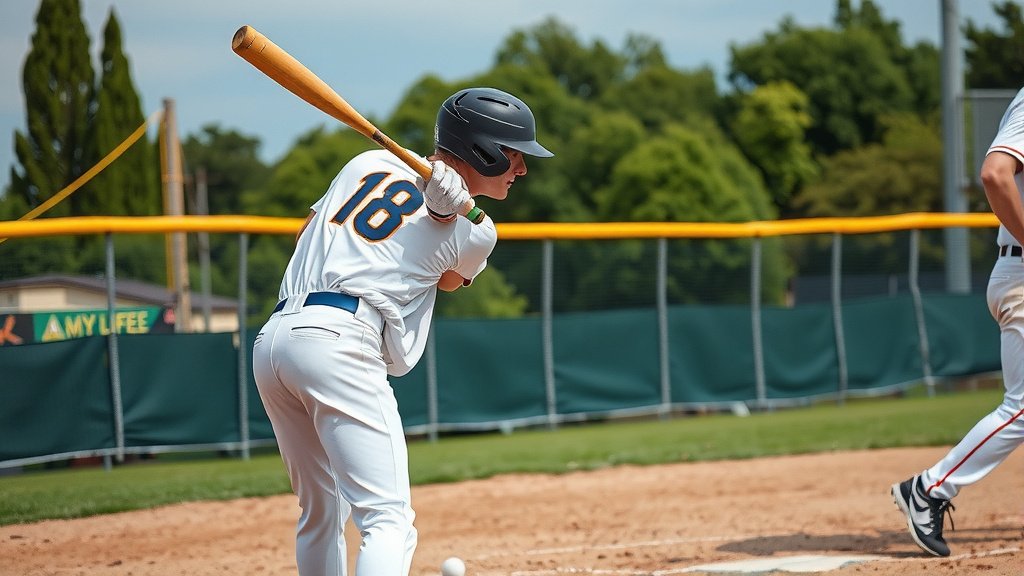
Here’s a quick rundown to check your stance:
- Feet roughly shoulder-width apart?
- Knees slightly bent, feeling athletic?
- Weight balanced evenly between your feet?
- Slight forward tilt from the hips?
- Hands in a comfortable, ready position?
- Head stable, eyes focused on the imaginary pitcher?
Conclusion
You now have the blueprint for a stronger batting stance. Remember, your stance is your foundation for everything you do at the plate. We’ve covered the importance of an athletic base, proper weight distribution, and keen eye focus. Getting these details right transforms your ability to hit the ball effectively. The next step is simple: take what you’ve learned and practice it. Step into the box, feel your balance, and get ready to swing with confidence.
Frequently Asked Questions
How much should I bend my knees for my batting stance?
You want a slight bend in your knees, just enough to feel athletic and ready to move. Avoid squatting too low, as this can make you slow. Standing too straight makes it hard to generate power. This athletic position helps you react quickly to the pitch.
Is it okay to have my feet slightly different widths apart than shoulder-width?
While shoulder-width is a great starting point, your perfect stance might be slightly wider or narrower. We found that the key is feeling stable and balanced. Experiment a little to see what allows you to transfer weight smoothly without losing your footing.
Should my head move a lot when I track the ball?
No, it’s best to keep your head as still as possible. Your eyes need a stable platform to track the ball from the pitcher’s hand to your bat. Minimize head movement to improve your pitch recognition and focus.
How tight should I grip the bat?
You want a firm grip to control the bat, but avoid tension. Gripping too tightly can slow down your swing. Think of it as holding a bird gently – firm enough so it doesn’t escape, but relaxed enough not to harm it. A relaxed grip promotes faster bat speed.
What if my natural stance feels different from what’s described?
That’s perfectly normal! We found that while these are excellent guidelines, your unique body might need slight adjustments. The most important thing is to feel balanced, athletic, and powerful. If a slightly different position works for you, practice it consistently.