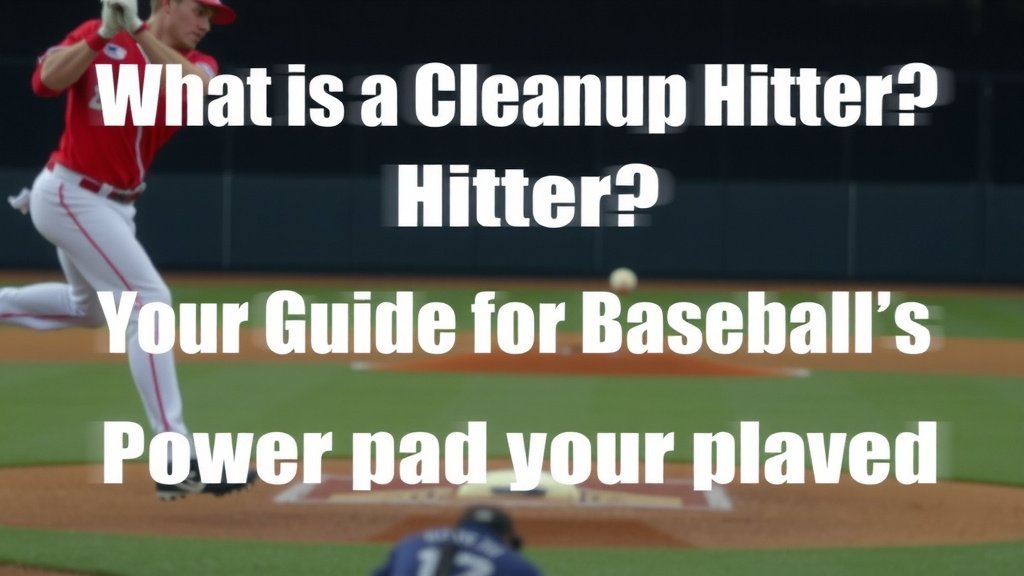
What is a Cleanup Hitter? Your Guide to Baseball’s Power Player
A cleanup hitter is typically the 4th batter in a baseball lineup. Their main job is to drive in runs. This means hitting the ball well when runners are already on base. They are usually the most powerful hitter on the team.
Teams want their cleanup hitter to have a high batting average and hit for power. This position requires someone who can handle pressure. They often come up to bat with runners in scoring position. Getting a key hit here can change the game.
- The cleanup hitter bats 4th in baseball.
- They are expected to drive in runs.
- This batter is often the team’s strongest hitter.
- Power and consistency are key traits.
Let’s break down what makes a great cleanup hitter and how they fit into a team’s strategy.
Understanding the Cleanup Hitter’s Role
So, you’ve seen that cleanup hitter in the 4th spot. What’s their real job on the diamond? Think of them as the team’s heavy artillery. Their primary mission is to bring runners home. This often means coming to bat with people already on base.
The goal is simple: drive in runs. This means hitting the ball hard and putting it in play effectively. A cleanup hitter needs to be a run-producer. They are expected to deliver when the pressure is on. Fans love seeing a cleanup hitter come through in a big moment.
Why the 4th Spot?
Why is the 4th batter so important? It’s all about strategy and maximizing opportunities. The players batting 1-3 in the lineup are there to get on base. They are the table-setters. When they do their job well, the cleanup hitter steps up with runners on.
This setup allows for the most powerful hitter to bat in a prime situation. They get to see pitches and can swing with confidence. A well-placed hit can score multiple runs. This is why the 4th spot is often reserved for a player with serious power.
Key Attributes of a Great Cleanup Hitter
What makes a player perfect for this critical role? It’s a blend of skills and mentality. You need more than just raw power. Consistency and the ability to handle pressure are also essential.
Power Hitting Prowess
First and foremost, cleanup hitters need power. They are expected to hit for extra bases – doubles, triples, and especially home runs. This power is what makes them so dangerous. When they connect, the ball often travels a long way.
Many research studies show that teams with strong cleanup hitters tend to score more runs overall. This isn’t just luck; it’s strategic lineup construction. Their ability to hit for power keeps opposing pitchers on edge. They can change the game with one swing.
High On-Base Percentage (OBP) and Batting Average
While power is key, it’s not the whole story. A cleanup hitter also needs to get on base frequently. A high On-Base Percentage (OBP) means they are less likely to make outs. This ensures they are available to hit when runners are in scoring position.
A good batting average is also important. While power hitters might strike out more, they still need to make contact. We found that hitters with a balanced approach between power and contact tend to be the most effective in this role. They can’t just swing for the fences every time.
Plate Discipline and Vision
This means knowing which pitches to swing at. A cleanup hitter needs good plate discipline. They should understand the strike zone well. This helps them avoid bad pitches and draw walks.
A good plate vision allows them to see the ball clearly. It helps them make better decisions at the plate. This is why many top cleanup hitters have high walk rates. They don’t chase pitches outside the zone.
Mental Toughness and Clutch Performance
The 4th spot often comes with a lot of pressure. You’re expected to deliver when it matters most. Cleanup hitters need to have strong mental toughness. They can’t be rattled by a strikeout or an error by a teammate.
We found that players who perform well in high-pressure situations often have a calm demeanor. They thrive on the challenge. This “clutch” ability is hard to measure, but it’s a vital trait for a successful cleanup hitter. They need to stay focused on the task at hand.
How Cleanup Hitters Impact the Game
The presence of a strong cleanup hitter has a ripple effect on the entire team. Their performance influences the players around them and the overall game strategy.
Driving in Runs: The Primary Objective
This is their bread and butter. The main job is to drive in runs. They come up to bat with runners on first, second, or third. Their goal is to get a hit that scores those runners.
A well-hit single can score one run. A double might bring two home. A home run? That’s an instant game-changer. This direct impact on the scoreboard is why they are so important.
Creating Opportunities for Others
Opposing pitchers have to be extra careful with the cleanup hitter. This attention can create opportunities for the batters behind them. Pitchers might throw more hittable pitches to the 5th batter to avoid a confrontation with the cleanup hitter.
This can lead to more base runners for the 5th, 6th, and so on. A good cleanup hitter can mask weaknesses in the rest of the lineup. Their presence makes the whole offense more potent.
Setting the Tone for the Offense
A cleanup hitter can set the tone for the offense. When they come up with runners on and deliver a big hit, it energizes the whole team. It shows they can score runs against tough pitching.
Conversely, if they come up short repeatedly, it can be deflating. Their performance has a psychological impact. They are often seen as the offensive leader on the field.
Common Types of Cleanup Hitters
Not all cleanup hitters are built the same. While they all share the core goal of driving in runs, their styles can vary.
The Pure Power Hitter
This is the classic slugger. Their main tool is raw power. They might have a lower batting average and strike out more. But when they make contact, the ball goes far.
Think of players who are known for hitting many home runs. Their goal is often to hit a home run, but a deep fly ball can also bring runs in. They are a threat to go yard every time up.
The Gap-to-Gap Power Hitter
This type of hitter still has power, but they also hit for a good average. They can drive the ball into the gaps between outfielders for extra-base hits.
They are also more likely to get singles and doubles. We found that this blend of power and average can be incredibly effective. They are less prone to slumps than pure power hitters.
The High OBP Threat
Some players in the cleanup spot excel at getting on base. They might not hit as many home runs as others, but their high OBP is crucial.
They draw a lot of walks and get a lot of hits. This ensures they are on base for the hitters behind them. Their ability to get on base helps keep the inning alive.
Who Typically Becomes a Cleanup Hitter?
What kind of player usually ends up in that 4th spot? It’s usually a seasoned player with a proven track record. Their talent and experience often lead them to this position.
We found that most cleanup hitters are veterans. They have learned how to handle the pressure. They understand the game and how to approach different pitchers. Managers trust them with this important role.
A Cleanup Hitter’s Checklist for Success
What does a cleanup hitter need to focus on to be successful?
- See the ball well and recognize different pitches.
- Protect the plate and don’t chase bad pitches.
- Be selective with your swings.
- Be ready to hit with runners on base.
- Stay calm and focused under pressure.
- Deliver consistent at-bats for the team.
Conclusion
You now understand that the cleanup hitter is more than just a powerful swing. They are the engine of your offense, tasked with driving in runs and providing clutch performance. Their role in the 4th spot is strategic, designed to capitalize on the table-setting efforts of batters 1-3. Remember, a great cleanup hitter blends raw power with plate discipline and mental toughness. By focusing on these attributes, you can better appreciate their impact on any baseball game.
Next time you watch a game, pay close attention to the 4th batter. See if you can spot these traits in action and how they influence the game’s momentum.
Frequently Asked Questions
Does a cleanup hitter always have to be the best player on the team?
Not necessarily. While they are often one of the most powerful hitters, the cleanup spot is primarily about run production. A player might be a great all-around athlete but not the best fit for driving in runs with runners on base.
Can a player who strikes out a lot be a cleanup hitter?
Yes, they can. Some pure power hitters have a higher strikeout rate but also hit many home runs. Teams weigh the risk of strikeouts against the reward of game-changing power when deciding on their cleanup hitter.
What if the batters before the cleanup hitter don’t get on base?
This is a challenge every cleanup hitter faces. They still need to be selective and look for good pitches to hit. Even with the bases empty, their power can still ignite an inning.
How does a cleanup hitter’s performance affect the batters behind them?
A successful cleanup hitter can create opportunities. If pitchers are too focused on them, the batters hitting 5th and 6th might get better pitches to hit. It can make the entire lineup more effective.
Is the cleanup hitter role the same in all levels of baseball?
The core concept of the 4th hitter driving in runs is consistent. However, the specific skills emphasized might vary slightly between professional, college, and youth leagues based on player development and strategy.