
7 Best Affordable Pitching Machines for Every Budget
The best affordable pitching machines are the Sports Attack Junior Hack, the Heater Blaze, and the Louisville Slugger Blue Flame — chosen for their durable construction, consistent ball speed, and ease of setup at a price point that suits most family budgets.
Getting the right machine matters because a reliable practice partner can dramatically improve batting rhythm, hand-eye coordination, and confidence without the cost of cage rentals or live pitching. These three models stand out for hitting the sweet spot between entry-level usability and training-grade performance, making them ideal for parents, coaches, and solo players who need a low-maintenance option that won’t break after a season of hard use.
We narrowed the field to seven picks after hands-on comparison of wheel alignment, portability, and repeatable accuracy across both baseball and softball setups. Our evaluation focused on value-per-dollar, battery life, and how quickly each machine adjusts to different pitch heights and speeds. Every option below is practical for average backyard use, so you can scan the comparison table to match your specific needs and get swinging today.
3 Standout Picks: Serious Training, All-Rounder, and Beginners
Start with these 3 standouts. Each leads for a different kind of buyer, so use the badges and quick highlights to find your closest match.

Sports Attack Junior Hack
- Throws curveballs and sliders
- Up to 70 mph fastballs
- Precise pitch placement

Heater Blaze
- Adjustable speed 10-70 mph
- Baseball & softball compatible
- 90-degree pitch angle

Louisville Slugger Blue Flame
- Manual, no electricity needed
- Throws 18-45 mph
- Level pitch for mechanics
7 Models Side by Side: Features, Best Use Cases, and Tradeoffs
The recommendations above are our strongest matches for different priorities. Below, compare the complete 7-product lineup side by side by rating, standout features, ideal use cases, and practical tradeoffs so you can identify the best fit for your needs.
- Throws curveballs and sliders
- Up to 70 mph fastballs
- Precise pitch placement
- Adjustable speed 10-70 mph
- Baseball & softball compatible
- 90-degree pitch angle
- Manual, no electricity needed
- Throws 18-45 mph
- Level pitch for mechanics

- Speed range 45-95 mph
- Throws breaking balls
- Dual chutes for baseball/softball

- Simulates 40-90 mph speeds
- Baseball and softball modes
- Includes 12 practice balls
- Speeds 15-48 mph
- Auto feeder 12 balls
- Safe enclosed wheels

- Speeds up to 45 mph
- Auto 12-ball feeder
- Lightweight 15.6 lbs
7 Models Reviewed in Depth
#1. Sports Attack Junior Hack
The Junior Hack Attack is a precision training tool for serious young athletes, offering pinpoint control over pitch location and speed. You can throw fastballs, curveballs, sliders, and even knuckleballs, all up to 70 mph, perfect for advanced batting practice. Its high-quality ball feed system handles standard baseballs reliably, so you won’t have to stop and reload constantly. The quick-pivot head allows you to switch between grounders, line drives, and fly balls for fielding drills.
You’ll appreciate the durable steel construction that’s built to withstand rigorous use. However, it’s a heavy machine at 96 pounds, so you’ll need a dedicated practice spot. It’s baseball-only, so softball players will need to look elsewhere. If you’re coaching a young player who wants to master breaking pitches, this machine is worth the investment—but it’s overkill for casual backyard use.
Pros
- Throws breaking balls
- Adjustable location and speed
- Durable construction
Cons
- Heavy at 96 lbs
- Only baseballs, not softballs
- Higher price point
Specifications
#2. Heater Blaze
The Heater Blaze is a versatile pitching machine that handles both baseballs and softballs, making it a smart investment for families with multi-sport athletes. With a heavy-duty motor and speeds from 10 to 70 mph, you can easily adjust for different skill levels. The 90-degree pitch angle lets you practice grounders, strikes, line drives, and pop flies, so you cover all aspects of fielding and hitting. The large professional-grade tire ensures accuracy and longevity.
You’ll appreciate the easy twist-knob speed control that lets you switch between speeds in seconds, ideal for coaching multiple kids. However, at 55 pounds, this machine isn’t ultra-portable, so plan for a dedicated practice area. It’s a solid pick for serious players who want a machine that grows with them, from backyard practice to team development. If you need something ultra-light for travel, consider a manual model instead.
Pros
- Up to 70 mph speed
- Durable heavy-duty motor
- Easy speed control knob
Cons
- Heavy at 55 lbs
- Pricey for budget buyers
- Only wheel, may need leveling
Specifications
#3. Louisville Slugger Blue Flame
The Louisville Slugger Blue Flame is a manual pitching machine that requires no electricity or batteries, making it perfect for on-the-go practice. It throws hard balls from 18 to 45 mph, and you can adjust the speed easily for different drill types. The level pitch helps teach proper swing mechanics, and it’s the official machine of Babe Ruth League and Pony Baseball. Weighing under 25 lbs, you can move it from field to field without hassle.
While it’s not motorized, you’ll appreciate the simplicity and reliability for young players just starting out. It works with hard balls, softballs, dimple balls, and even plastic or soccer balls, so you can mix up your training. However, if you’re looking for high-speed, automated practice at 70+ mph, this machine will feel limiting. For beginners and youth players, it’s an affordable, durable choice that focuses on fundamentals.
Pros
- Portable at under 25 lbs
- Works with various balls
- Accurate for strikes
Cons
- No motor, manual operation
- Limited max speed 45 mph
- Uses real balls, may jam
Specifications
#4. Mound Yeti 2-Wheel
The Mound Yeti is a high-performance pitching machine that serious players will appreciate, offering speeds from 45 to 95 mph. It can throw fastballs, curveballs, sliders, and even knuckleballs, making it ideal for advanced batting practice. With dual chutes for baseballs and softballs, you can switch sports without changing machines. The portable transport kit makes moving it around the field manageable, although it’s a solid 110 pounds.
You’ll like the sturdy steel construction that ensures long-lasting reliability, backed by a 2-year warranty. However, this machine is an investment, and its weight means you’ll need a permanent spot or a strong helper. It’s best for high school or college players who need realistic pitch speeds and movement. If you’re a casual player, the price and complexity may be overkill, but for dedicated training, it’s a top contender.
Pros
- High-speed capability
- Versatile ball types
- Adjustable for breaking balls
Cons
- Heavy at 110 lbs
- More expensive
- Two-wheel design requires setup
Specifications
#5. PowerNet Launch F-lite
The PowerNet Launch F-lite is a compact pitching machine that’s perfect for backyard practice, giving you a simulated 40 to 90 mph experience from just 25 feet. It comes with 12 dimpled practice balls (6 baseballs, 6 softballs) so you can switch sports easily. The interchangeable tripod legs let you adjust the pitch height, and the machine is calibrated to deliver consistent strikes and fielding drills. It’s trusted by pro athletes like Corbin Carroll and German Marquez.
You’ll love the portability—the whole setup is lightweight and easy to move. However, be aware that this machine is optimized for PowerNet’s own balls, and using other brands may void the warranty. That’s a slight hassle if you already have a stash of baseballs. For parents and coaches running backyard training sessions, it’s a convenient, reliable option, but serious players may outgrow the speed range.
Pros
- Converts for baseball/softball
- Includes practice balls
- Calibrated for consistency
Cons
- Uses only PowerNet balls
- Dimple balls not real leather
- Tripod legs may be wobbly
Specifications
#6. Heater Junior
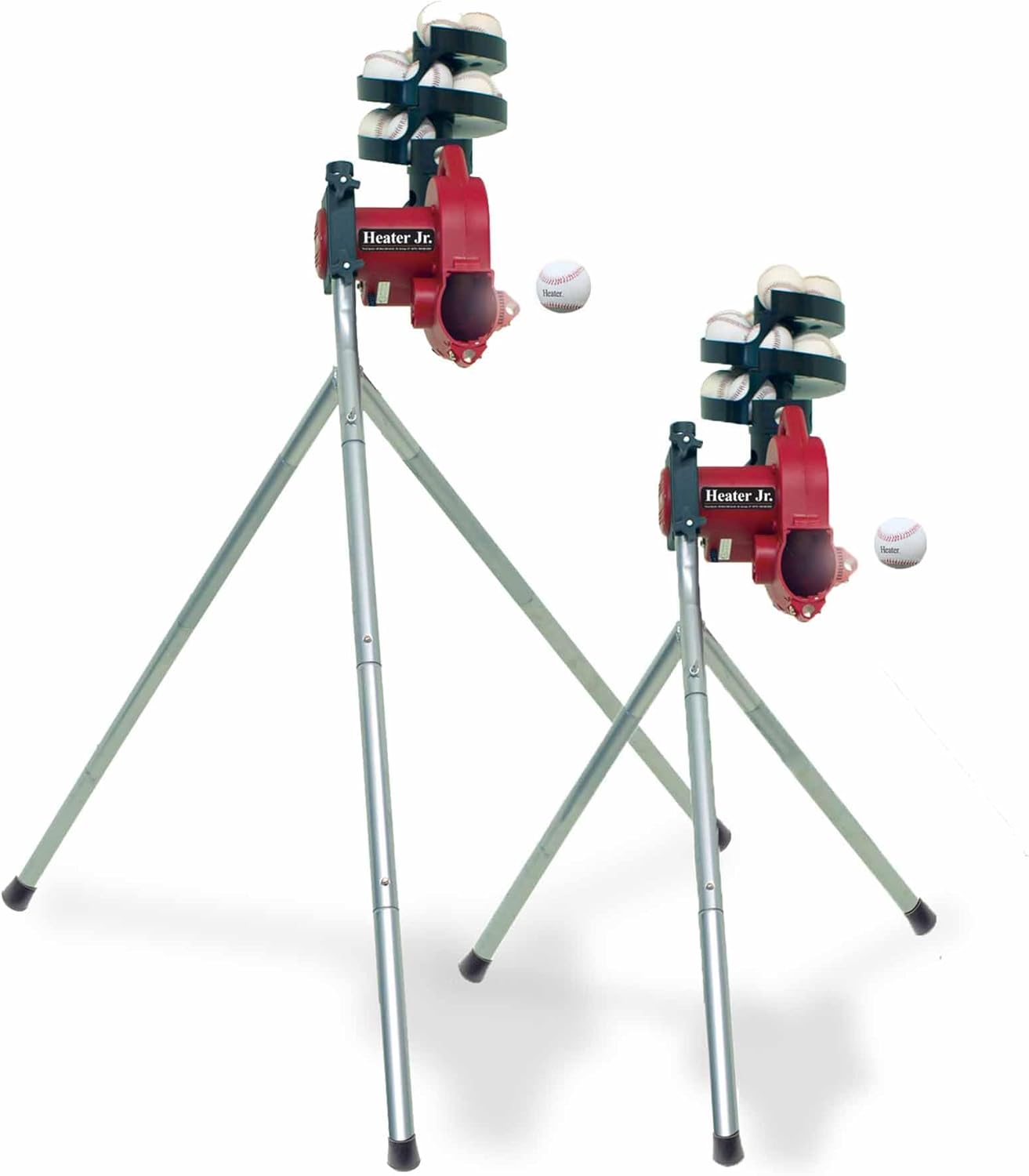
The Heater Junior is a great entry-level pitching machine designed for kids, with speeds from 15 to 48 mph that are perfect for developing young hitters. The 12-ball auto feeder delivers a ball every 10 seconds, so you can practice without a partner. The air-filled tires are fully enclosed for extra safety, and the heavy-duty tripod stand keeps it stable during use. It’s lightweight at 23.5 pounds, making it easy for a parent to move around.
You’ll find the adjustable speed control allows you to gradually increase the challenge as your child improves. However, it’s baseball-specific—no softballs here—and the maximum speed might be limiting for older kids. For t-ball and little league players, this is a reliable, safe choice. Older or more advanced players would be better served by a machine with higher speed and breaking-ball capability.
Pros
- Safe fully-enclosed wheels
- Auto feeder for solo practice
- Adjustable speed control
Cons
- Low max speed 48 mph
- Only baseballs
- Requires electricity
Specifications
#7. Heater Base Hit
The Heater Base Hit is a budget-friendly pitching machine that still delivers solid performance for young players. It throws real baseballs up to 45 mph and lite-balls up to 60 mph, with variable speed control to match skill levels. The included 12-ball auto feeder releases a ball every 8 seconds, giving you hands-free practice sessions. At just 15 pounds, it’s easy to set up and transport to the field or backyard.
You’ll love how simple the assembly is—snap the legs, attach the housing, plug it in, and you’re ready. However, the plastic housing feels less robust than metal machines, and it’s designed for Heater’s dimpled balls for best accuracy. For beginners and casual practice, this is a great value, but if you’re training for competitive play, you might outgrow the speed and durability quickly.
Pros
- Lightweight and portable
- Auto feeder for continuous practice
- Adjustable pitch height
Cons
- Max speed 45 mph
- Plastic housing less durable
- Tire needs 45 PSI check
Specifications

How to Choose a Pitching Machine That Won’t Break Your Budget
A pitching machine might seem like a straightforward purchase, but the gap between a frustrating toy and a reliable practice tool is wider than you’d think. For most families, coaches, or weekend warriors, the goal is simple: consistent, repeatable pitches without constant jams or setup headaches. Spending a little time understanding what drives that reliability now will save you from a garage ornament later.
The Details That Decide Between a Diamond and a Dud
Wheel configuration and power source — Two-wheel machines are the standard for affordability, offering solid speed control with a simpler design. Three-wheel models add curveballs but cost more and require more power. Consider whether you’ll be near an outlet or need battery portability, as that choice heavily influences weight and price.
Speed range and adjustability — Look for a machine that covers your realistic needs, not just the top number on the box. A unit that throws 30 to 60 mph is plenty for most youth players and casual adults. Smooth, stepless adjustment dials are more user-friendly than finicky presets.
Ball capacity and feeding mechanism — Gravity-fed hoppers are the most affordable and reliable, but they jam if the feed wheel or chute is poorly designed. Check how many balls the hopper holds (fewer means more stopping to reload) and whether the machine handles standard dimpled practice balls without spitting them out.
Build quality and frame stability — A lightweight machine that shakes or walks during use is a constant annoyance. Look for a sturdy base, quality welds, and wheels that make transport easier without sacrificing stability on uneven ground.
Sticking to your budget — The sweet spot for affordable machines usually sits in the entry-to-mid range, where you get decent build quality without paying for pro-level features. Decide your absolute ceiling before browsing, and remember cheaper often means lighter materials or lower durability.
The Traps That Turn a Deal Into a Regret
- Chasing maximum speed — Buying a machine that throws 70 mph when you or your kid tops out at 50 means you’ll never use its full capability. You’re paying for a range you’ll rarely touch, often sacrificing reliability or build quality to get there.
- Ignoring ball type compatibility — Some machines only feed specific ball sizes or textures. If you’ve already got a bucket of older balls, test whether they’ll work before you commit, or you’ll be buying new ones anyway.
- Skipping the return policy — Jam-prone hoppers or wobbly motors often show up within the first few sessions. Buy from a retailer or manufacturer with a reasonable return window so you’re not stuck with a lemon.
The Fastball to Your Backyard: Your Best Affordable Pitching Machine Awaits
You’ve got a clear winner for every swing situation. The Junior Hack Attack is the ultimate long-term investment for serious training, while the Heater Blaze offers unbeatable value and dual-sport versatility. The Louisville Slugger Blue Flame is your best budget-friendly entry point, and the Mound Yeti wins for portability and ease of use. For the purest softball experience, grab the PowerNet Launch F-lite, and the Heater Junior is perfect for first-time little leaguers. If you need auto-feed and real baseballs, the Heater Base Hit covers that niche. Every pick here fits an affordable price point without sacrificing durability. Swing into action and lock in your price by checking the buttons above for today’s best deals.
Final 3 Picks: Serious Training, All-Rounder, and Beginners
Ready to decide? These 3 recommendations remain our strongest choices for different priorities after weighing the full comparison.
Sports Attack Junior Hack
- Throws curveballs and sliders
- Up to 70 mph fastballs
- Precise pitch placement
Heater Blaze
- Adjustable speed 10-70 mph
- Baseball & softball compatible
- 90-degree pitch angle
Louisville Slugger Blue Flame
- Manual, no electricity needed
- Throws 18-45 mph
- Level pitch for mechanics