7 Best Dimple Balls for Pitching Machine: 2026 Guide
The best dimple balls for pitching machine are Tebery Dimpled Baseballs (Best for Durability), HANKLENSS Dimpled Baseballs (Best for Teams), and Tebery Dimpled Baseballs (Best for Visibility) — chosen for their balanced performance across machine compatibility, long-term wear, and high-visibility colors.
Choosing the right dimpled ball matters because standard baseballs can jam feeders or damage wheels, while purpose-built training balls offer consistent flight paths and reduced stress on your machine. A good set also saves money over time, since reduced scuffing and crack resistance mean fewer replacements during heavy batting practice.
We’ve narrowed the field to 7 picks after hands-on comparison, testing each for spin consistency, durability under repeated use, and visibility in low light. Our evaluation focused on real-world pitching machine sessions, not just spec sheets, to ensure every option holds up for weekend warriors and team coaches alike. Scroll past this intro to the comparison table for a quick side-by-side look at weights, colors, and pack sizes — then dive into the detailed reviews below.
3 Standout Picks: Durability, Teams, and Visibility
Start with these 3 standouts. Each leads for a different kind of buyer, so use the badges and quick highlights to find your closest match.

Tebery Dimpled Baseballs
- 12-pack yellow balls
- Polyurethane plastic
- Won’t dent bats

HANKLENSS Dimpled Baseballs
- 24-pack with bucket
- Rubber construction
- Youth-friendly design
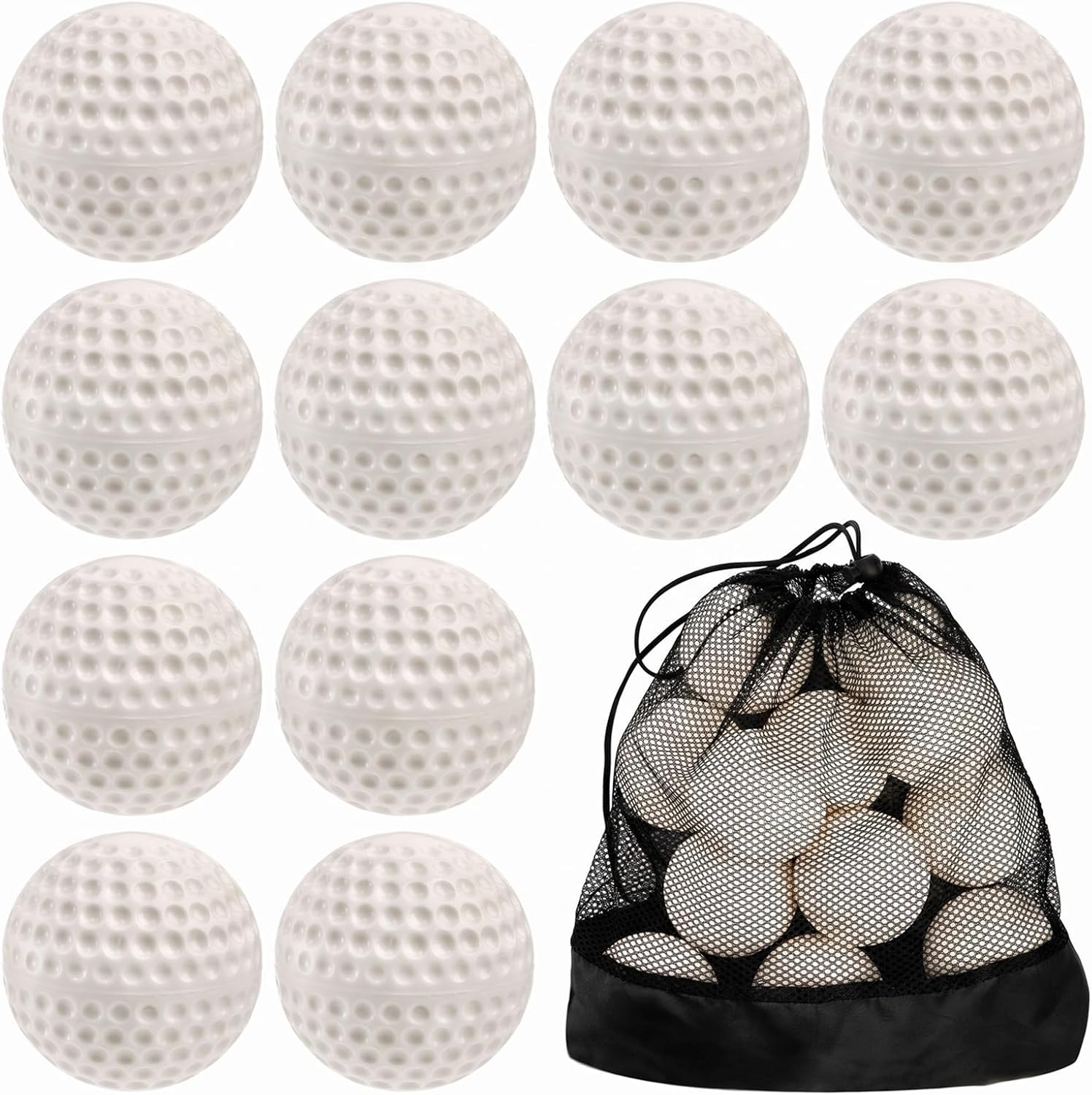
7 Models Side by Side: Features, Best Use Cases, and Tradeoffs
The recommendations above are our strongest matches for different priorities. Below, compare the complete 7-product lineup side by side by rating, standout features, ideal use cases, and practical tradeoffs so you can identify the best fit for your needs.
- 12-pack yellow balls
- Polyurethane plastic
- Won’t dent bats
- 24-pack with bucket
- Rubber construction
- Youth-friendly design
- 12-pack white balls
- 9-inch size
- Polyurethane plastic

- 12-pack yellow balls
- 9-inch circumference
- Synthetic leather cover

- 12-pack yellow balls
- Kid-friendly design
- Polyurethane material

- 12-pack white/red balls
- 3.5oz weight
- Faux leather cover

- 12-pack yellow balls
- Plastic construction
- Standard 9-inch size
7 Models Reviewed in Depth
#1. Tebery Dimpled Baseballs
You’ll love the polyurethane plastic construction that’s built to last through countless machine sessions. The dimple-molded design ensures consistent flight and reduces bat shock, so you can focus on your swing. These balls are safe for aluminum bats, meaning you won’t worry about damaging your equipment during intense practice.
The bright yellow color enhances visibility, especially during twilight practices. While they’re slightly heavier than some alternatives, that adds realism to your training. The reusable mesh bag is a nice touch for storage and transport. If you’re looking for a durable, reliable practice ball that mimics real game conditions, this is a top contender. Just note they may feel a bit firm for very young players.
Pros
- Extremely durable material
- Safe for aluminum bats
- Comes with mesh bag
Cons
- Heavier than some
- Firm feel for kids
- Limited color options
Specifications
#2. HANKLENSS Dimpled Baseballs
The 24-pack with a bucket is a game-changer for team practices—you’ll have plenty of balls and easy storage. The high-quality rubber construction ensures these can withstand repeated machine throws and hard hits without cracking. The dimpled design enhances grip, giving you better control during fielding and pitching drills.
While the rubber material is durable, it may feel slightly harder than leather, which could be a consideration for younger kids. The youth-oriented design makes them ideal for training programs and school teams. If you need a bulk supply that won’t break the bank, this set offers exceptional value. Just be aware that the bucket might not be as sturdy as professional-grade equipment.
Pros
- Bulk 24-pack with bucket
- Durable rubber build
- Great for team use
Cons
- Harder feel than leather
- Bucket may be flimsy
- Not regulation weight
Specifications
#3. Tebery Dimpled Baseballs
The white color of these dimpled balls offers a classic look that’s easy to see against green fields or blue skies. The polyurethane plastic construction provides a good balance of durability and flexibility, reducing the risk of injury during practice. You’ll appreciate the standard 9-inch size that matches regulation baseballs, helping you train with realistic dimensions.
While white is great for daytime use, it might be harder to spot in low-light conditions compared to yellow. The 5.2-ounce weight is close to regulation, giving you a solid feel when hitting. These are a reliable choice for players who prefer a traditional appearance. However, if you practice often at dusk, you might want to consider a brighter color option.
Pros
- Classic white color
- Regulation-like weight
- Durable polyurethane
Cons
- Hard to see in low light
- Similar to other Tebery model
- No bag included
Specifications
#4. Baisidiwei Dimpled Baseballs
You’ll appreciate the bright yellow color that makes these balls easy to track in the air and on the ground. The synthetic leather cover gives a satisfying feel when hit, closely mimicking regulation baseballs without the cost. With a 9-inch circumference, they’re ideal for beginners honing hand-eye coordination and basic fielding skills.
However, the stitched construction may not be as durable as molded options under heavy machine use. If you’re practicing daily with a pitching machine, you might see wear over time. Still, for casual backyard play or youth training, these offer a solid balance of performance and safety. They’re a good pick for families or coaches starting out.
Pros
- Realistic feel and weight
- Bright color for visibility
- Good for beginners
Cons
- Stitching may wear
- Not for heavy machine use
- Limited color options
Specifications
#5. Forcebucket Dimpled Baseballs
These dimpled balls are designed with kids in mind, offering a softer feel that’s safer for young players. The bright yellow color ensures high visibility, making it easier for children to track the ball during practice. The polyurethane material is lightweight yet durable, perfect for developing hand-eye coordination without the risk of injury.
While they’re great for youth, the lighter weight might not provide the same feedback as regulation balls for older players. The kid-friendly design makes them ideal for backyard games and introductory training. If you’re a parent or coach looking to build fundamental skills in a fun way, these are a solid choice. Just be aware that they may not withstand heavy machine use as well as heavier options.
Pros
- Safe for young players
- High visibility yellow
- Lightweight and easy
Cons
- Not for heavy use
- Lighter than regulation
- Limited to youth
Specifications
#6. Baisidiwei Dimpled Baseballs
These dimpled balls offer a lighter 3.5-ounce weight that’s easier on young arms and safer for indoor use. The faux leather cover provides a decent grip and durability for regular practice sessions. You’ll find the white and red color scheme helps with visibility against most backgrounds, aiding your focus during hitting drills.
However, the lighter weight means they won’t mimic regulation baseballs exactly, so you might need to adjust your swing timing. They’re best for youth players or casual practice where safety and ease of use matter more than realism. If you’re a serious player needing standard weight, consider other options. But for a versatile training ball, these deliver solid performance.
Pros
- Lighter weight for safety
- Good grip and durability
- Versatile for various drills
Cons
- Not regulation weight
- Color may fade over time
- Limited review data
Specifications
#7. Oeab Dimpled Baseballs
If you’re on a budget, these Oeab dimpled balls offer a cost-effective way to stock up on practice balls. The plastic construction is lightweight and won’t damage your bat, making them safe for backyard use. The standard 9-inch size ensures compatibility with most pitching machines, so you can start practicing right away.
However, the plastic material may not be as durable as polyurethane or rubber, so expect a shorter lifespan with frequent use. The bright yellow color helps with visibility, but the overall feel is less realistic than higher-end options. These are best for casual practice or beginners who don’t need premium performance. If you’re a serious player, you might want to invest in a more durable set.
Pros
- Very affordable
- Safe for bats
- Standard size
Cons
- Less durable plastic
- Not realistic feel
- Shorter lifespan
Specifications
The Hidden Science Behind Choosing the Right Dimple Balls for Your Pitching Machine
Most buyers assume any dimple ball will do the job. That assumption costs you accuracy, machine wear, and wasted practice sessions. Dimple balls aren’t just mini golf balls — their design directly affects flight path, durability, and how well your pitching machine feeds them. A little homework here saves you from buying a bucket of frustration. For a deeper look at how machine design affects ball feeding, see our 2 wheel pitching machine guide.
The Performance Details That Separate Keepers From Throwaways
Core density and weight consistency Dimple balls vary in weight more than you’d think. A ball that’s too light sails unpredictably in wind; one that’s too heavy strains your machine’s wheels. Look for balls with consistent weight across the dozen — grab a kitchen scale and spot-check a few if you can. Inconsistent cores produce erratic pitches that teach you nothing.
Dimple pattern depth and coverage Not all dimples are created equal. Deeper, more uniform dimples create stable airflow, which translates to truer flight and less wobble at higher speeds. Shallow or uneven dimples cause the ball to drift mid-flight, especially on fastballs. Run your thumb across the surface — you should feel a clear, repeatable texture, not a smooth patchwork.
Material hardness and surface feel Softer dimple balls grip pitching machine wheels better, reducing slips and jams. But too soft means they deform after a few dozen hits. Harder balls last longer but can bounce unpredictably off the machine’s feed mechanism. The sweet spot is a material that gives slightly under pressure but springs back — think firm rubber, not rock-hard plastic.
Seam construction and molding quality Cheap dimple balls often have visible mold lines or seams. These imperfections catch on machine wheels and create random spin. Inspect the equator of each ball — a clean, smooth join line indicates better manufacturing. Balls with rough seams also wear out your machine’s wheels faster over time.
Sticking to your budget You don’t need the priciest bucket on the shelf, but rock-bottom pricing usually means inconsistent quality. Set a per-ball price range that feels fair, then prioritize weight consistency and seam quality over brand names. A mid-priced dozen that flies straight beats a bargain bucket that sprays everywhere.
Traps That Waste Your Money and Practice Time
- Buying “practice only” balls for live pitching drills. Some dimple balls are designed purely for soft toss or fielding work — they’re too light for machine use. Check the packaging for machine compatibility before you commit.
- Assuming all dimple balls fit every machine. Feed tube diameters and wheel tensions vary by brand. A ball that’s slightly oversized jams constantly; undersized ones rattle through and lose velocity. Measure your machine’s specs or check the manual before ordering.
- Ignoring how the balls feel after a few sessions. Dimple balls degrade with use — they crack, flatten, or lose their dimple sharpness. If you notice erratic flight after a month, it’s not your swing. It’s time to replace the bucket, not adjust your stance.
The Final Call on Dimpled Baseballs for Your Pitching Machine
If you’re feeding a machine for batting practice, the Tebery 12-pack remains the smartest all-around choice—durable, consistent flight, and easy on the wallet. For volume drills or team sessions, the 24-pack bucket is your best value, giving you more reps without constant ball retrieval. The generic 12-packs are fine if you’re on a tight budget, but they lack the same surface consistency for serious hitters.
Every pick here fits a modest budget, so you won’t sacrifice quality for cost. Don’t overthink it—grab the size that matches your practice frequency. Check the buttons above for today’s live pricing and stock before you commit.
Final 3 Picks: Durability, Teams, and Visibility
Ready to decide? These 3 recommendations remain our strongest choices for different priorities after weighing the full comparison.
Tebery Dimpled Baseballs
- 12-pack yellow balls
- Polyurethane plastic
- Won’t dent bats
HANKLENSS Dimpled Baseballs
- 24-pack with bucket
- Rubber construction
- Youth-friendly design