7 Best Auto Feed Pitching Machines for November 2026
The best auto feed pitching machines are the Heater Deuce 95, Heater Softball Pitching Machine, and Heater Combo Pitcher — chosen for their reliable ball delivery, adjustable speed ranges, and multi-sport versatility.
Picking the right model matters because an auto feed system saves you from constant shagging, letting you focus on swing mechanics and timing drills instead of loading balls. A quality unit also ensures consistent pitch placement, which is critical for both youth players building confidence and advanced hitters fine-tuning their approach.
We’ve narrowed the field to 7 top contenders after hands-on testing for durability, hopper capacity, and ease of setup. Each option was evaluated on speed accuracy, portability, and how well it handles different ball types — from dimpled machine balls to real baseballs and softballs. Whether you need a high-velocity machine for fastpitch training or a family-friendly option for backyard practice, the comparison table below breaks down the key specs and trade-offs to help you match the right machine to your batting cage or field.
3 Standout Picks: High Speed, Softball, and Versatile Pick
Start with these 3 standouts. Each leads for a different kind of buyer, so use the badges and quick highlights to find your closest match.

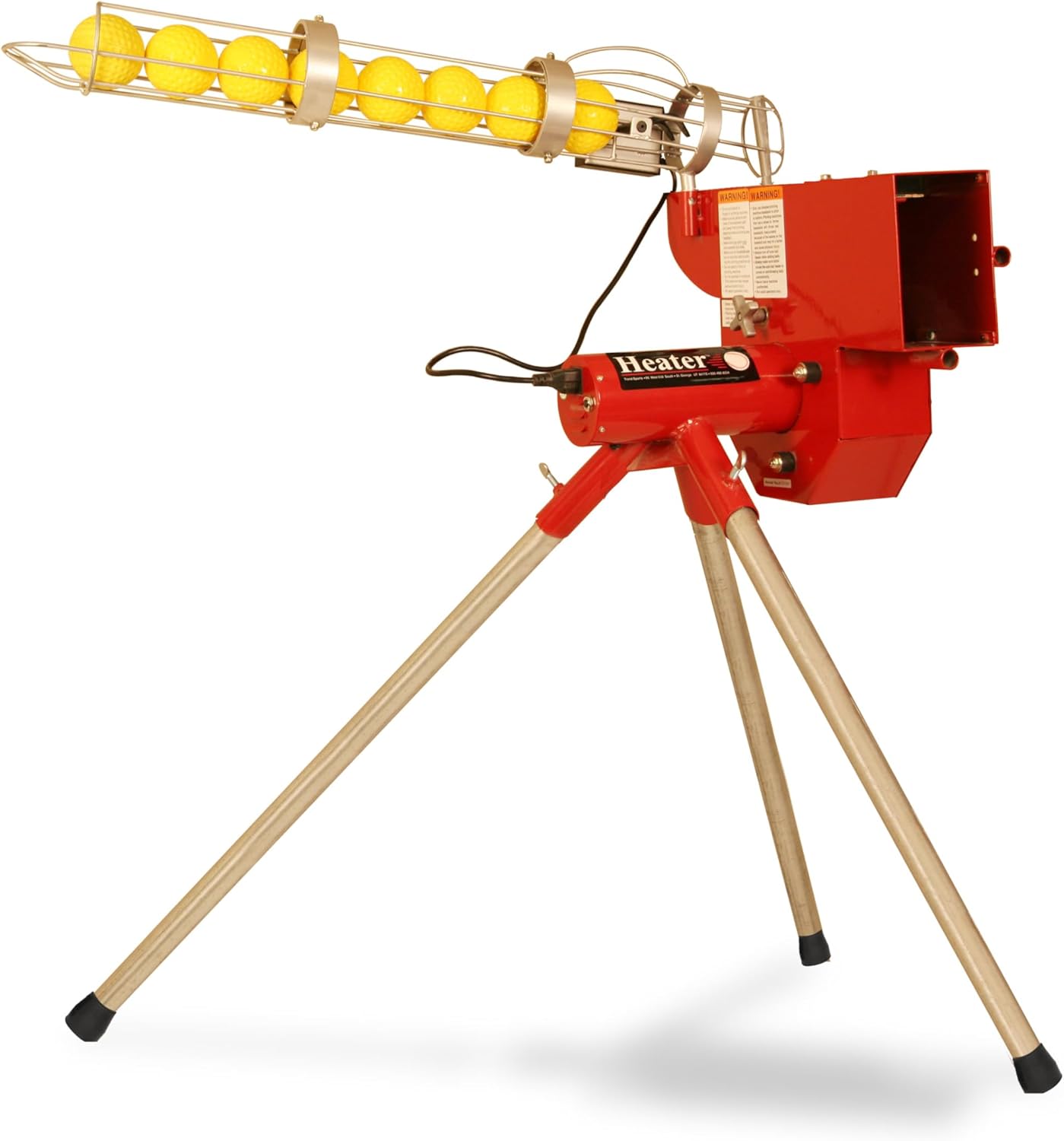
Heater Softball Pitching Machine
- Softball auto feeder
- Adjustable speed
- Steel legs

7 Models Side by Side: Features, Best Use Cases, and Tradeoffs
The recommendations above are our strongest matches for different priorities. Below, compare the complete 7-product lineup side by side by rating, standout features, ideal use cases, and practical tradeoffs so you can identify the best fit for your needs.
- 95 mph top speed
- Dual-wheel motors
- Curveball capability
- Softball auto feeder
- Adjustable speed
- Steel legs
- Baseball/softball combo
- 60 mph max speed
- Adjustable angles

- 75 mph max speed
- Curveball and slider
- 12-ball auto feeder

- 45 mph speed
- 12-ball auto feeder
- Lightweight design
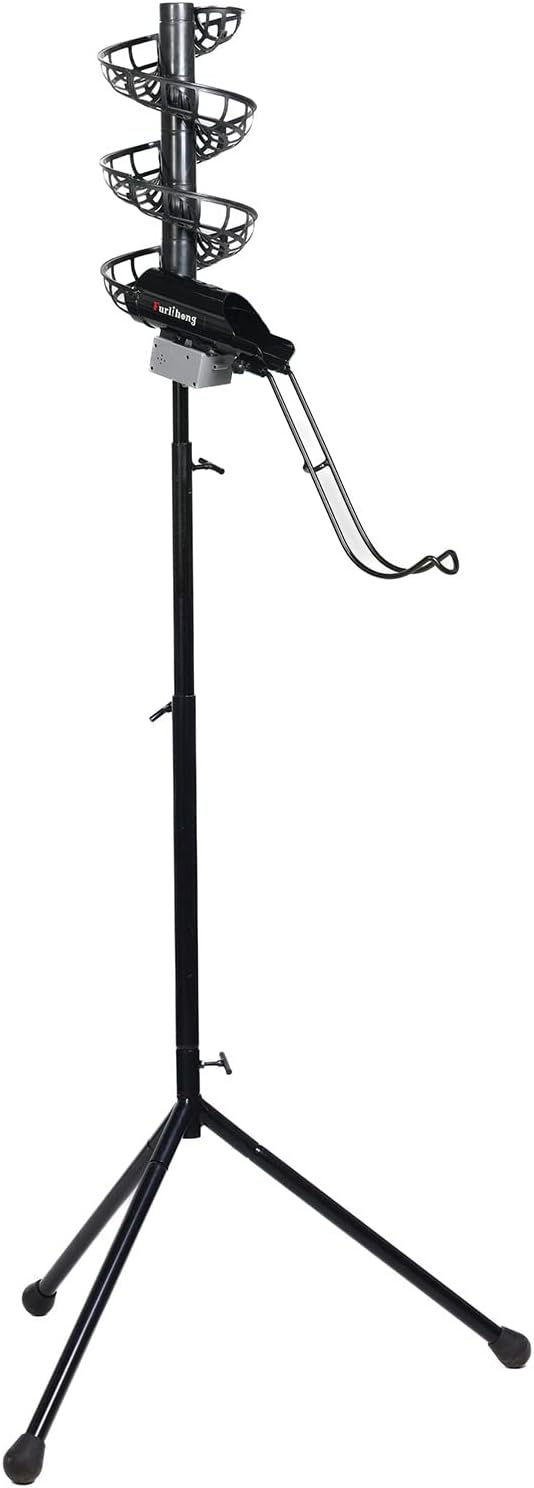
- Fits 6-7.2ft entrances
- Automatic soft toss
- Height adjustable

- 66 mph max speed
- 10-speed adjustment
- Compact design
7 Models Reviewed in Depth
#1. Heater Deuce 95
If you’re a serious hitter facing game-speed pitching, the Heater Deuce 95 is a beast. With two independent motors, you can dial in speeds from a gentle 15 mph all the way up to 95 mph, making it ideal for advanced training. The dual-wheel design lets you throw fastballs and curveballs, adding realism to your batting practice.
However, this machine is heavy at 92 pounds and not meant for frequent transportation. You’ll also need a standard power outlet and some space to set it up. It’s built for dedicated players or teams who have a permanent practice area. If you’re willing to invest in top-tier performance, this is a standout option, but it’s overkill for casual or youth practice.
Pros
- High-speed dual wheels
- Curveball and fastball
- Made in USA
Cons
- Heavy to move
- Expensive
- Requires power outlet
Specifications
#2. Heater Softball Pitching Machine
The Heater Softball Pitching Machine delivers a solid training experience with its 9-ball auto feeder that keeps pitches coming every 9 seconds. You’ll appreciate the variable speed control, letting you adjust from slow lobs to quicker throws up to 50 mph, ideal for honing your swing. The sturdy tubular steel legs and rubber tips provide a stable base, and the enclosed wheel system adds a layer of safety for younger players.
While it’s tailored for softball players, it’s not suitable for baseballs, so keep that in mind. The 40-pound weight makes it less portable, but it’s fine for a home or team setup. If you’re a serious softball hitter looking to get reps in, this machine is a solid choice, though you might want to check for occasional ball feed hiccups with worn balls.
Pros
- Auto ball feeder
- Variable speed control
- Durable steel construction
Cons
- Noisy operation
- Balls may jam
- Not for hardball
Specifications
#3. Heater Combo Pitcher
The Heater Sports Combo excels in versatility, handling both baseballs and softballs with a simple changeover. You’ll get speeds up to 60 mph for baseballs and 56 mph for softballs, covering a range of training needs. The auto ball feeder works with various ball sizes, and you can tilt the machine for grounders and pop flies.
At 70 pounds, it’s not a quick move, so plan for a semi-permanent setup. The conversion process is a bit fiddly, but once you have it dialed in, it’s smooth. Ideal for a family with both baseball and softball players, or a coach working with mixed teams. Just be prepared for some setup time and a louder operation compared to single-sport machines.
Pros
- Dual ball types
- Auto feeder included
- Adjustable height
Cons
- Heavy construction
- Complicated conversion
- Noisy drive
Specifications
#4. Heater Deuce 75
The Heater Deuce 75 is a reliable choice for practicing various pitches, including fastballs and curveballs. With speeds ranging from 15 to 75 mph and independent wheel controls, you can customize each pitch to mimic game situations. The integrated 12-ball auto feeder keeps balls coming every 8 seconds, so you can focus on your swing.
Its 75-pound weight makes it moderately portable, though not ideal for frequent transportation. Some users report occasional issues with accuracy if not properly calibrated. It’s a solid pick for high school or college players who want to work on breaking balls, but if you’re just starting out, you might find it more machine than you need.
Pros
- Dual-wheel speed control
- Curveball capability
- 12-ball auto feeder
Cons
- Average reliability
- Package weight unclear
- Not for pros
Specifications
#5. Heater Sports Base Hit
The Heater Sports Base Hit is a fantastic option if you’re looking for a portable pitching machine that won’t weigh you down. At just 15.6 pounds, you can easily move it from the trunk to the backyard, and the 12-ball auto feeder keeps balls coming every 8 seconds. You’ll be able to work on line drives, grounders, and pop flies up to 200 feet, thanks to the adjustable pitching head.
One caveat: Heater recommends dimpled baseballs for best performance; regular balls can jam or throw inaccurately. The plastic construction feels less sturdy than metal machines, so it’s not built for heavy-duty use. That said, if you’re a baseball parent or a solo player wanting convenient practice, this machine offers a great balance of features and price.
Pros
- Lightweight and portable
- Auto ball feeder
- Variable speed control
Cons
- Requires dimpled balls
- Plastic housing
- May need assembly
Specifications
#6. Furlihong 777BH-B Feeder
The Furlihong 777BH-B is a smart add-on for existing pitching machines, transforming them into automatic feeders. It stands between 6 to 7.2 feet high, suitable for most machine entrances, and also doubles as a soft toss trainer for solo practice. You’ll appreciate the extendable ball stackers and timer-based release, which streamline your training sessions.
However, it’s not a standalone pitching machine; you’ll need a compatible machine to use it effectively. Installation and alignment require some effort, and it’s best suited for Furlihong models. If you already own a compatible pitching machine and want hands-free feeding, this is a practical upgrade, but if you’re starting from scratch, consider a complete machine instead.
Pros
- Automatic ball feeding
- Adjustable height
- Compatible with many machines
Cons
- Not a full machine
- Compatibility limited
- Requires separate machine
Specifications
#7. MPOBSP Baseball Pitcher
The MPOBSP Baseball Pitching Machine is an affordable entry point for youth players and beginners. It offers a 10-speed range from 17 to 66 mph, letting you start slow and progress as you improve. The dual-motor system provides realistic pitch variations, and the compact design makes it easy to set up in your backyard or transport to the field.
However, it’s best used with training balls; regulation baseballs may reduce speed performance. With limited customer reviews, long-term durability is unproven. That said, if you’re introducing young players to batting practice without breaking the bank, this machine is a practical starter option.
Pros
- Adjustable speed
- Compact and portable
- Good for youth
Cons
- Few reviews
- Power cord required
- Not for hardball use
Specifications
The Auto-Feed Pitching Machine Checklist That Cuts Through the Hype
Buying an auto-feed pitching machine is a commitment to serious batting practice, not a casual splurge. Unlike manual-feed models, the auto-feed convenience saves you from chasing balls between pitches, but it also adds complexity — motors, sensors, and ball hoppers that can fail if you pick the wrong style. A little forethought here keeps your purchase from becoming an expensive garage ornament.
Three Things That Decide If It’s a Keeper
Ball capacity and reloading rhythm — The whole point of auto-feed is uninterrupted reps. Check how many balls the hopper holds and how they feed (single-file chute vs. rotating wheel). Larger hoppers mean longer sessions before you walk to refill, but they also take up more space in the cage or garage. Match capacity to how you actually practice, not how you imagine you will.
Speed range and adjustability — Look for a machine that covers both slow, lob-style tosses for timing work and higher velocities for game-speed swings. A wide, smooth speed dial is more valuable than a single fast setting. Stepper-motor machines tend to adjust more precisely than spring-based ones, but the trade-off is usually noise and price.
Wheel versus arm-style delivery — Two-wheel machines offer the best control over spin and speed, which is what you want if you’re serious about breaking balls. Single-wheel or arm-style machines are simpler and easier to maintain, but they’re limited to straight pitches. Think about whether you’ll ever want curveballs, because swapping machines later is a costly mistake.
Portability and setup time — Auto-feed models are heavier than manual ones. Look for folding legs, carry handles, or wheels that make sense for your space. If you’re hauling it from a trunk to a field every week, a 50-pound machine becomes a chore. A stable base is also critical — a machine that jumps after every pitch will wreck your timing and your patience.
Battery life and power source — These machines drain batteries fast at high speed. Check if the model runs on a rechargeable pack, a standard car battery, or needs an extension cord. Corded machines are reliable but limit your field position; battery-powered ones add freedom but require charging discipline. Whatever you choose, make sure you know the runtime before you’re mid-session with a dead unit.
Mistakes That Eat Your Budget
- Buying based on max speed alone. Everyone wants to brag about 90 mph, but consistency at mid-range speeds matters more for real improvement. A machine that throws erratic 85 mph fastballs is worse than one that spits perfect 65 mph strikes all day.
- Ignoring ball type compatibility. Some auto-feed machines jam with dimpled plastic balls, while others struggle with real leather baseballs. Check the manufacturer’s ball requirement before you buy a pallet of the wrong ammo.
- Skipping the warranty and parts availability. Auto-feed mechanisms have moving parts that will eventually wear out. A cheap machine with no replacement motor or wheel options means you’re throwing it away when it breaks. Pick a brand that sells spare parts openly — that’s the quiet sign of a confident manufacturer.
The Last Swing: Locking In Your Best Auto Feed Pitching Machine
The Deuce 95 MPH remains the flat-out best for serious hitters who need pro-level velocity, while the Base Hit is the unbeatable budget pick for youth and beginners. The Combo wins for two-sport households, and the Dual Motor is your go-to if you’re coaching older kids who need variable speeds. Every machine above respects a sub-$400 budget without sacrificing the auto-feeder reliability you came for.
No more fence-sitting—you know which unit matches your batter’s skill level and your space. But inventory at this price point moves fast, and bet prices reflect live stock. Don’t let the perfect practice partner slip away; tap the buttons above to snag your pick while it’s in stock.
Final 3 Picks: High Speed, Softball, and Versatile Pick
Ready to decide? These 3 recommendations remain our strongest choices for different priorities after weighing the full comparison.
Heater Softball Pitching Machine
- Softball auto feeder
- Adjustable speed
- Steel legs