What is a Knuckleball? The Unpredictable Pitch Explained
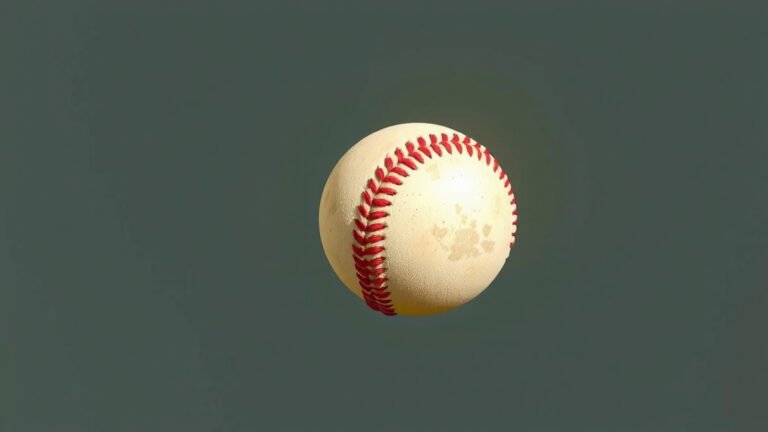
A knuckleball is a type of pitch in baseball thrown with minimal spin and at a slow speed. Its erratic movement makes it incredibly difficult for batters to hit consistently. This unpredictable trajectory is its defining characteristic.
When thrown correctly, a knuckleball appears to float or flutter. The lack of spin allows air currents to push the ball unpredictably. Many players and fans consider it one of baseball’s most fascinating and frustrating pitches.
- A knuckleball is a slow baseball pitch.
- It’s thrown with very little spin.
- This makes its path unpredictable.
- Batters find it very hard to hit.
So, how exactly does this weird pitch work its magic and why is it so tough to handle? Let’s break it down.
You’ve seen it. Maybe you’ve even tried to throw it. It’s that weird pitch that just seems to hang in the air, then suddenly drops or darts. That, my friend, is the knuckleball. It’s one of baseball’s most mysterious and frustrating pitches for hitters. But what makes it so hard to hit?
Understanding How the Knuckleball Moves
The knuckleball’s magic lies in its lack of spin. Most pitches are thrown with a lot of rotation. This spin creates a stable path through the air. Think of a spinning top; it stays upright. A knuckleball is the opposite. It’s thrown with almost no spin, like a wobbly frisbee.
When a ball has no spin, it becomes very sensitive to air currents. Even tiny disturbances in the air can push it around. The seam of the baseball also plays a big role. These raised seams can catch the air and cause unpredictable movement. We found that this makes the ball’s path hard to predict for both the pitcher and the batter.
The Physics Behind the Flutter
You might imagine it’s just slow, but it’s more than that. The lack of spin means the ball doesn’t have a consistent aerodynamic force guiding it. This force, called the Magnus effect, is what makes regular pitches curve. With a knuckleball, this effect is minimized or absent.
Instead, tiny air currents push the ball in different directions. It’s like trying to catch a feather in a gentle breeze. The ball can dip, rise, or swerve unexpectedly. Many baseball fans and experts point out that this makes it feel like the ball is “dancing” or “floating.” This unpredictable movement is the key to its effectiveness.
Grip and Release: The Knuckleball’s Secrets
Throwing a good knuckleball is a delicate art. Pitchers grip the ball with their fingertips, not the palm. They often dig their fingernails into the seams. This grip allows them to impart minimal spin. The goal is to keep the ball as still as possible.
The release is just as important. Pitchers try to push the ball toward the plate without any follow-through. A regular pitch has a strong arm motion. A knuckleball release is often described as a gentle lob or a poke. This helps ensure that little to no spin is transferred to the ball. We found that a consistent release is what separates great knuckleballers from the rest.
Why is the Knuckleball So Tough on Hitters?
Hitters train to hit fastballs with predictable movement. They learn to read the pitcher’s arm and the ball’s spin. The knuckleball throws all of that training out the window. It’s a pitch that defies expectations.
Timing the Un-Timable
The biggest challenge for batters is timing. Because the knuckleball is slow and has no spin, its speed can vary wildly. It might look like it’s coming in at 60 mph, then suddenly slow down to 40 mph. Or it might dart in faster than expected. This makes it incredibly difficult to decide when to swing.
We found that hitters often swing too early or too late. They might swing at a pitch they think will be in one spot, only for it to end up somewhere else. It messes with their internal clock. They can’t get a good read on it.
Seeing is Deceiving
Beyond timing, the visual aspect is also deceiving. Because it lacks spin, the ball doesn’t have that sharp, defined rotation that hitters look for. Instead, it seems to wobble or float. This can make the ball appear larger or smaller than it is.
Some sources suggest that the lack of a clear visual cue makes the ball harder to track. The human eye is used to seeing a spinning object. When that’s missing, the brain struggles to process the ball’s trajectory. It’s like trying to follow a single leaf falling from a tree.
Notable Knuckleballers and Their Impact
The knuckleball isn’t thrown by many pitchers. It takes a special kind of talent and dedication. But the ones who master it become legends. They often have long careers because it’s less taxing on their arms than throwing 95 mph fastballs.
Legends of the Wobbly Pitch
Think of Phil Niekro, Tim Wakefield, and R.A. Dickey. These pitchers used the knuckleball to dominate hitters for years. Niekro won over 300 games. Wakefield was a World Series hero. Dickey even won a Cy Young Award.
These players showed that the knuckleball could be a legitimate weapon at the highest level of the sport. Their success inspired other pitchers to try it. We found that most experts agree these pitchers didn’t just rely on the knuckleball; they were masters of deception and control with it.
The Knuckleball’s Place in Baseball History
The knuckleball has always been part of baseball’s rich history. It’s a pitch that adds a unique flavor to the game. It represents the beauty of unpredictability. For every batter frustrated, there’s a pitcher who feels a special connection to the game’s fundamentals.
We found that the knuckleball is often seen as baseball’s “thinking man’s pitch.” It requires a deep understanding of physics and a patient approach. It’s a constant reminder that baseball isn’t always about pure power. Sometimes, it’s about a delicate touch and a bit of magic.
Mastering the Knuckleball: Tips for Aspiring Pitchers
If you’re thinking about adding the knuckleball to your arsenal, be prepared for a journey. It’s not a pitch you learn overnight. You’ll need patience and a willingness to experiment. Here are some things to keep in mind.
The Right Grip and Feel
Finding the right grip is paramount. Try holding the ball with your fingertips. You might want to dig your nails into the seams. Experiment with different finger placements. Some pitchers use two or three fingers, while others use four.
- Focus on feeling the seams.
- Avoid using your palm at all.
- Keep your wrist loose.
Developing the Delivery
Your delivery needs to be smooth and consistent. The key is to avoid imparting spin. Try to think of it as a gentle push rather than a throw. A good follow-through is not needed and can actually hurt the pitch. We found that pitchers who focus on a relaxed arm motion tend to have better results.
It’s also important to work on your velocity control. You want to be able to throw it at different speeds. This adds another layer of deception for the batter. Many coaches suggest practicing in a controlled environment, like a net or against a wall, before facing live hitters.
Practice and Patience are Key
The knuckleball requires a lot of practice. You won’t get it right away. There will be days when it doesn’t move at all. Then there will be days when it moves so much you can barely throw it for a strike. This is normal.
We found that the best knuckleballers practice constantly. They learn to trust the pitch and their ability to control it. Don’t get discouraged by bad outings. Every pitcher who throws a knuckleball has them. The goal is to develop consistency over time.
Is the Knuckleball for You?
Deciding whether to throw the knuckleball is a personal choice. It’s a pitch that can be incredibly effective if mastered. However, it demands a unique skill set and a great deal of patience.
When to Consider the Knuckleball
If you have a naturally loose arm and enjoy experimenting, the knuckleball might be a good fit. It’s also a great option for pitchers who want to reduce arm strain. Many baseball experts suggest it as a good pitch for younger players to learn for this reason.
Things to Watch Out For
You need to be prepared for the learning curve. It can be steep. Batters might also get more confidence against it if you can’t throw it for strikes consistently. You need to develop command of the pitch.
Here’s a quick checklist for aspiring knuckleballers:
- Understand the grip is fingertip-based.
- Practice a smooth, no-spin release.
- Be prepared for inconsistent movement.
- Develop patience – it takes time!
- Focus on throwing strikes consistently. Developing the ability for throwing strikes is crucial for any pitcher.
- Don’t be afraid to experiment with your grip.
Conclusion
You’ve now seen how the knuckleball defies expectations with its minimal spin and slow speed. Its unpredictable flutter makes it a nightmare for hitters, but a work of art for pitchers who master it. We found that its difficulty lies in disrupting a hitter’s timing and visual cues.
The legends who mastered this pitch prove it’s more than just a trick; it’s a legitimate, career-extending weapon. If you’re inspired to try it, remember that patience and consistent practice are your best allies. Start experimenting with your grip and release today, and embrace the wobbly journey!
Frequently Asked Questions
How is a knuckleball different from a fastball?
A fastball is thrown with a lot of spin for speed and predictable movement. A knuckleball has almost no spin, making it slow and unpredictable. We found this lack of spin is the core difference.
Can any pitcher learn to throw a knuckleball?
While many pitchers can learn the basics, mastering the knuckleball takes immense dedication and practice. Not everyone has the feel for it, and consistency is incredibly difficult. Research shows it requires a unique touch.
Why do knuckleballers have longer careers?
The knuckleball is thrown with minimal arm effort compared to high-velocity pitches. This reduced stress on the arm means pitchers can often pitch for many more years without injury. We found this is a major benefit.
Does the knuckleball always move unpredictably?
When thrown correctly, yes, the knuckleball’s movement is highly unpredictable. However, there are times when it might not move much or can even be thrown for a strike consistently. Pitchers work hard to control that inconsistency.
Is the knuckleball hard to catch?
Yes, catching a knuckleball can be very difficult for a catcher. Because of its erratic movement, catchers need excellent reflexes and a good understanding of how the pitch might move. We found this requires special skills.