What is a Fly Ball in Baseball Explained
A fly ball in baseball is a batted ball hit high into the air. It travels a significant distance upward before descending. The key is that it’s hit with **enough force to go high** but not so much that it’s a home run over the fence. Think of it as a **long, arcing trajectory**.
These types of hits are important because they can lead to outs for the defense. A fly ball that doesn’t go over the fence is typically caught by an outfielder or an infielder. They often require players to track its flight and position themselves correctly for a catch, which can be a **real test of skill and athleticism**. Many baseball fans love watching these plays unfold. Outfielders must track its flight to make a catch.
- A fly ball is hit high in the air.
- It doesn’t go over the outfield fence.
- Outfielders and infielders try to catch them.
- It’s a common way for batters to get out.
Let’s break down what makes a fly ball a fly ball and how it impacts the game.
You’ve seen them. That ball soaring high, hanging in the air. Is it a hit? Will it be caught? That’s the drama of the fly ball. It’s a fundamental part of baseball that often determines whether a batter continues their turn or heads back to the dugout.
Understanding the Basics of a Fly Ball
A fly ball is a batted ball hit with enough upward trajectory to go high into the air. It travels a considerable distance before gravity pulls it back down. The key distinction is that it’s hit with enough force to get airborne, but not so much that it clears the outfield fence for a home run.
Trajectory and Flight Path
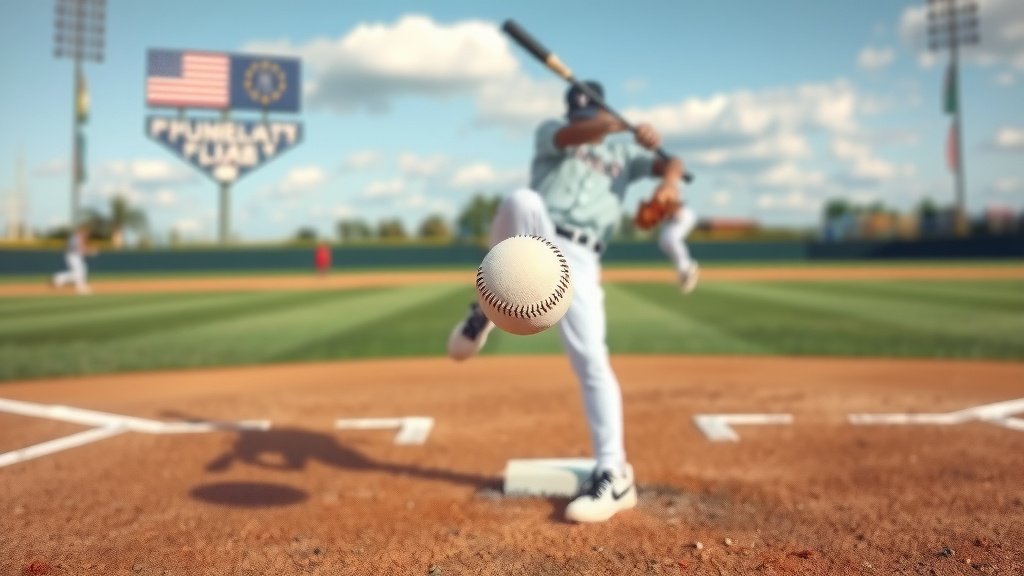
Think of a fly ball’s flight path as an arc. It rises sharply, reaches a peak, and then descends. This up-and-down movement is its defining characteristic. Unlike a ground ball that skims the infield or a line drive that zips horizontally, a fly ball spends time in the sky. This makes it a prime opportunity for the defense to make an out.
The Difference Between a Fly Ball and Other Hits
It’s easy to get fly balls confused with other types of batted balls. Let’s quickly clarify:
- Ground Ball: This ball stays low to the ground, rolling or bouncing along the infield dirt.
- Line Drive: This is a hard-hit ball traveling in a nearly flat, straight line. It has very little arc.
- Pop-Up: A pop-up is a type of fly ball, but it’s hit much shorter and higher. It usually lands within the infield. Think of it as a tiny, quick fly ball.
- Home Run: This fly ball travels over the outfield fence in fair territory. It’s a guaranteed score.
So, a fly ball sits somewhere between a line drive and a home run in terms of its flight. It’s high enough to give fielders time to react but usually not high or far enough to be uncatchable by an outfielder.
Why Fly Balls Matter in Baseball
The fly ball isn’t just a pretty sight; it’s a critical element of the game. For the offense, it represents a chance for a hit. For the defense, it’s often a chance to record an out.
Opportunities for the Defense
When a batter hits a fly ball, the defense springs into action. Outfielders and sometimes infielders will position themselves to catch the descending ball. A successful catch results in an out for the batter. This is one of the most common ways batters get out in baseball. Many research studies on baseball statistics show that fly balls caught by outfielders account for a significant percentage of outs recorded. A sacrifice fly is a specific type of fly ball that results in an out but allows a runner to score.
The Art of the Fly Ball Catch
Catching a fly ball requires excellent **judgment and athleticism**. Fielders must:
- Quickly identify the type of hit.
- Anticipate the ball’s trajectory.
- Run to the correct spot.
- Track the ball as it descends.
- Secure the catch, often with a leaping or diving play.
It’s a play that looks effortless when done well but is incredibly challenging. Players develop this skill through countless hours of practice. We found that the ability to read the ball off the bat is a skill that separates good fielders from great ones.
Implications for the Offense
For the batter, hitting a fly ball can be frustrating if it’s caught. You put a good swing on it, and the ball goes up, only for an outfielder to snatch it out of the air. However, not all fly balls are outs. Some can drop in front of outfielders for singles or doubles, especially if hit to the gaps.
When Fly Balls Become Hits
A fly ball can become a hit if it:
- Falls between outfielders.
- Lands just beyond the reach of an infielder.
- Bounces before being caught and the runner reaches base safely.
These are often referred to as “extra-base hits” if they reach the gaps or the wall. The difference between an out and a hit can come down to inches or a slight misjudgment by a fielder.
Factors Influencing a Fly Ball
Several things influence how a fly ball travels. Understanding these can help you appreciate the game even more.
The Batter’s Swing
The angle and force with which a batter hits the ball are paramount. A swing that connects with the ball slightly below its center often imparts backspin and lift, sending it high. A slight change in bat angle can turn a potential line drive into a fly ball, or vice-versa.
Ballparks and Wind Conditions
Believe it or not, the environment plays a role. Some ballparks are known for being “hitter-friendly” or “pitcher-friendly” based on their dimensions and how the wind typically blows. For example, a stadium with short porch in right field might mean fly balls hit that way are more likely to become home runs, while balls hit to deep center field might stay in play longer.
Wind can also be a major factor. A strong gust of wind can carry a fly ball further, or it can knock down a ball that might otherwise have gone over the fence. Baseball research often discusses how wind direction and speed can affect a ball’s flight. According to some meteorological studies applied to sports, even a moderate wind can add or subtract 10-20 feet to a fly ball’s distance.
Fly Balls in the Game: A Checklist
Here’s a quick way to remember what makes a fly ball important:
- It’s hit high into the air.
- It generally travels a good distance.
- It’s not a line drive or a grounder.
- It’s usually caught by outfielders for outs.
- It can sometimes result in a hit if it finds a gap.
- It’s a test of a fielder’s skill and reaction time.
So next time you’re watching a game, pay close attention to those soaring fly balls. They are more than just routine plays; they are moments where athletic skill, strategic positioning, and a bit of luck all come into play, shaping the outcome of each at-bat and the game itself.
Conclusion
You’ve now got a solid understanding of what a fly ball is and why it’s so important in baseball. We’ve seen how its unique arc makes it a central point for defensive plays and offensive opportunities. Remember, a fly ball isn’t just about hitting it high; it’s about the **strategic dance** between batter and fielder. The next time you watch a game, keep an eye on those soaring balls. Try to **predict where they’ll land** and see if you can spot the fielder’s skill in action. You’ll appreciate the game even more!
Frequently Asked Questions
What’s the main difference between a fly ball and a line drive?
A fly ball travels high into the air with a noticeable arc, while a line drive is hit hard and travels in a nearly flat, straight line. Researchers have found that the angle of the bat at contact is the primary factor creating this difference in trajectory.
Can a fly ball be a home run?
Yes, a fly ball can be a home run if it’s hit high and far enough to clear the outfield fence in fair territory. It’s essentially a fly ball that’s hit with exceptional power and trajectory.
How do outfielders track fly balls so well?
Outfielders develop excellent judgment and anticipation skills through practice. They learn to read the ball off the bat, estimate its flight path, and position themselves accordingly, often with quick bursts of speed.
What is a “pop-up,” and how is it different from a regular fly ball?
A pop-up is a type of fly ball hit with a very steep, high trajectory, but typically a much shorter distance. We’ve found these are usually caught by infielders, unlike longer fly balls that go to the outfield.
Does wind affect how far a fly ball travels?
Absolutely. Wind can significantly impact a fly ball’s distance. A strong tailwind can carry a ball further, potentially turning a long out into a home run, while a headwind can knock it down.